Barometric Pressure and Fishing: Why Falling Pressure Triggers Feeding Frenzies
It was a Tuesday morning in late September, and I almost didn't go. The sky had that strange yellow-gray cast, clouds stacking from the southwest, my phone showing a storm system rolling in by early afternoon. My buddy texted: "You still heading out?"
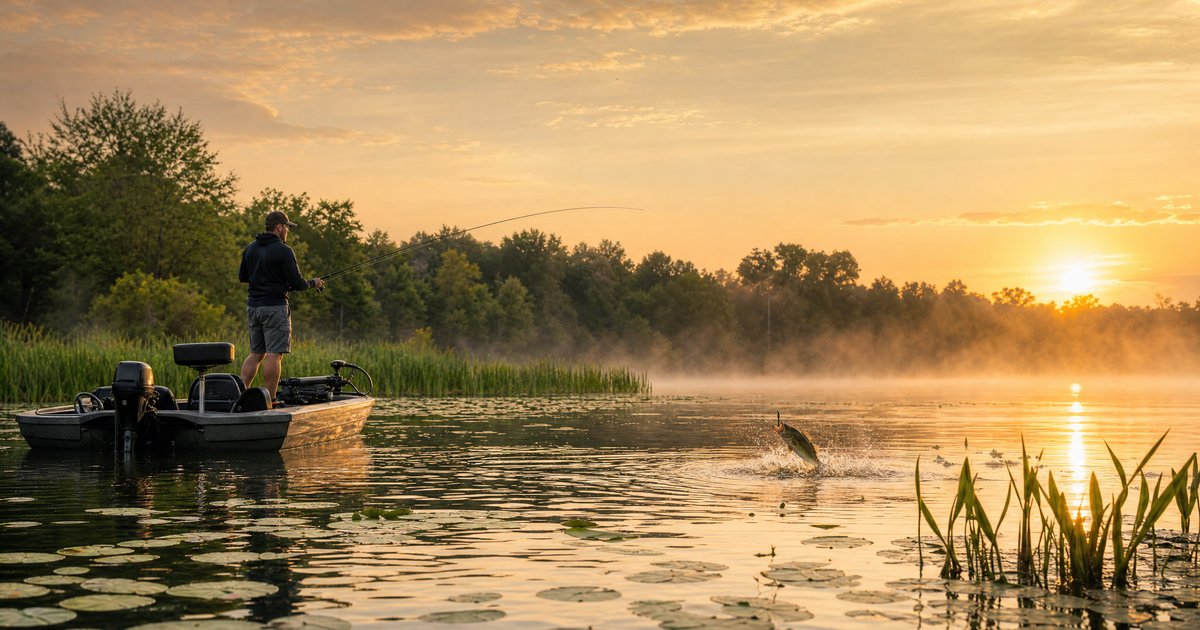
I went anyway. Kayak on the water by 6 a.m. on a smallmouth river in southern Missouri, and for the next three hours I couldn't keep fish off the hook — smallies crushing topwater, a couple of fat largemouth mixed in, one bass I'm pretty sure went well over four pounds. By 10 a.m., the front hit and the fishing died like someone flipped a switch.
That's barometric pressure doing exactly what it does. And once you understand the pattern, you'll stop picking fishing days based on convenience and start picking them based on what the atmosphere is actually telling you.
What Is Barometric Pressure and Why Should Anglers Care?
Barometric pressure — also called atmospheric pressure — is the weight of the air column above you pressing down on the earth's surface. According to NOAA, standard atmospheric pressure at sea level is 1013.25 hPa (hectopascals), or about 29.92 inches of mercury (inHg) — the unit you'll see on most fishing apps and weather stations.
That number isn't static. It rises and falls constantly as weather systems move through, and those changes create a cascading effect on everything from cloud cover and wind to how fish position and feed underwater.
Here's the part most anglers miss: fish don't have lungs that compress under pressure changes, but they do have a swim bladder — a gas-filled organ that helps them maintain buoyancy. When atmospheric pressure shifts, that swim bladder has to adjust. On a slow, gradual change, fish adapt easily. On a fast drop or spike, that adjustment takes real effort, and behavior shifts accordingly.
That's the core of it. Pressure changes — especially falling pressure — affect how comfortable fish are, where they sit in the water column, and critically, how aggressively they feed.
How Fast the Pressure Falls Matters
Not all pressure drops are equal. A slow, steady decline over 12 to 24 hours tends to produce a drawn-out feeding window. A rapid drop — say, 0.10 inHg or more per hour — often triggers a shorter, more intense feeding burst before conditions deteriorate fast.
In eight years of kayak fishing Ozark streams and Great Lakes bays, I've found the speed of the pressure change matters just as much as the direction. A system dropping from 30.10 to 29.60 over six hours lights fish up differently than the same total drop spread across two days.
The Feeding Frenzy Window: Why Falling Pressure Gets Fish Active
Here's what most people want to know: why does falling pressure make fish feed harder?
Several things happen simultaneously.
1. Fish instinctively feed before discomfort sets in
When pressure starts dropping, fish seem to sense that conditions are about to get worse. Think of it as an evolutionary survival mechanism — a hard low-pressure system means rough weather, reduced visibility, and tougher feeding conditions ahead. Bass, walleye, and most other gamefish will often go on a pre-storm feed that can be absolutely spectacular.
2. Baitfish behavior changes
Falling pressure pushes baitfish toward the surface and shallows. Shad, shiners, and other forage species become more active and disorganized — and disorganized baitfish are easy targets. When forage is scattered and moving erratically near the surface, predators capitalize. That's why topwater and shallow presentations often shine during falling pressure windows.
3. Light levels drop, reducing predator visibility concerns
As storm clouds roll in, light penetration drops. Fish that typically hold tight to cover in bright conditions — especially clear-water species like smallmouth bass — get more comfortable roaming and feeding aggressively. Reduced light is a green light for ambush predators.
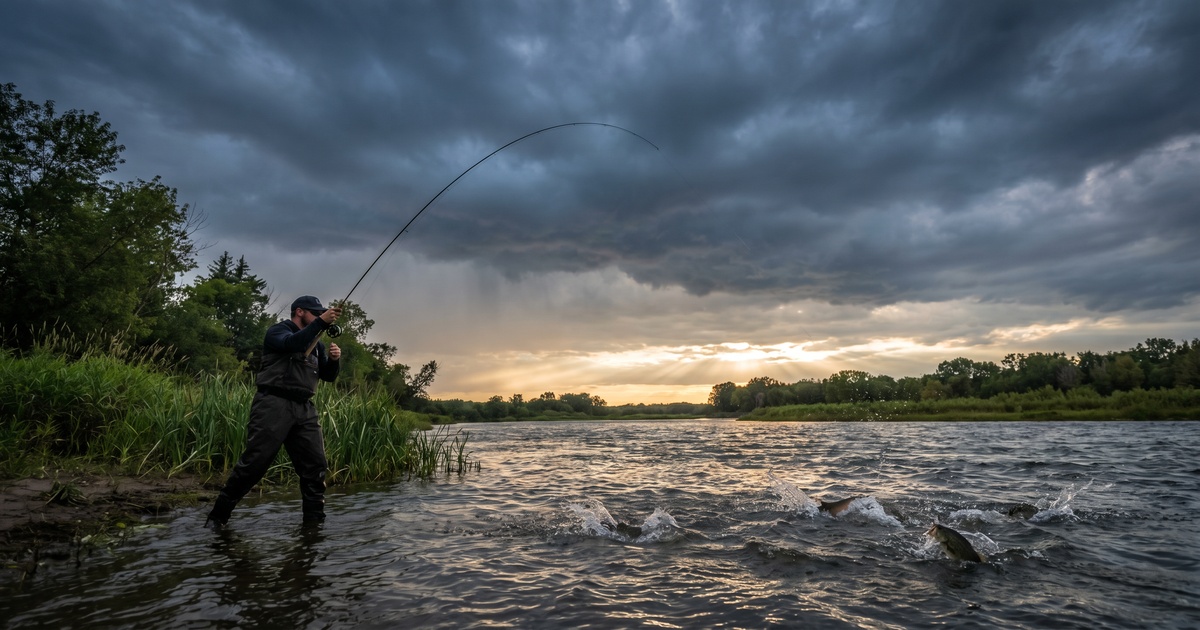
Field observation: My best topwater days on Midwest smallmouth rivers have almost always come in that two-to-four-hour window just before a front arrives. The barometer is dropping, clouds are building, and the fish are absolutely eating. Don't cancel the trip just because rain is in the forecast — the fishing before the storm often makes the whole day.
The Falling Pressure Phases
It helps to break falling pressure into three distinct phases:
| Phase | Pressure Trend | Typical Fish Behavior |
|---|---|---|
| Early Fall | Dropping slowly, 30.0+ inHg | Fish begin moving shallower, feeding picks up |
| Active Fall | Dropping steadily, 29.7–30.0 inHg | Peak feeding window, topwater and mid-column baits shine |
| Rapid Drop | Fast drop, below 29.7 inHg | Intense short burst, then fish pull back as front arrives |
These aren't hard rules — fish didn't read the chart — but this framework has held up consistently over years on the water.
What Happens After the Front Passes: High Pressure Blues
If falling pressure is the feast, high pressure after a cold front is the famine. This is when anglers drive two hours to the lake and get completely skunked. Bluebird sky, wind died, fish lockjaw. Here's why.
When a cold front pushes through, pressure rises sharply behind it — sometimes 0.20 inHg or more in a matter of hours. That rapid swing stresses fish. Their swim bladders are working to re-adjust, water temperatures may have dropped several degrees overnight, and the clear skies and high sun push fish deep and tight to cover.
Post-front fish behavior typically includes:
- Moving deeper or suspending
- Hugging heavy cover — laydowns, rock piles, dock pilings
- Dramatically shorter strike windows
- Reluctance to chase fast-moving presentations
This is the scenario that kills most weekend fishing trips. Anglers fish hard on Saturday — post-front, bluebird skies — instead of Thursday or Friday when the pressure was dropping and fish were actively eating.
How to Catch Fish in High Pressure Conditions
Post-front fishing isn't impossible. It just requires a different approach.
- Slow down significantly. Drop-shot rigs, ned rigs, and finesse presentations outperform reaction baits when fish are lethargic.
- Fish deeper or target shade. High sun pushes fish down and back. That dock you ignored during the falling pressure window becomes critical.
- Downsize everything. Lighter line, smaller profiles. Post-front fish in clear water are line-shy.
- Target transition areas. Fish will often stack on depth changes — the first drop off a flat, the outside edge of a weed bed — where they can retreat quickly if needed.
- Fish early and late. Even during stable high pressure, low-light windows at dawn and dusk can produce decent bites.
Pro tip: Post-front is a great time to fish current-oriented systems. Rivers and streams maintain more consistent water temperatures and oxygen levels than still-water lakes, and species like smallmouth bass tend to rebound faster after fronts than largemouth sitting in sluggish backwaters.
Reading Pressure Like a Local: Practical Tools and Tactics
Knowing the theory is one thing. Using it to make better fishing decisions is another.
Using a Barometer to Time Your Trips
You don't need expensive gear. A basic barometer — handheld or on your phone — is enough to track the trend. What you're watching for:
- Falling over 12–24 hours: Book your trip. This is the window.
- Steady and stable: Fishing will be consistent but not exceptional. Fish normal depth ranges.
- Rising after a front: Give it 24–48 hours if you can. Let fish settle back into feeding mode.
- Rapidly rising: Often the toughest conditions. Go deep, slow down, be patient.
Before every kayak trip, I check the 24–48 hour trend on HookCast. It's not just the number at that moment — it's whether pressure has been falling, rising, or holding steady. The trend is everything.
Species-Specific Pressure Responses
Different fish respond to pressure changes with slightly different timing and intensity. Here's how it breaks down from my Midwest freshwater experience:
Largemouth Bass
Very responsive to falling pressure. Will move shallower and feed aggressively in the hours before a storm. Post-front: goes deep and tight to cover. Texas rigs and drop shots are your friends.
Smallmouth Bass
Arguably the most pressure-sensitive of the bass family. I've had smallies completely shut down on stable high-pressure days in clear water. Falling pressure on a river? Some of the best fishing of the year. Give me a dropping barometer on an Ozark stream any day.
Walleye
Already low-light feeders, walleye often perform well under the overcast skies that accompany falling pressure — especially at dawn. More tolerant of stable conditions than bass, but still show reduced activity under extreme high pressure.
Panfish (Crappie, Bluegill)
Respond to pressure changes but recover faster than bass. Often the first species to return to active feeding after a front — a reliable fallback option when everything else is still shut down.
Stream Trout
Moving water buffers some of the pressure effects through current and dissolved oxygen levels, making stream trout slightly less reactive than still-water species. Still worth noting falling pressure on trout streams — insect activity often increases ahead of storms, which can trigger quality surface feeding.
Combining Pressure with Other Factors
Barometric pressure doesn't work in isolation. Stack it with other variables to build a complete picture:
- Solunar periods: A falling pressure window that coincides with a major solunar feeding period is when I'll rearrange my schedule to be on the water. HookCast's forecast tool combines pressure trends with solunar data so you can see when multiple factors align.
- Water temperature: Pressure changes matter more when water temps are in the active feeding range for your target species. Bass feeding actively at 65°F will respond more dramatically to a falling barometer than sluggish fish at 50°F.
- Wind: Falling pressure usually brings wind. Wind-blown points, windward shorelines, and current seams concentrate baitfish — and predators follow.
- Season: Spring and fall fronts tend to produce the most dramatic pressure-related feeding windows because fish are already in an active feeding mode, building energy reserves.
Putting It All Together: A Simple Decision Framework
You've got a potential fishing day coming up. Here's how I actually think through the barometric pressure piece:
Step 1: Check the 48-hour pressure trend — not just today's number.
Step 2: Determine whether pressure is falling, stable, or rising.
Step 3: Match your approach to the trend:
- Falling: Go. Fish shallow and active. Cover water. Topwater, crankbaits, swim jigs.
- Stable low: Fish normal patterns. Slightly overcast conditions can produce a decent bite.
- Stable high: Fish but adjust. Go deep, slow down, finesse.
- Rising rapidly post-front: Consider waiting 24–48 hours, or target panfish and current-oriented streams.
Step 4: Stack pressure trend with water temp, solunar periods, and seasonal patterns to find your best windows.
Step 5: Go fishing. The best fishing day is the one you're actually on.
Quick-Reference Takeaways
✅ Falling pressure = feeding window. The hours before a storm arrives are often prime fishing time.
✅ Speed of the drop matters. A fast drop triggers a shorter, more intense burst. A slow drop means a longer feeding window.
✅ Post-front high pressure is the toughest condition. Slow down, go deep, downsize.
✅ Standard atmospheric pressure is 1013.25 hPa (29.92 inHg) per NOAA — your baseline reference point.
✅ Don't fish the number, fish the trend. A reading of 29.80 means nothing without knowing if it's been falling or rising for the past 12 hours.
✅ Species matter. Smallmouth and bass are highly pressure-sensitive. Panfish recover fastest post-front.
✅ Stack your factors. Falling pressure + major solunar period + right water temp = get on the water.
✅ Check the trend before you go. HookCast's weather tool shows pressure trends alongside other conditions so you can make smarter decisions before you load the kayak.
Frequently Asked Questions
What is the best barometric pressure for fishing?
Fishing tends to be best during a falling barometric pressure period rather than at any specific static number. As pressure drops from its current level — especially in the range of 29.70 to 30.10 inHg — fish become more active and feed aggressively in the hours before a storm arrives. The trend matters more than the number itself.
Does barometric pressure really affect fish behavior?
Yes, and there's a clear biological reason. Fish use a swim bladder — a gas-filled organ — to control their buoyancy. Shifts in atmospheric pressure require fish to adjust that organ, which affects their comfort and positioning in the water column. Rapid pressure changes in either direction cause the most significant behavioral shifts, including reduced feeding activity during high-pressure post-front conditions.
Why do fish stop biting after a cold front?
A cold front brings a rapid rise in barometric pressure that stresses fish, pushing them deeper and tighter to cover while significantly reducing feeding aggression. Combined with colder, clearer water and bright sun that increases light penetration throughout the water column, post-front conditions are consistently the toughest for anglers. Waiting 24–48 hours, then fishing deep and slow with finesse presentations, gives you the best shot at connecting during these windows.
How do I track barometric pressure for fishing?
Most fishing weather apps — including HookCast — display real-time barometric pressure alongside the 24–48 hour trend. What you want to watch is whether pressure is rising, falling, or stable over time, not just the current reading. A handheld barometer also works well if you want a dedicated tool on the water.
Does barometric pressure affect all freshwater fish the same way?
Not exactly. Bass — especially smallmouth — are among the most pressure-sensitive species and can shut down dramatically under stable high pressure. Panfish like crappie and bluegill tend to recover faster after fronts and make a reliable fallback option in the days following a cold front. Stream trout are somewhat buffered by current and dissolved oxygen levels and may be slightly less reactive than still-water species. Walleye, already accustomed to feeding in low-light conditions, often perform well under the overcast skies that accompany falling pressure systems.