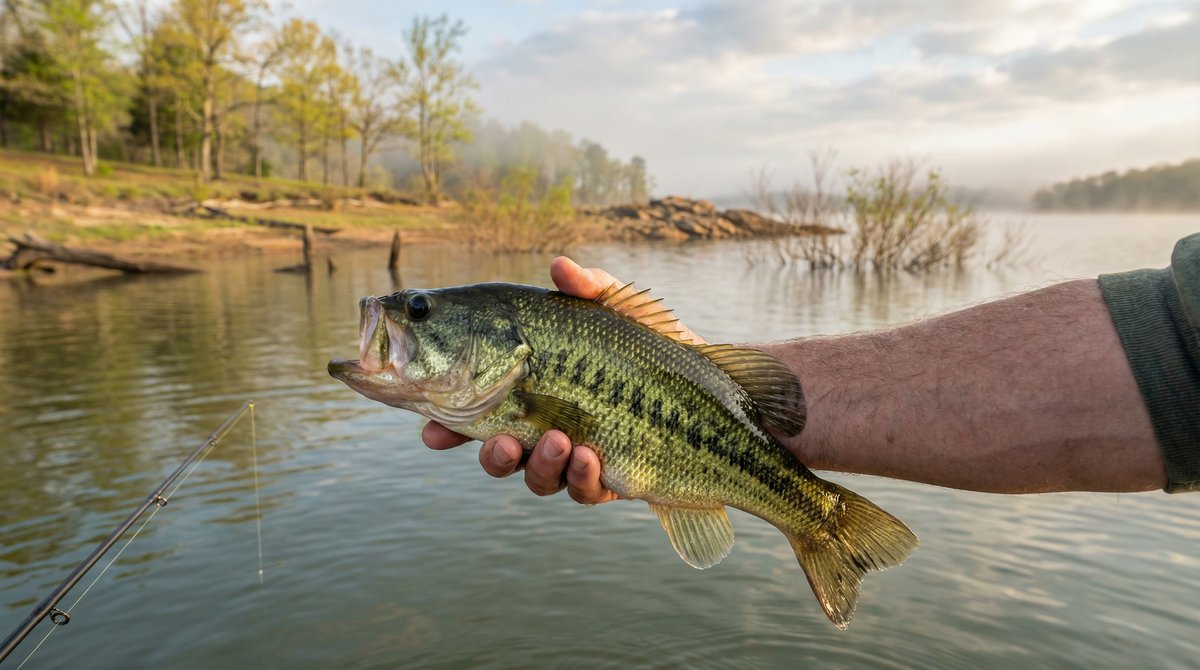
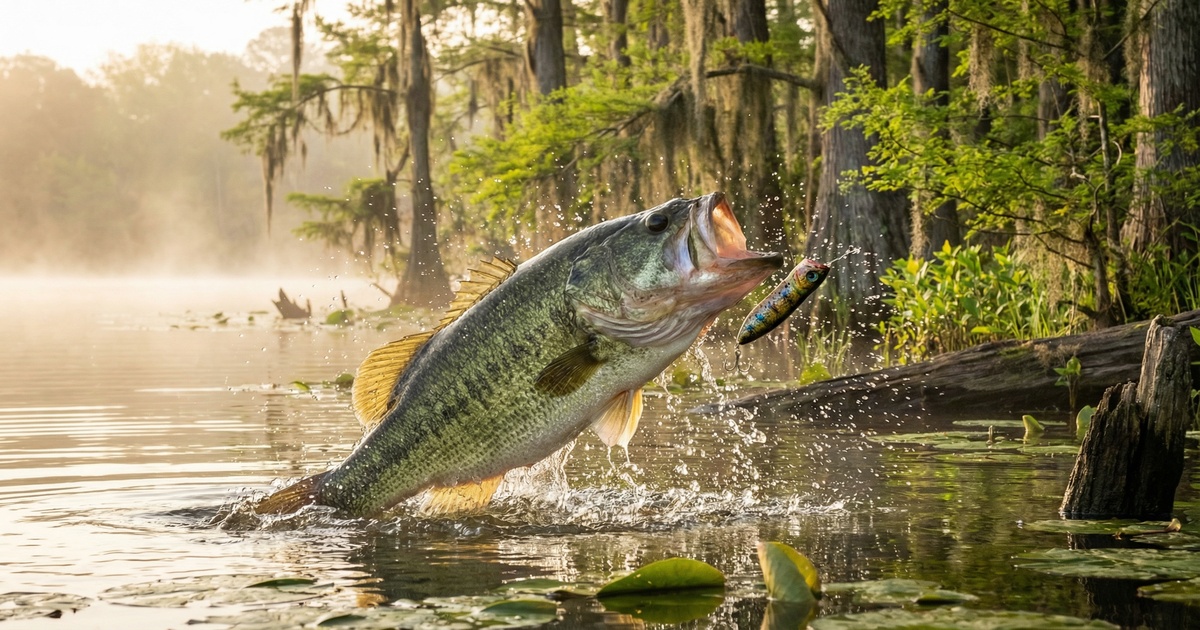
I’ll never forget a specific morning on a small Ozark stream about eight years ago. I had just bought my first fishing kayak—a beat-up $600 plastic rig that tracked like a shopping cart. I paddled up to a quiet pool as the fog lifted off the water, tied on a cheap topwater popper, and tossed it near a submerged laydown. Pop. Pop. Pause. The water erupted like someone dropped a bowling ball from the sky.
That smallmouth dragged my kayak into the current and cemented my obsession with topwater fishing.
There is nothing quite like the visual violence of a topwater strike. But if you’re reading this, you probably know the frustration of driving two hours to your favorite lake, tying on a frog or a walking bait, and spending the whole morning just casting at empty water. Spring bass topwater fishing isn't just about throwing a topwater plug and hoping for the best. To catch fish consistently—especially when moving between the deep reservoirs of the Midwest and the shallow grass lakes of the Southeast—you have to understand the mechanics of water temperature, barometric pressure, and fish behavior.
The Science Behind the Spring Topwater Bite
Bass are cold-blooded creatures, which means their metabolism and feeding aggression are entirely dictated by their environment. You can’t force a bass to hit a surface lure if the conditions are telling its brain to hug the bottom.
Water Temperature Milestones
In the early spring, when water temperatures are hovering in the high 40s to low 50s, topwater lure fishing is usually a waste of time. The bass are sluggish and focused on easy meals lower in the water column. The magic starts happening when the water consistently hits the 55 to 60-degree mark.
According to data on fish metabolism from NOAA Fisheries, as water temperatures warm into the optimal range, fish become vastly more active and require significantly higher caloric intake. In the spring, this warming trend pushes baitfish toward the shallows, and the bass follow.
- 55-60 Degrees (Prespawn): The topwater bite slowly wakes up. Bass are staging on secondary points and moving into shallow coves. Slow-moving surface baits worked with long pauses are the ticket.
- 60-68 Degrees (The Spawn): Bass are on beds. Topwater can actually be tough here unless you cast right over a bed and aggravate a guarding fish.
- 68-75 Degrees (Postspawn): This is the golden era of spring topwater bass fishing. The bass are exhausted from spawning and guarding fry. They want high-protein, easy meals. Shad are often spawning during this window, creating a surface-feeding frenzy.
Barometric Pressure and Fronts
Weather fronts make or break your trip. I’ve seen lakes go from an absolute feeding frenzy on Friday to completely dead on Saturday because a cold front blew through overnight.
Standard atmospheric pressure at sea level is 1013.25 hPa per the National Weather Service. Before a spring rainstorm or cold front, the pressure begins to drop. This dropping pressure triggers a biological feeding response in bass. They know rough weather is coming, so they gorge themselves.
"The 24 hours immediately preceding a spring thunderstorm offer the most aggressive topwater fishing you will ever experience. Don't sit at home when the sky turns gray."
Once the front passes, the pressure spikes. Bluebird skies, high winds, and a rapid drop in water temperature follow. The bass will pull off the shallow flats and bury themselves in deep cover. If you pull up to the lake on a high-pressure, post-front bluebird day, put the topwater box away and pick up a jig.
Before I load up my kayak, I always check current pressure on HookCast to see if the barometer is rising, falling, or stable. It tells me immediately whether I should start shallow with a buzzbait or start deep with a Texas rig.
Regional Timing: Southeast vs. Midwest
Spring doesn't happen everywhere at once. If you read a generic article telling you to throw topwater in March, you'll have a bad time if you live in Michigan.
The Southeast (Florida, Georgia, Alabama)
In places like Lake Seminole or Guntersville, the spring topwater bite can start as early as late February. Down south, you're dealing with extensive hydrilla flats and lily pads. The water warms fast in the Southern sun. Here, you are often looking for shad spawns along seawalls, or bluegill beds in the back of shallow, grassy bays.
The Midwest (Missouri, Illinois, Wisconsin)
Fishing my home waters like Lake of the Ozarks or Table Rock Lake, our topwater season rarely kicks into high gear until late April or May. We deal with deeper, clearer water and rockier shorelines. Tracking water levels and current flows is critical here because spring rains blow out the rivers. I regularly monitor the USGS National Water Dashboard for stream gauges and water clarity reports before deciding which river or lake arm to fish. I also pull the fishing forecast for Osage Beach to dial in the wind direction, as spring winds in the Midwest can easily ruin a topwater presentation.
Building Your Spring Surface Lure Arsenal
Walk into any tackle shop and the topwater aisle will overwhelm you. You don't need a massive tackle box to catch fish. You just need a few reliable tools that cover different water conditions.
Bass Popper Fishing
Bass popper fishing is the absolute staple of my spring kayak setup. Poppers have a concave face that spits water and creates a "bloop" sound when twitched.
When to use it: Target isolated cover like stumps, laydowns, and boat docks. A popper stays in the strike zone longer than any other lure. You can cast it next to a submerged log and keep it dancing in a three-foot circle for almost a minute.
The Retrieve: Cast past your target. Let the rings settle completely (this is crucial—often the bass strikes while it's just sitting there). Give the rod tip a sharp, downward twitch to make the lure spit. Pause for 3 to 5 seconds. Repeat.
Walking Baits (Spooks)
Walking baits are cigar-shaped plastic or wood lures with no lip and no concave face.
When to use it: These are search baits. Use them when you are fishing long stretches of bank, submerged points, or open water flats. They cast a mile and allow you to cover water efficiently.
The Retrieve: "Walking the dog." Keep your rod tip pointed down. Use rhythmic, short twitches of the rod while reeling slowly. This forces the lure to dart in a zig-zag pattern across the surface, mimicking a wounded baitfish fleeing a predator.
Buzzbaits
A wire bait with a large metal propeller blade that churns the surface.
When to use it: Post-spawn spring when water temps cross 70 degrees, especially around shad spawns in the early morning. It is also exceptional in muddy spring water because the blade creates tremendous noise and vibration.
The Retrieve: Cast out and immediately engage your reel before the lure sinks. Reel just fast enough to keep the blade sputtering on the surface. Occasionally pause for a split second to let the bait flutter—this often triggers trailing bass to strike.
Surface Lure Bass Fishing Quick Guide
| Lure Type | Best Water Clarity | Ideal Cover / Target Area | Retrieve Speed |
|---|---|---|---|
| Popper | Clear to lightly stained | Docks, isolated stumps, laydowns | Slow (Pop & Pause) |
| Walking Bait | Clear to stained | Open flats, points, long banks | Medium (Rhythmic) |
| Buzzbait | Stained to muddy | Weed edges, laydowns, rip-rap | Fast (Constant) |
| Hollow Body Frog | Clear to stained | Heavy matted vegetation, lily pads | Slow to Medium |
Kayak Tactics and Stealth Positioning
You don't need a $50,000 bass boat with forward-facing sonar to catch massive fish in the spring. In fact, a simple fishing kayak gives you a distinct advantage for surface lure bass fishing.
Spring bass are pushing shallow. When water is clear and bass are cruising in two feet of water, a loud aluminum boat hull scraping against a stump or the hum of an oversized trolling motor will spook them instantly.
A kayak allows you to slide into inches of water completely silently. But positioning is everything.
Manage the Wind: Wind pushes topwater lures and creates chop that makes subtle lures like poppers hard to see and hear. I always try to position my kayak upwind of my target. Casting with the wind gives you greater distance and prevents the wind from blowing a bow into your line. If there is a slight chop, I put the popper away and switch to a walking bait or buzzbait that has a louder profile.
Parallel the Bank: Most bank anglers cast straight out into the lake. From a kayak, position yourself a few yards off the shoreline and cast parallel to the bank. This keeps your topwater lure in the productive shallow strike zone for the entire duration of the retrieve, rather than just the first five feet.
Gear Up Right: Topwater fishing requires specific line. Never use fluorocarbon line for topwater lures. Fluorocarbon sinks, which will pull the nose of your popper or walking bait underwater and ruin the action. Use monofilament line (which floats and offers shock-absorbing stretch) or braided line (which floats and offers no stretch for driving hooks home on long casts).
Reading the Water for Spring Topwater Strikes
Throwing a topwater lure blindly into the middle of a cove is a low-percentage game. You need to target specific transitions and cover.
Laydowns and Submerged Timber
When spring storms knock trees into the water, those laydowns become bass magnets. The branches absorb heat from the sun, warming the water around them slightly faster. They also provide ambush points. Cast your popper parallel to the main trunk of the tree and work it slowly through the branches.
The Shad Spawn Phenomenon
In late spring (usually May in the Midwest, April in the Southeast), threadfin and gizzard shad push against seawalls, rip-rap banks, and floating docks overnight to spawn. At first light, you will see the water physically boiling against the rocks.
This is the most chaotic topwater bass fishing spring has to offer. Tie on a white buzzbait or a silver walking bait and parallel the rocks. The bass corral the shad against the hard structure and decimate them. This bite usually only lasts for the first hour of daylight, so be on the water early.
Bluegill Beds
Right as the bass finish spawning, the bluegill move in to spawn in the exact same shallow, sandy areas. Bass love eating bluegill. Look for honeycomb-shaped craters on shallow sandy bottoms. Throw a bluegill-patterned popper or a small walking bait directly over these beds.
Spring Topwater Checklist
To save you a headache on the water, run through this checklist before your next spring launch:
- Check the Water Temp: Is it above 55 degrees? If not, fish sub-surface.
- Check the Barometer: Falling pressure means active fish. Post-front high pressure means tough fishing.
- Check Your Line: Ensure your topwater setups are spooled with braid or monofilament, not fluorocarbon.
- Match the Hatch: Have a white/silver bait for shad, a green/orange bait for bluegill, and a black bait for low light/night fishing.
- Wait for the Weight: When a bass blows up on your surface lure, do not set the hook instantly. Wait until you actually feel the weight of the fish on the line. Setting the hook too early will yank the lure right out of the fish's mouth.
Topwater fishing in the spring requires patience, precise casting, and an understanding of the environment. Get out there early, watch the weather, and hold on tight to your rod.
FAQ
When is the best time for topwater bass fishing spring?
The best time for spring topwater fishing is during the late prespawn and postspawn periods, typically early morning and late evening. Overcast days with dropping barometric pressure just before a rainstorm also provide excellent all-day topwater action.
What water temperature is best for spring bass topwater?
The topwater bite begins to activate when surface water temperatures consistently hit 55 to 60 degrees Fahrenheit. The most explosive topwater action occurs during the postspawn period when water temperatures rise between 68 and 75 degrees.
How do you retrieve for bass popper fishing?
Cast the popper near isolated cover like a stump or dock, and let the ripples completely fade away before moving it. Twitch your rod tip downward sharply to make the bait spit and "bloop," then let it sit perfectly still for 3 to 5 seconds before popping it again.
What is the best line setup for surface lure bass fishing?
You should always use braided line or monofilament line for topwater fishing because both materials float, keeping the lure's action intact. Never use fluorocarbon line for surface lures, as it sinks and will drag the nose of your bait underwater.
Can you do topwater lure fishing after a cold front?
Topwater fishing is generally very poor immediately following a spring cold front. The high barometric pressure, bluebird skies, and dropping water temperatures cause bass to retreat to deeper water and tight cover, making jigs and slow-moving bottom baits a much better choice.