Catfish Fishing Guide: Channel Cats, Blues, and Flatheads by Season
My buddy Dave is one of the most stubborn fishermen I know. He grew up catching channel cats on chicken liver from a riverbank in southern Missouri, and for years he assumed catfishing was catfishing — same bait, same spots, same approach no matter what. Then one summer evening he watched a guy across the river haul out a 40-pound flathead on a live bluegill while Dave sat there with his styrofoam container of stink bait wondering what he was doing wrong.
That's the thing about catfish. Most people lump them together like they're all the same fish. They're not. Channel cats, blue catfish, and flatheads behave differently, eat differently, and respond to seasons in ways that matter when you're planning a trip. Get it right and catfishing is some of the most consistent, accessible angling in freshwater. Get it wrong and you're sitting on the bank watching your rod tip do nothing.
Here's what I've learned from years of chasing all three species across Midwest rivers and reservoirs — and what'll help you stop guessing.
Channel Cats, Blues, and Flatheads: Know Your Target
Before you talk tactics, you need to understand what separates these three species. They overlap in range, but they're very different animals in terms of behavior and habitat preference.
Channel Catfish
Channel catfish (Ictalurus punctatus) are the most widely distributed and most commonly caught catfish in North America. They're opportunistic omnivores — they'll eat cut bait, stink bait, worms, crawfish, small fish, even fruit in some situations. Channel cats are found in virtually every major river system and reservoir east of the Rockies, and they've been stocked so widely that you can find them in ponds, small lakes, and tailwaters across the country.
Key identifiers: forked tail, spotted flanks (especially on younger fish), relatively slender body. They usually run 1–10 pounds in most waters, though 20-plus-pound fish aren't rare in good river systems.
Blue Catfish
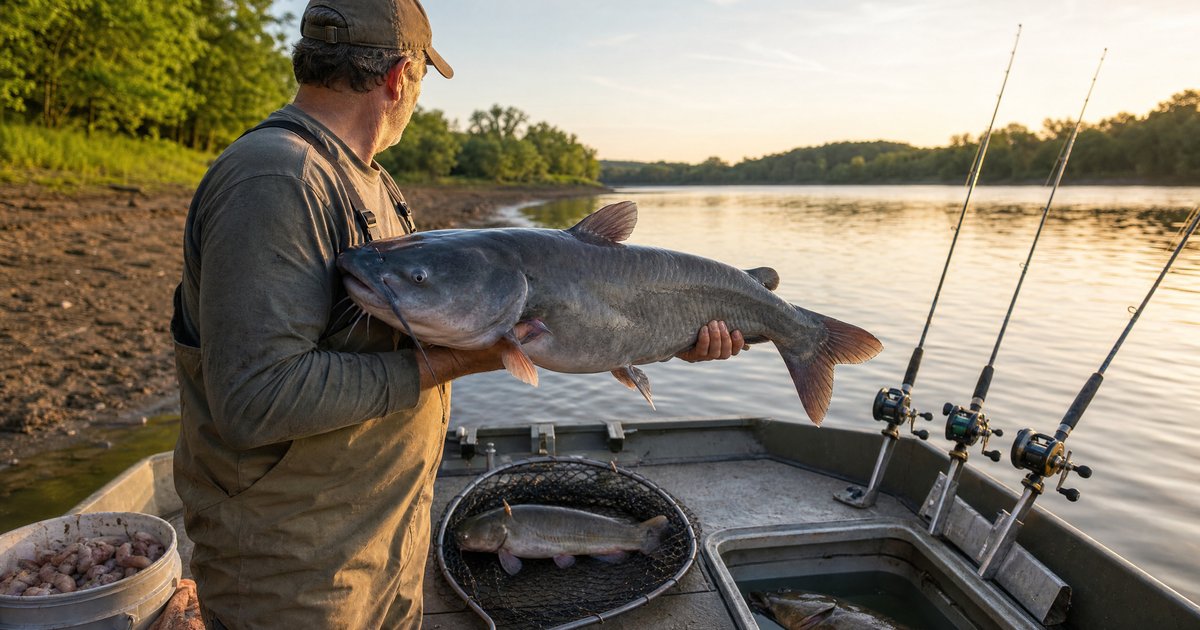
Blue catfish (Ictalurus furcatus) are the giants of the family. The current all-tackle world record sits over 140 pounds, and blues commonly exceed 50 pounds in productive reservoirs. They're primarily piscivores as adults — meaning they eat fish — though they'll readily take cut shad and skipjack.
Blues prefer larger rivers and reservoirs with strong current and tend to hold in deeper water than channels. The James River in Virginia and the Missouri River are well-known blue cat fisheries, and they've been introduced in many East Coast reservoirs where they've grown to massive sizes. Blues look similar to channel cats but have a straight-edged anal fin (channel cats have a rounded one) and lack spots.
Flathead Catfish
Flathead catfish (Pylodictis olivaris) are the ambush predators of the group. They're almost exclusively live-bait fish — adult flatheads rarely bother with dead or cut offerings and basically ignore stink bait altogether. They're structure-oriented, solitary, and largely nocturnal. A big flathead will wedge itself under a log jam or in a deep undercut bank and wait for something alive to swim by.
Flatheads grow large — 40- to 60-pound fish are legitimate targets in quality river systems — and they fight like nothing else in freshwater. If you're after trophies and don't mind adapting your approach, flatheads are worth pursuing on their own terms.
The Best Catfish Baits by Species
This is where a lot of anglers go wrong. Using the right bait for the wrong species is frustrating and avoidable.
Channel Catfish Baits
Channel cats have exceptional chemoreception — they can detect dissolved compounds in the water at extremely low concentrations, which is why strong-smelling baits work so well.
- Cut shad or skipjack — hard to beat in rivers. Fresh-cut works better than frozen in my experience.
- Chicken liver — classic and effective, though it's soft and tends to fly off the hook on a hard cast. Wrapping a piece of nylon stocking around it helps.
- Punch bait and dip bait — commercial stink baits like Team Catfish Secret 7 or Punch-It bait work well for channels. Usually fished on a foam worm or treble hook.
- Nightcrawlers and worms — underrated for channel cats in rivers and ponds, especially in spring.
- Crawfish — excellent in Ozark streams and clear-water rivers.
Blue Catfish Baits
Blues are built to eat fish. Keep it simple.
- Fresh-cut shad — the go-to bait for most serious blue cat anglers. Cut it in sections and use it fresh.
- Skipjack herring — especially effective in big river systems like the Mississippi and Ohio where skipjack are present.
- Live bream or perch — works for big blues in reservoirs.
- Prepared cut bait — blues respond well to oily, fresh fish. Avoid overly processed or aged bait.
Flathead Catfish Baits
Keep it alive. Period.
- Live bluegill — the classic flathead bait, and for good reason. Hook it through the back behind the dorsal fin.
- Live bullheads — extremely durable on the hook, and flatheads love them.
- Live creek chubs or suckers — great options in rivers where they're naturally present.
- Live carp or drum (small) — used by some dedicated flathead hunters in bigger river systems.
Field note: I've tried cut bait for flatheads more times than I care to admit, mostly out of stubbornness. I've caught maybe two flatheads that way in eight years. Switch to live bait and you'll understand why every serious flathead angler is so adamant about it.
Seasonal Catfish Patterns: Timing Your Trips
Catfish are cold-blooded, and their behavior tracks water temperature closely. Understanding the seasonal patterns is what separates a good catfisherman from someone who shows up and hopes for the best. Before any trip, I check current water temperature and weather conditions on HookCast — knowing the pressure trend and whether water temps are rising or falling makes a real difference in how I approach a session.
Spring (Water Temps: 55–70°F)
Spring is a transition period and one of the most productive times of year for all three species — especially channels and blues.
As water temperatures climb above 55°F, catfish that spent winter in deep, slow-moving pools start moving shallower and feeding more actively. They're rebuilding energy reserves, and it shows.
Channel cats in spring: Look for them in 4–10 feet of water near current breaks — behind boulders, at the heads of pools, around bridge pilings. Worms and cut bait both produce well. As temps approach 65–70°F, pre-spawn feeding really kicks in.
Blues in spring: Big blues follow shad and other baitfish into the upper ends of reservoirs and river bends as those areas warm first. Fish current edges and transition zones between slack water and moving water.
Flatheads in spring: Slower to move than the other two, but they start showing up at night along shallow woody cover as temps approach 60°F. Live bream fished near submerged timber will find them.
The USGS streamflow data is worth checking in spring — high, muddy water after rain events pushes cats to the slack-water margins, and you can intercept them there.
Pre-Spawn and Spawn (Water Temps: 70–82°F)
Catfish spawn when water temperatures hit roughly 75–82°F, typically late May through early July depending on your region. Understanding spawning behavior matters both for your fishing strategy and for how you handle the fish you catch.
Spawning behavior: All three species are cavity nesters — they use holes in banks, hollow logs, rock crevices, and man-made structure like concrete drain pipes. Males guard the eggs aggressively during this period.
During the spawn itself, fishing slows somewhat as fish focus on reproduction rather than feeding. The best fishing is actually the pre-spawn window — the two to three weeks before temperatures hit that peak range — when fish are eating hard.
Handling note: If you're fishing during or near the spawn and catching fish from obvious nest sites (guarding males are often dark-colored and aggressive), consider releasing those fish promptly and carefully. Removing a nest-guarding male can wipe out the entire spawn for that pair. A quick photo and a clean release goes a long way.
Summer (Water Temps: 75–85°F+)
Summer catfishing is excellent if you fish the right hours and the right depths. The mistake most people make is fishing midday in shallow water in July and wondering why nothing's happening.
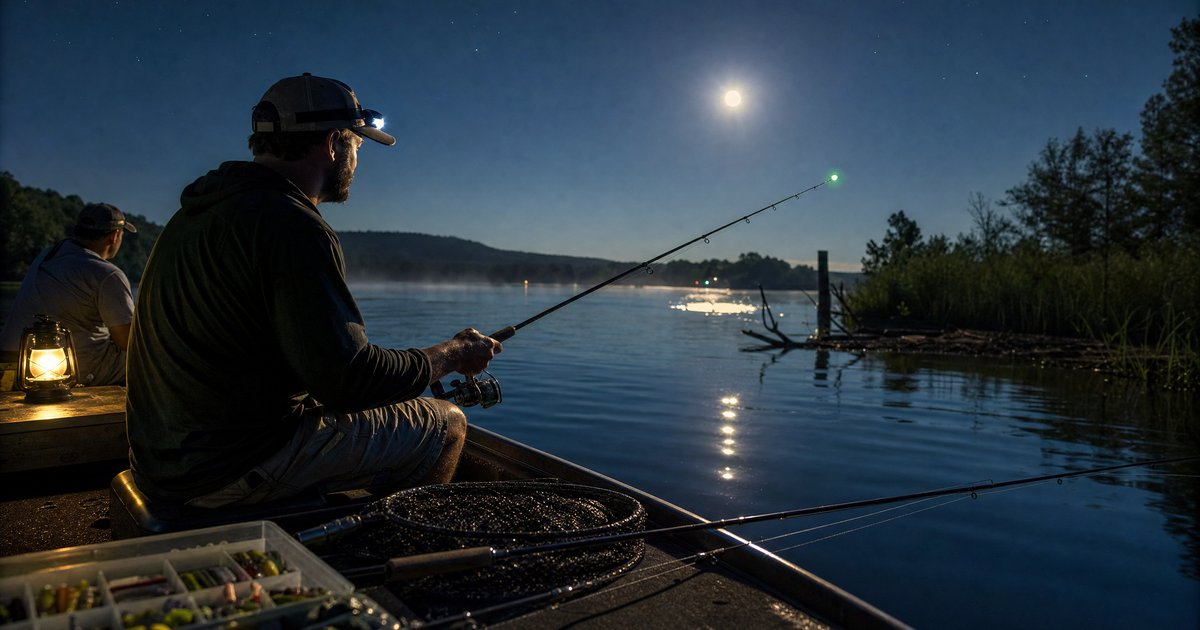
Night fishing: This is when catfishing gets fun. All three species feed most actively at night in summer. Channels and flatheads in particular become very shallow after dark — you can find channels in 2–3 feet of water over sand and gravel bars. Flatheads cruise the shallows hunting anything that moves.
Blues in summer: Larger blues hold deep during the day — think 20–40 feet in big reservoirs — near submerged structure and channel edges. Anchoring over a ledge with fresh-cut shad is a classic summer blue cat approach. At night, they spread out and feed more aggressively.
River catfish in summer: In rivers, summer low water concentrates fish in the deepest holes. Focus your effort on these pools. Less water means less area to search, which actually makes river catfishing more predictable in summer if you can find those key deep spots.
Safety note: Night fishing is some of the best catfishing of the year, but come prepared. Always fish with a partner or let someone know your plans and when you expect to return. Carry a headlamp or flashlight, be aware of footing near steep banks, and keep a life jacket close if you're fishing from a kayak or canoe after dark.
Fall (Water Temps: Dropping from 75°F to 50°F)
Fall is my personal favorite time to target catfish, and it's consistently underrated. As water temps drop in September and October, catfish go on a pre-winter feeding binge that can produce some of the heaviest fish of the year.
Fall channel cats: They stack up in larger numbers in mid-depth zones — not as deep as winter, not as shallow as summer nights. Cut bait in 8–15 feet of water near current transitions is deadly. Early morning and evening are the best windows.
Fall blues: As shad bunch up in cooling water, big blue cats follow them. Find the shad on a graph and set up nearby. Some of the biggest blue cat catches I've heard about from Missouri and Tennessee guys happen in October and November.
Fall flatheads: They start transitioning toward their winter deep holes in October, but they're feeding hard in September. Big live bait fished near the transition from shallow woody cover to deeper water can produce trophy fish.
Winter (Water Temps: Below 50°F)
Catfishing doesn't stop in winter — it just gets slower and requires more patience. All three species become lethargic in cold water and feed less frequently, but they still eat.
Key winter tactic: Go deep and go slow. Fish heavy weight to hold bottom in 15–40 feet of water in the main river channel or deep reservoir holes. Blues and big channels stack up in these wintering areas. Cut bait still works — just leave it soaking longer and don't expect fast action.
Presentation adjustment: Downsize your bait in winter. A big chunk of shad that works in September might be ignored in January. Smaller pieces, fished slow and patient, get more bites in cold water.
Gear and Rigging Basics
You don't need anything fancy for catfish. Here's what covers 90% of situations:
Rods and Reels
- Medium-heavy to heavy action rod, 7–8 feet — gives you casting distance and backbone for big fish.
- Baitcasting or spinning reel with a line capacity of at least 150 yards — big catfish run.
- Line: 20–40 lb monofilament or fluorocarbon for most situations; 50–65 lb braid for big blues or heavy current.
Terminal Tackle
| Rig | Best For | Notes |
|---|---|---|
| Carolina rig | Channels, blues | Slip sinker 1–4 oz, 18–24" leader, circle hook |
| Slip float rig | Channels, flatheads | Presents bait off bottom; good for snag-prone areas |
| Three-way rig | River blues, drift fishing | Holds bottom in heavy current |
| Santee Cooper rig | All species | Carolina rig with float on leader to lift bait |
Circle hooks are strongly recommended for catfish — they hook fish in the corner of the mouth almost every time, making release easy and clean. A 5/0 to 8/0 circle hook covers most channel and blue cat situations. Go to a 10/0 or bigger for large flatheads and trophy blues.
Pro tip: With circle hooks, don't set the hook the way you would with a J-hook. Just reel down to the fish and let the rod load. Setting hard on a circle hook actually pulls it out of the fish's mouth. This took me embarrassingly long to accept.
Reading Water for Catfish
Whether you're on a reservoir or a river, a few structural elements hold catfish consistently.
In rivers:
- Deep holes below riffles and rapids
- Outside bends with undercut banks
- Log jams and woody debris
- Bridge pilings and riprap (especially for channels)
- Current seams where fast and slow water meet
In reservoirs and lakes:
- Channel edges and old river channels
- Points that drop off into deep water
- Submerged timber and brush piles
- Tailwaters below dams — consistently productive for blues and channels year-round
- Creek arms where current enters the main lake
Barometric pressure affects catfish like it does most other species — falling pressure ahead of a front tends to turn on the bite, while a sharp pressure drop followed by a cold front can shut things down for a day or two. I pull up HookCast's weather forecast before planning a trip to see where the pressure's headed. Fishing on a rising barometer after a front passes is often better than people think, especially for catfish.
Key Takeaways
- Match your bait to your target species. Stink bait for channels, fresh-cut shad for blues, live bait only for flatheads.
- Seasonal patterns matter. Pre-spawn spring and fall feed-up are your best windows for heavy fish.
- Night fishing in summer is game-changing, especially for channel cats and flatheads in rivers.
- In winter, go deeper, fish slower, and downsize your bait.
- Circle hooks make release easier and land more fish. Use them.
- Structure is everything. Log jams, deep holes, current breaks — that's where catfish live.
- Check local regulations for size and bag limits before you go — catfish rules vary significantly by state and water body.
- Handle spawning fish carefully and release nest-guarding males promptly.
FAQ
What is the best bait for catching catfish?
The best catfish bait depends on the species you're targeting. For channel catfish, fresh-cut shad, chicken liver, and commercial punch baits are all effective. Blue catfish respond best to fresh-cut shad and skipjack herring. Flathead catfish are almost exclusively caught on live bait — live bluegill, bullheads, or creek chubs are the top choices. Using live bait for flatheads instead of cut or stink bait makes a significant difference in success rates.
What is the difference between channel catfish and blue catfish?
Channel catfish and blue catfish look similar but have a few reliable distinguishing features. Channel cats have a rounded anal fin, spotted flanks (especially on younger fish), and typically run smaller — most are under 20 pounds. Blue catfish have a straight-edged anal fin, no spots, and grow much larger — 50-plus-pound fish are common in productive waters. Blues also tend to prefer larger rivers and reservoirs with more current, while channel cats are found in a much wider variety of water types.
When is the best time of year to catch catfish?
Pre-spawn spring (when water temps climb from 55–72°F) and early fall are generally the most productive times for all three catfish species. In spring, catfish feed aggressively before spawning. In fall, they feed heavily to build reserves before winter. Summer night fishing is also excellent, particularly for channel cats and flatheads in rivers. Winter catfishing is slower but still productive if you fish deep holes with patience.
Do catfish bite during the day or at night?
Catfish feed at all hours, but night fishing is consistently more productive, especially in summer. Catfish are largely nocturnal feeders — they use their highly sensitive barbels and chemoreceptors to hunt in low-light conditions. During the day, particularly in warm water, catfish tend to hold in deep, shaded areas and are less active. The most dependable summer catfishing window is from dusk through midnight.
What size hooks should I use for catfish?
Hook size depends on the species and bait. For channel catfish, a 2/0 to 5/0 circle hook handles most situations. For blue catfish with cut shad, a 5/0 to 8/0 circle hook is a good range. For flatheads on live bluegill, go with an 8/0 to 10/0 circle hook. Circle hooks are preferred over J-hooks for catfish because they consistently hook fish in the corner of the mouth, which makes releasing fish cleaner and easier — especially during the spawn.