Dale Hollow Lake Fishing: Smallmouth Bass Record Holder and Spring Tactics
Picture this: You've driven four hours from Nashville, launched your kayak at sunrise, and the water is so clear you can see the bottom in 20 feet. You tie on a tube jig, drop it along a rocky point, and within the first hour you've got a five-pound smallmouth running drag. That's Dale Hollow on a good spring morning.
I'd heard about this lake for years before I finally made the trip down from Missouri. Smallmouth anglers talk about it the way trout fishermen talk about the Madison River — with a mix of reverence and genuine excitement. After spending several days paddling its coves and drifting baits along its bluffs, I understand the reputation. Dale Hollow isn't just a great smallmouth lake. It might be the best smallmouth lake in the country.
Here's what you need to know before you make the drive.
Why Dale Hollow Is in a Class of Its Own
Dale Hollow Lake straddles the Tennessee-Kentucky border, covering approximately 27,700 acres with over 600 miles of shoreline. The U.S. Army Corps of Engineers manages the reservoir, and development along the banks has stayed relatively light. For anglers, that translates to clean water, abundant rocky structure, and a smallmouth population that doesn't absorb the fishing pressure you'd see on lakes close to major metro areas.
The water clarity here is exceptional. In spring, visibility commonly reaches 15 to 20 feet. That changes how you fish in fundamental ways — smallmouth can inspect your presentation at length, which is both an advantage when you get it right and a liability when you don't.
The World Record Connection
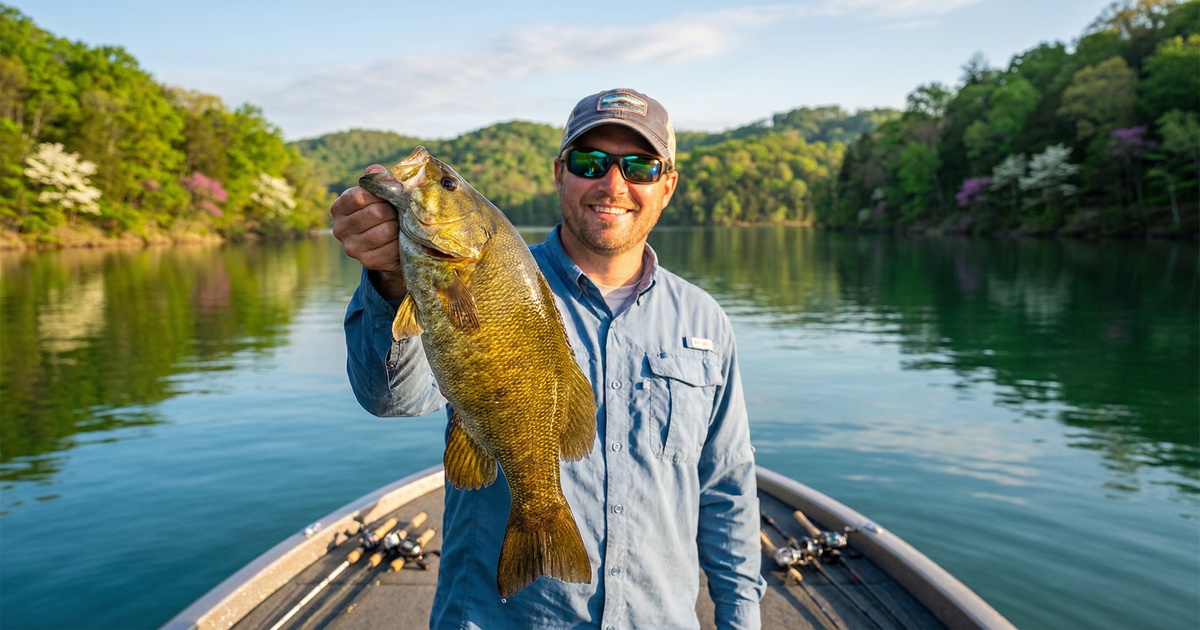
On July 9, 1955, David Hayes landed an 11-pound, 15-ounce smallmouth bass from Dale Hollow. That record has stood for nearly 70 years and remains the IGFA world record for smallmouth bass. It didn't happen by accident. Dale Hollow's combination of deep, clear water, rocky substrate, abundant crayfish forage, and low fishing pressure built the conditions to grow a fish that size.
You're probably not going to break that record. Neither am I. But the same genetics and the same habitat that produced that fish are still here, and five- to six-pound smallmouth are realistic targets in the spring.
Water Quality and Habitat
The exceptional water clarity at Dale Hollow comes from its depth and limited agricultural runoff relative to many Midwest reservoirs. Limestone bluffs, submerged points, and chunk rock flats create ideal smallmouth habitat throughout the lake. Crayfish are abundant. Shad populations are healthy. The fish have food, structure, and clean, well-oxygenated water — the building blocks for serious size.
Check the current fishing forecast for the Dale Hollow area before your trip. Water temperature is one of the primary drivers of spring smallmouth behavior here, and a difference of a few degrees can mean the difference between fish stacked on shallow flats and fish suspended 30 feet down on a main-lake bluff wall.
Understanding Dale Hollow's Spring Smallmouth Patterns
Spring at Dale Hollow runs roughly from late February through late May and plays out in three distinct phases. Miss the timing on one phase and you might spend the day wondering where the fish went.
Pre-Spawn: Late February Through March
Water temperatures in the 48–58°F range kick off the pre-spawn period. Smallmouth begin their migration from deep winter holding areas — main-lake points and bluff walls in 25 to 40 feet — toward secondary points and the mouths of major coves.
This is a transitional period. Fish aren't at peak aggression, but they're actively feeding in preparation for the spawn, and a well-placed presentation will trigger strikes. Slow down your retrieve. Not a little — genuinely slow. A tube jig crawled along rocky bottom at a near-walking pace consistently outfishes faster presentations during this window. I've tested this enough times that I no longer second-guess it.
Key pre-spawn locations:
- Secondary points at the mouths of major creeks
- Chunk rock banks with a gradual slope descending to 15–20 feet
- Submerged roadbeds — Dale Hollow has several remnants from the original valley flooding
- Transition zones where flat bottoms meet rocky drops
Water temperature swings during this period can push fish shallower or deeper from one day to the next. I check HookCast for the barometric trend before heading out — a falling pressure typically slows the pre-spawn bite significantly, while a steady or rising pressure in the days following a front gets fish active again.
Spawn: Mid-April Through Early May
When water temperatures reach 60–65°F, Dale Hollow smallmouth move onto beds. They seek gravel and pea-sized rock in 3 to 12 feet of water, typically on upper flats or in protected coves sheltered from main-lake current.
A note on spawn fishing ethics: Spawning fish are vulnerable. If you locate a bedded fish, practice strict catch and release, minimize handling, and return the fish to the nest as quickly as possible. The male guards eggs and fry, and extended time off the nest can kill an entire spawn. If there are plenty of pre-spawn and post-spawn fish available, consider passing on visible bedded fish altogether — you'll likely have more fun fishing them anyway.
For sight-fishing Dale Hollow's clear, shallow flats during the spawn, a drop shot with a finesse worm or a small tube on a light head are the most reliable approaches. Finesse presentations consistently outperform reaction baits in this clear-water, slow-feeding situation.
Post-Spawn: Mid-May Through June
The post-spawn period is, in my opinion, the most underrated window on Dale Hollow. Males are worn out and hungry after guarding nests for weeks. Females have recovered from the spawn and are feeding hard to rebuild condition. Fish are scattered across a range of depths from the shallows out to 20 feet, which means anglers with different presentations and approaches can all find success.
This is when topwater fishing picks up in earnest — particularly in the first two hours after sunrise and again in the evening. A walking bait worked over rocky points at first light is among the most exciting experiences in freshwater bass fishing. When a five-pound smallmouth detonates on a surface lure in 15 feet of visibility, it stays with you.
Best Lures and Techniques for Dale Hollow Smallmouth
Dale Hollow smallmouth — particularly around popular access points — are well-educated fish. They've seen a lot of presentations. Here's what consistently produces across the spring season.
Tube Jigs
This is the foundational Dale Hollow lure, and for good reason. A 3.5 to 4-inch tube in green pumpkin, smoke, or natural brown on a 3/16 to 3/8 oz jig head covers the majority of spring situations. Fish it on light fluorocarbon — 8 to 10 lb is standard — and crawl it along rocky bottom on points and flats.
The tube mimics a crayfish, which is the dominant forage at Dale Hollow. There's no need to complicate it beyond that.
Drop Shot Rig
For finesse situations — suspended fish, clear shallow water during the spawn, tough post-front conditions — a drop shot with a 4-inch finesse worm or small hand-pour is highly effective. Use 6 to 8 lb fluorocarbon and keep the weight light, half an ounce or less.
Drop shots are at their best during the spawn and anytime fish are visible in clear water but unwilling to commit to a more aggressive presentation.
Ned Rig
The Ned rig — a small mushroom-head jig paired with a stubby buoyant soft plastic — has become a reliable producer on Dale Hollow smallmouth over the past several years. It's nearly impossible to fish incorrectly. Cast it out, let it settle to the bottom, drag it slowly. The plastic stands up off the bottom at rest, a posture that reliably draws strikes from smallmouth in the 8 to 18 foot zone on rocky structure.
Use the Ned rig when the bite is difficult and fish aren't committing to more active presentations.
Topwater
From the post-spawn period through summer, topwater is productive from dawn until roughly 9 AM and again during the evening. Walking baits — Zara Spook, Heddon Super Spook Jr. — and poppers fished on main-lake rocky points are the standard approach. Match the size of your topwater to current forage; smaller profile baits like the Spook Jr. often outperform larger versions when shad are running small in late spring.
Jerkbaits
Cold water and early spring are jerkbait conditions. A 4-inch suspending jerkbait in a natural shad or ghost pattern, fished with extended pauses of 3 to 5 seconds between twitches, triggers strikes from fish that won't chase faster-moving presentations. This is primarily a pre-spawn and early spawn lure at Dale Hollow, most effective before water temps climb consistently above 58°F.
| Lure | Season | Depth Range | Best Conditions |
|---|---|---|---|
| Tube jig | Pre-spawn, spawn | 5–25 ft | Stable weather, clear water |
| Jerkbait | Pre-spawn | 8–18 ft | Cold water, slow bite |
| Drop shot | Spawn, tough bites | 4–20 ft | Post-front, clear water |
| Ned rig | Year-round | 6–18 ft | Difficult conditions |
| Topwater | Post-spawn, summer | 0–3 ft | Early morning, low light |
How to Fish Dale Hollow From a Kayak
A kayak is well-suited to Dale Hollow, and in some ways it's the ideal platform for the water here. Much of the best smallmouth structure — secondary coves, shallow rocky banks, gravel flats — gets bypassed by tournament boats racing to established spots. A quiet kayak approach lets you work those areas without pushing fish off structure before your bait arrives.
Launch Points and Access
Dale Hollow has multiple public boat ramps. The Willow Grove area on the Tennessee side and Hendricks Creek are two commonly used access points. Cell service is unreliable near the lake — download your maps offline before you launch.
The lake is large enough to generate real wave action on open water when wind builds. Don't underestimate it. On my first trip, I got caught on the main lake in a 20 mph wind and had a long, uncomfortable paddle back to the ramp. Check the forecast before launching, stay in sheltered coves when wind is increasing, and wear your PFD — especially in cold spring water.
Spring water temperatures at Dale Hollow can still be dangerously cold in March and April. Cold water shock is a genuine hazard in a capsize. Dress for immersion, not the air temperature.
Finding Fish Without Electronics
If you're running a basic kayak setup without side imaging, the clear water at Dale Hollow works in your favor. You can visually identify productive structure — rocky points, cove mouths, gravel transitions — by reading the shoreline and the angle at which it enters the water. Limestone bluffs that extend below the surface, gradually sloping rocky banks, and wood debris near the waterline are all worth fishing.
Field observation: Secondary coves with some current influence from incoming creek flows consistently hold more pre-spawn fish than dead-end coves with no movement. The slight water flow concentrates baitfish and appears to activate smallmouth feeding earlier in the day.
Reading the Clear Water
The same visibility that makes Dale Hollow productive also means fish can see you. Keep a low profile in the kayak. Position yourself to cast parallel to structure rather than presenting baits directly overhead. Use longer casts and lighter line than you might on a stained-water lake, and take extra time working each spot thoroughly before repositioning.
Planning Your Dale Hollow Trip: Practical Details
Best Months to Visit
- Late March to early April: Pre-spawn; fish feeding actively and moving shallower
- Mid-April to early May: Spawn; sight-fishing opportunities on clear flats
- Mid-May through June: Post-spawn; aggressive feeding and topwater action
Regulations and Licenses
Verify current Tennessee and Kentucky fishing regulations before you launch. Dale Hollow spans both states, and regulations can differ by state and can change from year to year. You'll need a valid fishing license for the state whose waters you're fishing — many anglers carry both. The Tennessee Wildlife Resources Agency and the Kentucky Department of Fish and Wildlife publish current size and creel limits online. Tennessee has historically maintained a 15-inch minimum on Dale Hollow smallmouth, but confirm the current rules before your trip.
Accommodations and Access
Celina, Tennessee is the primary gateway community. Cabins and campgrounds near the lake include options with dock access. Book early for April and May — these are peak months and lodging fills up. Cell service and reliable internet access are limited near the water.
Weather and Barometric Pressure
Spring weather in the Tennessee-Kentucky border region is unpredictable. Cold fronts move through on a roughly weekly cycle during March and April, and each front passage affects the bite. Standard atmospheric pressure is 1013.25 hPa, and I've watched Dale Hollow smallmouth shut down almost completely following a sharp pressure drop of 10 or more hPa within 24 hours.
Allow the lake a day or two to stabilize following a front before expecting consistent action. HookCast's solunar and pressure data is a practical tool to consult in the week leading up to your trip — if a significant front is moving through your planned travel window, schedule flexibility can be the difference between a productive trip and a frustrating one.
Quick-Reference: Dale Hollow Spring Smallmouth Checklist
Before You Go
- [ ] Check Tennessee and Kentucky regulations; secure the appropriate licenses
- [ ] Review the barometric pressure forecast — plan around stable or rising pressure windows
- [ ] Download offline maps; cell service is unreliable near the lake
- [ ] Check water temperature trend — target the 55–70°F window for peak activity
Gear Essentials
- [ ] 8–10 lb fluorocarbon for tube jigs and most bottom presentations
- [ ] Tube jigs in green pumpkin, smoke, and natural brown (3.5–4 inch)
- [ ] Ned rig heads with TRD or similar buoyant plastic
- [ ] Drop shot setup with 6–8 lb fluorocarbon
- [ ] Suspending jerkbait in natural shad or ghost pattern
- [ ] Topwater walking bait (Spook Jr. or similar smaller profile)
On the Water
- [ ] Wear your PFD — spring water is cold and unforgiving
- [ ] Start on rocky secondary points in the morning
- [ ] Slow presentations in cold water and post-front conditions
- [ ] Handle spawning fish with care; minimize time out of the water
- [ ] Keep a low profile in clear water — longer casts, lighter line
Ethics and Access
- [ ] Practice catch and release, especially during the spawn
- [ ] Pack out everything you pack in — Dale Hollow's light development is what makes it special
- [ ] Respect private shoreline; stay within Corps of Engineers public areas
FAQ
Is Dale Hollow Lake the best smallmouth bass lake in the country?
Dale Hollow is widely regarded as one of the premier smallmouth bass fisheries in the United States, and it holds the all-time IGFA world record — an 11-pound, 15-ounce fish landed in 1955. Its clear water, rocky limestone structure, and abundant crayfish forage create ideal conditions for producing large fish. Lakes like Erie and the St. Lawrence River generate high numbers of smallmouth, but Dale Hollow consistently produces trophy-class size, which is a different standard.
What is the best time of year to fish Dale Hollow for smallmouth bass?
The spring window from late March through early June is the most productive period. Pre-spawn fish feed aggressively as water temperatures climb into the mid-50s, and the post-spawn period in May and June brings some of the most active topwater fishing of the year. Summer can produce fish during early morning hours, but spring offers the most favorable combination of shallow, accessible fish and aggressive feeding behavior.
What lures work best for Dale Hollow smallmouth bass?
Tube jigs in natural crayfish colors — green pumpkin, smoke, and brown — are the foundational lure at Dale Hollow and produce consistently throughout the spring. Drop shots and Ned rigs perform well in tough conditions and during the spawn when fish are in clear, shallow water. Post-spawn, suspending jerkbaits and topwater walking baits are effective during low-light periods. Light fluorocarbon — 6 to 10 lb depending on the presentation — is standard for the clear water conditions here.
Do I need a Tennessee fishing license to fish Dale Hollow?
Dale Hollow straddles the Tennessee-Kentucky border, so you need a valid license for whichever state's waters you're fishing. Many anglers who fish both sides of the lake carry licenses for both states. You should also confirm current size and creel limits for smallmouth bass before your trip, as regulations can change. The Tennessee Wildlife Resources Agency (TWRA) website has the most current information for the Tennessee portion of the lake.
Can you kayak fish Dale Hollow Lake?
Yes — Dale Hollow is an excellent kayak fishery. Several public boat ramps provide access, and the lake's coves, rocky secondary points, and shallow structure are well-suited to the quiet, methodical approach a kayak allows. The main lake can develop significant wave action when wind picks up, so stay in sheltered water during spring weather. Because spring water temperatures can still be dangerously cold in March and April, always wear a PFD and dress for immersion when kayaking Dale Hollow early in the season.