Florida Keys Bonefish Fishing: Flats Fishing Secrets from Key Largo to Key West
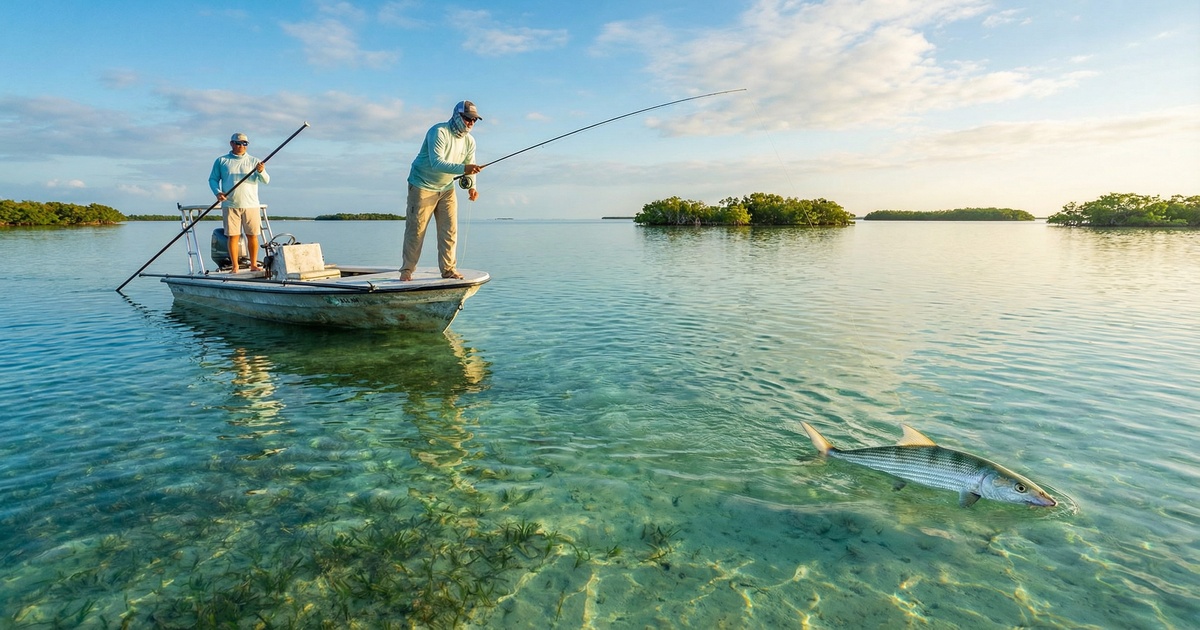
You're poling across a shallow flat at low light, the water so clear you can count the grass blades on the bottom. Then your guide whispers, "Ten o'clock, sixty feet, three bones." Your heart rate doubles. You make the cast. The lead fish tips up, tails, eats — and you're tight to one of the fastest fish in the ocean.
That's bonefish. And the Florida Keys is where most East Coast anglers get their first taste of flats fishing.
I came to the Keys the first time as a marine biology student chasing research data on seagrass productivity. I left completely addicted to chasing bonefish on a fly rod. Since then I've spent time on the flats from Blackwater Sound down to the Content Keys, and I've learned that success here isn't luck — it's reading water, understanding tidal movement, and knowing where fish want to be at different points in the tidal cycle.
Here's what I know.
Why the Florida Keys Are Ground Zero for Bonefish
The Florida Keys sit at a unique intersection of Atlantic Ocean, Gulf of Mexico, and Florida Bay — and that geography creates an enormous network of shallow-water habitat. The backcountry flats stretching from Key Largo toward Key West are, in many places, less than two feet deep at low tide. That's prime bonefish real estate.
Bonefish (Albula vulpes) are a tropical species that thrive in warm, shallow water. They feed primarily on crustaceans, worms, and small mollusks that live in the marl, sand, and grass flats. NOAA Fisheries recognizes them as a highly migratory coastal species, and in Florida they enjoy catch-and-release only status — which is a big reason why the Keys fishery remains as strong as it does.
Spring — roughly March through June — is widely considered the best window for Keys bonefish. Water temperatures are climbing back toward the mid-70s after winter, and fish that pulled into deeper water during cold fronts start pushing up onto the flats again in earnest. By April, you'll find bones actively feeding throughout the day, not just during low-light windows.
Key Largo to Islamorada: The Upper Keys Advantage
The upper Keys offer some of the most accessible bonefish flats on the East Coast side. Card Sound, Blackwater Sound, and the oceanside flats off Key Largo hold fish year-round, but spring sees real numbers. Islamorada — often called the Sport Fishing Capital of the World — is the hub of the bonefishing world in this stretch.
The flats here tend to have good mixed structure: hard sand bottom, scattered turtle grass, and scattered coral rubble. That variety holds bait, which holds bones.
The Middle Keys and Content Keys Backcountry
From Marathon down through the Content Keys and Sugarloaf, the backcountry opens up into a maze of flats, channels, and mangrove islands. This is where I've seen the biggest concentrations of bonefish in spring, especially as fish stage before moving toward spawning aggregations offshore. It's harder to navigate if you don't know the water, but the reward is often less pressure and larger average fish size.
Key West and the Lower Keys
Key West's oceanside flats — Mule Key, Woman Key, the backcountry toward Boca Grande — produce excellent spring fishing. The lower Keys backcountry connects to the Marquesas, which holds some of the biggest bonefish in Florida. Fish in the four to eight pound range aren't unusual out here. If you've got the time and a good guide, this area is worth the extra miles.
How Tides Drive Bonefish Behavior (This Is Everything)
If there's one thing I want every angler reading this to take away, it's this: tides are not background information for bonefish fishing — they are the entire game.
Bonefish use tidal movement the way stripers use current on the East Coast. The incoming tide pushes water over the flats, activating the invertebrate prey that live in the substrate and drawing predators in from the deeper edges. The outgoing tide funnels fish back toward channels and cuts, often creating ambush feeding situations.
Here's a simplified breakdown of how I read a tidal cycle on a Keys flat:
| Tide Stage | Bonefish Position | Best Approach |
|---|---|---|
| Early incoming | Edges of flat, channel mouths | Wade or pole the edge |
| Mid incoming | Moving up onto flat, tailing | Follow the flood, cast ahead of moving fish |
| High tide | Dispersed across flat, in grass | Tougher — look for edges and cuts |
| Early outgoing | Consolidating near exits | Station at channel mouths |
| Low tide | Off flat entirely or in deeper potholes | Sight fish potholes and sandy depressions |
The most productive period I've found, based on years of watching tidal behavior on these flats, is the first two hours of an incoming tide — especially on a spring tide (the bigger tidal swings around new and full moons). Fish are hungry, aggressive, and moving in predictable directions.
Field observation: On a flat I fish near Islamorada, bonefish consistently enter from the same two cuts during the incoming tide. They don't always feed in the same spots, but they almost always come through those cuts. Once I understood that, I stopped chasing fish across the flat and started waiting.
You can track the exact tide stage for any backcountry location using NOAA tidal predictions — plug in your target flat's nearest station and plan your morning around it. I also pull up tide charts for your area on HookCast before every trip to layer in the solunar timing and see if I've got a major or minor feeding period lined up with the incoming push. When those two things align — the right tide stage and a solunar peak — you're looking at some of the most consistent action the Keys can offer.
Barometric Pressure and Bonefish
Bonefish are notoriously sensitive to pressure changes. A falling barometer ahead of a cold front will shut down a flat that was lit up the day before. Standard atmospheric pressure sits at 1013.25 hPa per NOAA — and in my experience, anything dropping more than a few millibars over 24 hours puts fish into neutral or off the flat entirely.
Post-front conditions — stable, rising pressure, clear skies — are actually excellent for sight fishing because visibility is exceptional. But you need the water to warm back up, and that takes a day or two after a front passes. Check current pressure on HookCast to see where the barometer is trending before you make the drive down US-1.
Reading Flats Structure Like a Marine Biologist
I spent two years studying seagrass bed distribution on Florida's Gulf Coast as a grad student, and I can tell you that not all grass is equal — and bonefish know it.
Dense turtle grass (Thalassia testudinum) beds hold enormous populations of shrimp, crabs, and worms. Bonefish root through the grass edges, creating the classic "tailing" behavior sight-fishers love. When you see a tail waving above the surface, that fish is nose-down in the substrate, actively rooting for food.
Sandy pothole flats are different. These are depressions in the seagrass or marl bottom that concentrate invertebrates and create natural feeding stations. In my experience, potholes produce fish throughout the tidal cycle — even at low tide when bones have backed off most of the flat. If you're on a guided trip and your guide is poling slowly across a flat looking into every pothole, that's exactly right. Those spots often produce the best shots of the day.
Mangrove edges deserve more attention than most visiting anglers give them. On the incoming tide, bonefish push right up into the mangrove roots, chasing small crabs and shrimp. You need accurate casting — no room for sloppy loops — but the fish right against the roots are usually feeding confidently.
Water Color as a Visual Guide
Learning to read water color is one of the highest-leverage skills on a flat:
- Dark green/brown: Dense seagrass, often holds fish but harder to sight
- Light green/turquoise: Sandy or marl bottom with sparse grass — best sight fishing conditions
- White/milky: Marl or sand flat, often very shallow, prime tailing territory
- Gray-blue: Deeper water, channel edge — where fish retreat on the outgoing tide
Polarized sunglasses are non-negotiable. Amber or copper lenses work well in the low-angle morning light that defines most flats sessions. Glass lenses over plastic if you can afford them — the optical clarity difference matters when you're trying to pick out a shadow moving across a grass bed at sixty feet.
Gear, Flies, and Presentations That Work in the Keys
Bonefish are not complicated feeders, but they are spooky. The presentation — especially the depth and speed of the sink — matters more than the pattern in most cases.
Fly rod setup: A 9-foot, 8-weight is the standard Keys bonefish rod. You'll need a weight-forward floating line built for tropical distances — stiff mono core, since nylon fly lines go limp in Florida heat. A 9-foot leader tapered to 10-12 lb fluorocarbon tippet covers most situations.
Essential flies:
- Crazy Charlie (tan/pink): The original bonefish fly, still works everywhere
- Gotcha: Excellent on sand flats, great sink rate
- Spawning Shrimp: Especially effective in spring when actual shrimp spawns are happening
- EP Crab patterns: For tailing fish in the grass, a slow-sinking crab fly is hard to beat
The presentation rule: Lead the fish. In clear, shallow water, bonefish detect a fly landing too close and will spook immediately. Cast 6-8 feet ahead of the fish's travel direction, let the fly sink to the fish's level, and begin a slow strip retrieve as the fish approaches. The eat is often subtle — a quick stop, a change in direction, or the line going tight without drama.
Pro tip: Strip strike, never trout set. When you feel the eat, strip hard with your line hand while keeping the rod tip low and pointed at the fish. A trout set will pull the fly out of the fish's mouth 90% of the time.
Planning Your Spring Keys Trip: Logistics and Timing
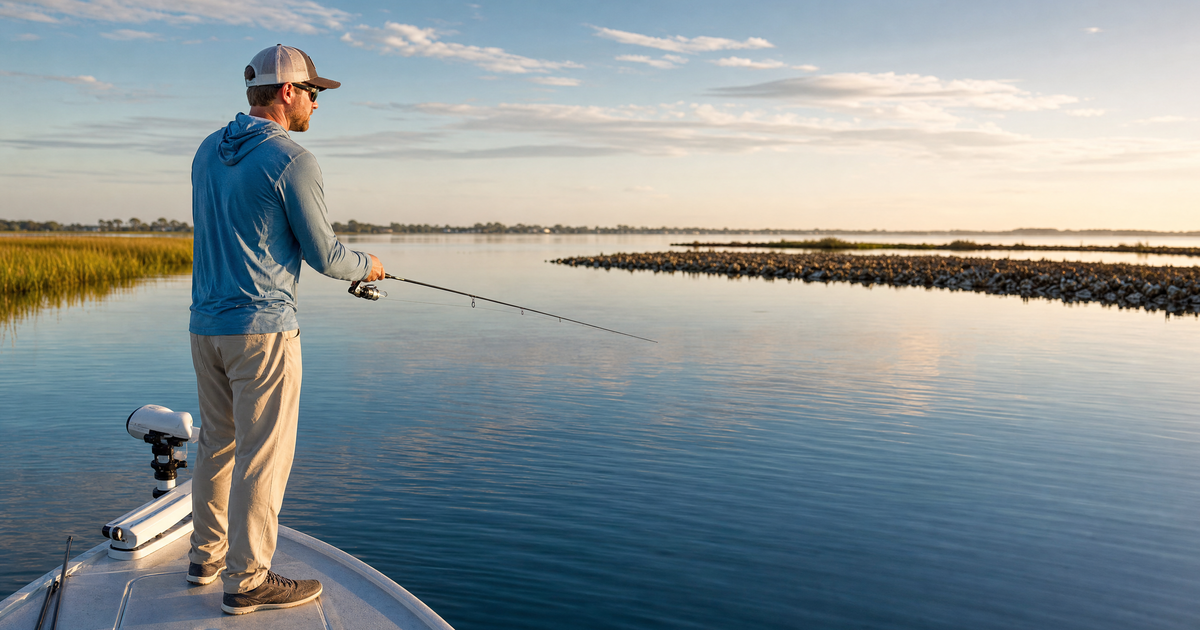
The Keys run along US-1, which means access is straightforward — but the flats themselves require a shallow draft skiff or a wade approach. Most visiting anglers hire a guide for at least their first few days, and I strongly recommend it. These are big, featureless-looking flats to an outsider, and a guide who knows where the fish stage at different tidal stages will save you an enormous amount of time.
Best spring months: Mid-March through May. April is particularly good — stable weather, comfortable temperatures, and fish actively feeding throughout the day.
Book guide trips early. Top Keys guides book 6-12 months out, especially for spring. Islamorada-based guides typically charge $650-$850 for a full day; Key West guides run a bit higher. Worth every dollar if you're serious about the fishery.
Tide timing logistics: Most Keys guides schedule departure around the tide, not the clock. Don't be surprised if your trip starts at 6 AM on one day and 10 AM the next — the guide is chasing the incoming window.
Wind matters: Sustained wind over 15 mph makes sight fishing significantly harder. Trade winds are common in the Keys, but spring typically offers calmer mornings. Check the fishing forecast for Key West before you finalize your trip days — you want low wind for the sight fishing, and mornings are almost always calmer than afternoons.
Key Takeaways: Florida Keys Bonefish Quick Reference
✅ Spring (March–May) is the prime window — water temps rising, fish active throughout the day
✅ First two hours of incoming tide is your highest-percentage window on most flats
✅ Solunar peaks + incoming tide = best possible scenario; layer these before you pick your day
✅ Falling barometer = tough bite. Wait for stable or rising pressure post-front
✅ Read the water: Light-colored sand/marl flats offer the best sight fishing; potholes produce all day
✅ Lead the fish 6-8 feet, let the fly sink, slow strip — and strip strike when you feel the eat
✅ Hire a guide for your first few trips in a new area; the local knowledge shortcut is worth the cost
✅ Polarized glass lenses over plastic whenever possible — sight fishing demands optical clarity
✅ Book early — top Keys guides fill up months ahead, especially for the spring season
FAQ
What is the best time of year to fish for bonefish in the Florida Keys?
Spring — specifically mid-March through May — is considered the peak season for bonefish in the Florida Keys. Water temperatures climb back into the ideal feeding range in the mid-70s Fahrenheit, fish push actively onto the flats after any winter cold fronts, and weather conditions are generally more stable than summer. April is a particularly productive month, with fish feeding throughout the day rather than only during low-light windows.
How do tides affect bonefish fishing on the flats?
Tides are the single most important factor in bonefish fishing. The incoming tide pushes water over shallow flats, activating the shrimp, crabs, and worms that bonefish feed on, and draws fish in from deeper channels. The first two hours of an incoming tide — especially on a spring tide near a new or full moon — typically produce the most aggressive, predictable feeding behavior. On the outgoing tide, fish consolidate near channel exits and cuts, which can also create productive ambush opportunities.
Do I need a guide to fish for bonefish in the Florida Keys?
A guide is strongly recommended, especially for first-time visitors to the Keys. The flats are vast, and productive spots depend on subtle bottom structure, tidal timing, and local knowledge that takes years to develop. Top Islamorada and Key West guides typically charge $650-$850 per day, and they book months in advance for the spring season. Even experienced flats anglers often fish with a guide when exploring a new area to shorten the learning curve significantly.
What flies work best for Florida Keys bonefish?
The most consistently productive bonefish flies in the Keys are the Crazy Charlie (in tan or pink), the Gotcha, spawning shrimp patterns, and EP-style crab flies. Fly selection matters less than presentation — the fly needs to sink to the fish's level quickly and be retrieved slowly as the fish approaches. In spring, shrimp patterns are especially effective because actual shrimp spawning events are happening on the flats, and bonefish key in on that food source.
What gear do I need for flats fishing in the Florida Keys?
A 9-foot, 8-weight fly rod is the standard setup for Keys bonefish, paired with a weight-forward floating line designed for tropical use — tropical lines have stiffer cores that don't go limp in Florida heat. A 9-foot tapered leader to 10-12 lb fluorocarbon tippet handles most situations. Polarized sunglasses with glass lenses in amber or copper tint are essential for spotting fish in the flat's glare. Light, breathable wading gear and reef-safe sunscreen round out the basics.