Florida Tarpon Season: When & Where to Find the Silver King
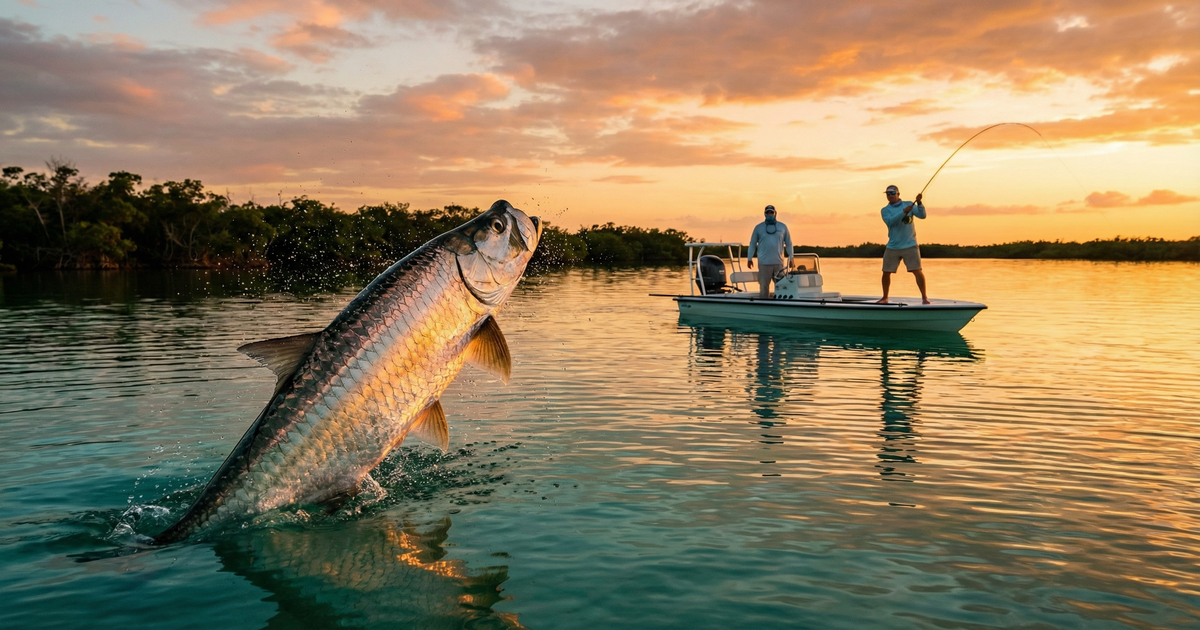
The first time I watched a tarpon blow up on a crab in Boca Grande Pass, I understood immediately why anglers call it the greatest show in saltwater fishing. That fish — easily 150 pounds — cleared the water by three feet, shaking like it was trying to rattle the hook free through sheer force of personality. My client in the bow couldn't even reel for a full minute. He just stood there with his mouth open.
That scene plays out thousands of times every spring along Florida's Gulf and Atlantic coasts. And if you've ever wanted to be part of it — or you've shown up and found nothing but flat water and frustration — this guide is for you. Florida tarpon fishing isn't just about luck. It's about knowing the migration, reading the tides, and being in the right place when that massive prehistoric fish decides to show up.
Understanding Florida's Tarpon Migration
Tarpon (Megalops atlanticus) are one of the most studied fish in the Southeast, and what we know about their movement along the Florida coast is genuinely useful for anglers.
They follow water temperature. Tarpon prefer water between 74°F and 88°F. As Gulf and Atlantic waters warm through late spring, fish that spent the winter in deeper offshore haunts or further south start pushing north and inshore. Think of the Florida coast less like a fixed address and more like a conveyor belt — fish roll through in waves, staging in certain areas before continuing their migration.
The migration has a loose but predictable sequence:
- February–March: First tarpon appear in the Florida Keys and South Florida flats. These are early-season fish, often smaller "juvenile" tarpon mixed with some giants. Water temps are still variable — a cold snap can shut the bite down overnight.
- April–May: The main migration begins in earnest. Boca Grande Pass lights up. Tampa Bay sees action. Fish are stacking.
- May–June: Peak season along most of the Gulf Coast and into the Panhandle. Atlantic Coast fish are moving through the St. Lucie Inlet area and pushing north.
- June–July: Tarpon spread further north. Some fish push all the way to the Carolinas by midsummer — which is something I watch closely on the Outer Banks side.
- August–September: Outmigration begins. Fish start reversing course as water temps peak and begin to drop.
The critical thing to understand: tarpon aren't spread evenly across all of Florida at once. Knowing which part of the migration you're targeting dictates where you go and what tactics work.
Where to Fish: The Top Florida Tarpon Locations
Boca Grande Pass — The Capital of Tarpon Fishing
If you ask any serious tarpon angler to name one spot, they'll say Boca Grande. The pass connects Charlotte Harbor to the Gulf of Mexico, and its deep channel — dropping to 80 feet in places — creates an underwater highway that tarpon have used for thousands of years.
Why it works: The pass channels enormous tidal flow, which concentrates crabs and baitfish at predictable points. Tarpon stage here before and after spawning offshore, stacking up in massive numbers from May through July. On a good tide in peak season, you might see hundreds of fish rolling on the surface.
How they fish it: Most guides work the bottom of the channel with live or dead crabs on jig heads, drifting with the tidal current. The fish are feeding on pass crabs that get swept through with the tide. Knowing the tide is everything here — you want to be in the pass as the tide transitions, especially the outgoing tide when bait is funneling out of Charlotte Harbor.
Pro tip: The boat traffic at Boca Grande during peak season is intense. If you're new to the area, hire a local guide for at least one trip before going DIY. The etiquette and the logistics of fishing a busy pass with 200 other boats is its own skill set.
The Florida Keys — Early Season Sight Fishing
The Keys are where serious fly fishermen make their pilgrimages. The gin-clear shallow flats from Islamorada down through the backcountry of Key West offer some of the most technical and rewarding tarpon fishing anywhere in the world.
What makes it different: You're sight fishing. Tarpon roll on the surface or cruise just under it, and you're presenting to visible fish. This changes everything about the approach — presentation matters more than location, and a spooked fish is a lost opportunity.
Best areas:
- Islamorada: The traditional heart of Keys tarpon fishing. Lots of guides, established permit and tarpon flats. April through June.
- Key West backcountry: More remote flats, less pressure. Good for anglers who want to get away from crowds. Same season window.
- Bahia Honda area: Underrated stretch with good tarpon movement during migration.
The tidal dynamic in the Keys is different from Boca Grande. On the flats, you're looking for tarpon on incoming tides as fish push onto the shallows to feed, and as tide drops you're often repositioning to deeper edges where fish retreat.
Tampa Bay and Charlotte Harbor
These two interconnected estuary systems punch above their weight for tarpon. Less glamorous than the Keys or Boca Grande, but accessible and productive — especially for anglers who want to target tarpon from bridges, shorelines, or smaller boats.
Tampa Bay: The Sunshine Skyway Bridge is famous for tarpon during the night tidal flows from April into summer. Fishing bridge lights at night with live mullet or threadfin herring during outgoing tides is classic Tampa Bay tarpon fishing.
Charlotte Harbor: The harbor itself holds tarpon all season. Flats adjacent to Gasparilla Island, the Myakka River mouth, and the Harbor's eastern grass flats all produce. Less intense boat pressure than the pass itself.
St. Lucie Inlet and the Atlantic Coast
The Atlantic side of Florida gets overlooked in most tarpon guides, but the St. Lucie Inlet area — and the stretch from Stuart down through Palm Beach — sees excellent tarpon action from March through June as fish migrate north.
How to fish it: Inlet fishing here is similar to Boca Grande in concept — tides moving through a cut concentrate fish. Live mullet, threadfin, or blue crabs on the drop off the inlet rocks during outgoing tides puts you in the game.
Tides and Timing: The Real Engine of Tarpon Success
I say this about every species I guide for, but it's especially true for tarpon: the tide doesn't care what day of the week it is, but the fish do.
Tarpon are not random. They respond to tidal flow because tidal flow moves their food. Understanding the mechanics saves you hours of fishless water.
The Tidal Sweet Spot
For most Florida tarpon locations, the last two hours of outgoing tide and the first hour of incoming is the most productive window. Here's why:
As water drains out of a bay, harbor, or inlet, it sweeps baitfish and crabs along with it. Tarpon position at the mouth of these flows — passes, cuts, creek mouths — and intercept the food with minimal effort. They're apex ambush predators and they're lazy about it in the best way.
The incoming tide brings fresh, oxygenated water and often triggers surface rolling behavior — tarpon venting gas from their swim bladders as they adjust to changing conditions. This is often misread as feeding behavior, but rolling fish aren't always eating fish. Watch for subsurface pushing or fin-cutting behavior as a better indicator of active feeding mode.
Solunar Peaks and Moon Phase
Major and minor solunar periods align with tarpon activity more consistently than with most inshore species. I've seen the bite absolutely light up 20 minutes before a major solunar peak and die just as fast afterward. I pull up HookCast's solunar calendar when I'm planning multi-day trips — it's one of the better ways to identify which tide cycle of the day to prioritize.
Full and new moon phases drive the strongest tidal swings, which generally means better bait movement and more active tarpon. New moon tides in May and June at Boca Grande are the stuff of legend.
Reading Tarpon Behavior
| Behavior | What It Means |
|---|---|
| Rolling on surface | Adjusting to pressure/oxygen changes; may or may not be feeding |
| Daisy chaining | Pre-spawn behavior, often not feeding — impressive to watch, tough to catch |
| Crashing bait | Active feeding mode — get your presentation in the zone |
| Single fish pushing fast | Traveling fish, usually not interested in eating |
| Laid-up fish barely moving | Can be sight-fished, but requires delicate presentation |
Gear, Rigs, and Baits That Actually Work
Florida tarpon fishing isn't the place for light tackle. These fish average 80–130 pounds, jump repeatedly, and will destroy you on a 20-pound outfit.
Spinning vs. Conventional
Spinning: Most inshore and flats fishing is done on spinning gear. A 7'6"–8' medium-heavy rod rated 30–50 lb with a 5000–6000 series reel loaded with 50 lb braid and a 60–80 lb fluorocarbon leader covers most situations.
Conventional: For pass fishing — Boca Grande style — heavy conventional setups dominate. Heavier baits, deeper presentations, and the leverage you need when a 150-pound fish decides to run through a fleet of boats.
Terminal Tackle
- Live bait leader: 5–6 feet of 60–80 lb fluorocarbon, Owner or Gamakatsu hooks in 5/0–7/0 depending on bait size
- Crab rigs: Jig head with a screw-lock system for live crabs, 1/2–2 oz depending on current
- Artificial: DOA Baitbuster, large swimbaits, and topwater plugs work — but live bait outperforms significantly during peak season
Top Baits by Location
- Boca Grande: Live pass crabs, dead crabs, threadfin herring
- Keys flats: Live crabs, live mullet, scaled sardines; fly patterns — tarpon toads, EP crabs, Enrico puglisi patterns in chartreuse, black, or purple
- Tampa Bay / bridges: Live mullet, threadfin herring, pilchards
- Inlets (Atlantic side): Live mullet, blue crabs, live pinfish
Planning Your Florida Tarpon Trip
Licenses and Regulations
Florida requires a Tarpon Tag ($50 resident, $51.50 non-resident) if you intend to harvest or temporarily remove a tarpon from the water for measurement purposes. For catch-and-release — which is by far the dominant practice — you don't need the tag, just a standard saltwater fishing license.
Regulations change. Check the Florida Fish and Wildlife Conservation Commission (FWC) website before your trip.
When to Book
If you're targeting Boca Grande during peak season (May–June), guides book 6–12 months in advance. This isn't exaggeration. Same story in Islamorada for the premium flats guides. Book early or be prepared to fish from a pier, bridge, or wade the edges on your own.
Checking Conditions Before You Go
Tarpon fishing — especially sight fishing on the flats — is weather dependent in ways that bluefishing on the surf just isn't. Wind above 15 knots wipes out visibility on the flats. A cold front drops water temps and shuts the bite down for days. Check wind, barometric trend, water temp, and tides together before making the drive.
I use HookCast for the tide and pressure tracking — it puts the barometric trend and tide cycle on the same screen, which matters when you're trying to figure out if a moving front will catch you mid-trip.
Key Takeaways: Florida Tarpon Season at a Glance
✓ Best window: Mid-April through mid-July for peak action statewide
✓ Location by timing:
- Keys & South Florida — February through May (early season, flats fishing)
- Boca Grande — May through July (peak migration, pass fishing)
- Tampa Bay/Charlotte Harbor — April through August
- Atlantic inlets (Stuart/Palm Beach) — March through June
✓ Tidal priority: Last two hours outgoing, first hour incoming for most pass/inlet locations; incoming on flats
✓ Moon phase: New and full moon periods drive strongest tidal flow and most active fish
✓ Essential gear: 50 lb braid minimum, 60–80 lb fluorocarbon leader, strong hooks — tarpon will test every connection in your system
✓ Top baits: Live crabs (Boca Grande), live mullet (inlets, bridges), scaled sardines and threadfin (flats)
✓ Book ahead: Quality guides in peak locations book up fast — plan 6+ months out
✓ Regulations: Tarpon tag required if removing from water; always practice proper catch-and-release
The Silver King earned that name. When a 120-pound tarpon launches itself six feet in the air 40 yards from your boat, you understand pretty quickly why anglers plan their whole year around this fish. Know the season, know the tide, and get yourself to the right piece of water at the right time — the rest takes care of itself.
FAQ
When is the best time to fish for tarpon in Florida?
Peak tarpon season along Florida's Gulf Coast runs from May through June, when fish are most concentrated and actively migrating. However, the season begins as early as February in the Florida Keys and South Florida, and action can continue through September as fish begin their outmigration.
What water temperature do tarpon prefer?
Tarpon thrive in water temperatures between 74°F and 88°F. Monitoring water temps is one of the most reliable ways to predict tarpon activity — a sudden cold snap can shut the bite down quickly, while warming water in spring triggers the northward migration.
Where is the best place in Florida to catch tarpon?
Boca Grande Pass is widely considered the top tarpon destination in Florida, and arguably the world. Its deep channel connects Charlotte Harbor to the Gulf of Mexico and has served as a tarpon migration corridor for thousands of years. Other productive areas include Tampa Bay, the Florida Keys, and St. Lucie Inlet on the Atlantic Coast.
Do tarpon stay in Florida year-round?
No. While some tarpon may remain in Florida's warmer southern waters during winter, the majority follow a seasonal migration pattern. Fish push inshore and northward as waters warm in spring and summer, with some reaching as far as the Carolinas by midsummer before reversing course in late summer and fall.
What months should I avoid if I want to target tarpon in Florida?
November through January are generally the slowest months for tarpon fishing in Florida, as most fish have moved offshore or migrated south to warmer waters. Water temperatures during this period typically fall below the 74°F threshold that tarpon prefer.