Flounder Fishing Guide: Doormat Tactics for Fluke from New Jersey to the Carolinas
It's early June. You're drifting a channel edge in Barnegat Bay, watching the rod tip. The guy in the next boat over just boated his third keeper. You've had three short bites and one missed hook-set. Same spot, same tide, roughly the same rig.
What's the difference?
Usually it comes down to drift speed, bait presentation, and knowing exactly where on that bottom the flounder are actually sitting. Summer flounder — called fluke from Jersey to Long Island, flounder once you get into the Carolinas — are ambush predators with a very specific game plan. They want current. They want structure. They want something to hide behind and something to eat. Once you understand how they think, everything else starts to make sense.
I fish freshwater primarily — bass and walleye out of a kayak in the Midwest — but I've made enough trips to the Jersey shore and the Outer Banks to know what separates productive days from frustrating ones. This guide covers the core tactics that consistently produce fish from Sandy Hook south through Cape Hatteras.
Understanding Summer Flounder: How They Hunt and Where They Hold
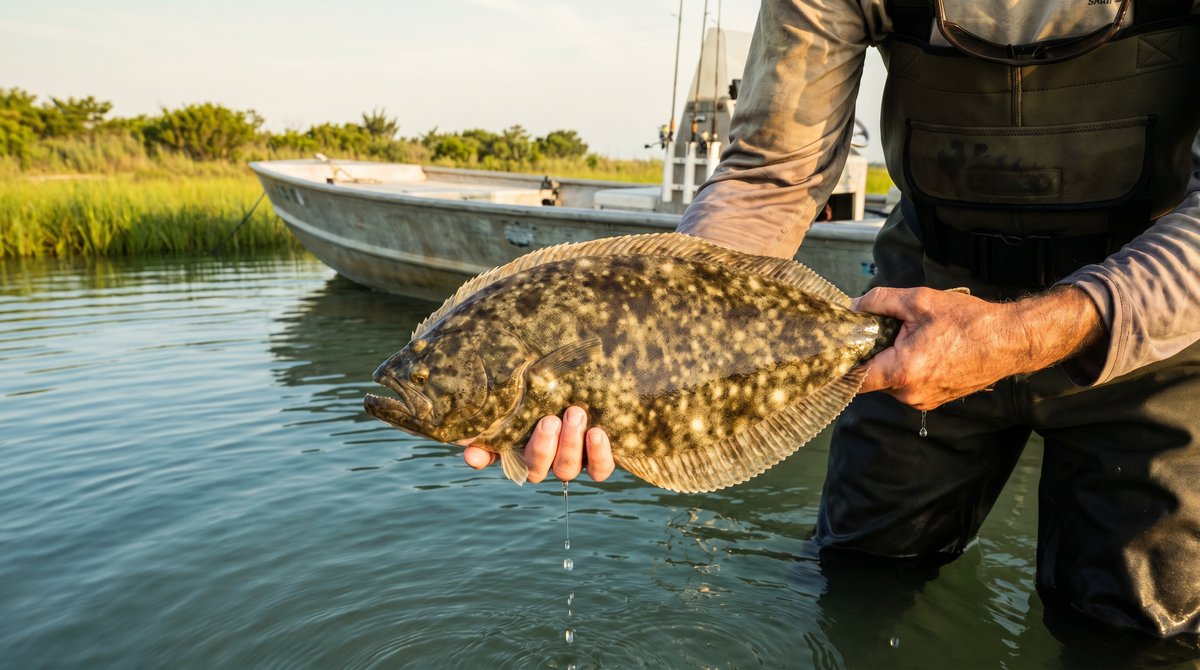
Before we get into rigs and spots, it helps to understand what summer flounder (Paralichthys dentatus) are actually doing when you're trying to catch them. Summer flounder are highly migratory ambush predators that push inshore during warmer months — typically April through October — then retreat to deeper offshore water in winter.
Their whole body plan is built around the bottom. Both eyes sit on top of the head. They shift color to blend with sand or mud. They lay flat and wait for baitfish, shrimp, or squid to pass within reach, then strike hard and fast — far more aggressively than most people expect from a flatfish.
What "Structure" Actually Means for Flounder
When flounder anglers talk about structure, they mean anything that interrupts current flow or creates a defensible holding position:
- Channel edges — the seam where deep meets shallow concentrates both current and baitfish
- Inlet mouths — heavy current, heavy baitfish traffic, consistent action
- Drop-offs near grass flats — flounder stage at the lip waiting for baitfish pushed off the shallow
- Dock pilings and jetty rocks — hard current breaks that flounder stack behind
- Sand holes — subtle depressions in otherwise flat bottom that collect fish
Think of it the way I think about bass holding water: there's always a reason a fish is in a specific spot, and that reason almost always comes back to current and ambush position.
Seasonal Timing Along the Mid-Atlantic Coast
The spring migration begins as water temperatures climb through the 55–65°F range. Flounder push into backbays, estuaries, and nearshore structure — and they show up progressively later as you move north.
The most productive windows by region:
- New Jersey / Delaware Bay: Mid-May through July
- Chesapeake Bay tributaries: April into early June
- North Carolina / Outer Banks: Late March through June
Field note: In my experience fishing Chincoteague and the Outer Banks in late April, the morning incoming tide over sand and shell bottom is as reliable as anything I've found for spring flounder. Fish are actively pushing in and feeding, not just holding.
Reading the Tide: The Single Biggest Variable
If there's one thing that separates consistent flounder fishermen from anglers who just get lucky, it's tide awareness. Flounder are ambush predators that depend on current to deliver food to them. No current, no feeding motivation.
The rule is simple: moving water produces active fish.
Incoming vs. Outgoing — Where to Fish Each
Both tides can produce. The difference is where the fish position themselves and how aggressively they respond.
Incoming tide:
Flounder push up into backbays and shallow flats. Target the edges of grass beds, channel lips, and creek mouths. Fish are moving and feeding actively — presentations can be more assertive.
Outgoing tide:
Baitfish flush out of creeks and flats back into main channels. Flounder set up at narrows, channel bends, and inlet mouths to intercept them. Slower, more deliberate presentations tend to work better here.
The weakest period is dead slack at the top and bottom of the tide. You can still pick up fish, but the bite noticeably drops off. Build your day around the moving portions of the cycle — I pull up tide charts for my target area before I decide which section of a bay or inlet to fish. Choosing the right window versus the wrong one is often the whole difference between a productive morning and a slow one.
Drift Speed and Bottom Contact
This is where a lot of anglers quietly lose fish they never knew they had. Flounder want your bait moving — but not fast. Roughly 0.5 to 1.5 mph is the productive range in most situations. Faster and the bait lifts off the bottom. Slower and it looks dead.
In heavy-current areas like inlet mouths, you may need extra weight to maintain bottom contact. In calmer backbay water, lighter rigging and a slow natural drift is usually enough.
Flounder Rigs: Simple Setups, Precise Execution
You don't need a dozen different configurations. Most productive fluke fishing comes down to two or three core rigs, and the execution details within each matter more than which rig you're running.
Sliding Sinker Rig (Carolina-Style Bottom Rig)
The foundational flounder setup:
- Egg sinker or fish-finder sinker (1–3 oz depending on current)
- 18–24" fluorocarbon leader (20–30 lb)
- Wide-gap or Kahle hook, size 2/0 to 4/0
- Bait: squid strip, live mummichog, spot, or mud minnow
The sliding sinker lets a fish mouth the bait without feeling resistance — important because flounder often sample before committing.
Bucktail Jig — The Classic Fluke Producer
The bucktail jig is arguably the most effective artificial for Mid-Atlantic flounder. Quarter-ounce to one-ounce depending on depth and current, with white and chartreuse being the most versatile colors.
The retrieve that consistently works: lift, drop, drag. Hop it off the bottom, let it flutter down, then drag it slowly before the next hop. Flounder typically hit on the drop or just as the jig settles.
Sweeten the bucktail with a Gulp! Alive shrimp or minnow trailer. This combination reliably outproduces either the jig or the soft plastic alone.
Tandem / Fluke Killer Rig
Popular in New Jersey and New York waters — a two-hook setup with a bucktail or spinner above and a baited hook below. The extra flash and movement works well in stained water or when fish are being selective.
| Rig Type | Best Conditions | Typical Bait or Lure |
|---|---|---|
| Sliding sinker | Slow drift, backbay | Live minnow, squid strip |
| Bucktail jig | Channel edges, inlets | Gulp! trailer, strip bait |
| Tandem / Fluke Killer | Stained water, deep channels | Spinner + squid |
| Drop-shot variation | Dock structure, tight spots | Small paddle tail |
Where to Fish: Region-by-Region Habitat Breakdown
New Jersey and Delaware Bay
Jersey fluke fishing is built around inlet access and bay structure. The most consistently productive water includes:
- Barnegat Inlet and surrounding bay — channel drop-offs, structure edges, and the current rips at the inlet mouth
- Great Bay — shallow backbay drifting for fish that push well off the main channels
- Delaware Bay — large fish move through in May and June; structure near ship channels holds them
Regulations in New Jersey set minimum size and bag limits that have changed frequently in recent years. Check New Jersey DEP Fish & Wildlife before every trip — fluke management in the region has been particularly variable.
Early-season tip: A live mummichog (mud minnow) on a standard bottom rig is hard to beat when water temps are still climbing and fish are transitioning. Local bait shops near Great Bay and Barnegat keep them in stock when they're running.
Chesapeake Bay and Its Tributaries
The Chesapeake system is enormous, and flounder use it differently than most anglers expect. They concentrate near:
- Bay Bridge area — deep structure and strong current edges
- Lower bay tributaries (James, York, Rappahannock rivers) — tidal creek mouths in spring
- Inlet cuts near the Eastern Shore — current-focused holding water
Spring flounder in the Chesapeake often respond well to soft crab or soft crab belly strips — a regional bait worth asking about at local tackle shops. The Chesapeake Bay Program tracks water quality and ecosystem conditions that influence baitfish movement, which in turn drives flounder location.
Outer Banks and North Carolina Sounds
This is where early-season fishing gets genuinely good. Pamlico Sound and Albemarle Sound warm faster than the open Atlantic, and flounder push into the sound system earlier than most anglers plan for.
Key areas:
- Oregon Inlet — the rip at the inlet is one of the most productive flounder spots on the East Coast during late spring
- Pamlico Sound grass flats — slow drifting over shallow sand and grass in late afternoon
- Nearshore structure off Cape Hatteras — larger fish in slightly deeper water as summer develops
Before nearshore trips out of the Outer Banks, check NOAA tidal predictions to time your inlet crossing and understand current windows in the sound. Oregon Inlet gets genuinely dangerous when wind opposes outgoing tide — shoaling and current can create rough conditions very quickly.
Safety note: If you're running Oregon Inlet or Cape Hatteras Inlet by boat, take the forecast seriously. File a float plan, wear your life jacket through the inlet, and don't push marginal conditions. This is not a place to get casual.
Presentation Details That Turn Average Days Into Good Ones
The fundamentals of where and when are established. Now it comes down to execution.
Controlling Drift Speed
Use a drift sock or sea anchor when wind or current pushes you through a zone too quickly. Fishing from a kayak, I use a small drag bag off the stern for the same purpose. The goal is bait that's scratching the bottom, not skipping over it. If you're moving through a productive-looking zone in under a minute, you're going too fast.
Timing the Hook-Set
Flounder are notorious for mouthing bait before committing. Setting the hook the moment you feel contact is the number one reason anglers miss fish. When you feel that initial tap-tap-tap:
- Drop the rod tip and feed slack
- Count two to three seconds
- Reel down until you feel weight, then make a firm sweep
If you miss, leave the bait in place. Flounder often come back within 15–20 seconds.
Bait Selection Hierarchy
All three major options — live bait, cut bait, artificials — produce fish. The rough ranking:
- Live bait (mummichog, spot, live shrimp) — highest hook-up percentage, harder to source and keep alive
- Cut squid and strip baits — the most reliable all-day option; easy to carry, works everywhere along the coast
- Artificials (bucktail, paddle tails, Gulp!) — better for covering water and locating fish; matches live bait results when fish are feeding aggressively
For targeting true doormats above six or seven pounds, live spot or croaker consistently outperform cut bait. Big flounder want substantial meals.
Using the Barometric Trend
Like bass fishing, flounder feed more aggressively when pressure is stable or slowly rising. A sharp pressure drop following a cold front can shut the bite down even when tide timing and location look perfect. Before any saltwater trip, I check the current forecast on HookCast to read the pressure trend alongside the tide window. Combining both filters cuts out a lot of slow days before they happen.
Regulations and Responsible Fish Handling
Size and Bag Limits
Summer flounder regulations vary by state and have changed multiple times in recent seasons due to ongoing stock management. Minimum sizes and daily bag limits differ between New Jersey, Delaware, Maryland, Virginia, and North Carolina. As of recent seasons, minimum sizes have ranged from 12 to 16 inches depending on the state and whether you're fishing recreationally or from a for-hire vessel.
Check your state's current regulations before every trip. A quick search for "[your state] flounder regulations" will get you to the right agency page.
Handling Fish You're Releasing
If you're releasing undersized fish:
- Wet your hands before touching the fish
- Support the body horizontally — don't hold by the mouth the way you would a bass
- Return the fish upright and allow it to swim off under its own power
- If it's sluggish, gently move it forward and back in the water to push flow over the gills
Flounder held out of water too long — particularly in warm summer conditions — have measurably lower survival rates after release. Keep it brief.
Pre-Trip Checklist
Day before:
- [ ] Pull tide chart — identify 2–3 hour moving water windows
- [ ] Check barometric pressure trend
- [ ] Confirm current flounder regulations for your specific state
- [ ] Obtain or verify saltwater fishing license
- [ ] Source live or fresh bait (pack Gulp!/squid as backup)
Tackle:
- [ ] Bucktail jigs — 1/4 oz, 1/2 oz, 1 oz in white and chartreuse
- [ ] Pre-tied sliding sinker rigs with 20–30 lb fluorocarbon leader
- [ ] Wide-gap or Kahle hooks, 2/0–4/0
- [ ] Squid strip or Gulp! Alive shrimp/minnow trailers
- [ ] Drift sock or sea anchor
- [ ] Measuring device for checking fish length
On the water:
- [ ] Start on channel edges or structure during moving tide
- [ ] Maintain 0.5–1.5 mph drift speed
- [ ] Wait before setting the hook — let the fish load up
- [ ] Reposition if no bites in 20–30 minutes — flounder are concentrated, not scattered
- [ ] Life jacket on through inlet crossings and in rough conditions
FAQ
What is the best bait for summer flounder?
Live mud minnows (mummichogs) and live spot are consistently the top producers for large flounder along the Mid-Atlantic coast. For convenience and reliability across all conditions, squid strip bait is the best cut-bait option. Gulp! Alive soft plastics on a bucktail jig are the top artificial choice and can match live bait results when fish are actively feeding.
When is the best time to fish for flounder in New Jersey?
Late May through July is the most productive window for keeper flounder in New Jersey backbays and inlets. Fish begin moving inshore as water temperatures reach the 55–65°F range in late April or early May, with peak action coming once temps stabilize in the mid-60s. Action remains solid through summer before fish begin the offshore migration in September and October.
How do you know when a flounder is biting?
Flounder bites typically begin as a light tap-tap-tap rather than a hard strike. The most common mistake is setting the hook immediately on that first contact. Drop the rod tip to give slack, count two to three seconds to let the fish fully take the bait, then reel down until you feel weight before making a firm sweep set. Rushing the hook-set is the primary reason anglers miss flounder.
What size hooks should I use for fluke fishing?
A wide-gap or Kahle hook in the 2/0 to 4/0 range handles most flounder fishing situations. Go up to 4/0–6/0 when using whole live bait like spot or croaker targeting larger fish. Drop down to 1/0–2/0 for thin squid strip presentations on a sliding sinker rig. The hook gap needs to be wide enough to clear the bait and still find purchase when you set.
Do flounder bite during slack tide?
Flounder can be caught during slack tide, but the bite slows noticeably when water stops moving. Because flounder are ambush predators that rely on current to deliver baitfish to their position, they have less reason to feed actively when there's no flow. Concentrate your focused fishing effort in the two to three hours of moving water on either side of the tide change, and use slack periods for repositioning.