I reviewed the draft closely. It's well-structured, informative, and clearly written from genuine experience. Below is my complete set of recommendations, organized by category.
Structural & Organizational Suggestions
1. Add a Brief "Why Kayak Fishing?" Section After the Intro
The opening anecdote does a good job selling the concept, but there's a gap between the story and jumping straight into kayak selection. A short bridging section — even three or four sentences — could briefly name the core advantages (cost, access to shallow water, simplicity, exercise, stealth) as a list or short paragraph. This gives readers who landed on the article from a search a quick orientation before the buying discussion begins.
2. Move the Safety Section Before Rigging
Right now the order is Choosing → Rigging → Safety → Tackle → First Trip. Safety information is more foundational than rigging details, and readers who are genuinely new to paddling should internalize PFD use, water temperature awareness, and self-rescue before they start thinking about anchor trolleys and gear tracks. Reordering to Choosing → Safety → Rigging → Tackle → First Trip creates a more logical progression: buy the boat, learn how not to get hurt, then set it up, then fish.
3. Consider Splitting the Rigging Section into Two Distinct Parts
The rigging section covers both essential safety-adjacent gear (PFD, paddle leash, dry storage) and fishing-specific accessories (rod holders, fish finder, crate). Splitting these into "Essential Gear" and "Fishing-Specific Rigging" subsections would make the list easier to scan and would reinforce the priority hierarchy — safety and basic function first, fishing optimization second.
4. The FAQ Partially Duplicates Body Content
Several FAQ answers closely restate points already made in the main text — the best beginner kayak, lure recommendations, launching procedure, and safety basics. This is fine for SEO purposes if that's the intent, but if the article is meant to be read top to bottom, the repetition may feel redundant. Consider either trimming the FAQ answers to shorter summaries that reference the relevant sections above, or reframing them to add a genuinely new angle not covered in the body.
Factual & Technical Issues
5. PFD Link Points to the Wrong Source
The sentence about U.S. Coast Guard PFD requirements links to fisheries.noaa.gov. NOAA Fisheries deals with marine fisheries management, not boating safety regulations. The correct source for Coast Guard PFD requirements would be the U.S. Coast Guard Boating Safety page. Fix this — linking an authoritative claim to the wrong agency undermines credibility.
6. Navigation Lights Link Is Also Mismatched
The navigation light section links to usgs.gov for state boating regulations. USGS handles geological survey data, not boating law. A better link would be the National Association of State Boating Law Administrators (NASBLA) or a direct link to a representative state's boating regulations page. Alternatively, simply recommend readers search "[state name] boating regulations" rather than linking to an incorrect authority.
7. Cold Water Immersion Statement Needs Slight Refinement
The draft says: "If the water is below 60°F, your body can lose the ability to swim effectively within minutes of capfull immersion."
- "capfull" is a typo — should be "capsized" or "full."
- The claim itself is broadly accurate but could be more precise. The National Center for Cold Water Safety uses the 120°F combined air/water temperature guideline (which the article does mention), but the specific physiological risk at sub-60°F water is cold shock response (gasping reflex, hyperventilation) occurring in the first 1–3 minutes, followed by swim failure in 3–30 minutes depending on temperature and fitness. Stating "within minutes" is defensible but vague. Adding even a brief parenthetical — something like "(cold shock can cause involuntary gasping within the first minute, and muscle control degrades rapidly after that)" — would make the warning more concrete and actionable.
8. The 120°F Rule Deserves a Source or Attribution
The 120°F combined temperature guideline is widely used in paddling safety education, but it's not a Coast Guard regulation — it's a rule of thumb promoted by organizations like the National Center for Cold Water Safety and the American Canoe Association. Attributing it (even informally, e.g., "a widely used guideline from paddling safety organizations") prevents readers from assuming it's a legal standard.
Content Gaps & Additions
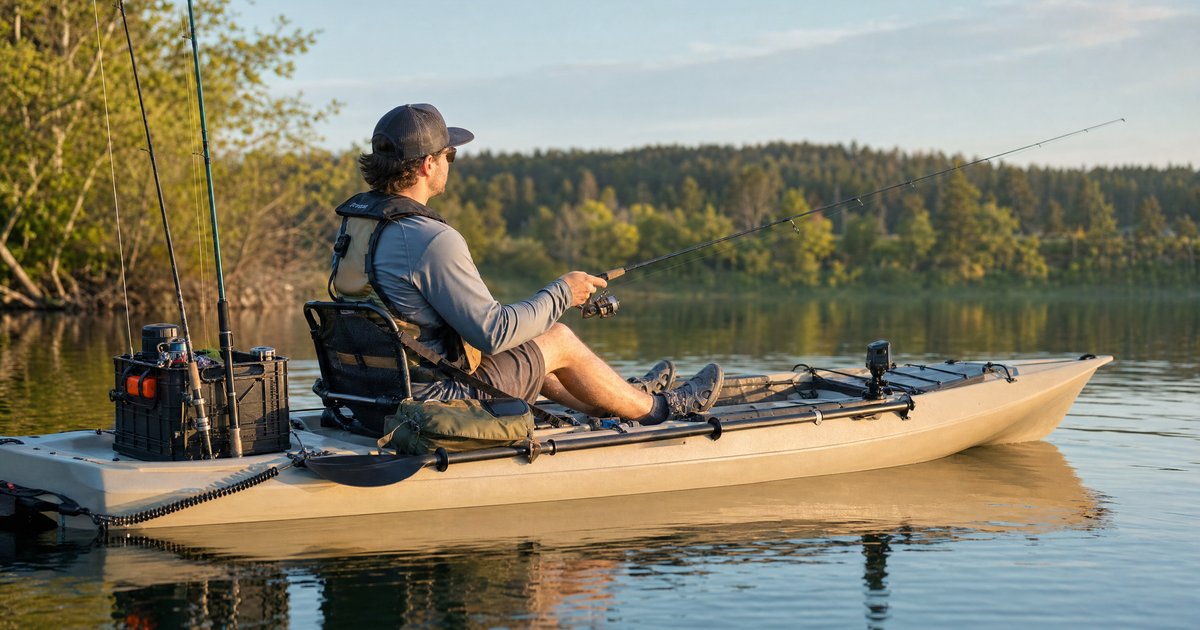
9. No Mention of Kayak Weight and Transport
For a true beginner, one of the biggest practical hurdles is getting the kayak to the water. A 12-foot fishing SOT can weigh 60–85 lbs depending on the model. The article should address:
- Typical weight ranges for the kayaks recommended
- Basic transport options (roof rack, truck bed, kayak trailer, foam blocks for car rooftops)
- Solo loading techniques (many beginners don't have a partner to help lift)
This is the kind of mundane logistical detail that experienced anglers forget but beginners search for constantly.
10. Seat Comfort Is Unmentioned
Kayak seat quality varies enormously across price points, and an uncomfortable seat will cut a trip short faster than bad fishing. The sub-$500 boats especially tend to have thin, hard seats. A brief mention — even one sentence advising beginners to sit in the seat before buying and to budget for a seat upgrade if needed — would be valuable practical advice.
11. No Discussion of River-Specific Considerations
The article mentions rivers several times (anchor trolley for current, river as a good first-trip option) but doesn't address river-specific concerns:
- Reading current and avoiding strainers (fallen trees blocking the current), which are a genuine and common kayak hazard
- The difference between flatwater paddling and dealing with even mild current
- Put-in/take-out logistics for float trips (shuttle vehicle or bike shuttle)
If rivers are being recommended as beginner-friendly water, the unique risks and logistics deserve at least a short subsection.
12. Add a Note on Kayak Registration Requirements
Many states require kayak registration (sometimes only for motorized kayaks, sometimes for all watercraft). This is another regulatory detail that catches beginners off guard. A brief mention alongside the fishing license discussion would be appropriate.
13. Sun Exposure and Heat Management
The personal comfort checklist includes sunscreen and a hat, but given that kayak anglers sit in direct sun with water reflection for hours, a sentence or two in the body text about sun exposure management — UPF clothing, reapplying sunscreen, hydration — would be warranted. Heat exhaustion is a real and underappreciated risk on summer kayak trips.
Tone & Clarity
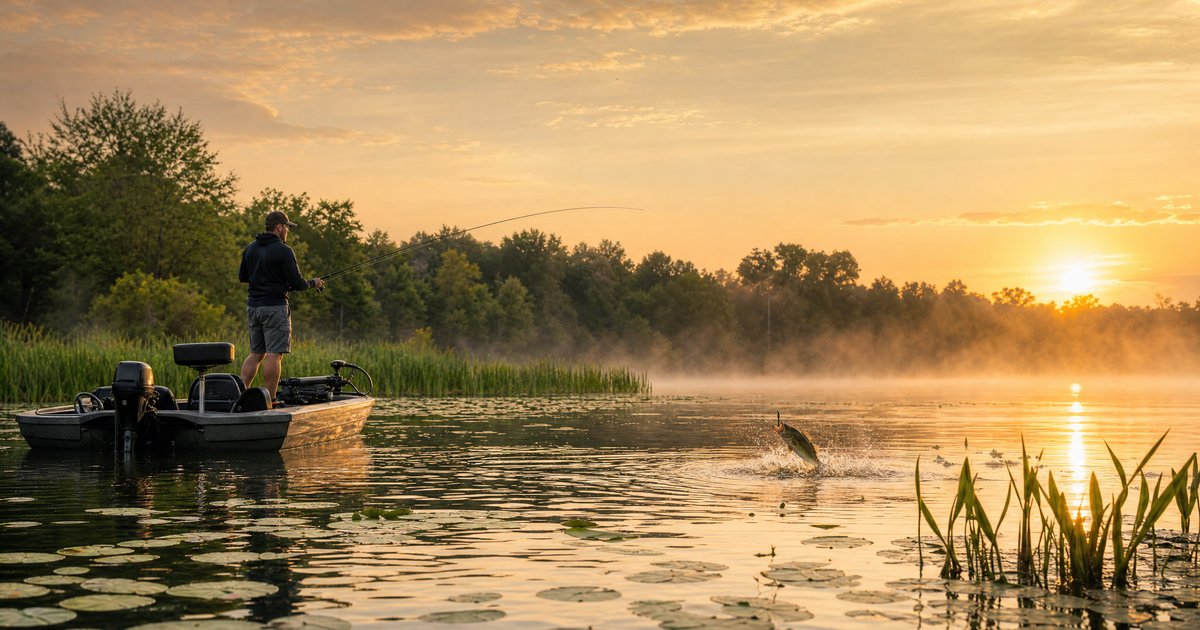
14. The Opening Anecdote Sets a Slightly Adversarial Tone Toward Powerboaters
The intro positions kayak fishing in opposition to bass boats ("$60,000 bass boat," "those guys are still running to their first spot"). This is a common framing in kayak fishing culture, but for a beginner's guide it risks alienating readers who also fish from powerboats or are deciding between the two. The competitive angle is engaging, but consider softening it slightly — the point (kayaks access water powerboats can't) stands on its own without the implied put-down.
15. "Field Note" Callout Style Is Effective — Use It More
The boxed "Field note" about the used market is a strong stylistic element. Consider using the same format for one or two more experience-based asides — for example, a field note about a specific self-rescue experience, or about a time wind conditions changed unexpectedly mid-trip. These would reinforce the author's credibility and break up the instructional sections.
16. Inconsistent Second-Person Address
The article mostly uses "you" but occasionally shifts to more general phrasing ("Paddlers upgrade often. Their old boat might be your perfect starter."). This is minor, but maintaining consistent direct address throughout keeps the conversational tone steady.
Checklist & Formatting
17. The Checklist Could Include a "Day Before" vs. "Morning Of" Structure
Right now it's organized by category (Boat & Safety, Rigging, Personal Comfort, Pre-Trip Checks). An alternative structure — or an additional framing — that separates "pack the night before" items from "check the morning of" items (weather, water temp, barometric pressure) would be more actionable for someone actually preparing for a trip.
18. The Table in the Length Section Is Clean but Could Add a "Weight" Column
Since weight affects transport (and I've recommended adding a transport section), the kayak length table could include a typical weight range column to give beginners a fuller picture of what each size category entails practically.
Minor Mechanical Issues
19. Typo: "capfull immersion"
Should be "full immersion" or "capsizing" — noted above in the factual section but flagging here as a copy error as well.
20. Em Dash Usage Is Mostly Consistent but Has One Exception
"Get off the water." after the lightning sentence is fine, but the surrounding paragraph uses em dashes for asides while this sentence stands alone as a short declarative. Not a problem per se, but the abrupt shift in sentence length and punctuation style is slightly jarring in context. Consider integrating it into the preceding sentence: "Lightning is an absolute stop-fishing situation — get off the water immediately."
Summary of Priority Recommendations
| Priority | Recommendation |
|---|---|
| High | Fix the incorrect NOAA and USGS links (points 5, 6) |
| High | Add kayak weight and transport guidance (point 9) |
| High | Fix the "capfull" typo and refine cold water language (point 7) |
| Medium | Reorder sections to place Safety before Rigging (point 2) |
| Medium | Add river-specific safety considerations (point 11) |
| Medium | Add seat comfort mention (point 10) |
| Medium | Attribute the 120°F rule properly (point 8) |
| Low | Soften the opening tone toward powerboaters (point 14) |
| Low | Restructure checklist chronologically (point 17) |
| Low | Trim or differentiate FAQ from body content (point 4) |
The draft is strong. The voice is credible, the advice is practical, and the structure is logical. The highest-priority fixes are the incorrect links and the missing transport/logistics content — those are the gaps most likely to either undermine trust or leave a genuine beginner stuck.