Kentucky Lake and Lake Barkley Spring Fishing: Crappie, Bass, and Catfish Hotspots
It was the second week of April. Water temps had been flirting with 60°F for a few days, the dogwoods were blooming along the bluffs, and my buddy Dave pulled up to the Paris Landing boat ramp at 6 a.m. with a cooler full of confidence. Three hours later, he had two small crappie and a bad attitude. He'd driven four hours from Indianapolis, picked a random cove off a satellite image, and never stopped to think about what the fish were actually doing.
I've made the same mistake. Most of us have.
Spring on Kentucky Lake and Lake Barkley is as good as freshwater fishing gets in the Midwest and upper South — but "spring" isn't one thing. It's a six-week window that moves fast, and if you show up without a plan, you'll watch the guy in the next cove fill a livewell while you scratch your head.
This guide breaks down that six-week window: where the fish are, why they're there, and what to throw. Whether you're chasing slab crappie in the flooded timber, largemouth bass on the spawning flats, or channel cats in the river channel, there's a game plan here for you.
Understanding the Lakes Before You Go
Kentucky Lake and Lake Barkley sit side by side in western Kentucky and Tennessee, separated by a narrow strip of land called Land Between the Lakes. Kentucky Lake covers approximately 160,000 acres and is formed by the Tennessee River; Barkley sits at roughly 57,900 acres, backed by the Cumberland River. A connecting canal links the two, which makes them fish like one massive system in many ways.
Both are jointly managed and offer remarkable variety — deep river channels, shallow flats, flooded timber, submerged creek beds, and miles of secondary coves. That complexity is what makes them so productive. It also makes picking a spot feel like pulling a name from a hat if you don't understand the seasonal patterns.
Water temperature is your primary guide in spring. Here's a rough breakdown:
| Water Temp | What's Happening |
|---|---|
| 48–54°F | Pre-spawn staging — fish move from winter holes toward flats |
| 55–62°F | Crappie move shallow, bass begin staging, catfish get active |
| 63–68°F | Largemouth and crappie spawn begins, best topwater window |
| 68–72°F+ | Post-spawn transition, fish scatter, crappie move back out |
You can pull real-time water temperature data from USGS stream gauge stations near the Tennessee and Cumberland River inflows — a quick check the night before saves you from guessing.
Also worth checking before you launch: lake pool elevation. The Tennessee Valley Authority manages water levels on Kentucky Lake, and a rising pool in spring pushes fish shallower and into flooded vegetation. A dropping pool does the opposite. TVA's daily elevation data is worth bookmarking.
Spring Crappie: The Main Event
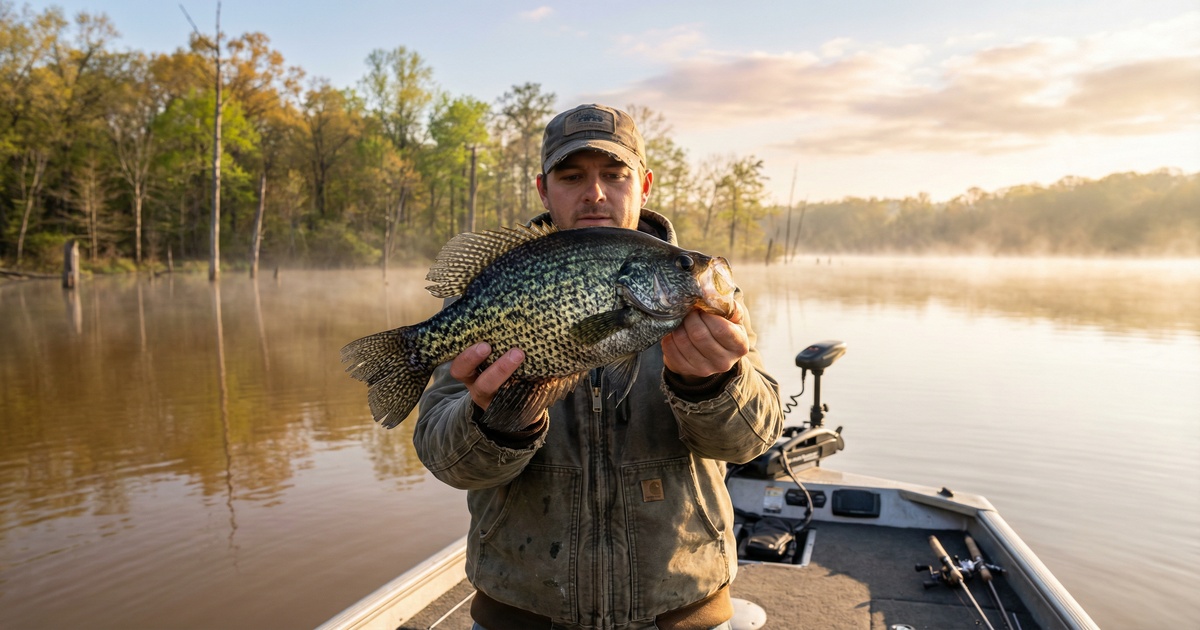
If you only make one trip to Kentucky Lake in spring, make it a crappie trip. The white crappie and black crappie populations here are serious, and when the spawn lines up, you'll have days that are hard to replicate anywhere else in the country.
Reading the Spawn Timing
Crappie begin their pre-spawn migration when water temps push consistently above 55°F — typically mid-March to early April in a normal year. By the time temps hit 60–65°F, they're stacked in the shallows, fanning beds over gravel or sand near woody structure.
The key word is near. Crappie don't always spawn right on the brush pile. They stage outside it, then move in. I've watched anglers cast directly onto visible brush and get nothing, while the fish were holding 8–12 feet outside on a subtle depth transition. Work the approach angles, not just the obvious cover.
Best Locations for Spring Crappie
Pisgah Bay and the upper end of the lake near Jonathan Creek are perennial spring producers. The secondary coves off Jonathan Creek hold a mix of standing timber, flooded willows, and dock structure that crappie gravitate toward. On Barkley, the Crooked Creek arm and the backs of the larger coves off the main lake are worth exploring.
Look for:
- Flooded willows and buck brush along the bank in 3–8 feet of water
- Dock posts and brush piles in 6–12 feet
- Secondary points with gradual depth transitions
- Any cove with a muddy bottom transitioning to gravel
Crappie Techniques That Actually Work
The two-rod setup is standard on Kentucky Lake — one rigged with a 1/16 oz jig (chartreuse/white or pink/white are reliable), another with a live minnow under a slip float. Don't overcomplicate it.
Field note: In clear water, I've done better with smaller profiles — a 1.5-inch tube on a 1/32 oz head, slow-falling straight down through timber. In stained water, a little chartreuse flash and a slightly heavier head to move faster gets more bites.
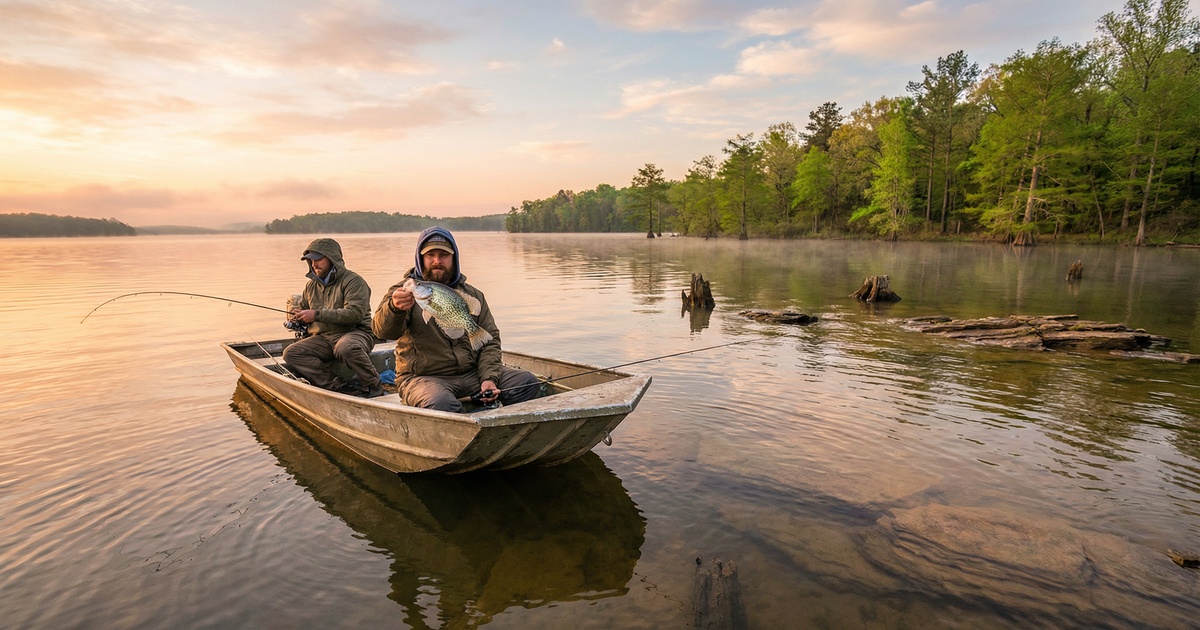
When crappie are actively feeding, a slow spider-rig drift along a depth contour with multiple rods angled out from the bow is as effective as anything. From a kayak, I keep it simple: one rod, slow vertical presentation, move until I find a pod of fish, then stay put.
A note on handling: Spring crappie are actively spawning or staging to do so. Handle them quickly, keep them wet, and if you're releasing fish, do it gently. Bag limits vary — check the current Kentucky Department of Fish and Wildlife regulations before you go.
Spring Bass Fishing: Largemouth and Smallmouth Setups
Kentucky Lake gets well-deserved attention for bass. The largemouth bass fishery here is deep, with fish spread from shallow spawning flats to deep channel edges depending on where you are in the spring progression.
Pre-Spawn Bass (Water Temps: 50–62°F)
This is the window I personally love most. Fish are coming off their winter patterns and actively feeding to build energy before the spawn. They're not locked to the bank yet — they're using secondary points, main lake humps, and channel swings in 8–16 feet of water.
Best baits for pre-spawn largemouth:
- Suspending jerkbaits (Rapala X-Rap, Strike King KVD Jerkbait) — slow retrieves with long pauses
- Football jigs in 3/4 oz — drag them along bottom transitions in deeper water
- 6-inch straight-tail worms on a shakey head near deep brush
On Kentucky Lake, focus on the main lake points from Kenlake State Park south toward the Kentucky-Tennessee line. These points have defined depth transitions and draw pre-spawn fish like magnets when the water starts warming.
Spawn and Post-Spawn Bass (Temps: 63°F+)
When bass push into the shallows to spawn, the game shifts. Beds show up on hard-bottom flats near the mouths of coves — sand, gravel, shell beds, anything firmer than mud. Northwest-facing banks warm first and tend to see spawning activity earlier.
Sight fishing is the obvious play when you can see beds, but be thoughtful about it. Repeatedly pulling a bass off a nest stresses the fish and exposes the eggs to predators. If you're practicing catch-and-release, keep your time on spawning fish short.
Post-spawn (late April into May) is when some of the biggest fish of the year get caught. Males guard fry near shallow cover; females are recovering and feeding hard. Topwaters, swimbaits, and moving baits all shine here.
Weather matters more than most anglers realize. A cold front mid-spawn can shut things down completely. I check HookCast the morning before a trip to review barometric pressure trends — a steady or rising pressure after a front passes is your green light to fish shallow.
Don't Overlook Smallmouth
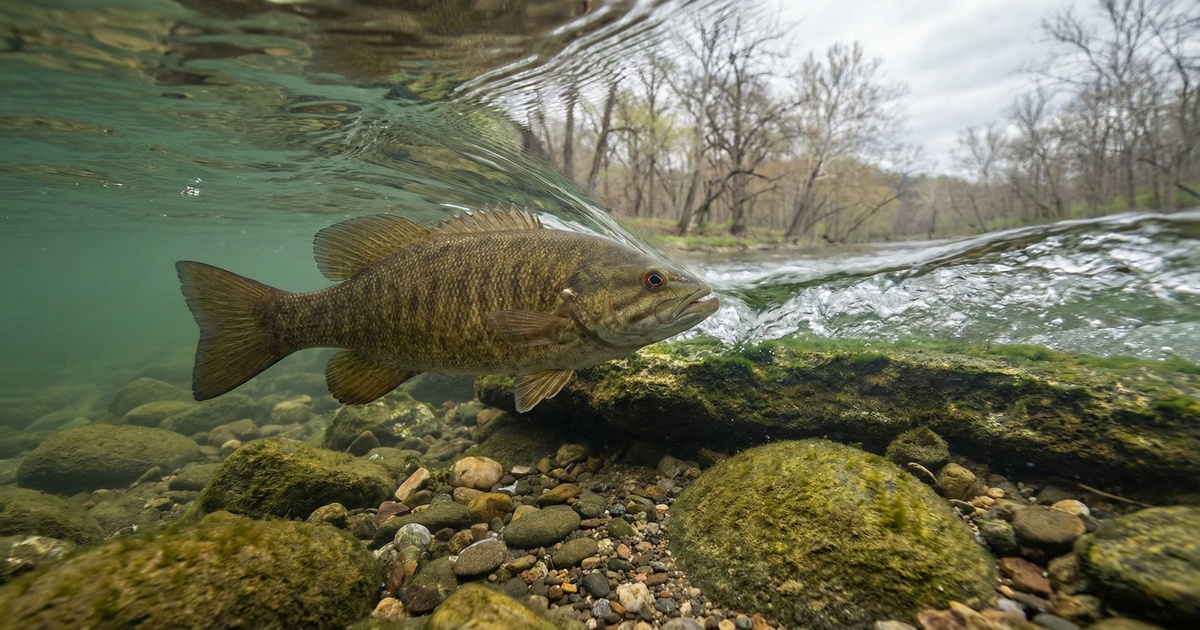
Barkley and the tailwaters below Kentucky Dam hold smallmouth bass that get overlooked in spring. When water temps climb into the upper 50s, smallies stage on rocky points and ledges near current. Tubes, grubs, and ned rigs in natural colors — green pumpkin, brown, smoke — are hard to beat.
Spring Catfish: Channel Cats on the Move
Kentucky Lake's catfish population doesn't attract the same attention as its bass fishery, but serious catfish anglers know this system well. Channel catfish are the main spring target — active, aggressive, and genuinely fun on a medium spinning rod.
Why Spring Catfish Are Different
As water temperatures climb from the low 50s into the 60s, channel cats transition from deep winter holes into shallower feeding areas. They're actively hunting at this point, which means you don't necessarily need live bait — fresh-cut bait works well.
Best spring catfish spots:
- Tailwaters below Kentucky Dam — current and oxygenated water concentrate baitfish, and catfish follow
- River channel bends where current scours the bottom — look for depth changes from 15 feet to 6 feet on a bend
- Creek channel intersections inside coves — where a submerged creek channel meets a flat
Effective spring catfish rigs:
- Slip sinker rig with a circle hook (3/0–5/0) — lets a cat pick up bait without feeling resistance
- 3-way rig in current — keeps bait near the bottom in moving water
- Fresh-cut skipjack, shad, or bluegill are reliable baits; prepared stink baits work but tend to attract smaller fish
Circle hooks are worth using whether you're keeping fish or releasing them. They're easier to remove, cause significantly less damage, and nearly eliminate gut-hooking.
Keep an eye on current flow. TVA manages discharge through Kentucky Dam, and a heavy generation schedule concentrates catfish in the tailwaters. Slow or no generation tends to spread them out.
Reading Conditions Before You Launch
Spring weather in western Kentucky is unpredictable. You can have 75°F and bluebird skies one day and a 40°F cold rain the next. Those swings directly affect fish behavior, and knowing how to read them keeps you from wasting a trip.
Barometric Pressure
This is the variable most casual anglers overlook, and it's one of the most reliable indicators of feeding activity. Standard atmospheric pressure sits at 1013.25 hPa per NOAA. When pressure falls ahead of a front, fish often feed aggressively. Once a cold front passes and pressure spikes high, the bite typically dies — especially for bass in shallow water.
The rule I fish by: falling pressure means get on the water. Stable, moderate pressure means solid fishing. High pressure after a cold front means go deep or wait it out.
You can check current barometric pressure trends on HookCast alongside the full forecast, which takes the guesswork out of timing your trip.
Wind and Cloud Cover
A light southeast or southwest wind in spring is generally productive — it warms surface water and pushes baitfish toward windward banks. Bass and crappie often stack on the windward side of points and in the backs of wind-blown coves.
Cloud cover levels the playing field. Overcast days often produce better daytime fishing in clear water because fish aren't as light-sensitive and will move shallower without hesitation.
Avoid launching in lightning. This sounds obvious, but it happens — particularly with tournament anglers pushing conditions. In a kayak, you're the tallest object on the water. Get off the lake.
Water Clarity and Color
Kentucky Lake runs relatively clear compared to many Midwestern reservoirs. In spring, stained water from runoff can push into the backs of coves — this often concentrates fish near the cleaner water edge and can turn on feeding in areas that were otherwise slow.
Use brighter colors and faster retrieves in stained water. Drop back to natural colors and slower presentations in clear conditions.
Quick-Reference Spring Fishing Checklist
Before the Trip:
- [ ] Check water temperature (target 58–68°F for peak activity)
- [ ] Pull barometric pressure trend — look for stable or falling pressure
- [ ] Verify lake pool elevation — rising or falling?
- [ ] Review current regulations and license requirements at Kentucky Department of Fish and Wildlife
- [ ] Check weather forecast for cold front timing
Crappie Setup:
- [ ] 1/16 oz jigs in chartreuse/white and pink/white
- [ ] 1/32 oz heads for finesse situations
- [ ] Live minnows and slip floats as backup
- [ ] Light spinning rod (6'6", UL or L power, 6 lb mono or 4 lb fluoro)
Bass Setup:
- [ ] Suspending jerkbait for pre-spawn
- [ ] Football jig (3/4 oz) for deep staging fish
- [ ] Soft plastics — shakey head worms, tube jigs for smallmouth
- [ ] Topwater frog or walking bait for post-spawn
Catfish Setup:
- [ ] Slip sinker rigs with circle hooks (3/0–5/0)
- [ ] Fresh-cut shad or skipjack
- [ ] Medium-heavy spinning or baitcasting rod
- [ ] Check current discharge schedule for tailwater timing
On the Water:
- [ ] Life jacket on — always, especially in a kayak
- [ ] Wet hands before handling fish
- [ ] Keep bass and crappie in water during spawning season if releasing
- [ ] Note depth, cover type, and water temp when you catch fish — builds your pattern faster
Spring on Kentucky Lake and Lake Barkley rewards preparation. The fish are there. The system is massive and sees less pressure than destination lakes farther south. If you show up with a read on the conditions, a plan based on water temperature, and the patience to work through the water column, you will find fish.
And if it turns into a slow day? The scenery at Land Between the Lakes in April is worth the drive on its own.
FAQ
What is the best time of year to fish Kentucky Lake for crappie?
Spring is the peak season for crappie on Kentucky Lake, typically running from mid-March through early May. The bite is most consistent when water temperatures are between 58°F and 65°F, as crappie move shallow to spawn near flooded timber, brush piles, and dock structure. Early mornings on calm days tend to produce the most action during this window.
What are the best lures for spring bass fishing on Kentucky Lake?
Pre-spawn largemouth bass respond well to suspending jerkbaits worked slowly on main lake points, pausing in the 8–16 foot range. As water warms into the upper 60s and fish move shallow, topwaters and swimbaits become more productive. Soft plastics — shakey head worms, tubes, and ned rigs — hold up across all spring phases, especially in clearer water.
Do I need a Kentucky fishing license to fish Kentucky Lake?
Yes. Any angler 16 or older fishing in Kentucky waters must have a valid Kentucky fishing license. Non-residents can purchase annual or short-term licenses. The lake crosses into Tennessee near the southern end, so verify whether your target area falls under Kentucky or Tennessee jurisdiction — both states' regulations may apply depending on where you're fishing. Current licensing and regulation information is available at the Kentucky Department of Fish and Wildlife.
How does cold front weather affect fishing on Kentucky Lake in spring?
Cold fronts can shut down the bite quickly, especially for bass in shallow water. When a front passes, barometric pressure rises sharply and fish often move deeper or stop feeding for 24–48 hours. The bite typically recovers as pressure stabilizes. Pre-front periods with falling pressure are often the most productive windows — fish feed aggressively in the hours before a front arrives.
Is kayak fishing practical on Kentucky Lake?
Kayak fishing is very practical on Kentucky Lake, particularly in the secondary coves, creek arms, and protected bays. The main lake can generate significant wave action in windy conditions, so kayakers should stick to sheltered water and monitor the forecast closely. Many of the best spring crappie and bass areas — flooded willows, dock structures, shallow flats — are well-suited to kayak access and can actually be difficult to fish effectively from a larger boat.