Lake Guntersville Alabama: Spring Bass Fishing on the Tennessee River Chain
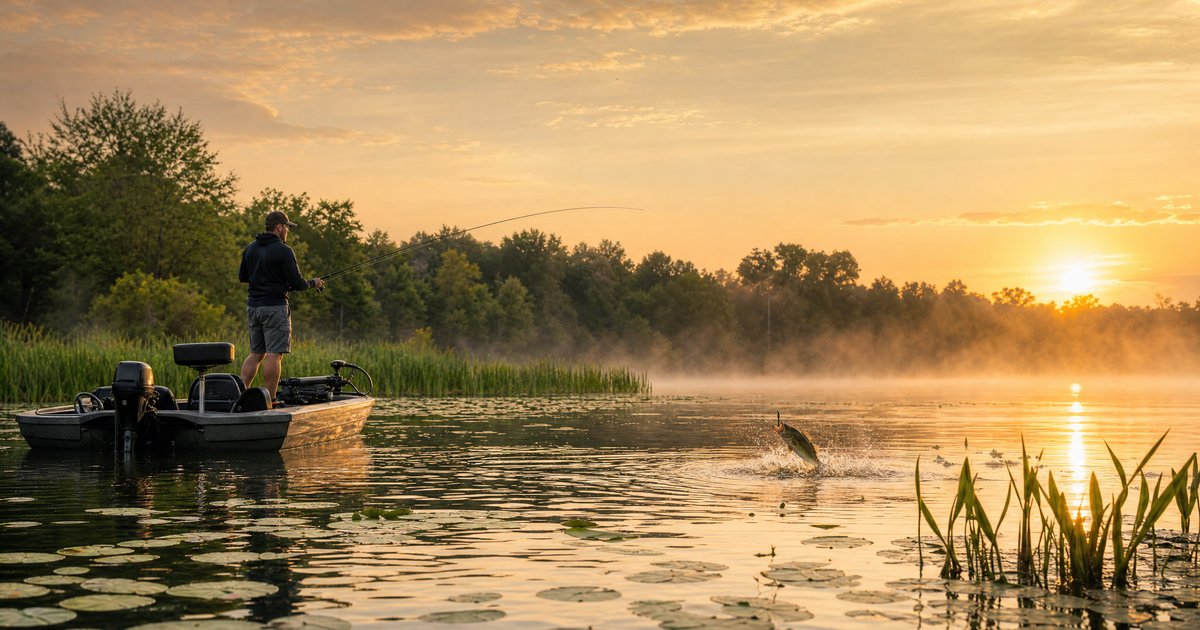
Picture this: You've driven down from Nashville or over from Atlanta, pulled into the boat ramp at 6 a.m., and the lake looks absolutely perfect. Calm water, 65-degree air, a mist sitting on the grass beds. You've got four hours before the wind picks up and the family wants to go to lunch.
You're going to make them count.
That's the promise of Lake Guntersville in spring — but only if you know what you're looking for. Anglers from up North show up here in April expecting to fish it like a mid-Atlantic impoundment and get eaten alive by the learning curve. Guntersville is its own animal. It's a Tennessee River reservoir with 69,000 acres of water, a massive shallow-water grass system, and a largemouth population that — in the right conditions — will make you seriously question every other fishery you've ever fished.
This guide is for the angler who wants to fish smarter, not just longer. We'll cover the seasonal timing, the key spots and structure, the right setups, and the weather intel that separates a great day from a frustrating one.
Why Guntersville Is a Big Deal for Spring Bass
Lake Guntersville sits in northeastern Alabama, straddling Marshall and Jackson counties along the Tennessee River. It's the largest lake in Alabama and one of the most storied largemouth fisheries in the Southeast. The Alabama Division of Wildlife and Freshwater Fisheries has long recognized it as a trophy bass destination — and for good reason. The lake's combination of warm winters, abundant aquatic vegetation (primarily hydrilla and milfoil), and nutrient-rich Tennessee River flow creates ideal conditions for bass to grow large and reproduce heavily.
For spring anglers, Guntersville hits its stride somewhere between late February and early May, depending on the year. That window lines up with the pre-spawn, spawn, and post-spawn phases — three distinct patterns that require different approaches and different spots on the lake.
Here's what makes Guntersville uniquely productive in spring compared to, say, a clear highland reservoir:
- Shallow grass holds fish from early pre-spawn all the way through the post-spawn period
- Water clarity runs stained to murky across much of the main lake, which keeps fish shallow longer
- The back ends of pockets and creeks warm faster than the main river channel, pulling bass in weeks before they'd move shallow in cleaner water
- Big female fish are accessible from the bank in many areas — no need for a high-end tournament rig to get into quality fish
That last point matters. Guntersville's shallow grass flats are kayak-friendly, the coves stay calm on most mornings, and you can cover a ton of productive water without ever tangling with tournament traffic.
Reading the Spring Timeline: Phases and Water Temperature
Water temperature runs the show. Everything else — moon phase, wind, barometric pressure — plays a supporting role. Temperature is the director.
Here's how the spawn progression typically maps to water temps at Guntersville:
| Phase | Water Temp Range | Typical Timing at Guntersville | Fish Location |
|---|---|---|---|
| Pre-spawn | 48–58°F | Late February – March | Main lake grass edges, channel swings |
| Early spawn | 58–65°F | Late March – early April | Back pockets, cove flats, protected bays |
| Full spawn | 65–72°F | April | Bedding areas in 1–4 ft of water |
| Post-spawn | 72°F+ | Late April – May | Shallow grass edges, laydowns, docks |
These are approximations based on typical Alabama spring weather. A late cold snap can push everything back two weeks. An early warm spell in February can have bass staging earlier than you'd expect.
Field note: Guntersville locals throw swimbaits on grass edges in 52-degree water and catch legitimate 5-pound fish. Don't wait until it feels like spring — pre-spawn fish are aggressive and often the biggest of the year.
Barometric Pressure and Feeding Windows
Bass respond to barometric pressure changes in ways that directly affect when and how hard they feed. A stable or rising pressure after a front signals active feeding. A rapidly dropping pressure ahead of a storm can trigger a short but intense burst of activity. Pressure crashing through a major cold front? That's when the bite goes quiet.
Standard atmospheric pressure sits at 1013.25 hPa per NOAA. When you're seeing readings consistently above that and trending stable or slightly rising, that's your green light. Checking the pressure trend — not just the weather forecast — the night before a Guntersville trip is the difference between showing up at the right time and arriving on the wrong side of a cold front. Tools like HookCast's fishing weather dashboard give you pressure trends alongside solunar timing, which makes the planning call a lot cleaner.
Key Spots on Guntersville: Where to Focus Your Time
Guntersville is big. Sixty-nine thousand acres can feel overwhelming without a framework. Here's how to break down the lake for a spring trip.
Big Spring Creek and the Upper Lake
The upper end of Guntersville — above the bridge at Grant — is where the river character of the Tennessee is most pronounced. Big Spring Creek and its tributaries warm up early because they're shallower and more protected from main-lake wind and current. This makes them a strong pre-spawn destination in late February and March.
Fish the grass edges where hydrilla meets open water, and pay attention to flooded brush and timber in the back of the creek arms. Bass stage along these transitions before pushing all the way back to spawn.
Honeycomb Creek and the Middle Lake
The middle section of Guntersville — roughly from town up toward the dam — offers some of the most diverse structure on the lake. Honeycomb Creek is well-known among tournament anglers for its grass flats, so expect company on busy weekends. The creek arms on both the north and south banks in this zone offer protected coves where bass move in stages from the main lake grass to the backs of pockets as water temps climb.
Focus on secondary points inside these coves — the spots where a point juts into the back of a pocket. Big pre-spawn females stack on these before committing to the flat to bed.
The Grass Flats: Your Main Stage
This is what Guntersville is famous for. The vast hydrilla and milfoil flats throughout the middle and lower lake are the backbone of the spring fishery. In full spring — April especially — bass move onto these flats to spawn and hold nearby through the post-spawn period.
Key features to target on the flats:
- Potholes and openings in the grass: Bass use these as staging and bedding areas
- Hard bottom transitions: Where grass meets shell or gravel bottom, big fish often set up
- Inside grass edges: The edge closest to shore in 1–3 feet of water is prime spawning territory
- Irregular edges: A straight grass edge holds fish; a point or inside bend on that edge concentrates them
Gear and Technique Breakdown
Four Setups That Cover Spring Guntersville
You don't need 20 rods. For spring Guntersville, four setups cover roughly 90% of the situations you'll encounter.
1. Flipping and Pitching — Heavy Cover
- Rod: 7'3" heavy flipping stick
- Line: 50–65 lb braided line
- Bait: Texas-rigged creature bait or beaver-style bait, 1/2 oz to 1 oz sinker
- Target: Thick grass mats, flooded bushes, dock posts
This is your power move. When bass are buried in heavy grass or tucked under structure in the back of a pocket, you need to get a bait in and get it back out before they wrap you up. Braid and a stout rod make that possible.
2. Swim Jig or Bladed Jig — Grass Edges
- Rod: 7' medium-heavy casting rod
- Line: 20 lb fluorocarbon or 30 lb braid with fluorocarbon leader
- Bait: 3/8 oz swim jig with a paddle-tail trailer, or a chatterbait
- Target: Grass edges, flats, channel swings adjacent to grass
The chatterbait is practically synonymous with Guntersville. It moves fast, triggers reaction strikes, and its vibration helps bass find it in stained water. Chartreuse and white, green pumpkin, and shad patterns all produce across different conditions.
3. Wacky Rig or Neko Rig — Finesse Sight Fishing
- Rod: 7' medium spinning rod
- Line: 10–15 lb braid with 10 lb fluorocarbon leader
- Bait: 5–6 inch stick bait
- Target: Visible beds, pressured fish, clear-water pockets
During the spawn, when you can see fish on beds, finesse presentations often outperform power fishing. A wacky-rigged stick bait dropped near a bedding fish and twitched in place is difficult for a big female to ignore — and it's much easier to remove from a fish you're releasing than a treble hook.
Quick tip: Use a weedguard on your wacky hook in heavy grass. Without one, you'll spend half your time cleaning vegetation off the bait.
4. Topwater — Early Morning, Post-Spawn
- Rod: 7' medium-heavy casting rod
- Line: 50 lb braid, no leader needed — braid floats
- Bait: Buzzbait, hollow-body frog, or walking bait
- Target: Open water over shallow flats, cove pockets at dawn
Once water temps push into the low 70s and post-spawn bass are actively feeding, topwater becomes one of the most consistent producers on the lake. Early morning, before the sun gets high, work a frog or walking bait across the grass flats. Few things in freshwater fishing are more satisfying than watching a big Guntersville bass blow up on a surface bait.
Fishing the Beds: Do It Right
Sight fishing to bedding bass is part of the Guntersville spring experience. Fish are visible in the shallows — sometimes in just 12 inches of water — and it's genuinely exciting. That said, handle every fish carefully during the spawn:
- Wet your hands before touching the fish
- Support the belly of large fish, especially females heavy with eggs
- Release fish quickly and as close to the bed as possible so they can return to guard their eggs
- Barbless or single-hook setups speed up releases and reduce injury during heavy sight-fishing sessions
Alabama regulations set a 14-inch minimum for largemouth on most public waters, including Guntersville. Always verify current rules with the Alabama Division of Wildlife and Freshwater Fisheries before your trip — size and bag limits can change.
Weather Patterns and Timing Your Trip
Cold Fronts: The Spring Angler's Worst Enemy
Alabama in spring is beautiful and unpredictable. A 75-degree day can be followed by a 45-degree morning with north winds and overcast skies. Cold fronts hit Guntersville hard during March and April and can shut down the bite for 24–48 hours after they pass.
Signs a front has hurt the bite:
- Bass push off the flats into deeper grass or channel edges
- Strikes become tentative — short hits, fish following but not committing
- Fast-moving and topwater presentations produce little; slower setups get more attention
Post-front strategy: Slow down and downsize. Target the deepest grass edges in a given area — 6–8 feet of water where hydrilla thins out against the channel. A slow-rolled swimbait or a drop shot worked along those edges can salvage a tough post-front day.
The Sweet Spot: Stable or Rising Pressure After Rain
The best Guntersville days tend to come 1–2 days after a rainstorm when pressure is stabilizing and water temps are climbing back up. Fish that were pushed off by the pressure drop and rain return to the shallows aggressive and ready to feed. The USGS streamflow and water temperature data for the Tennessee River watershed gives you a clear picture of how recent rain events have affected the system — useful context if you're planning from out of state.
Wind and Current
Guntersville gets significant wind on the main lake, especially from the south and southwest in spring. Wind creates current, and current positions fish. Wind-blown coves concentrate baitfish, and bass follow. If you're in a kayak or small boat, know your limits on open water — the main lake in a sustained 20 mph south wind is no place for a small craft. Stick to protected coves and creek arms when conditions get pushy.
Practical Trip Planning for Guntersville
Getting There
The town of Guntersville, Alabama sits roughly:
- 90 minutes northeast of Birmingham
- 2.5 hours south of Nashville
- 3 hours northwest of Atlanta
It's a reasonable day trip for much of the Southeast and Upper South, and a solid weekend destination for anglers further out.
Boat Ramps and Access
Major access points include the Seibold Park ramp near town, Honeycomb Creek access, and various TVA-managed ramps throughout the system. Kayaks and hand-carry craft open up additional access points — particularly the backs of shallow coves — that larger rigs can't reach.
Lodging and Guides
Guntersville has solid tourist infrastructure: a state park with cabins, several fishing lodges on the water, and standard hotel options in town. If it's your first trip and you want to compress the learning curve, hiring a local guide for a day is money well spent. A good Guntersville guide knows the current grass patterns — which shift constantly — and can put you on fish in ways that would take multiple solo trips to figure out on your own.
Pre-Trip Checklist
Before you load up and make the drive:
- [ ] Check current water temps via USGS gauge data or local fishing reports
- [ ] Pull up HookCast's fishing forecast for the Guntersville area to check barometric trends and solunar timing
- [ ] Verify your Alabama fishing license is current
- [ ] Confirm current size and bag limits for largemouth bass at Lake Guntersville
- [ ] Pack a grass-friendly variety: chatterbaits, swim jigs, flipping weights, wacky rig hooks
- [ ] Bring polarized sunglasses — essential for sight fishing
- [ ] Check wind forecasts and adjust your plan between main lake and creek arm fishing
- [ ] Have a rubberized landing net and wet release tools ready if you're photographing fish
- [ ] Let someone know your planned ramp location and return time
Guntersville rewards anglers who pay attention — to water temp, to grass condition, to pressure trends. It's not a lake where you can go through the motions and expect results. But when you do your homework and show up at the right time with the right approach, it'll remind you why spring bass fishing is worth every early morning alarm.
Frequently Asked Questions
When is the best time to fish Lake Guntersville for bass in spring?
The best spring bass fishing at Lake Guntersville typically runs from late February through early May. Late February and March are prime for pre-spawn largemouth staging along grass edges and channel swings. Full spawn activity peaks in April when water temperatures reach 65–72°F, and post-spawn fishing remains productive into May as bass recover and feed aggressively near shallow grass and cover.
What lures work best for Lake Guntersville spring bass fishing?
The chatterbait is one of the most reliable producers at Guntersville in spring, particularly along grass edges in stained water. Swim jigs, Texas-rigged creature baits for flipping heavy cover, wacky-rigged stick baits for bedding fish, and topwater baits like frogs and buzzbaits during early morning hours are all highly effective depending on the phase of the spawn and current water conditions.
Do I need a bass boat to fish Lake Guntersville?
No. While Guntersville hosts major bass tournaments with large fleets, kayaks and small boats can access much of the best spring fishing effectively. The shallow grass flats, back ends of creek arms, and protected coves where bass spawn are all reachable in a kayak or small aluminum boat. On windy days, smaller craft should stick to protected areas rather than venturing onto the main lake.
What is the size limit for largemouth bass at Lake Guntersville?
Alabama regulations generally set a 14-inch minimum length for largemouth bass on public waters including Lake Guntersville, but regulations can change seasonally or by specific water body. Always verify current size and bag limits with the Alabama Division of Wildlife and Freshwater Fisheries before your trip and confirm your Alabama fishing license is current.
How does weather affect the spring bass bite on Lake Guntersville?
Cold fronts passing through in March and April can slow the bite significantly for 24–48 hours after they move through, pushing fish off shallow flats and into deeper grass edges. The best fishing typically comes 1–2 days after a front when barometric pressure stabilizes or rises and water temps resume their upward climb. Stable, rising pressure with warming trends signals the strongest feeding windows during the spring season.