Lake Okeechobee Fishing Guide: Florida's Bass Fishing Capital
Picture this: You've driven down from Atlanta, hauled your kayak eight hours south, and you're standing at the boat ramp at Pahokee watching a local guy slide a 7-pound largemouth into his livewell before you've even finished rigging up. You had the right baits. You read the forum posts. But you fished the wrong spots at the wrong time with the wrong approach for this particular body of water.
That's Lake Okeechobee. It'll humble you fast if you come in unprepared — and it'll absolutely blow your mind when things click.
I made my first trip to "The Big O" three years ago during a late February cold snap, fished hard for two days, and managed a handful of respectable fish but nothing remarkable. Went back the following March under better conditions and had the kind of day that rearranges your vacation calendar for the next year. The difference wasn't luck — it was understanding the lake.
Here's what I've learned, and what you need to know before you go.
Why Lake Okeechobee Fishes Differently Than Anywhere Else
Lake Okeechobee is the largest freshwater lake in Florida and the second-largest freshwater lake entirely within the contiguous United States, covering roughly 730 square miles. That's not a typo. It's massive — and yet its average depth is only about 9 feet. You've got an enormous, shallow, vegetation-choked body of water that functions essentially as one continuous bass habitat.
That combination — enormous surface area, shallow depth, dense vegetation — creates conditions unlike any Midwestern reservoir or southern impoundment most visiting anglers are accustomed to. There are no dramatic depth transitions to target, no classic creek channel ledges to follow. Bass here live and feed in and around emergent vegetation year-round, and learning to read that vegetation is 80% of the game.
The lake is also heavily managed for water levels by the South Florida Water Management District, which regulates inflows and outflows based on flood control and agricultural needs. Those fluctuations directly affect bass behavior and access to certain areas. Before your trip, it's worth checking current lake stage conditions — the SFWMD posts real-time data online, and current water levels will tell you a great deal about where fish will be positioned.
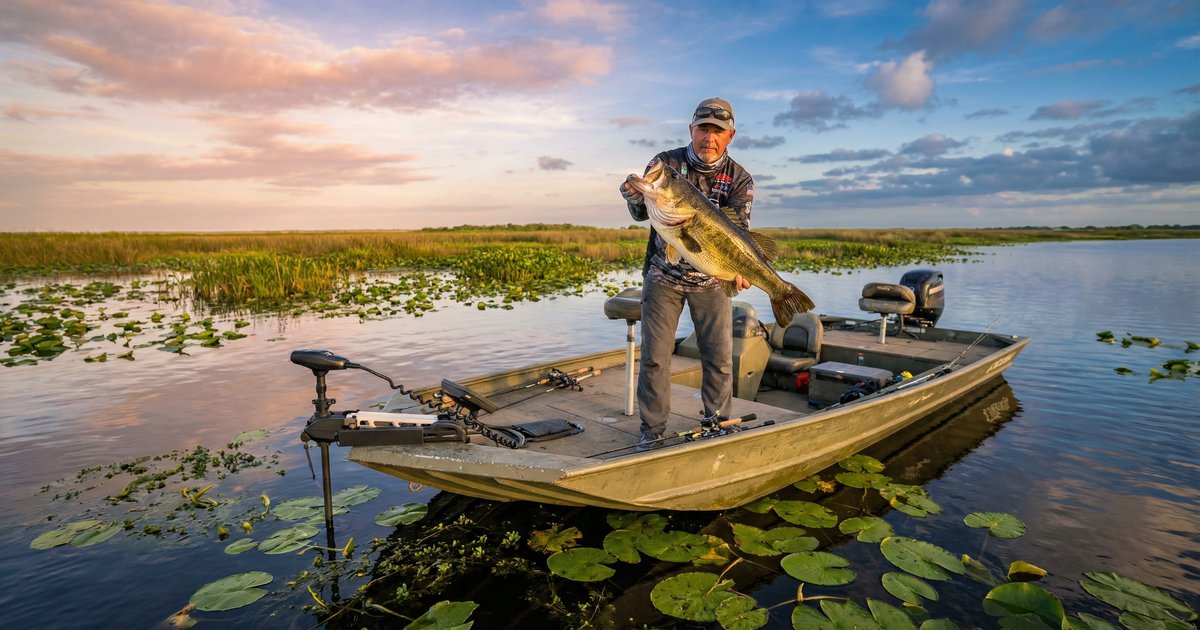
The primary target species is largemouth bass, specifically the Florida strain, which grows larger and lives longer than the northern largemouth most visiting anglers are used to. Eight, nine, and ten-pound fish are genuinely realistic targets during a good spring bite. The Florida record stands at 17 pounds, 4 ounces, and Okeechobee has likely produced more citation-size largemouth than any other lake in the state.
Spring Timing: When to Be There
Spring is the prime time to fish Okeechobee, full stop. Bass spawn earlier here than anywhere I fish in the Midwest — pre-spawn typically begins in January and runs through February, with the peak spawn hitting from late February through March, and the post-spawn stretching into April and early May depending on water temperatures.
Water Temperature Windows
- Pre-spawn (58–65°F): Bass are moving from deeper vegetation edges toward staging areas. Big females are actively feeding to build energy reserves, making this a prime window for reaction baits. Swimbaits, lipless crankbaits, and chatterbaits burned through the outside edges of hydrilla and cattail mats all produce well.
- Peak spawn (65–72°F): Fish are on beds. Sight fishing becomes possible in clearer pockets. Soft plastic creature baits and flukes worked slowly are your best options. Be thoughtful here — bedding bass are vulnerable, and responsible catch-and-release practices matter significantly during this phase.
- Post-spawn (72°F+): Fish scatter and feeding patterns become more opportunistic. Topwater in low-light conditions, frogs over mats, and Texas-rigged soft plastics in thicker cover all produce consistently.
The Barometric Factor
Spring in Florida is a front parade, and fronts affect the bite here just as severely as they do on any Midwestern river system. Standard atmospheric pressure sits around 1013 hPa — when readings drop sharply ahead of an approaching front, fish tend to go active briefly before turning lockjawed as pressure bottoms out and begins to rise again.
Before any trip to the Big O, I check the weather and pressure trend on HookCast to see where the barometric trend is heading. A stable or slowly recovering pressure in the days after a front has passed is typically your best fishing window.
Where to Fish: Zones, Access Points, and Vegetation
The lake is large enough that you could fish for a week without covering it thoroughly. That's intimidating, but it also means there's almost always somewhere that's producing — you just need a framework for narrowing it down.
The North End: Kissimmee River Inflows
The north end of the lake, where the Kissimmee River flows in, gets overlooked by most visiting anglers who head directly to the well-known south shore. That's a mistake in spring. Inflows from the Kissimmee bring cooler, oxygenated water and baitfish, and bass stack up in the transition zones where river water mixes with the lake.
Look for emergent bulrush and maidencane grass in the bays around Port Mayaca and the river mouth. Work the edges with a weightless Senko or fluke early in the morning, then transition to punching mats with a tungsten weight and creature bait once the sun gets up and fish push deeper under the canopy.
The South Shore: Belle Glade, Pahokee, and Clewiston
The south end is where most tournament anglers concentrate their time, and for good reason. Vegetation here is thicker and more diverse — hydrilla, peppergrass, cattails, and lily pads stack together in certain areas, creating layered cover that holds fish through multiple stages of the spawn. Water clarity on the south end can be surprisingly good for a lake this size, which makes sight fishing for bedding bass legitimately productive.
Clewiston and Moore Haven on the southwest corner are worth exploring when the south shore carries heavy tournament pressure.
The Eastern Shore: Buckhead Ridge and the Rim Canal
Fishing out of Okee-Tantie Recreation Area near Moore Haven gives you access to productive west-side structure, but the east side near Buckhead Ridge is where I've had some of my better sessions. The rim canal system running along the eastern edge funnels fish predictably during water fluctuations — when lake levels are dropping, bass push toward the canal edges in a way that's almost clockwork.
Field note: On my last March trip, water levels had dropped roughly 18 inches from the previous month. Bass were stacked tight against the outside edge of the hydrilla lines within easy casting distance of the rim canal. You could see baitfish flickering at the surface every 20 minutes — that kind of visual cue doesn't show up in forum posts because it's entirely dependent on what the lake is doing that specific week.
Reading Vegetation on Okeechobee
The vegetation types here aren't interchangeable — different plant species hold fish differently, and matching your technique to the vegetation is often more important than bait selection.
| Vegetation Type | Best Technique | Peak Season |
|---|---|---|
| Hydrilla mats | Punch rigs, frogs | Year-round, peak spring |
| Peppergrass / coontail | Swimbaits, lipless crankbaits | Pre-spawn |
| Cattail edges | Flipping jigs, Texas rigs | Spawn / post-spawn |
| Lily pads | Topwater frogs, weedless rigs | Post-spawn |
| Open grass edges | Chatterbaits, swimbaits | Pre-spawn |
Tackle and Techniques That Actually Work Here
Fishing from a kayak means thinking carefully about what comes along — you can't haul every rod you own. After three trips, here's the setup I've refined.
Rod and Reel Setup
You don't need tournament-grade gear, but you do need tackle capable of handling heavy vegetation. Light tackle will get you broken off constantly in hydrilla mats.
- Flipping / punching setup: 7'6" heavy or extra-heavy baitcaster with 65-pound braided line. Non-negotiable for extracting fish from thick mats with any consistency.
- Frog rod: 7'3" heavy power with 50–65lb braid. Be patient on the hookset — wait until you feel the weight of the fish before driving the hook.
- Swimbait / reaction setup: 7' medium-heavy with 20–30lb fluorocarbon, or 30lb braid with a fluorocarbon leader.
- Finesse / sight fishing setup: Medium spinning rod with 10lb fluorocarbon, or 20lb braid with an 8–10lb fluorocarbon leader for working bedding fish.
Go-To Baits
Locals will tell you this, and they're right: punch rigs are the most consistent producers on Okeechobee when the mats are thick. A ¾ to 1.5-ounce tungsten weight paired with a beaver-style bait or craw imitation, punched straight through the mat and worked slowly on the fall. Big fish use those mats as thermal refuge in summer and as staging cover during spring, and getting a bait directly in front of them is hard to replicate with any other presentation.
Frogs are the genuinely enjoyable choice — and legitimately effective early morning over pads and surface mats. The strikes are violent and memorable.
Swimbaits like the Keitech Swing Impact FAT on a light jighead along the outside edges of hydrilla lines are criminally underused here. Some of my better pre-spawn sessions have come from burning a paddletail slowly through that outside seam where grass meets open water.
For sight fishing during the spawn, a 4-inch soft plastic stick bait rigged weedless, cast past the bed and slowly dragged back, is as reliable as anything else. A ned rig dropped vertically can also draw strikes from stubborn fish that have seen pressure — though that tends to be more of a tournament tactic late in a heavy-pressure event.
Kayak Fishing on the Big O: What You Need to Know
Fishing Okeechobee from a kayak is a genuinely rewarding way to experience the lake, but the logistics and safety considerations are real and deserve attention before you load up the car.
Access and Navigation
The rim canal that rings much of the lake is your best friend as a kayak angler. You can cover sections of the canal under calmer conditions and fish shoreline vegetation without venturing onto the main lake at all — and that distinction matters.
Safety note: Open water on Lake Okeechobee can turn dangerous quickly. This is a massive, shallow lake, and wind can build 2–3 foot chop faster than most anglers expect. I've seen full-sized bass boats turn around on the Big O because of conditions. Kayak anglers need to be proportionally more conservative. Watch the forecast obsessively, know your exit points before you launch, and don't get caught far from shore when wind picks up.
Check the National Weather Service forecast before every session and file a float plan with someone at home. It sounds excessive until it isn't.
Best Kayak Launch Points
- Pahokee Marina (south shore) — protected launch with easy access to productive south shore vegetation
- Okee-Tantie Recreation Area (Moore Haven) — full facility with camping for multi-day trips
- Port Mayaca Lock (east end) — rim canal access that keeps you off open water entirely
- Harney Pond Canal (west side) — excellent vegetation with noticeably less pressure
The rim canal sections accessible from these launches put you within range of 90% of the productive spring habitat without exposing you to open water conditions.
Regulations, Licenses, and Conservation
Florida requires a freshwater fishing license for all anglers unless you qualify for a specific exemption. Licenses are available through the Florida Fish and Wildlife Conservation Commission, with short-term non-resident options available for visiting anglers.
Current largemouth bass regulations on Lake Okeechobee include a 14-inch minimum length limit as of this writing, though regulations can and do change, and special rules may apply in specific areas. Always verify current rules directly with the FWC before your trip — don't rely on last year's forum posts.
During the spawn, please take catch-and-release practices seriously. Bedded bass are already physiologically stressed, and extended handling during egg protection does measurable harm to both the spawning female and the eggs she's guarding. Wet your hands before contact, take your photo quickly, and get the fish back. Best handling practices include minimizing air exposure, supporting larger fish horizontally, and avoiding contact with the gills. Florida strain largemouth are particularly susceptible to handling stress in warm water — the big fish you release today is a legitimate 10-pound target next season, potentially for you.
Quick-Reference Checklist Before Your Okeechobee Trip
Planning:
- [ ] Check current lake stage levels at the SFWMD website
- [ ] Verify current FWC regulations and license requirements
- [ ] Pull barometric pressure trend on HookCast — aim for stable or recovering pressure
- [ ] Check NWS extended forecast for wind speed and direction
- [ ] Confirm launch ramp access or camping reservation at your chosen access point
Tackle:
- [ ] Heavy flipping / punching setup (65lb braid)
- [ ] Frog rod (50–65lb braid)
- [ ] Medium-heavy swimbait / reaction bait setup
- [ ] Finesse spinning rod for sight fishing
- [ ] Punch rigs (¾ – 1.5oz tungsten), frogs, swimbaits, stick baits
Kayak / Safety:
- [ ] PFD — worn, not just on deck
- [ ] Float plan filed with someone at home
- [ ] Weather alerts active on your phone
- [ ] Bilge pump and paddle float if going anywhere near open water
- [ ] Exit points identified before you launch
Fish Care:
- [ ] Wet hands before handling
- [ ] Forceps or hook remover ready for quick releases
- [ ] Keep bedding fish out of the water as briefly as possible
Frequently Asked Questions
What is the best time of year to fish Lake Okeechobee for bass?
Spring — roughly late January through April — is the best window for targeting largemouth bass on Lake Okeechobee. Florida strain bass cycle through their pre-spawn, spawn, and post-spawn phases earlier than northern largemouth, with peak spawning activity typically falling between late February and March when water temperatures reach the mid-60s to low 70s. Big females are at their heaviest and most aggressively feeding during this window, which is why it consistently produces the most memorable fish of the year.
Do I need a guide to fish Lake Okeechobee successfully?
You don't need a guide, but the lake's scale — roughly 730 square miles — and vegetation complexity can make a first trip frustrating without local knowledge to lean on. A half-day guide trip early in your visit is money well spent. Most experienced Okeechobee guides will show you how to read mat edges, canal transitions, and vegetation types that take most visiting anglers multiple trips to decode independently. One guided session typically makes every subsequent self-guided trip significantly more productive.
What are the best baits for Lake Okeechobee bass fishing?
Punch rigs with tungsten weights (¾ to 1.5 ounces) paired with beaver or craw-style soft plastics are the most consistent producers through thick hydrilla and cattail mats. Topwater frogs work well early morning over lily pads and surface vegetation. During the pre-spawn, lipless crankbaits and swimbaits burned along the outside edges of grass lines draw aggressive strikes from feeding fish. For sight fishing during the spawn, a weightless soft plastic stick bait worked slowly past a visible bed is hard to beat.
Can you kayak fish Lake Okeechobee safely?
Yes, but with genuine caution. Open water sections of Okeechobee can develop dangerous chop quickly in wind, including during otherwise pleasant spring days. Kayak anglers are best positioned by fishing the rim canal system and protected shoreline areas rather than paddling onto the main lake. Always check the forecast before launching, wear a PFD, and file a float plan. The rim canal alone provides access to excellent habitat and productive fishing without the open water exposure.
What fishing license do I need for Lake Okeechobee?
All anglers fishing Lake Okeechobee require a Florida freshwater fishing license, available through the Florida Fish and Wildlife Conservation Commission at myfwc.com. Both resident and non-resident licenses are available, and short-term non-resident options exist for visiting anglers. Always verify current size and bag limits for largemouth bass directly with the FWC before your trip — regulations are subject to change and should not be confirmed through third-party sources.