May Bass Fishing: Post-Spawn Recovery and Transitional Patterns
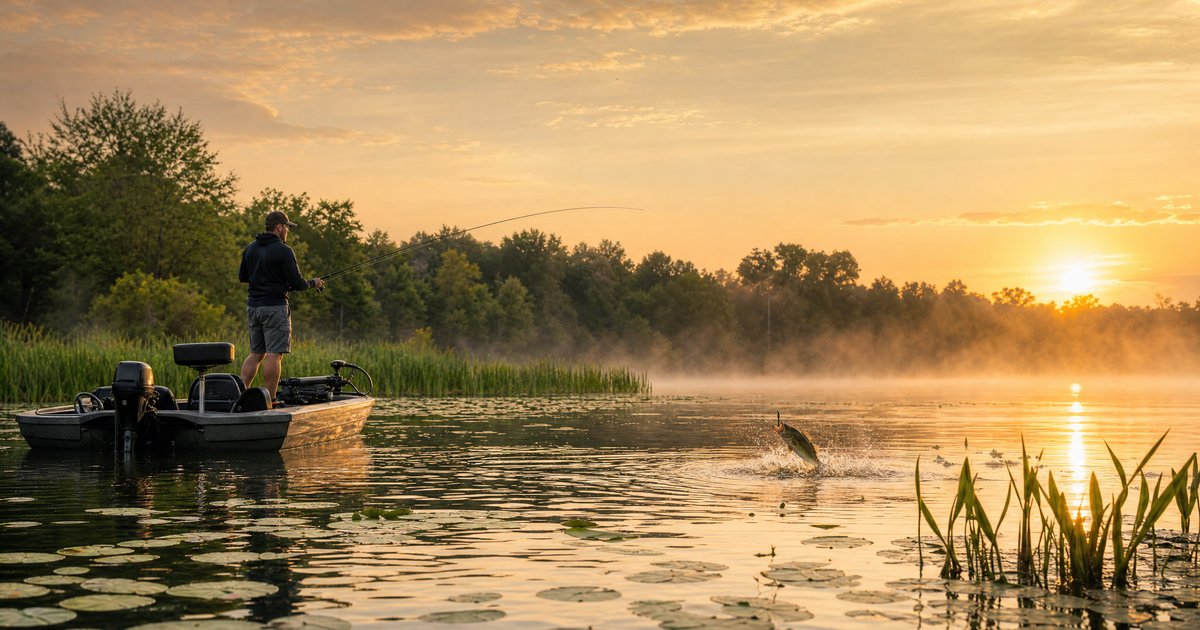
You drove an hour and a half to your favorite lake on a Saturday in mid-May, launched before sunrise, and worked every shallow flat you know. By 10 a.m. you've got one small keeper and a lot of questions. Last month, those same spots were loaded with fish on beds. What happened?
This is the post-spawn trap. Plenty of anglers fall into it every year — and I've been one of them more times than I'd like to admit. The spawn flips a switch on bass behavior, and if you don't adjust your approach to match where fish are in their recovery cycle, you're going to grind through some frustrating mornings wondering what changed.
May is actually one of my favorite months to be on the water. The weather is usually manageable, the fish are active, and there are multiple patterns running at the same time if you know where to look. But it requires you to stop fishing like it's still April.
Here's how I think about the post-spawn transition, what I've learned from years of chasing bass on Midwestern reservoirs and Ozark rivers, and how to put more fish in the net during this underrated window.
Understanding What Bass Are Doing in May
Before you can figure out where to cast, you need a rough picture of what's happening biologically. Largemouth and smallmouth bass spawn when water temperatures climb into the 60–75°F range — in the Midwest, that typically puts the peak spawn somewhere between late April and mid-May depending on the year and your latitude.
By the time you hit the water on a typical May weekend, you're likely dealing with three distinct groups of bass:
- Post-spawn females recovering in deeper adjacent cover — stressed, not feeding aggressively, and harder to locate than they were a few weeks ago
- Males guarding fry in the shallows — aggressive but often undersized, and worth a quick release when possible
- Early spawners that have already started the transition toward summer structure in deeper water
This is why the mid-May bite can feel so inconsistent. You're not fishing one pattern — you're fishing three at once. The anglers who adjust their approach throughout the day and across different parts of the lake are the ones who manage to piece together a solid catch.
The Recovery Phase: What Female Bass Are Doing
Post-spawn females are the most sought-after fish in May. These are your bigger largemouth — the ones that were fat with eggs a few weeks ago. After spawning, they're temporarily depleted and move off the beds toward secondary structure: deeper grass edges, submerged points, channel swings near spawning flats, dock pilings in 6–12 feet of water.
They're not busting bait aggressively. They're holding tight to cover and feeding opportunistically. That calls for slow-moving, natural presentations — not reaction baits burned through the water column.
In my experience on Missouri and Illinois reservoirs, recovering females typically park themselves on the first significant depth change adjacent to where they spawned. If they bedded in a 3-foot cove, I'm looking at the 8–12 foot break on the way out. A USGS lake contour map can save you a lot of idle time finding those transitions before you even launch.
Male Bass: Aggressive, But Worth Thinking About
The males hanging around fry balls are catchable — sometimes almost embarrassingly easy. Cast a small swimbait, a drop shot, or a Ned rig near a school of fry and the guarding male will almost certainly eat it.
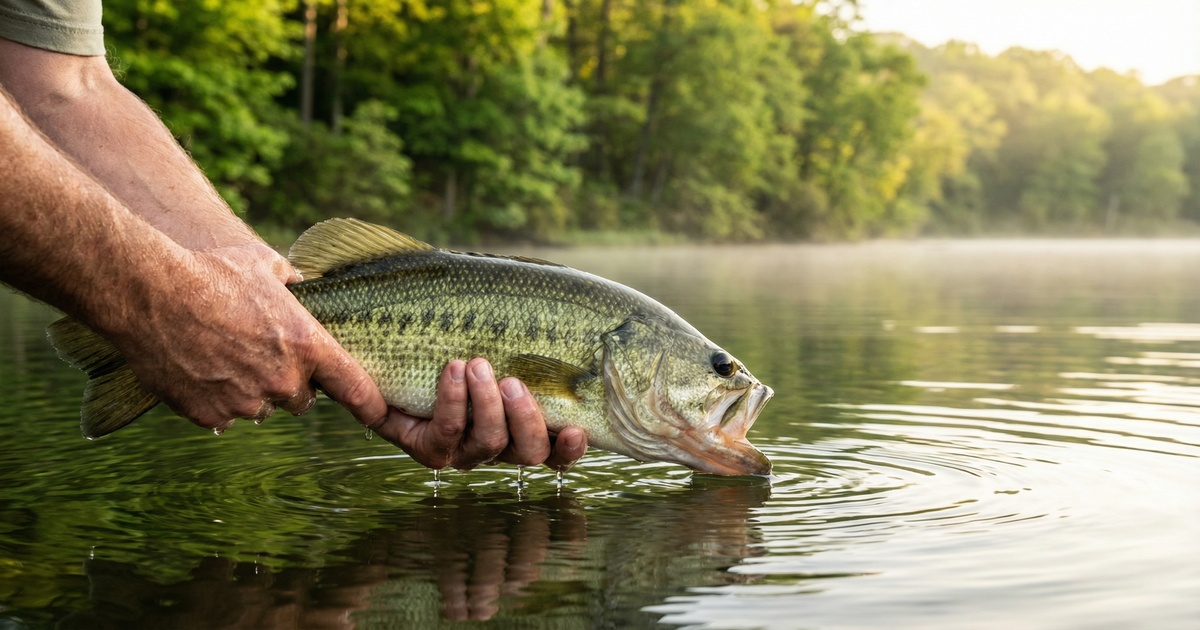
Here's my honest take: I'm not opposed to catching these fish, but I make quick, careful releases a priority. That male bass is doing something ecologically useful. If you're keeping fish, this probably isn't the moment to hammer them. Wet your hands, keep them out of the air, and get them back quickly. Tournament or not, those fish matter for next year's population.
Field note: In years when cold fronts move through during the spawn, I've watched fry get abandoned early. When that happens, males recover faster and join the rest of the fish transitioning to deeper water. If May has been cold and unsettled in your area, the males may already be on the move before you'd typically expect them.
Reading Post-Spawn Water Conditions
Weather and water in May are unpredictable. You can have 80°F and bluebird skies one weekend and a 40°F cold front the next. Both situations change where and how bass feed — sometimes dramatically.
Barometric Pressure and the Post-Spawn Bite
Bass are sensitive to pressure changes year-round, but post-spawn fish that are already dealing with some physiological stress seem especially prone to shutting down when pressure swings hard. Standard atmospheric pressure sits at 1013.25 hPa — when it drops fast ahead of a storm system, expect a brief window of activity followed by fish going quiet.
Before any May trip, I check HookCast's weather tool to look at the barometric trend rather than just the current reading. A steady or slowly rising pressure usually produces a more consistent bite. A rapidly falling pressure might give you an hour or two of action before things shut down.
The pattern I've seen play out repeatedly in post-spawn fishing: low, stable pressure after a passing front can push fish shallow briefly around dawn. Once pressure starts climbing and the sky clears, they slide back to that depth transition and get lockjaw.
Water Temperature and Stratification
By mid-May across most of the Midwest, surface temps are pushing 65–75°F — comfortable territory for bass. But pay attention to water clarity and how conditions vary across the lake. After spring rains, you often get:
- Stained or muddy water in the backs of coves from runoff
- Clearer water on main lake points and windswept banks
- Early thermocline development in deeper water, which starts limiting where bass can comfortably hold
Post-spawn fish in stained water will move shallower and respond better to louder, high-vibration presentations. In clear water, they stay deeper and want more subtle, natural-looking baits. Don't assume the same setup that worked in one corner of the lake will produce the same results somewhere else.
The Best Post-Spawn Bass Fishing Techniques
This is where most anglers leave fish on the table in May — not in their location choices, but in their technique selection. Here's what's actually working during this window.
Slow It Down: Finesse Fishing for Recovering Females
The most consistent pattern I've found for post-spawn females is finesse presentations worked slowly along depth transitions. My go-to setups are a Ned rig or a drop shot rigged with a straight-tail worm or small creature bait.
Drop shot:
- 6–8 lb fluorocarbon leader
- Small hook (size 1 or 1/0), nose-hooked worm
- 1/4 to 3/8 oz weight
- Work it slowly along points, dock cables, and grass edges in 8–15 feet
Ned rig:
- 8–10 lb fluorocarbon on a spinning rod
- 1/5 to 1/4 oz mushroom head
- Short ElaZtech-style bait
- Let it fall on a semi-slack line, lift gently, and repeat
The key is patience. These baits don't need to be ripped or bounced aggressively. Let them sit. Post-spawn females will often nose up to a bait and hold there for several seconds before committing. Move it too fast and you're pulling it away from fish that would have eaten it.
Reaction Baits: Making the Most of the Morning Window
There's usually a window in early morning — sometimes lasting a couple of hours — when post-spawn bass are actively chasing bait, especially before the sun gets high in May. Don't waste that window throwing finesse setups exclusively.
Reaction baits worth having rigged in May:
- Topwater poppers and walking baits — in shaded coves and near emergent grass at first light
- Squarebill crankbaits — around shallow wood, rocks, and dock pilings in 2–5 feet
- Bladed jigs (ChatterBaits) — along grass edges and through sparse vegetation
- Swimbaits on a swimbait head — worked slowly near transition areas
One thing I've noticed consistently: post-spawn fish often follow a bait and don't commit. If you're getting bumps on a ChatterBait but not converting them, slow down and follow up with a drop shot or Ned rig in the same area. The reaction bait puts fish on alert; the finesse bait closes the deal.
Flipping and Pitching: Working Docks and Laydowns
Shaded cover is prime real estate in May. Bass use docks, laydowns, and overhanging brush as refuge from direct sun and as ambush points while they recover. Flipping and pitching tight cover with a jig or Texas-rigged creature bait is reliable all month long.
Setup I use most:
- 7'3" medium-heavy rod, 15–20 lb fluorocarbon
- 3/8 oz flipping jig in dark colors (green pumpkin, black/blue)
- Or a 3/8 oz Texas rig with a 4" creature bait
Target:
- Shaded dock corners and inner sections
- Laydowns with branches extending into deeper water
- Brushpiles if you know their locations
- Rock piles near channel banks
Let the bait fall on a slack line, watch for the line to jump or go unexpectedly slack, and set the hook hard. Post-spawn bass holding in cover will often pick up a jig and move with it without telegraphing the bite much at all.
Smallmouth in May: A Different Animal
If you're targeting smallmouth — which I do regularly on Ozark streams and clear-water reservoirs — the post-spawn picture looks a little different. Smallies often spawn slightly later than largemouth in the same system, preferring cooler water with some current, so you may still find fish on beds in early May.
Post-spawn smallmouth in rivers and streams tend to drop into slower eddies, deep pools below fast water, and rock ledges. They respond well to:
- Tube baits on a small football head or drop shot rig
- Small swimbaits (3–4 inch) worked slowly near the bottom
- Hair jigs and small finesse jigs around rock structure
Field note: On Ozark stream smallmouth, I've consistently found that shad imitation colors — white, silver, pearl — outperform crawfish patterns during the post-spawn window. The fish seem more focused on easy protein in the form of baitfish than on hunting down crayfish.
Location Breakdown: Where to Find May Bass
Here's a straightforward look at where I'm targeting fish at different points throughout the month:
| Time of Month | Target Areas | Primary Technique |
|---|---|---|
| Early May | Shallow flats, bedding areas, transition edges | Swimbaits, finesse jigs, sight fishing |
| Mid-May | Secondary points, dock lines, 8–15 ft depth breaks | Drop shot, Ned rig, flipping jigs |
| Late May | Deep grass edges, main lake points, channel bends | Crankbaits, Carolina rigs, football jigs |
Reservoirs vs. Natural Lakes
Reservoirs with significant impoundment structure — roadbeds, creek channels, standing timber — give bass a lot of vertical range to work with. Fish move up and down based on pressure and temperature more fluidly than they do in natural lakes. Focus on creek arms in early May, then shift toward main lake structure by late May as the transition progresses.
Natural lakes in the Midwest (Minnesota border country, Indiana glacial lakes) tend to have more consistent weed structure. Bass in these systems often stay tied to emerging cabbage or coontail as it develops through May. Work the outer edges of weed growth — that's where the forage concentrates.
Reading an Unfamiliar Lake
If you're hitting a body of water you haven't fished before, combining HookCast's fishing weather forecast with a quick look at satellite imagery and a topo map will tell you most of what you need to know before you launch. Three things I prioritize:
- North-facing coves — they warm faster and usually hold the earliest spawn activity
- Hard-bottom transitions adjacent to soft spawning flats — that's the recovery zone
- Structure in 8–12 feet — this is the post-spawn highway for transitioning fish
Cold Fronts in May: Dealing With the Worst-Case Scenario
May cold fronts are a genuine problem in the Midwest. You get three days of 75°F weather, the bass start moving well, and then a Canadian air mass drops temperatures 25 degrees overnight. Post-spawn bass — already under some physiological stress — shut down hard in those conditions.
What to do after a May cold front:
- Go small and slow. Downsize everything. A 2-inch drop shot worm in natural colors will often outperform anything else in post-front conditions.
- Fish deeper. The fish slide down the break and go tight to the bottom. Time spent working shallow water is largely wasted.
- Find the warmest water available. Even a 2-degree surface temperature difference matters. South-facing banks, dark-bottomed coves, and any area with incoming water warm faster and hold more active fish.
- Fish midday. After a cold front, the midday sun warming the surface can trigger a short bite window that you'd miss entirely if you packed up at 9 a.m.
One more thing worth saying: give it time. Bass don't recover from a front immediately, and post-spawn fish have less reserve to draw on. A second or third day after the front passes often produces better than the day right after it moved through.
Quick-Reference Checklist: May Bass Fishing
Before you go:
- [ ] Check barometric trend (not just current pressure) — look for stable or slowly rising
- [ ] Note water temperature on your target lake if possible
- [ ] Identify spawning coves and adjacent structure on a topo map
- [ ] Check local regulations for size and bag limits and any seasonal closures
On the water:
- [ ] Start shallow and active (topwater, crankbait) at first light
- [ ] Transition to finesse presentations (Ned rig, drop shot) as the sun climbs
- [ ] Work depth transitions — the 8–12 ft break adjacent to spawning flats
- [ ] Target shaded cover (docks, laydowns) during midday hours
- [ ] Slow down and downsize after cold fronts
Gear essentials for May:
- [ ] Spinning rod + 8–10 lb fluorocarbon for finesse work
- [ ] Medium-heavy rod + 15–20 lb fluorocarbon for flipping
- [ ] Drop shot weights and hooks
- [ ] Ned rig heads + ElaZtech-style baits
- [ ] Squarebill crankbait in crawfish and shad colors
- [ ] Topwater (popper or walking bait) for early morning
Ethics and handling:
- [ ] Wet your hands before handling bass
- [ ] Minimize air exposure, especially on warm days
- [ ] Release fry-guarding males quickly when possible
- [ ] Know your state's size and bag limits before keeping anything
FAQ
Why is bass fishing slow in May after the spawn?
Post-spawn bass — especially larger females — go through a recovery period where they aren't actively chasing bait. They move off spawning flats to nearby deeper structure and feed opportunistically rather than predictably. Slowing down your presentation and targeting depth transitions adjacent to spawning areas, typically in 8–15 feet of water, is the most effective adjustment you can make during this window.
What are the best lures for post-spawn bass fishing in May?
Drop shot rigs, Ned rigs, and finesse jigs are the most reliable producers for post-spawn bass in recovery mode. For more active fish during the early morning window, squarebill crankbaits, bladed jigs, and topwater baits can trigger reaction strikes. Matching your lure choice to current conditions — slower and smaller after cold fronts, more aggressive when pressure is stable — makes a larger difference than any single bait selection.
Where do bass go after they spawn in May?
After spawning, female bass typically move to the first significant depth break adjacent to their spawning flat — often 8–15 feet near secondary points, dock lines, submerged roadbeds, or grass edges. Males stay shallower longer, guarding fry near the original spawning areas. By late May, most bass are transitioning toward main lake structure, deeper grass edges, and channel bends as summer patterns begin to set up.
How does a cold front affect post-spawn bass fishing in May?
A cold front during the post-spawn is particularly tough because the fish are already in a recovery phase and get further stressed by the rapid change in temperature and pressure. Bass will slide deeper, go tight to bottom structure, and largely stop feeding actively. Your best response is to downsize your baits, slow everything down, target the warmest available water, and focus your efforts around midday when surface temperatures start recovering.
Should I keep bass caught during the post-spawn period?
That's a personal call, but it's worth giving it some thought. Post-spawn females are still recovering, and removing large breeding fish can affect future population health — especially on smaller bodies of water. If you do keep fish, follow your state's current size and bag limits. For males actively guarding fry, a quick release is generally the better choice since they're directly contributing to next year's bass population.