New England Striper & Bluefish Season: Cape Cod to Block Island Fishing Guide
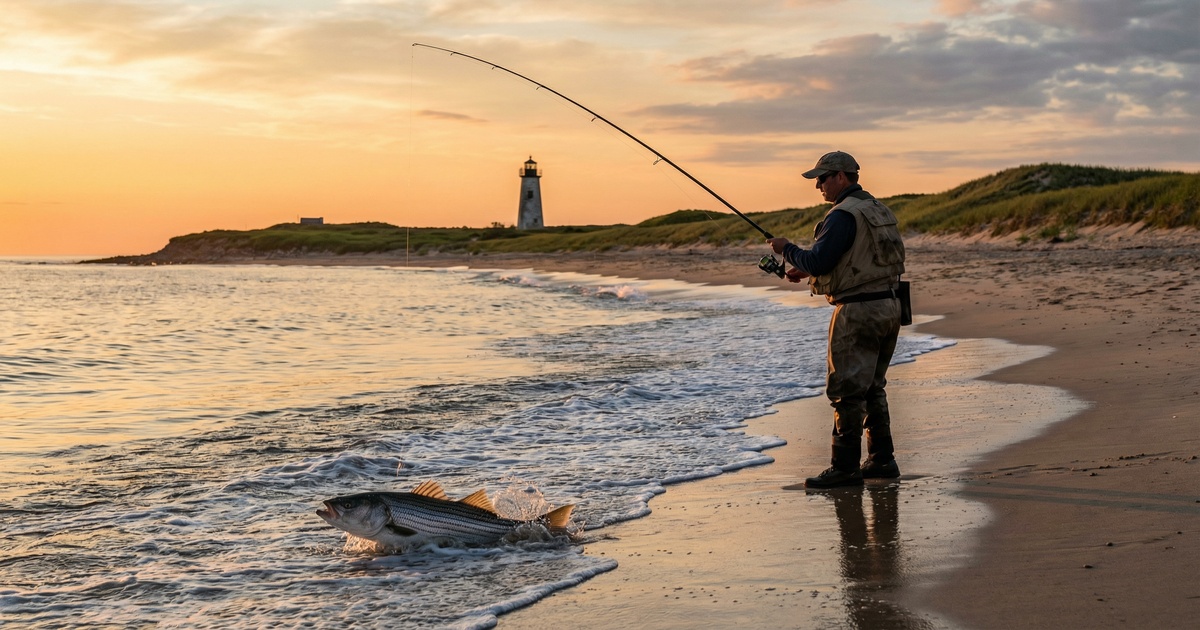
It's 5:30 AM on a July morning at Nauset Beach, and the outgoing tide is already pulling hard through the inlet. A wall of fog sits just offshore. The guy next to me works a bucktail into the rip — third cast, hooked up — a fat 28-inch striper that had been holding tight to the cut edge, waiting for the current to funnel sand eels past it.
He didn't get lucky. He got there at the right time, fished the right structure, and let the tide do the work.
That's what fishing New England is about. From the sandy flats of Cape Cod to the rocky ledges of Block Island, this stretch of coastline produces some of the best striper and bluefish fishing on the East Coast every summer. But the bite here isn't random. Fish follow bait, bait follows current, and current follows tides. Once you understand that chain, the whole region opens up.
Here's what you need to know before you go.
When the Fish Show Up: Seasonal Timing
Striped bass typically arrive along southern New England in late May, with the bulk of the population pushing into Cape Cod waters and up toward Block Island by mid-June. Fish staging through Rhode Island Sound in June tend to be the larger class — cows in the 30- to 50-inch range working their way up from the Chesapeake. By July, stripers are spread throughout the region: in the rips off Monomoy, along the Elizabeth Islands, through Vineyard Sound, and stacked around Block Island's North Rip.
Bluefish run a similar corridor but often arrive slightly earlier in some years and push harder into shallower water. Mid-June through August is peak bluefish action across the region. You'll find them mixed with stripers over sandy structure, though blues tend to feed more chaotically — crashing peanut bunker schools, blitzing the surface, tearing up the water column in ways stripers typically don't.
By late August into September, the dynamic shifts. Water temperatures begin to cool, and both species start staging for their fall migration. That transition window — late September through October — is arguably the best fishing of the year in New England. Bigger fish, aggressive pre-migration feeding, and fewer boats on the water.
Field note: The very best striper windows often come right after a weather system pushes through. A slight drop in barometric pressure followed by a 12–24 hour rise seems to switch the bite on. You can check current pressure trends on HookCast before loading the truck — it's saved me more than a few wasted drives.
Reading the Water: How Tides Drive the Bite
If there's one piece of advice worth internalizing for New England fishing, it's this: fish the moving water, not the clock.
Most anglers target the first and last two hours of incoming or outgoing tide. That's not wrong — but in this region, specific tide stages create specific conditions at specific spots. That's the more useful framework.
Rips and Current Edges
Cape Cod is essentially a sand machine — constantly shifting bars, cuts, and inlets that create rip lines wherever current accelerates over irregular bottom. NOAA tidal predictions show that tidal exchanges in certain Cape Cod locations can run 9–10 feet, generating serious current that concentrates baitfish and triggers predators.
The outgoing tide at places like Chatham Inlet, Nauset Inlet, and Monomoy Point creates textbook striper conditions. As water drains from the backside bays, it funnels through narrow cuts and pours over the bars. Sand eels, silversides, and small herring get swept along helplessly — and stripers position themselves at the rip edge to ambush them.
How to fish it:
- Cast upcurrent and let your presentation drift through the rip edge
- Soft plastics on a jig head (½ to 1 oz) are the workhorse — match the size to what you're seeing on the surface
- Topwater plugs during low-light rip feeding are about as good as saltwater fishing gets
Block Island's North Rip
Block Island is in a class by itself. The island sits in the middle of Rhode Island Sound and acts as a funnel for tidal flow moving in and out of Long Island Sound. The North Rip off Sandy Point is one of the most consistently productive striper spots in New England, fishing well on both incoming and outgoing tide — the constant is that there's always moving water.
When the tide runs hard, bait piles up against the rip. Stripers stack just below the turbulence, where they can dart into the current to grab food without burning much energy. I've watched boats anchored in that rip pull fish after fish on leadhead jigs while nearby boats drifting randomly went nearly fishless.
At Block Island, knowing which tide stage is running matters more than what lure you're throwing.
Vineyard Sound and the Elizabeth Islands
The water running between Martha's Vineyard and the Elizabeth Islands chain moves fast. The constriction between the islands and the Cape creates reliable rip conditions on every tide cycle. Quicks Hole and Robinsons Hole — breaks in the Elizabeth Islands chain — produce fast-moving water that concentrates bait and stripers with predictable regularity.
The ferry channels and drop-offs along the Vineyard's north shore are worth targeting on the outgoing, when current pushes bait along the channel edge.
Best Spots Broken Down
Cape Cod
| Location | Species | Peak Tide | Best Season |
|---|---|---|---|
| Nauset/Chatham Inlet | Stripers, Blues | Outgoing | June–Sept |
| Monomoy Point | Stripers, Blues | Incoming/Outgoing | July–Oct |
| Race Point (P-town) | Stripers, Blues | All stages | Aug–Oct |
| Cape Cod Canal | Stripers | Peak current | June–Oct |
The Cape Cod Canal deserves its own mention. It's not oceanfront fishing — it's a 17.4-mile shipping channel connecting Cape Cod Bay to Buzzards Bay, and current rips through it at up to 4–5 knots on a strong tide. Stripers stack in the Canal because bait gets swept helplessly through it twice daily.
Walking the Canal banks at first light during peak current is one of those New England experiences you don't forget. Anglers chunking bunker, throwing metal-lipped swimmers, slinging eels after dark — it all works. The fish know the drill.
Pro tip: The Canal is one of the few places where heavier tackle and bigger presentations outperform finesse. With that kind of current, you need to get your lure down and in front of the fish. A 2 oz needlefish or a metal jig fished against the current is a reliable go-to.
Martha's Vineyard
The Vineyard is underrated as a fishing destination relative to its reputation as a summer tourist spot. The south shore beaches — Katama, Wasque Point — produce big bass and bluefish on the outgoing tide when current cutting from the Katama Bay opening drags bait along the beach. The rip at Wasque Point is legendary among fly fishers and surfcasters alike.
Gay Head (Aquinnah) on the west end offers rocky structure, deep water, and reliable current — a completely different look from the open sandy beaches, and just as productive.
Block Island
Block Island fishing is about positioning on structure and reading the tide. North of the lighthouse at Sandy Point, the North Rip is the main event for stripers. The Southwest Ledge holds fish throughout summer, particularly when bluefish push through in numbers. New Harbor inlet can also produce on outgoing tide, especially for schoolie bass.
Block Island is worth the ferry ride specifically for late July through September. The fall run here can be exceptional — fish in the 30–40 inch range in numbers, based on consistent reports from guides who work the island regularly.
Tackle and Rigging for New England Conditions
Surf and Beach Fishing
Rods: A 10–11 ft medium-heavy spinning rod rated for 1–3 oz is the versatile choice. One rod for most situations.
Reels: 6000–8000 class spinning reel with a quality drag. This is not the place for light gear when a 30-pound striper runs into a rip current.
Line: 20–30 lb braided main line with a 24–36 inch fluorocarbon leader in 25–40 lb. Braid gives you casting distance; fluoro gives you abrasion resistance around structure.
Lures:
- Soft plastics — 5–7 inch paddle tail swimbaits on 1–1.5 oz jig heads are the workhorse
- Metal jigs — Kastmaster or similar 1–2 oz metals work in the surf and around rips
- Topwater — Pencil poppers and needlefish at first light and after dark
Live and Cut Bait
If you're fishing structure or anchoring in a rip, live eels are the most consistent big-bass bait in New England. Fished on a simple single-hook rig, free-lined or with minimal weight, they're a low-light and nighttime bait that really come into their own after dark.
Chunked bunker (menhaden) is the other key option. When bunker schools move through — and bluefish and birds will tell you when they do — cutting a chunk and soaking it near structure is a reliable striper tactic.
According to NOAA Fisheries, Atlantic menhaden are a critical forage species for striped bass across their migratory range. Where you find bunker in numbers, stripers are rarely far behind.
Weather Windows and Pressure Patterns
Post-frontal conditions — After a cold front passes through (common even in July and August across the Northeast), the bite can go quiet for 12–24 hours as barometric pressure spikes. Give it a day and fishing often rebounds hard as pressure stabilizes. Standard atmospheric pressure sits at 1013.25 hPa; fish tend to feed more actively when pressure is stable or gradually rising after a recent low.
Wind and surf height — A southeast wind builds swell on Cape Cod's outer beaches and creates the kind of churned, turbid water that washes sand crabs and small baitfish off the bottom. Stripers work the wash well in those conditions. Flat-calm surf on a bright July midday is usually a slow-bite situation.
Water temperature — Surface temps above 72°F push stripers deeper during midday hours. Early morning and evening, they'll come up. You can check tide charts for your area on HookCast and cross-reference tide timing with time of day to identify your best window.
Moon phase — Big tides around new and full moon generate stronger rip currents throughout the region. More current typically means more baitfish movement and more aggressive feeding. Full moon outgoing tides in the Cape Cod Canal and at Block Island's North Rip can produce the kind of fishing you drive eight hours for.
Regulations You Need to Know
Striped bass regulations in New England are actively managed and have tightened in recent years. Always verify current rules before your trip. Massachusetts and Rhode Island have both implemented slot limits and reduced bag limits on stripers, reflecting ongoing concerns about the Atlantic striped bass stock. NOAA Fisheries and the Atlantic States Marine Fisheries Commission (ASMFC) are the authoritative sources.
Key points:
- Check state-specific size and bag limits for Massachusetts and Rhode Island separately — they are not identical
- Catch-and-release with circle hooks is increasingly standard practice among ethical striper anglers; J-hooks gut-hook fish at a significantly higher rate
- Bluefish regulations are generally more liberal but still worth confirming
- Saltwater recreational fishing requires a permit in both Massachusetts and Rhode Island — register before you wet a line
Quick Reference
When to go:
- Early run stripers: Mid-June
- Peak summer action: July–August
- Best fishing of the year: Late September–October fall run
Key spots:
- Cape Cod Canal — current-fed striper stacking
- Chatham/Nauset — outgoing tide rips
- Block Island North Rip — structure-based, incoming and outgoing
- Martha's Vineyard, Wasque Point — surf, outgoing tide
What works:
- Soft plastics on jig heads near rip edges
- Live eels for big bass at night
- Chunked bunker when menhaden are present
- Topwater at first light and dusk
What to watch:
- Outgoing tide at inlet cuts and rip lines
- Barometric pressure trends — stabilizing pressure typically improves the bite
- Water temp above 72°F pushes bass deep at midday
- Post-frontal recovery windows, 24–48 hours after passage
Before you go:
- Verify current Massachusetts and Rhode Island striper regulations
- Register for saltwater recreational fishing in both states
- Use circle hooks for live bait release fishing
- Check HookCast tide charts before picking your spot
New England striper and bluefish fishing rewards anglers who do the homework. The fish are there every summer, moving through in predictable patterns, responding to tides and bait in ways you can anticipate once you know what to look for. Show up with the right conditions, fish the moving water, and you won't need luck.
FAQ
When is the best time to fish for striped bass in New England?
The peak window runs from mid-June through October. The fall run in late September through October generally produces the largest and most aggressive fish, but summer months offer consistent action — particularly during early morning and evening tides. Surface water temperatures above 72°F during midday push fish deeper, so early and late in the day is your best bet during the heart of summer.
How do tides affect striper fishing on Cape Cod?
Tidal movement is the primary driver. The outgoing tide at inlets like Chatham, Nauset, and Monomoy funnels baitfish through narrow cuts and over sandbars, creating rip lines where stripers stack up to feed. NOAA data shows tidal exchanges in some Cape Cod locations can exceed nine feet, generating strong current that concentrates both bait and predators. The two hours before and after peak outgoing current at inlet rips typically produces the most consistent action.
What are the best lures for bluefish in New England?
Bluefish respond well to fast-moving, flashy presentations — metal jigs, topwater poppers, and needlefish plugs all produce. Because bluefish have sharp teeth that cut monofilament easily, use a 6–12 inch wire leader or heavy fluorocarbon (50 lb or heavier) when targeting them specifically. Bluefish feeding blitzes are usually visible — diving birds, surface chaos, and the distinctive watermelon smell of crushed baitfish. When you find a blitz, cast to the edges of the school rather than directly into it.
Is Block Island worth the trip for striped bass fishing?
Block Island is one of the most consistently productive striper destinations in southern New England, particularly from mid-July through October. The North Rip off Sandy Point and the Southwest Ledge generate reliable current that concentrates bait and holds fish throughout the season. The ferry from Point Judith, Rhode Island takes roughly an hour, and fall run fishing on the island can be exceptional — fish in the 30–40 inch range — for anglers who time their visits around the tide stage at the North Rip.
Do I need a fishing license to fish saltwater in Massachusetts and Rhode Island?
Yes. Both states require saltwater recreational fishing permits, separate from freshwater fishing licenses, and required even for surf fishing from public beaches. Registration is available online through each state's Division of Marine Fisheries. Striped bass regulations — including size limits and bag limits — have tightened in recent years, so verify current rules with the Massachusetts Division of Marine Fisheries or the Rhode Island DEM before your trip.