`markdown
New Moon Solunar Forecast: Why the Darkest Nights Produce the Best Bites
I almost didn't go out that night.
It was a Tuesday in late September, water temps were dropping toward 60, and I had work the next morning. But I'd been watching the solunar calendar for about two weeks, and the new moon window was peaking. My buddy Jason had texted me earlier: "You going?" I told him I'd think about it.
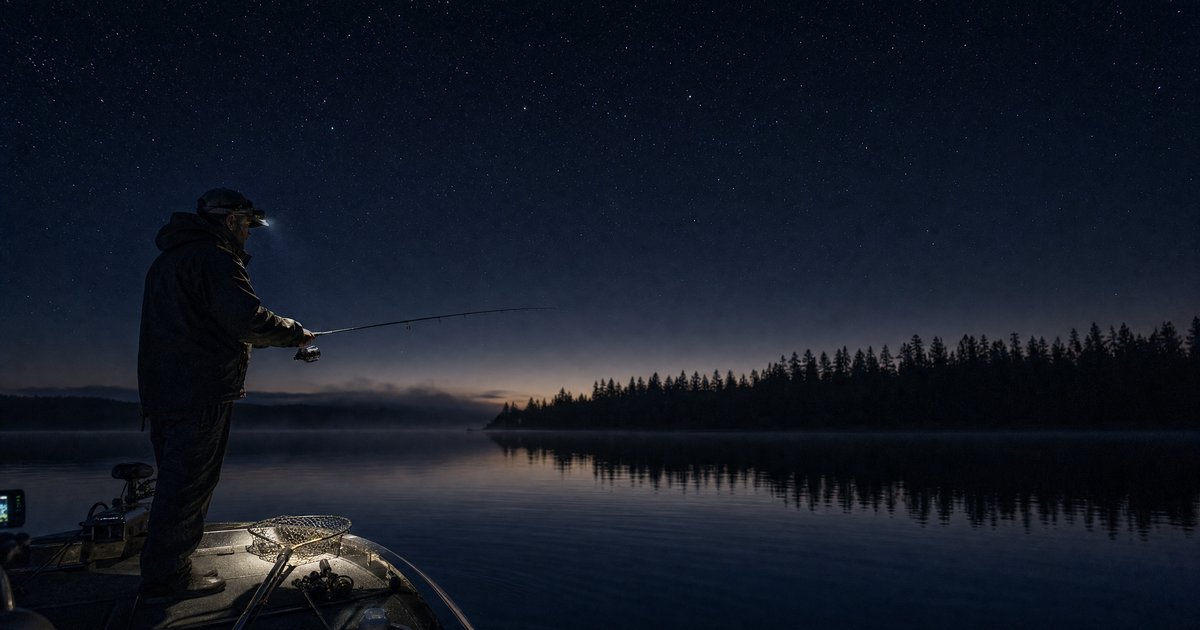
I went. Launched my kayak at 8pm on a smallmouth river I know pretty well, worked a stretch of rocky flats I'd been eyeing all summer. By 10pm, I'd landed seven fish — including a 19-inch smallie that absolutely crushed a swimbait on a drop. Jason stayed home. He's still bitter.
I'm not going to tell you the new moon is some magic guarantee. Fishing doesn't work that way, and anyone who says otherwise is selling something. But over eight years of kayak fishing — from Ozark float trips to Great Lakes walleye runs — I've noticed enough of a pattern to take the new moon solunar window seriously. This article breaks down why it works, how to use it, and how to build a simple game plan around it.
What the Solunar Theory Actually Says (And Why It's Not Just Folklore)
John Alden Knight developed the solunar theory back in 1926, and the core idea is straightforward: the gravitational pull of the moon and sun creates predictable feeding windows throughout the day and month. Most anglers know about the daily major and minor periods — but the monthly lunar phase piece gets overlooked.
Here's the short version: fish are more active during new and full moon phases, when gravitational forces are strongest. During a new moon, the sun and moon are aligned on the same side of Earth, which amplifies tidal pull and — according to the theory — triggers heightened biological activity in fish.
Now, does every biologist buy in completely? No. The research is mixed. But there's enough field evidence, and enough angler experience stacking up over decades, to treat it as a useful planning tool rather than superstition.
"The moon doesn't guarantee a bite. But ignoring it is like ignoring the barometer — you're leaving information on the table." — something a tournament guy on the Osage River told me years ago, and it stuck.
What makes the new moon fishing window different from the full moon? A few things:
- Darkness. With no reflected moonlight, nighttime conditions are truly dark. This changes how predator fish hunt — they rely more on their lateral line and less on vision.
- Feeding aggression. Bass, walleye, and most predatory species are ambush hunters. Low light gives them an advantage over prey, which triggers more confident, aggressive strikes.
- Reduced angling pressure. Most casual anglers avoid fishing at night during a new moon because "it's too dark." You're often sharing water with nobody.
NOAA Fisheries has documented that many freshwater species adjust their foraging behavior in response to light levels — a factor the new moon phase amplifies compared to any other point in the lunar cycle.
How the New Moon Affects Freshwater Differently Than Saltwater
If you fish inshore or coastal, you already know the moon drives tidal movement, and solunar periods line up with major current changes. That's a direct, physical mechanism.
In freshwater, it's less about tides and more about biological rhythms and light levels. The gravitational influence on large inland bodies of water is real but subtle. What you're really working with is:
Light Penetration and Predator Behavior
Without moonlight, the water's surface reflects less ambient light. Baitfish — which rely heavily on vision to avoid predators — are more disoriented and vulnerable. Largemouth and smallmouth bass, walleye, and northern pike evolved to exploit exactly this kind of low-light advantage.
Walleye are the textbook example. Their tapetum lucidum — a reflective layer behind the retina — gives them exceptional low-light vision. During a new moon, walleye in lakes like Erie or Leech Lake are absolutely in their element. I've had guides on those fisheries tell me they flat-out don't book daytime walleye trips during the new moon week. They move everything to dusk and after.
Current and Barometric Influence
Here's something worth layering in: the new moon phase often coincides with stronger barometric pressure swings, especially in the Midwest during fall and spring. You want to check the pressure trend, not just the lunar phase. A rising barometer after a front moves through, combined with a new moon period — that's a combination worth clearing your schedule for.
I pull up HookCast's weather and pressure tool before any serious night trip. Falling pressure during a new moon? I might still go, but I'll temper my expectations. Rising pressure? I'm rigging up early.
Spawn Timing and Lunar Cycles
This matters more for bass and panfish anglers. Largemouth bass spawning is triggered by water temperature AND moon phase — most biologists put the new and full moon as the primary spawn-push catalysts when water temps hit the mid-60s. That late spring new moon can absolutely coincide with peak spawning activity.
Worth noting: during spawning season, practice careful catch-and-release. Handle fish quickly, wet your hands, and get them back on the nest. Especially on heavily pressured lakes, those bedding fish are doing important work.
Reading a New Moon Solunar Forecast the Right Way
Not all new moon days are equal. The solunar forecast gives you major and minor feeding periods on top of the monthly lunar phase — and stacking those together is where the real planning happens.
Major vs. Minor Solunar Periods
- Major periods happen roughly twice a day, when the moon is directly overhead or directly underfoot. These typically last 1.5–2 hours.
- Minor periods happen when the moon is rising or setting — shorter windows, usually 45–60 minutes.
During a new moon, major periods that overlap with dawn or dusk are gold. You're stacking three factors: low-light conditions, peak predator feeding behavior, and strong gravitational pull.
Here's a simple table to think about it:
| Condition | Fishing Impact |
|---|---|
| New moon + major solunar + dawn | Excellent — prime multi-factor window |
| New moon + major solunar + midday | Good — especially in summer when fish go deep |
| New moon + minor solunar + dusk | Good — worth targeting |
| New moon + falling barometer | Mixed — fish may shut down despite lunar period |
| New moon + rising barometer + major period | Exceptional — best possible combo |
Where to Check Your Solunar Calendar
HookCast's solunar calendar integrates lunar phase data with your local forecast so you can see how the new moon major periods line up with actual weather at your fishing spot. That weather-meets-lunar integration is what makes it actually useful for planning, rather than just staring at a generic moon chart that doesn't account for a cold front blowing through.
You can also cross-reference with NOAA's lunar phase data if you want to get granular about exact rise and set times.
Species-Specific Tactics for New Moon Windows
Different fish respond to new moon conditions in different ways. Here's how I approach the most common freshwater targets.
Bass (Largemouth and Smallmouth)
Night fishing for bass during a new moon is one of the most underrated techniques in freshwater fishing. With zero moonlight, bass push into shallow water — especially near structure — to ambush prey.
What works:
- Dark-colored lures — black or dark blue work better than natural patterns in true darkness because they create a stronger silhouette against any ambient light
- Slow-rolled spinnerbaits with a single Colorado blade (the thump and vibration matters more than flash)
- Large profile swimbaits — that 19-inch smallie I mentioned at the start ate a 4-inch paddle tail on a 3/8 oz jighead
- Topwater — yes, even at night. A black Zara Spook walked slowly over a shallow flat can produce violent strikes you'll feel before you hear
Key spots: rocky points, wood structure in 2–6 feet of water, channel swings near shallow flats. Bass move up to feed — find the transition zones.
Walleye
New moon walleye fishing might be the strongest case for lunar planning in freshwater. These fish are built for low-light, and the darkest nights of the month consistently produce the best action.
What works:
- Jig and minnow combinations — 1/4 to 3/8 oz jigheads with live or fresh-cut shiners
- Shallow crankbaits worked over rock piles and gravel bars in 6–12 feet
- Slip bobber rigs with leeches or nightcrawlers if you're stationary fishing from shore
The key adjustment for new moon walleye: fish shallower than you think. These fish move up aggressively at night. I've caught walleye in less than 4 feet of water during a new moon that would have been in 20 feet during daylight.
Crappie and Panfish
Crappie are a different story. They follow baitfish, and baitfish get drawn to light at night — which is why dock lights are so effective. During a new moon, crappie near lit structures are even more concentrated because ambient light from the moon isn't competing with dock lights and marina lights.
Small tube jigs and 1.5-inch paddle tails on 1/32 oz heads are plenty. Match the color to what you see under the light — chartreuse and white work under green lights; pink and white under white lights.
Building a Night Fishing Game Plan Around the New Moon
This is where most anglers miss the opportunity. The solunar calendar tells you when — your preparation determines whether you capitalize on it.
Safety First (Non-Negotiable)
Night kayak fishing requires extra attention. I say this from experience, not just obligation:
- Wear your PFD. Always. Every night trip, no exceptions.
- Use a white 360-degree light visible from all directions — this is a legal requirement in most states for any vessel underway at night
- Bring a headlamp and a backup — cheap headlamps die at the worst moments
- Tell someone where you're launching and when you expect to be back
- Know your water before you fish it in the dark — night isn't the time to explore new water with submerged hazards
If you're wade fishing at night, the same principles apply. Know the bottom composition, wear felt or studded soles on slippery rock, and don't push into current you couldn't handle in daylight.
Pre-Trip Planning Checklist
About 48–72 hours before a new moon night trip:
- [ ] Check the solunar calendar for major/minor periods on your target night
- [ ] Check barometric pressure trend — you want stable or rising
- [ ] Review water temperature for your target species' feeding range
- [ ] Scout your spot in daylight if possible — know where the structure is before dark
- [ ] Charge all electronics, lights, and fish finders
- [ ] Pre-rig 3–4 setups so you're not fumbling with knots in the dark
Lure Colors and Visibility
In total darkness — which is what a true new moon gives you — black outperforms natural colors for most applications. The silhouette contrast is what triggers strikes, not flash or realistic color patterns. Second choice is dark blue, then dark purple.
Save your chartreuse and white for situations where there's ambient light — dock lights, bridge lights, or marina glow.
Working Structure Without Visibility
Your fish finder becomes critical at night. Knowing where a drop-off, rock pile, or submerged timber is before you start casting gives you a huge advantage. Use the daylight scouting or your past waypoints to position accurately, then cast to the known structure.
Slower retrieves generally outperform fast presentations at night. Fish are reacting to sound and vibration more than visual cues.
Quick-Reference: New Moon Fishing Strategy
Best species targets: Walleye, largemouth bass, smallmouth bass, crappie near lights
Best times: Major solunar periods overlapping with dusk or dawn; 2–3 hours after dark
Best lure colors: Black, dark blue, dark purple; match silhouette over realism
Best structure: Shallow transition zones — rock piles, timber, channel edges in 3–12 feet
Best conditions to combine: Rising barometer + stable weather + new moon major period
Conditions to avoid: Rapidly falling barometer, hard cold front within 24 hours, high winds on open water at night (kayak safety)
Planning tools: HookCast solunar calendar for timing, NOAA lunar data for rise/set times, USGS stream gauges for river conditions
The bottom line is this: the new moon isn't a guarantee of great fishing, but it's one of the most reliable natural cycles you can plan around. Eight years of kayak fishing have taught me that the anglers who consistently catch fish aren't just better at casting — they're better at showing up at the right time. The new moon solunar window is one of the clearest signals we have.
Use it.
FAQ
Is the new moon or the full moon better for fishing?
Both lunar phases produce strong solunar feeding activity, but many freshwater anglers — especially those targeting walleye and bass — report that the new moon edges out the full moon for nighttime fishing. The complete darkness of a new moon gives predator fish a stronger low-light advantage over prey, often triggering more aggressive feeding behavior. Full moon nights can also be productive, but the added ambient light lets prey fish see and avoid predators more effectively.
What time of night is best to fish during a new moon?
The most productive windows are during major solunar periods that overlap with dusk or the first 2–3 hours after dark. Major periods occur when the moon is directly overhead or underfoot — these last roughly 90–120 minutes and represent peak gravitational and biological activity. Stacking a major solunar period with low-light conditions (dusk or full dark) during a new moon gives you the best combination of feeding triggers.
Does new moon fishing work for bass in freshwater lakes?
Yes — largemouth and smallmouth bass are strong new moon targets in freshwater. During new moon periods, bass push into shallow structure (2–6 feet) to ambush prey under the cover of darkness. Dark-colored lures like black spinnerbaits, swimbaits, and topwater plugs worked slowly near wood, rock, or transition zones tend to outperform natural-color presentations because silhouette contrast matters more than realistic color in low-light conditions.
How do I find the new moon solunar feeding times for my area?
Solunar calendars calculate major and minor feeding periods based on moon position relative to your location, so the times shift daily and vary by region. HookCast's solunar tool integrates lunar phase data with local weather conditions, which lets you see how the new moon periods line up with barometric pressure trends at your specific fishing location. You can also reference NOAA's tidal and lunar data for precise moonrise and moonset times.
Is it safe to kayak fish at night during a new moon?
Night kayak fishing is safe with proper preparation, but the lack of moonlight during a new moon means you need to take extra precautions. Always wear a PFD, carry a white 360-degree navigation light (legally required in most states for vessels underway), bring a headlamp plus a backup, and fish water you've already scouted in daylight. Tell someone your launch location and expected return time before every night trip.
`