Night Fishing Guide: Species, Tactics & Safety for After-Dark Fishing
It was a Tuesday in late July, and I'd been getting absolutely cooked on my home lake for two weeks straight. Midday surface temps pushing 88°F, fish buried in the deepest thermocline they could find, and me coming home with a sunburn and a bad attitude. My buddy Dave called me that evening and said, "Meet me at the ramp at 9 p.m."
I thought he was joking. He wasn't.
By midnight we had boated more largemouth than I'd seen in a month of daytime trips. Big ones, too — fish that had been completely lockjawed during the day were suddenly aggressive, shallow, and mean. That night changed the way I fish summers entirely.
If you've been grinding through the dog days of summer wondering where all the fish went, they didn't go anywhere. They just went nocturnal. And once you understand how to chase them after dark, you'll start looking forward to those hot, flat, windless summer nights instead of dreading them.
Why Fish Feed Better at Night in Summer
The short answer: comfort and cover.
During the heat of summer, water temperatures in the shallows can spike high enough to stress fish metabolically. Bass, walleye, catfish — they're all cold-blooded, and their feeding behavior is directly tied to water temperature. When the shallows cool down after sunset, fish that spent the day suspended in deeper, cooler water move back up to feed.
There's also the light factor. Most predatory fish are ambush feeders, and darkness is their ally. Baitfish lose their visual advantage at night, which means bass, walleye, and other predators can hunt more efficiently. The food chain tips in favor of the hunter.
Reduced pressure is another big piece of the puzzle. Most recreational anglers are off the water by dark. Boat traffic drops to near zero. Fish that were spooked and boat-shy all day suddenly have the whole lake to themselves. In my experience, this pressure reduction alone can flip a dead bite into a productive one — especially on heavily fished public lakes.
One more thing worth mentioning: solunar activity. Major and minor feeding periods don't stop just because the sun goes down. Some of my best night sessions have coincided with a major solunar period happening between 10 p.m. and midnight. I always pull up HookCast before a night trip to check both the solunar calendar and the barometric trend — a stable or slowly rising pressure after a front has passed usually means the bite is on.
Best Fish to Catch at Night
Not every species goes on a night bite equally. Here's a breakdown of the fish most worth targeting after dark, and why they're so productive.
Largemouth and Smallmouth Bass
Bass are arguably the most popular night fishing target in the country, and for good reason. Largemouth especially become aggressive shallow feeders after dark, moving into the same flats, points, and laydowns that they avoid during bright summer days.
Largemouth tend to set up along weed edges, dock pilings, and rocky points. They're hunting by vibration and sound as much as sight, which is why big, slow-moving lures work so well.
Smallmouth in rivers and clear lakes also feed actively at night, though they tend to stay tighter to current seams and rocky structure. On Ozark streams — which I fish a lot — smallies will push into surprisingly shallow riffles after dark to ambush crayfish.
Walleye
Walleye are practically built for night fishing. Their large, light-gathering eyes give them a significant advantage in low-light conditions, and they're well-known for moving shallow at night to feed on shad and perch along sand flats and rocky shorelines.
On the Great Lakes tributaries and reservoirs throughout the Midwest, walleye night fishing peaks in summer when fish push into 5–12 feet of water after spending the day in 20–30 feet. If you've never targeted walleye after dark, you're missing some of the most consistent action of the season.
Catfish
If there's one species that was born to be caught at night, it's catfish. Channel cats, blues, and flatheads all feed heavily after dark, relying on their extraordinary sense of smell and barbels to locate food in complete darkness.
Flathead catfish in particular are almost exclusively nocturnal hunters. They're ambush predators that set up near structure — submerged logs, bridge pilings, deep bends — and wait for live prey to come to them. Channel cats are more opportunistic and will roam flats and current seams looking for cut bait, chicken liver, or prepared stink baits.
Catfish night fishing is one of the most accessible forms of after-dark angling. You don't need fancy electronics or expensive gear. A good rod, a circle hook, some fresh cut shad, and a lawn chair will get the job done.
Crappie
Crappie are an underrated night bite, especially around dock lights and bridge lights that attract insects, which attract baitfish, which attract crappie. This is one of the most reliable patterns in summer fishing anywhere in the South and Midwest.
The fish stack up in the lit water edges — not directly in the brightest light, but right at the shadow line where they can ambush baitfish moving through. Small jigs and live minnows both work well.
A Quick Species Comparison
| Species | Best Night Habitat | Top Tactics | Peak Window |
|---|---|---|---|
| Largemouth Bass | Shallow flats, docks, weed edges | Topwater, slow-rolled swimbaits | 10 p.m. – 2 a.m. |
| Smallmouth Bass | Rocky points, current seams | Tubes, crayfish imitations | Dusk – midnight |
| Walleye | Sand flats, rocky shorelines | Jigs, live minnows, crankbaits | Dusk – midnight |
| Channel Catfish | Current seams, flats | Cut bait, stink bait on bottom | 9 p.m. – 3 a.m. |
| Flathead Catfish | Deep structure, log jams | Live bluegill, large shiners | 10 p.m. – 4 a.m. |
| Crappie | Dock lights, bridge lights | Small jigs, live minnows | 9 p.m. – midnight |
Night Fishing Tactics That Actually Work
Bass After Dark: Slow Down and Go Big
The single biggest mistake I see anglers make when they first try night bass fishing is using the same lures and retrieves they'd use during the day. Night fishing rewards patience and a slower, more deliberate presentation.
Black and dark-colored lures are the standard for night bass fishing, and the reasoning is counterintuitive to most people. You'd think bright colors would be more visible in the dark — but fish are looking up at your lure against whatever ambient light exists (moon, stars, dock lights). A dark silhouette is more visible and defined than a translucent or light-colored lure.
Top night bass lures:
- Buzzbait: Nothing beats the topwater commotion of a buzzbait on a calm summer night. Work it slow, keep it on the surface, and hold on.
- Black/blue jig: A 3/8 to 1/2 oz flipping jig crawled along the bottom near structure is a night fishing classic.
- Large plastic worm: A 10–12 inch straight-tail worm in black or purple, Texas-rigged and dragged slowly, is one of the most consistent night bass producers I've ever used.
- Spinnerbait: The thump and vibration of a Colorado-blade spinnerbait lets bass zero in on it even in complete darkness.
Pro tip: Slow your retrieve down by at least 30% compared to your daytime speed. Fish are tracking your lure by vibration and sound, and they need time to locate and commit. A retrieve that feels almost painfully slow to you is often exactly right.
Walleye: Work the Transitions
Walleye night fishing is all about finding the transition zones — where hard bottom meets soft bottom, where a weed edge drops into open water, where a sand flat butts up against a rock pile. These are the ambush zones where walleye set up to feed.
Jig and minnow combinations are the bread and butter of walleye night fishing. A 1/4 oz jig tipped with a live shiner or fathead, worked slowly along the bottom, is hard to beat. Keep contact with the bottom and move the jig in short hops rather than long sweeps.
Shallow-running crankbaits worked along weed edges and rocky shorelines can also be deadly. The key is matching your crankbait's running depth to the depth you're fishing — you want it ticking the tops of weeds or occasionally bumping bottom.
Catfish Night Fishing: Location Is Everything
For catfish, the most important decision you make is where you set up, not what bait you use (though bait matters too).
Current breaks are prime catfish territory at night. On rivers, look for the inside of bends, behind large rocks or bridge pilings, and at the confluence of tributaries. Catfish use these current breaks as ambush points and resting spots.
Fresh cut bait — shad, skipjack, bluegill — is hard to beat for channel cats and blues. Cut it fresh, expose the bloody meat, and let the scent do the work. For flatheads, live bait is the gold standard. A lively 6–8 inch bluegill on a circle hook, presented near heavy structure, is about as good as it gets.
Circle hooks are worth mentioning here specifically: they dramatically reduce gut-hooking, which makes releasing fish much cleaner and more humane. Even if you're keeping catfish for the table, circle hooks reduce handling time and stress on fish you're releasing.
Using Light to Your Advantage
Submersible fishing lights are a legitimate tool for night fishing, particularly for crappie and walleye. Green LED lights attract plankton, which attracts baitfish, which attracts predators. It's a simple food chain play, and it works.
For bass fishing, I'm more selective about using lights. Dock lights and bridge lights are great to fish around because the fish are already conditioned to them. But throwing your own light into a dark cove can sometimes spook fish that have settled into a feeding pattern in the darkness.
Essential Gear for Night Fishing
You don't need to overhaul your entire tackle setup for night fishing, but there are a few pieces of gear that go from optional to essential once the sun goes down.
Lighting
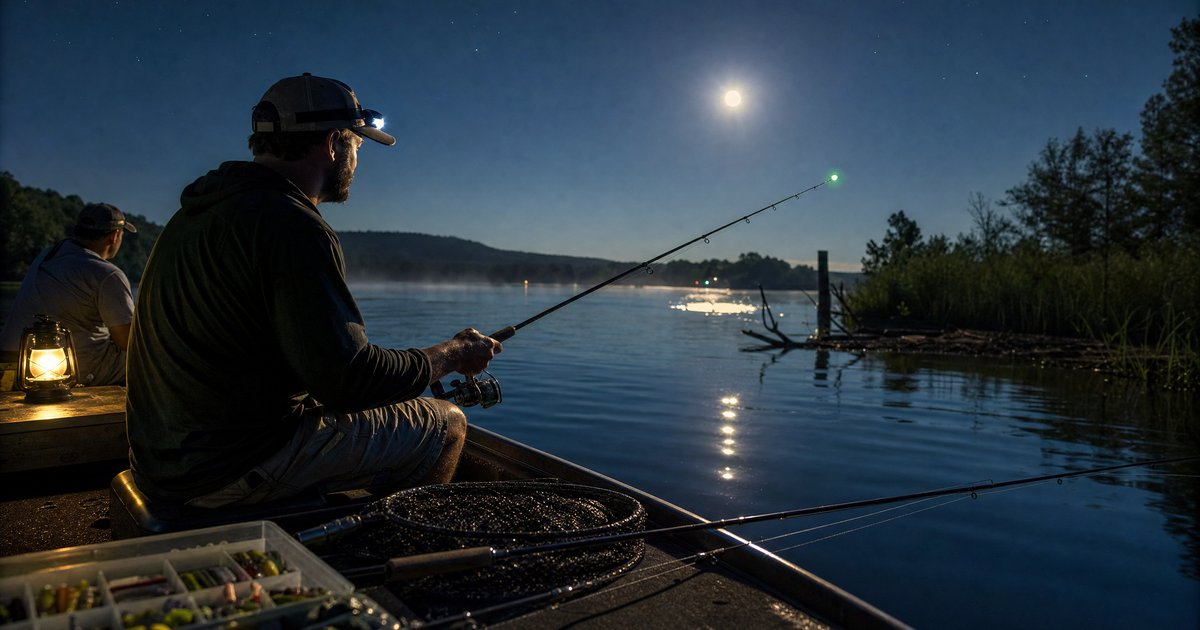
- Headlamp: Non-negotiable. Get one with a red-light mode — red light preserves your night vision and doesn't spook fish the way white light does. I've been running the same basic headlamp for three years and it's never let me down.
- Rod tip light: Small clip-on lights for your rod tips let you watch for bites when you're fishing multiple rods, especially useful for catfishing setups.
- Navigation lights: If you're on a boat, proper navigation lights aren't optional — they're legally required and genuinely important for safety.
Tackle Organization
This sounds boring, but disorganized tackle is a real problem at night. You can't see what you're grabbing, and digging through a box of hooks and jigs in the dark is a recipe for a hook in your finger.
Pre-rig several rods before you leave the house. Organize your tackle so your most-used lures are in a single, easy-access box. Simplify your setup — you don't need 40 lure options at night.
Electronics
Your fish finder is just as useful at night as during the day. If you're walleye fishing or targeting suspended catfish, knowing the depth contours and locating fish on screen is still valuable. The screen brightness might need adjusting — most units have a night mode that dims the display so you're not blinding yourself.
Night Fishing Safety: Don't Skip This Part
I want to be direct here: night fishing carries real risks that daytime fishing doesn't, and you need to take them seriously. I've been on the water after dark hundreds of times, and I've seen things go wrong when people get casual about safety.
On the Water Safety
Always wear your life jacket at night. I know plenty of anglers who wear a PFD during the day but skip it at night because "it's calm." That's exactly backwards. If you fall overboard in the dark, your ability to be seen and rescued drops dramatically. On my kayak, the PFD goes on before I launch and comes off when I'm back on shore — no exceptions.
File a float plan. Tell someone where you're going, what water you're fishing, and when you expect to be back. This is basic water safety that most people ignore until something goes wrong.
Know your water before dark. Don't fish a new body of water for the first time at night. Submerged hazards — stumps, rocks, shallow bars — that you'd easily spot during the day become invisible in the dark. Scout new water during daylight first.
Navigation lights are required on motorized vessels after dark. Know the rules. On a kayak, you're required to have a white light available to show to prevent collision — a headlamp or clip-on light works for this.
Personal Safety on Shore
If you're bank fishing or wading at night:
- Watch your footing. Rocks and roots that are easy to navigate in daylight become ankle-breakers in the dark.
- Be aware of wildlife. In the South and Southwest, water moccasins and rattlesnakes are active at night near water. Watch where you step and where you put your hands.
- Bring a buddy when possible. Night fishing solo is fine when you're experienced and on familiar water, but having a partner is always safer.
Weather Awareness
Summer nights can turn fast. What starts as a calm, clear evening can become a lightning storm in under an hour. Before any night trip, check the forecast carefully — not just the evening forecast, but the overnight outlook.
I always check current pressure on HookCast before heading out at night. A dropping barometer in the evening is a red flag — it often signals incoming weather even when the sky looks clear. A stable or rising pressure after a front has passed is usually a green light for a productive, safe night session.
Safety rule: If you see lightning, get off the water immediately. Don't wait to see if it passes. Get to shore, get away from the water, and wait it out.
Quick-Reference Night Fishing Checklist
Before you head out, run through this list:
Gear
- [ ] Headlamp with fresh batteries (and backup batteries)
- [ ] Red-light mode headlamp for rigging without killing night vision
- [ ] Pre-rigged rods (at least 2-3)
- [ ] Simplified, organized tackle
- [ ] Navigation lights (boat) or white safety light (kayak/canoe)
Safety
- [ ] Life jacket on (not just in the boat — on your body)
- [ ] Float plan filed with someone onshore
- [ ] Weather forecast checked — including overnight outlook
- [ ] Barometric pressure trend noted
- [ ] Fully charged phone
- [ ] First aid kit
Planning
- [ ] Solunar periods checked for the night
- [ ] Water you're fishing is familiar from daytime scouting
- [ ] Local regulations reviewed (some waters have night fishing restrictions)
- [ ] Bait/lures prepped and ready
Ethics & Handling
- [ ] Circle hooks for catfish to reduce gut-hooking
- [ ] Wet hands before handling fish
- [ ] Proper release technique ready — support fish horizontally, revive before releasing
Night fishing isn't complicated, but it does reward preparation. The fish are there. The bite is often better than anything you'll find during the day in summer. You just need to show up ready, stay safe, and slow down enough to let the darkness work in your favor.
Get out there. The night bite is waiting.
FAQ
What is the best fish to catch at night?
Catfish, walleye, and largemouth bass are consistently the top night fishing targets across most of the country. Catfish are almost exclusively nocturnal hunters and respond well to cut bait and live bait fished near structure. Walleye use their large, light-sensitive eyes to dominate shallow flats after dark. Largemouth bass move shallow at night to feed aggressively, especially during the hot summer months when they avoid the shallows during daylight hours.
What lures work best for night bass fishing?
Dark-colored lures that create vibration and noise are the most effective for bass after dark. Black buzzbaits, large black or purple plastic worms, black/blue jigs, and Colorado-blade spinnerbaits are all proven producers. The key is to slow your retrieve significantly — fish are tracking lures by sound and vibration at night, and a slower presentation gives them time to locate and commit to the bait.
Is night fishing safe?
Night fishing is safe when you take it seriously and prepare properly. Always wear a life jacket on the water, file a float plan with someone onshore, and only fish water you've already scouted during daylight. Carry a headlamp with fresh batteries, check the weather forecast before you go, and get off the water immediately if lightning develops. Bank anglers should watch their footing carefully and be aware of nocturnal wildlife near water, particularly in the South.
Why do fish bite better at night in summer?
In summer, shallow water temperatures can spike high enough to stress fish metabolically during the day, pushing them into deeper, cooler water where they become inactive. After sunset, the shallows cool down and fish move back up to feed. Reduced boat traffic also plays a major role — fish that were pressured and boat-shy all day become much more aggressive once the lake quiets down. Predatory fish like bass and walleye also have a hunting advantage in low light, since baitfish lose their visual edge after dark.
Do I need special gear for night fishing?
You don't need to overhaul your tackle setup, but a few items are essential. A quality headlamp with a red-light mode is the most important piece of night-specific gear — red light lets you rig and handle fish without destroying your night vision. Pre-rigging several rods before you leave home and simplifying your tackle selection will save you a lot of frustration in the dark. If you're on a boat, proper navigation lights are legally required and genuinely important for safety on the water.