Pacific Northwest Salmon Fishing: Chinook, Coho & Pink Salmon Seasons Explained
It's 5:30 a.m. on a July morning in Puget Sound, and the surface looks like hammered glass. A charter boat idles past the breakwall, riggers already set, downrigger balls glinting in the gray light. The captain doesn't look at a phone. He already knows where he's going — because he knows what the fish are doing this time of year.
That's the thing about Pacific Northwest salmon fishing that keeps anglers coming back season after season. These fish run on a schedule. Not perfectly, not to the minute, but close enough that if you understand the biology behind the runs, you can put yourself in the right place at the right time with remarkable consistency.
I came up fishing stripers and red drum on the Outer Banks, where everything revolves around tides and bait movement. The Pacific Northwest operates on the same underlying logic — predators follow forage, and forage moves with structure and current — but the salmon dimension adds a layer of seasonal complexity that's genuinely fascinating. So let's break it down: Chinook, Coho, and Pink salmon, what drives each run, and how to fish them effectively whether you're on the Washington coast, inside Puget Sound, or working an Oregon river bar.
The Three Salmon You're Actually Chasing
Before we get into tactics, let's get the species straight. Pacific Northwest anglers primarily target three species during the summer and fall windows.
Chinook (King) Salmon
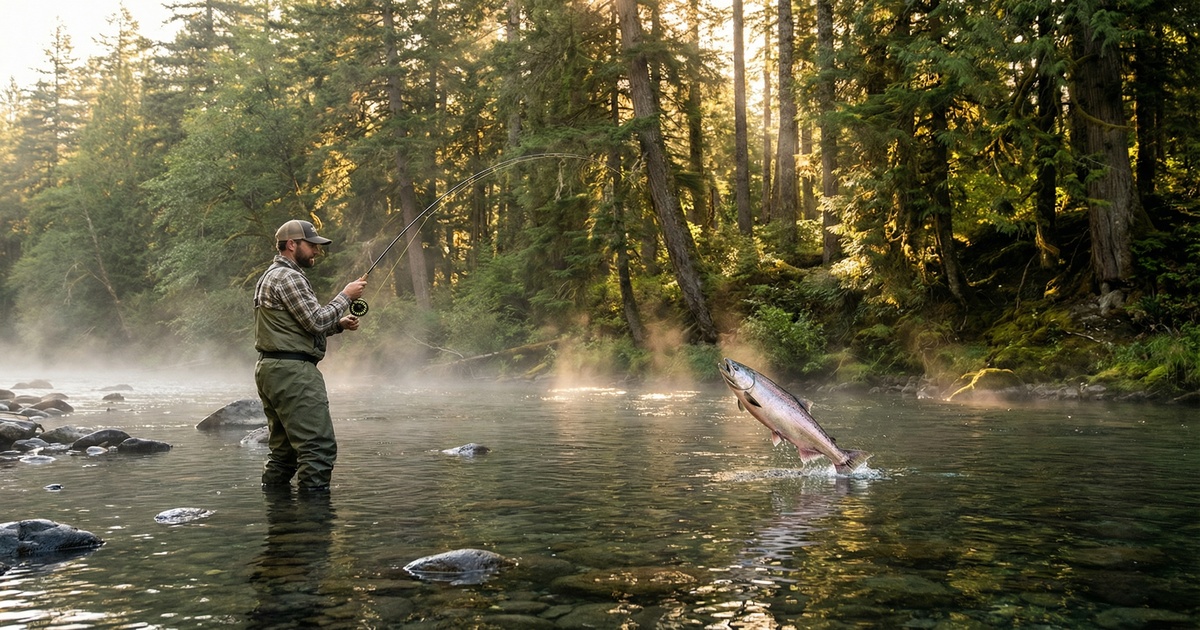
Chinook salmon are the apex fish in this fishery — the largest Pacific salmon species, routinely hitting 20-40 pounds with true trophy fish pushing past 50. They're the reason people book charter trips months in advance.
Kings don't congregate in surface-level schools the way Coho do. They run deeper, often hugging the thermocline or sitting tight to underwater structure. That depth preference is the central challenge of Chinook fishing — and why downriggers dominate the offshore game.
Chinook enter the Pacific Northwest system in multiple runs. Spring Chinook (also called springers) are the most prized inland run fish, moving into river systems as early as March. Summer/fall Chinook are what most ocean and Puget Sound anglers are targeting, with peak opportunity running from late June through September depending on location.
Coho (Silver) Salmon
Coho salmon are the action fish. They're aggressive, acrobatic, and far more willing to hit surface lures and shallow presentations than their bigger cousins. Average size runs 6-12 pounds, which puts them in a sweet spot for lighter tackle and a genuinely fun fight.
Coho start showing in numbers in Puget Sound and along the coast in August, with the run typically peaking through September and into October. They're notorious for their surface-feeding blitzes — if you've ever watched a school of silvers crashing baitfish on top, you'll understand why people get hooked on Coho fishing.
Pink Salmon
Pink salmon are the odd ones out in this group — smaller (averaging 3-5 pounds), humbler in reputation, and running on a strict odd-year cycle. In Washington State, the pink run is one of the most predictable events in Northwest fishing: huge numbers, accessible fish, and a feeding behavior that makes them surprisingly catchable even for newer anglers.
Pinks start entering Puget Sound in earnest in July of odd years, with peak fishing typically landing in August. The Strait of Juan de Fuca and Central Sound are ground zero for this fishery.
Field observation: On an odd year, don't overlook pinks. I've watched anglers on the same boat completely ignore a biting school of pinks while waiting for a Chinook that never showed — and the guy targeting pinks limited out and went home happy by 8 a.m.
Understanding the Runs: What's Actually Moving the Fish
Here's the "why" that most fishing articles skip over. Salmon are anadromous — born in freshwater, they migrate to the ocean to feed and grow, then return to their natal rivers to spawn. That return journey is what drives every salmon season you'll read about.
Ocean Feeding vs. River Bound
When salmon are in the ocean or in marine waters like Puget Sound, they're still in feeding mode. They're chasing herring, anchovies, candlefish (eulachon), and sand lance. This is when they're most aggressive and most accessible to sport anglers. Once salmon commit to a river and start their upstream push, their feeding instinct diminishes significantly — they're running on stored energy.
This biology creates a key strategic principle: fish the transition zone. The area where ocean-bound or sound-bound fish are still actively feeding but staging near river mouths or pinch points is where you'll find the most aggressive bites.
How Tides and Current Shape the Bite
This is where my East Coast background actually transfers directly. In the Puget Sound system, tidal exchange moves baitfish, and salmon follow the bait.
Strong tidal movement creates current seams — edges between moving water and slack water where baitfish get concentrated. Salmon stack on the downcurrent side of points, in eddies behind structure, and along drop-offs where they can ambush disoriented bait.
The incoming tide in Puget Sound pushes marine water and baitfish into the sound, often concentrating fish around narrows like Admiralty Inlet and the passages between islands. The outgoing tide pulls water back toward the straits, funneling fish along predictable corridors.
Before any Puget Sound salmon trip, I'd pull up HookCast to cross-reference the tide chart with the solunar period. When you get a strong tidal movement aligning with a major solunar feeding window, that's when you want your lines in the water.
Puget Sound Salmon Fishing: Tactics by Species
Puget Sound is one of the most complex marine environments on the West Coast — a network of deep basins, shallow reefs, strong tidal narrows, and river deltas that create dozens of distinct fishing zones. Here's how to approach it for each target species.
Chinook Tactics in Puget Sound
Chinook fishing here is fundamentally a downrigger game. Fish are typically holding at 40-120 feet, depending on where the thermocline sits and where the bait is showing on your sonar.
Standard Puget Sound Chinook setup:
- Downrigger or heavy diver to get to depth
- Flasher (8-11 inch dodger or rotating flasher) for attraction
- Trailing hoochie, cut plug herring, or spoon on 18-36 inch leader
- Trolling speed: 1.5-2.5 mph
Key locations: Port Angeles area, Sekiu, Point No Point, the Tacoma Narrows (local knowledge matters enormously here), and South Sound zones during the fall push.
Structure is everything. If you're marking fish on sonar but not getting bites, move along the depth contour rather than changing your offering — Chinook are notoriously position-specific.
Coho Tactics
Coho are the species where lighter tackle and more active presentations shine. They respond to faster trolling speeds (2.5-3.5 mph), and they're far more likely to come up in the water column to chase a lure.
When Coho are surface feeding — which happens regularly in August and September — casting is legitimate and incredibly fun. Small spoons, needlefish lures, and even Coho-weighted flies work when fish are blitzing.
Productive Coho setups:
- Lighter mooching rod (10-12 lb main, 8-10 lb fluorocarbon leader)
- Small hoochies or spoons 15-40 feet down under a kicker motor
- During surface blitzes: 3/4 oz Coho Killer or similar cast-and-retrieve spoon
Watch for diving birds. Murres and cormorants working a specific area usually mean bait is being pushed up — and Coho aren't far behind.
Pink Salmon: Don't Sleep on This Fishery
Pink salmon fishing in Puget Sound during odd years is genuinely one of the most accessible salmon experiences anywhere in the country. The fish are numerous, the gear is simple, and the action can be fast.
Basics of pink salmon fishing:
- Light spinning gear (8-10 lb) with small pink or chartreuse spoons, spinners, or flies
- Pinks are shallow runners — often 10-20 feet or even at the surface
- Watch for rolling fish; when you see them, you're in the right neighborhood
The mouth of the Snohomish River, Possession Sound, and the Kingston area are historically reliable during peak pink years.
Oregon Salmon Fishing: Coast vs. Rivers
Oregon's salmon fishery plays out differently than Puget Sound — you're dealing with open coast bar fishing, bay and estuary fishing, and river fishing as three distinct experiences.
The Oregon Coast Bar Fishery
Ports like Tillamook, Depoe Bay, Newport, and Astoria support charter and private boat fisheries targeting Chinook and Coho in offshore waters. Fish are often found within 5-15 miles of the bar, concentrated around underwater structure, bait schools, and temperature breaks.
Cold water upwelling along the Oregon coast during summer concentrates baitfish (especially anchovies) and draws salmon in to feed. Your electronics and sea surface temperature data matter as much here as any specific lure choice — find the 55-58°F water band and you're usually in the right zip code.
Check regulations carefully before every Oregon ocean trip. ODFW (Oregon Department of Fish and Wildlife) adjusts season dates, bag limits, and retention rules based on annual run assessments, and they can change mid-season.
Fall River Fishing
By September and October, Chinook and Coho are pushing into Oregon's major river systems — the Rogue, Umpqua, Coquille, and the massive Columbia River system. This is when bank fishing becomes productive and the character of the fishery completely changes.
River salmon tactics:
- Drift fishing with cured roe, sand shrimp, or soft beads through holding water
- Plug pulling from a drift boat (Hot Shot, Kwikfish wrapped in sardine)
- Side drifting soft baits through deeper slot water
- Anchor and back-bounce in known holding holes
River fish have transitioned from feeding mode but will still bite out of aggression or reflex — presentation has to be in the zone (not just nearby) to trigger a strike.
Timing Your Trip: A Quick Reference by Month
| Month | Species | Location | Notes |
|---|---|---|---|
| May-June | Spring Chinook | Oregon rivers, Columbia | Renowned for quality; tight regs |
| July | Chinook, Pinks (odd years) | Puget Sound, WA coast | Pinks peak late July into August |
| August | Coho, Pinks, Chinook | Puget Sound, Oregon coast | Best all-around summer month |
| September | Coho, Fall Chinook | Sound, coast, river mouths | Transition to river run begins |
| October | Fall Chinook, Coho | Oregon/WA rivers | River fishing peaks |
Pro tip: Salmon fishing in the Pacific Northwest is one of the most heavily regulated fisheries in the country, and for good reason — these runs sustain commercial, tribal, and sport fisheries simultaneously. Always verify current regulations through WDFW (Washington Department of Fish and Wildlife) or ODFW before your trip. Season dates and bag limits can shift significantly year to year based on run forecasts.
Reading Conditions Before You Go
Here's where the East Coast angler in me always comes back to the same fundamentals: conditions matter as much as location.
Barometric pressure affects salmon behavior similarly to how it affects nearshore fish anywhere. A stable, high-pressure system generally means calmer water and more consistent feeding. A dropping barometer ahead of a marine low can turn the bite on — or off — unpredictably.
Water clarity is huge, especially on the Oregon coast after rain events. Heavy rainfall muddies river plumes and can suppress biting. After a clearing period, the estuary and near-coastal bite often fires up hard as fish push in with cleaner water.
Wind and sea state are the practical gatekeepers for any ocean or Puget Sound trip. Admiralty Inlet can get nasty in an afternoon north wind. Know your boat's limits and watch the marine forecast.
I use HookCast to track barometric trends leading up to a trip — three days of stable pressure followed by a gentle drop has produced some of the best bites I've seen, across both coasts.
Key Takeaways Before You Head Out
- Chinook run deep — downrigger setups at 40-120 feet are standard; find the thermocline and the bait
- Coho are aggressive and will come up for faster presentations; watch for bird activity and surface blitzes
- Pinks run on odd years in Washington — don't ignore this fishery; light gear and simple presentations
- Tidal transitions are your prime windows — fish the movement, especially near narrows, points, and river mouths
- Ocean vs. river presentation is a completely different game; feeding fish bite differently than river-bound fish
- Check regulations before every trip — WDFW and ODFW update seasons and rules based on real-time run data
- Water temp matters on the Oregon coast — find the 55-58°F band and you're likely on bait and fish
- Stable then slightly falling pressure often precedes strong bites — monitor the trend, not just the current reading
Pacific Northwest salmon fishing has a learning curve, no question. But once you understand that these fish are running on biology and responding to the same environmental cues as any predator-prey system, the puzzle starts to feel solvable. Put yourself in the right water during the right tidal window of the right month, and the fish will do the rest.
FAQ
What is the best time of year to fish for Chinook, Coho, and Pink salmon in the Pacific Northwest?
The timing varies by species. Chinook (King) salmon offer the broadest window, with spring Chinook entering river systems as early as March and ocean/Puget Sound fishing peaking from late June through September. Coho (Silver) salmon start showing in numbers in August, with peak action running through September and into October. Pink salmon run on an odd-year cycle and are typically targeted during their own distinct summer window. Understanding which species is running when is the key to planning a productive trip.
Do I need a charter boat to fish for Pacific Northwest salmon, or can I go on my own?
Both options are viable depending on your experience level and equipment. Charter boats offer a significant advantage for Chinook fishing in particular, since captains know the local structure, thermocline depths, and current migration patterns — and they come equipped with downriggers essential for reaching King salmon at depth. That said, experienced DIY anglers with their own boats do very well targeting Coho, which are more accessible near the surface and closer to shore. If you're new to the fishery, a charter trip or two is one of the fastest ways to learn the water.
Why do downriggers matter so much for Chinook salmon fishing?
Chinook salmon run deep, often holding near the thermocline or tight to underwater structure rather than feeding near the surface like Coho. Downriggers allow anglers to present lures and bait at precise depths — sometimes 80 to 150 feet down — where Kings are actually holding. Without the ability to control depth accurately, you're essentially fishing over the fish rather than in front of them.
What's the difference between fishing Puget Sound versus the Washington or Oregon coast for salmon?
Both environments hold salmon but fish differently. The open coast offers access to salmon staging in saltwater before they commit to river systems, often producing larger fish that are still in peak condition. Puget Sound is a more sheltered, complex system with its own migration corridors, structure, and current patterns — and it supports strong fisheries for both Chinook and Coho throughout the season. River bar fishing along Oregon rivers adds yet another dimension, targeting fish that have already begun their freshwater transition. Each environment rewards local knowledge, so understanding the specific water you're fishing matters as much as species knowledge.
Are Pacific Northwest salmon runs consistent from year to year?
Salmon runs follow predictable seasonal patterns, but actual run strength varies considerably from year to year based on ocean conditions, freshwater habitat quality, hatchery returns, and broader environmental factors like water temperature and prey availability. Managers monitor run forecasts closely, and fishing regulations — including season openings, closures, and retention limits — are adjusted annually based on those projections. Checking current Washington Department of Fish and Wildlife (WDFW) or Oregon Department of Fish and Wildlife (ODFW) forecasts before your trip is essential, both for planning purposes and to ensure you're fishing within current legal guidelines.