Red Tide and Fishing: What Harmful Algal Blooms Mean for Anglers
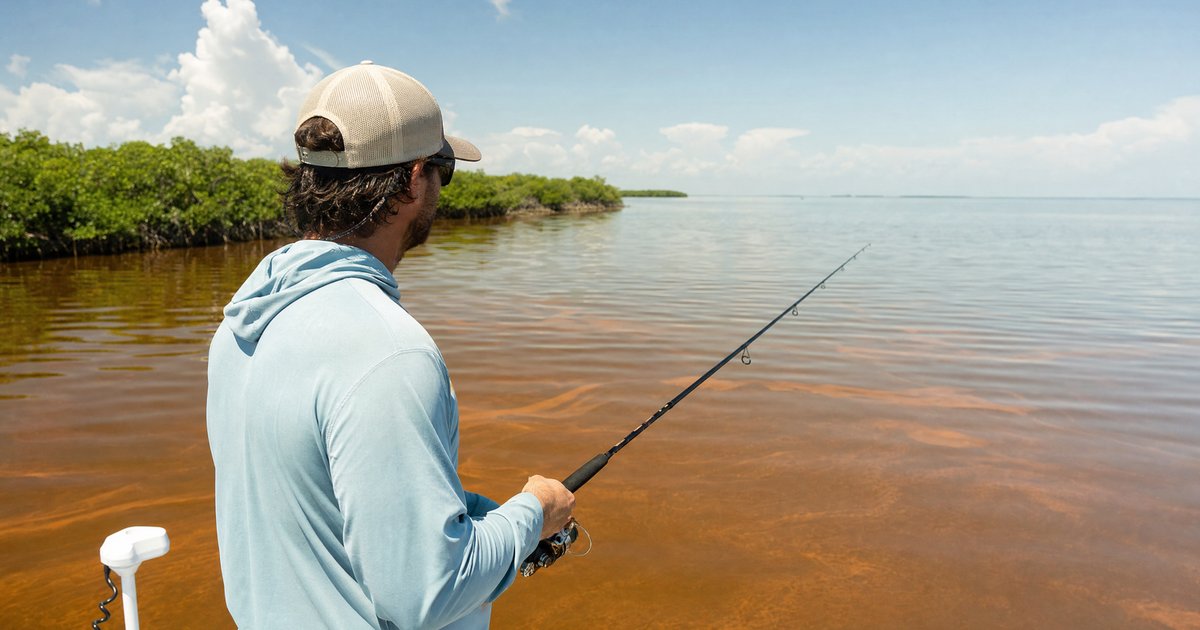
It was a Tuesday morning in late August, and I had a full boat — four guys from Atlanta who'd driven down to Tampa Bay specifically for snook season. We launched out of Madeira Beach before sunrise, and the smell hit us before we even cleared the channel markers. That thick, throat-scratching, low-tide-times-ten smell that every Gulf Coast angler knows in their gut. Red tide. By the time we reached our first flat, there were dead pinfish floating belly-up along the mangrove edge. We fished hard for four hours and landed exactly nothing. I refunded half the trip cost and drove home with a headache that lasted two days.
That trip cost me money, cost my clients a vacation memory, and reminded me — again — that red tide is one of the most disruptive forces in Gulf Coast fishing. It doesn't care about your vacation schedule, your tournament entry fee, or your carefully planned anniversary fishing trip.
But here's what I've learned after 15 years running charters on the Gulf: red tide doesn't have to mean you stay home. It means you need to understand what's actually happening in the water, where the bloom is moving, and how fish respond to it. Some of that knowledge can save a trip. Some of it just helps you make peace with a tough situation and plan better next time.
What Red Tide Actually Is (And Why It Matters to Anglers)
Red tide is the common name for a harmful algal bloom caused primarily by Karenia brevis, a microscopic, single-celled organism that occurs naturally in the Gulf of Mexico. It's been documented along Florida's Gulf Coast for centuries — Spanish explorers wrote about discolored water and dead fish in the 1500s. This isn't a new problem, though warming water temperatures and nutrient runoff have made blooms more frequent and intense in recent decades.
K. brevis produces brevetoxins, potent neurotoxins that affect the nervous systems of fish, marine mammals, and seabirds. When concentrations get high enough — typically above 100,000 cells per liter — you start seeing fish kills. At lower concentrations, you might not see dead fish, but the fish you're targeting are already stressed, off their feed, and moving.
How Blooms Form and Move
Red tide typically originates 10 to 40 miles offshore in the Gulf, where nutrient-rich upwelling supports the initial bloom. Onshore winds and currents then push those blooms toward the coast. Once inshore, they can linger for days or weeks depending on wind direction, tidal flushing, and rainfall.
The bloom doesn't distribute evenly. You can have a dead zone at one boat ramp and clean, fishable water three miles up the same bay. That patchiness is both the frustration and the opportunity — if you know how to read it.
What "Concentration" Means on the Water
The Florida Fish and Wildlife Conservation Commission (FWC) monitors K. brevis cell counts and publishes weekly bloom status reports during active events. Here's a rough field guide to what those numbers mean for fishing:
| Cell Count (per liter) | Water Appearance | Fish Behavior | Fishability |
|---|---|---|---|
| < 1,000 | Clear to slightly hazy | Normal | Good |
| 1,000 – 10,000 | Slight discoloration | Mildly stressed, may feed less | Fair |
| 10,000 – 100,000 | Brown/rust tint, possible odor | Noticeably off feed, moving | Poor to fair |
| > 100,000 | Heavy discoloration, strong odor, fish kills | Fleeing or dying | Avoid |
I've fished in the low-to-mid range and caught fish. Above 100,000 cells per liter, you're not fishing — you're sightseeing, and not the good kind.
How Fish Respond to Red Tide
This is where it gets interesting, because fish don't all respond the same way. Understanding species-specific behavior during a bloom can mean the difference between a blank day and a decent one.
The Flee Response
Most fish have enough sense to leave. Snook, redfish, and spotted seatrout — the bread-and-butter inshore species on the Gulf Coast — are mobile enough to relocate when toxin levels rise. In my experience, they push into areas with better water quality: deeper channels with stronger tidal flushing, the upper reaches of tidal creeks where freshwater inflow dilutes the bloom, or simply the opposite side of a bay from where the bloom is concentrated.
During the 2018 red tide event — one of the worst I've seen in my career — I watched snook stack up in the mouths of freshwater canals along the Caloosahatchee drainage in numbers I'd never seen before. They weren't feeding aggressively, but they were there, and a slow-worked soft plastic along the bottom would occasionally get bit. The fish were stressed. They weren't chasing. You had to put it right on their nose.
The Species That Suffer Most
Pinfish, pigfish, and other small forage species tend to die in large numbers during heavy blooms. This matters to you as an angler for two reasons. First, the bait you'd normally catch on a sabiki rig is dead or gone. Second, the larger predators that rely on that bait are suddenly without their primary food source — which can actually trigger opportunistic feeding on whatever's left, if you can find clean-enough water.
Grouper and bottom fish are more vulnerable than people realize. They can't relocate as easily as pelagic species. During severe inshore events, gag grouper in shallow nearshore structure can be badly impacted. Offshore, beyond the bloom's reach, they're fine.
Tarpon are particularly sensitive to brevetoxins. I've seen rolling tarpon on a flat go completely still and then start listing within an hour as a bloom pushed in on a tide change. If you're targeting tarpon during a red tide event, check the FWC bloom maps before you go — it's not worth stressing those fish further.
Pelagic Species: A Different Story
Here's the thing about kingfish, mahi, cobia, and other offshore pelagics: they're largely unaffected if you get far enough out. The bloom is primarily a nearshore and inshore phenomenon. On a bad red tide year, I've had some of my best offshore trips because the fish that normally hang in nearshore structure pushed out, and the offshore bite was stacked.
If red tide is hammering the bays and flats, think about going wide. The 40-to-60-foot range can be surprisingly productive when the inshore bite is dead.
Reading the Water: Finding Clean Zones During a Bloom
This is the skill that separates anglers who adapt from anglers who go home early.
Visual and Sensory Cues
You don't need a cell counter to know when red tide is bad. Your nose and eyes will tell you:
- Color: Healthy Gulf water is green-blue to blue. Red tide water turns brownish-red, rust-colored, or murky amber. The color isn't always dramatic — sometimes it's just a subtle dinginess.
- Smell: That distinctive irritating odor — like a combination of rotting seaweed and something chemical — is brevetoxin aerosol. If it's making your eyes water on the water, it's definitely affecting the fish below.
- Foam: Red tide blooms often produce a brownish, persistent foam along tide lines and shorelines.
- Dead fish: Obvious, but worth stating. If you're seeing floaters, you're in the thick of it.
- Coughing and throat irritation: This is your body telling you what the fish already know. I've had clients start coughing on the boat before we could even see the discoloration. People with asthma or respiratory conditions should stay off the water entirely during heavy bloom events.
Where Clean Water Hides
During a bloom, I'm always looking for these refuge zones:
Tidal creek mouths with freshwater inflow. Freshwater doesn't support K. brevis well. The transition zone where a creek dumps into a bay often has noticeably cleaner water, and fish know it. Check your tide charts for your area — you want to fish these spots on an incoming tide when freshwater is pushing out, not an outgoing tide pulling bloom water in.
Windward shorelines. If the wind has been pushing the bloom from the southwest (common in summer), the northeast shorelines of bays and islands often stay cleaner. The bloom concentrates on the downwind side.
Deep channels with strong tidal flow. The tidal flushing in a deep, narrow channel moves water fast enough to keep concentrations lower. I've caught redfish in a channel while the adjacent flat was completely dead.
Passes and inlets. The strong current through a pass dilutes and disperses the bloom. Fish often stack up in passes during red tide events, taking advantage of the cleaner water and the baitfish that congregate there.
Using Technology to Stay Ahead of the Bloom
Before any trip during red tide season — which in Florida runs roughly July through October, though blooms can occur any time — I check two things: the FWC's Harmful Algal Bloom monitoring page for current cell counts and bloom location, and HookCast's weather and conditions forecast to understand wind direction and tidal movement over the next 48 hours.
Wind direction is everything. A sustained onshore wind pushes the bloom in. An offshore wind pushes it back out. If I see a wind shift coming in the forecast, I know whether conditions are about to improve or deteriorate. That information alone has saved me from making a two-hour run to a spot that would be unfishable by the time I got there.
Adjusting Your Tactics When You Can't Avoid the Bloom
Sometimes you're already on the water when conditions change. Sometimes the only accessible water has some level of bloom in it. Here's how I adapt.
Slow Down Everything
Fish in stressed water don't chase. They're conserving energy and their feeding instinct is suppressed. The aggressive topwater bite you'd normally expect from snook at first light? Forget it. Switch to slow-moving presentations:
- Soft plastics worked slowly along the bottom — a 4-inch paddle tail on a light jig head, barely moving
- Live shrimp under a popping cork, but worked with long pauses instead of aggressive pops
- Cut bait on the bottom for redfish that are holding tight to structure and not willing to move for anything
The key is putting the bait right in front of the fish's face and giving it time to decide. In clean water, a redfish might chase a lure three feet. In bloom-stressed water, it might not move six inches.
Target Structure, Not Open Water
Stressed fish hug structure. Mangrove roots, dock pilings, bridge fenders, oyster bars — anything that gives them a sense of security. I've caught redfish in conditions I'd normally consider unfishable by working a soft plastic right against the base of a mangrove root, essentially dragging it under the overhanging branches. You're not covering water. You're picking apart individual pieces of structure.
Fish the Tidal Transitions
Even during a bloom, the tide still moves fish. An incoming tide bringing cleaner water from a pass can temporarily improve conditions on a flat and trigger a brief feeding window. I've had 20-minute windows of solid bites during an otherwise dead day because a tide change brought a pulse of cleaner water through a channel.
Field observation: During the worst of the 2021 bloom near Charlotte Harbor, I found that the hour before and after a tide change was the only reliable feeding window. The fish seemed to respond to the water movement itself, even when conditions were otherwise poor. Short windows, but worth being ready for.
Respect the Fish You Do Catch
This is important. Fish caught in red tide conditions are already physiologically stressed. Keep them in the water as much as possible. Use wet hands or a rubberized net. If you're practicing catch and release — which I'd strongly encourage during any bloom event — minimize air exposure to under 10 seconds if you can. A fish that swims away looking strong may still be compromised internally. Give it every advantage.
After the Bloom: The Recovery Bite
Here's the silver lining that most anglers miss: the post-bloom bite can be exceptional.
When a red tide clears — usually after a sustained offshore wind event or significant rainfall — the fish that have been stressed, displaced, and underfed come back hungry. The bait that survived starts repopulating the flats. And the predators follow.
I've had some of my best snook and redfish days in the two weeks after a major bloom clears. The fish are aggressive, they're feeding hard to rebuild condition, and they're often in locations they wouldn't normally be because the bloom pushed them there. New structure, new spots, unexpected concentrations — it's worth exploring after a bloom.
The water clarity also improves dramatically post-bloom, which makes sight fishing on the flats exceptional if you get there before the fish fully redistribute. I always make a point of getting out within 48 hours of a bloom clearing. It's one of the most reliable "good bite" windows on the Gulf Coast calendar.
Red Tide Safety: What Anglers Need to Know
A few non-negotiable points before I wrap this up:
Do not eat shellfish from bloom-affected areas. Oysters, clams, and mussels filter-feed and concentrate brevetoxins. The Florida Department of Health issues shellfish harvesting closures during bloom events — follow them. This is not a guideline, it's a health issue.
Finfish from bloom areas are generally considered safe to eat if they appear healthy and were caught alive, according to current guidance from Florida health authorities. However, I personally don't keep fish caught in heavy bloom conditions — they're stressed, their flesh quality is compromised, and it's not worth it. Release them and come back when conditions improve.
Respiratory protection. If you're going to fish in light bloom conditions, people with asthma, COPD, or other respiratory conditions should wear an N95 mask on the water. Brevetoxin aerosol is real and it can trigger serious reactions.
Check local regulations. During severe bloom events, FWC sometimes implements emergency closures on specific species or areas. Always check current regulations before heading out — FWC's MyFWC.com is the authoritative source for Florida.
Quick-Reference: Red Tide Fishing Checklist
Before You Go
- [ ] Check FWC's HAB monitoring page for current bloom location and cell counts
- [ ] Check wind forecast — offshore wind = improving conditions, onshore wind = worsening
- [ ] Pull up HookCast for tidal movement and weather trends
- [ ] Have a backup plan (different bay, offshore option, or different day)
On the Water
- [ ] Use your nose and eyes — trust what you smell and see
- [ ] Identify clean water refuges: creek mouths, windward shores, deep channels, passes
- [ ] Slow down presentations — stressed fish don't chase
- [ ] Target structure, not open water
- [ ] Fish the tidal transitions for brief feeding windows
If You Catch Fish
- [ ] Minimize handling time — wet hands, keep in water
- [ ] Consider releasing everything during heavy bloom conditions
- [ ] Do not harvest shellfish from bloom-affected areas
- [ ] Check for any active FWC emergency closures
Planning Ahead
- [ ] Mark your calendar: Gulf Coast bloom season peaks July–October
- [ ] Watch for post-bloom windows — often the best bite of the season
- [ ] Build offshore options into your summer trip planning
Red tide is a reality of fishing the Gulf Coast. It's been here longer than any of us, and it'll be here long after we're gone. The anglers who handle it best aren't the ones who get lucky — they're the ones who understand what's happening in the water and adjust accordingly. Some days you adapt and find fish. Some days you turn the boat around and go get breakfast. Both are valid. The water will be there when it clears.
FAQ
Is it safe to fish during red tide?
Fishing during a red tide event carries some risks depending on bloom intensity. In light bloom conditions (low cell counts, minimal odor), many anglers fish without issue, though people with respiratory conditions like asthma should avoid it due to airborne brevetoxins. In heavy bloom conditions with strong odor, visible fish kills, and high cell counts, it's best to stay off the water entirely. Always check current FWC bloom reports before heading out.
Can you eat fish caught during red tide?
Finfish caught alive in red tide-affected areas are generally considered safe to eat according to Florida health guidance, provided they appear healthy and were not found floating. However, shellfish — oysters, clams, mussels — should never be harvested from bloom-affected waters, as they concentrate brevetoxins and can cause serious illness. During heavy bloom events, many experienced anglers choose to practice catch and release rather than keep fish, as flesh quality is often compromised in stressed fish.
Where do redfish and snook go during red tide?
Redfish and snook typically flee areas of heavy red tide concentration and seek refuge in cleaner water. Common holding areas include tidal creek mouths with freshwater inflow, deep channels with strong tidal flushing, windward shorelines away from the bloom's direction of drift, and passes and inlets where strong current dilutes the bloom. Fish in these areas are often less active than normal, so slow presentations worked tight to structure tend to outperform aggressive retrieves.
How long does red tide last in Florida?
Red tide duration varies widely — a bloom can clear in a few days with a sustained offshore wind, or persist for weeks to months under the right oceanographic conditions. Florida's Gulf Coast bloom season typically peaks between July and October, though blooms have been documented in every month of the year. The FWC monitors active blooms weekly and publishes updated status reports that anglers can use to track a bloom's movement and intensity over time.
Does red tide affect offshore fishing?
Offshore fishing is largely unaffected by red tide, which is primarily a nearshore and inshore phenomenon. Beyond approximately 20 to 40 miles offshore, water quality is typically clean and pelagic species like kingfish, mahi-mahi, and cobia are unaffected. During severe inshore bloom events, some anglers find that offshore fishing actually improves, as fish that normally hold in nearshore structure push further out and concentrate in offshore zones.