Spring Trout Stocking Season: Where to Find Them and How to Catch More
Opening day of trout season. You drove an hour and a half, got there at 5:45 AM to beat the crowd, and watched the guy next to you — PowerBait on a plain hook, no sinker, no finesse — pull out three fish in the first 30 minutes while you blanked.
That's a gut punch.
Here's the thing: stocked trout fishing has a reputation for being easy, and it is — once you understand what's actually going on. Miss that, and you can get outfished by a kid with a Zebco on his first trip. This guide breaks down the where, the why, and the how so you stop guessing and start catching.
What "Stocked Trout" Actually Means for Your Fishing
Before you can catch them consistently, you need to understand what you're dealing with. Stocked rainbow trout (and browns or brookies depending on your state) are hatchery-raised fish. They didn't grow up hunting caddisfly hatches or holding in current seams. They grew up eating pellets, competing for food in crowded raceways, and getting handled repeatedly.
That changes everything about how they behave — at least initially.
The Adjustment Period
Right after a truck dumps fish into a lake or stream, you'll see a short window of chaos. Fish are disoriented, scattered, and easy. Guys walking the bank and chucking anything that moves will catch fish during this period. This is why opening weekend produces numbers even for beginners.
But within 24-72 hours, fish that survived the initial pressure start settling in. They find structure. They get spooky. They start acting — slowly, imperfectly — more like wild trout.
Field observation: I've seen stocked trout in pressured ponds get so hook-shy within a week of stocking that you had to drop down to 4-pound fluorocarbon and tiny jigs to get strikes. Same fish that ate anything 48 hours earlier. Pressure changes everything.
Hatchery Conditioning Still Matters
Here's the good news: even after they wise up, stocked trout still carry hatchery instincts. They're conditioned to surface feeding at pellet time. They associate competition with food. That's why PowerBait works — it mimics the scent profile of what they've been eating for months. And it's why a tight cluster of fish often means aggressive feeding rather than the opposite.
Where Stocked Trout Go After They're Released
This is the piece most anglers get wrong. They fish where the truck stopped, not where the fish ended up.
In Lakes and Ponds
Stocked trout in still water need a few things: cool temperatures, adequate oxygen, and safety from predators. In early spring, when water temps are still in the low-to-mid 50s, trout have more flexibility. As the season pushes toward May and temperatures rise, they'll move.
Watch for these zones:
- Inlet areas — Cool, oxygenated water coming in. Trout find these fast.
- Shaded north banks — Slower to warm. Holds fish longer into the day.
- Depth transitions — Where a shelf drops off. Trout stage here to regulate temperature.
- Submerged structure — Logs, old docks, brush piles. Stocked fish aren't wild, but they still seek cover once acclimated.
One thing that surprises people: stocked trout in ponds often move shallow at dawn and dusk, especially in the first week or two post-stocking. They're following the pellet-feeding schedule baked into them at the hatchery. First and last light in spring can be genuinely excellent.
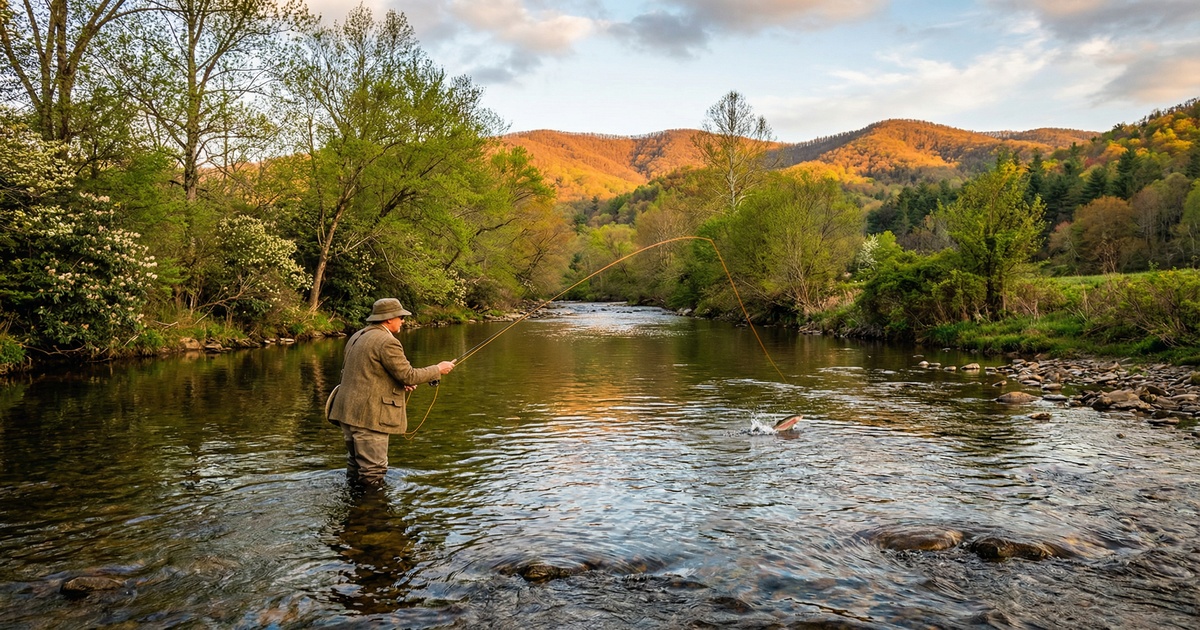
In Rivers and Streams
Moving water is a different puzzle. Stocked fish get dumped in, and current immediately starts working on them. Fish that can't hold position get pushed downstream. The strongest fish claim the best lies.
High-percentage spots:
- Slow pools below fast runs — Fish rest here. Classic holding water.
- Behind large boulders and wood — Current breaks. Stocked fish figure these out quickly.
- Undercut banks — Especially on outside bends. Shade, cover, and slack water.
- Tailouts of pools — Where a pool shallows and picks up speed before the next riffle. Fish feed here during hatches or when food washes through.
Pro tip: Don't sleep on the "boring" flat water between pools. In early spring, when temps are cold and fish metabolism is lower, trout will spread out more. The obvious pools get hammered; the flat runs between them get ignored. That's your opportunity.
The Best Baits and Lures for Stocked Trout (By Situation)
No one bait catches stocked trout in every situation. Here's how to match your approach to conditions.
Bait Fishing
PowerBait is the undisputed king for still water. The dough floats off bottom, the scent cloud does the work, and stocked trout are conditioned to the flavor profile. Use it on a simple sliding sinker rig with 2-4 feet of fluorocarbon leader to a size 10-12 hook.
Colors that produce consistently: chartreuse, rainbow, salmon egg. In clear water, go natural. In stained water, go bright.
Berkley Gulp! Trout Worms are underrated — same scent technology, but they fish better on a small jighead when you want to add a little action.
Corn still catches fish, and it's legal in most states. When PowerBait gets totally ignored, switch to a single kernel on a small hook. Don't overthink it.
For rivers: salmon eggs on a size 10 hook, drifted naturally through pools. Nightcrawlers fished the same way work too, especially in off-color water after rain.
| Situation | Top Bait | Rig |
|---|---|---|
| Still water, bottom fishing | PowerBait | Sliding sinker, 2-4ft leader |
| Still water, suspended fish | Gulp! Trout Worm | 1/64 oz jighead |
| River, clear water | Single salmon egg | Size 10 hook, split shot |
| River, stained water | Nightcrawler | Carolina rig, light split shot |
| Early morning, any water | Live minnow | Bobber, 18" leader |
Artificial Lures
Don't let the PowerBait crowd fool you — artificials can absolutely out-produce bait on the right day.
Small inline spinners (Rooster Tail, Panther Martin) are consistent producers. The flash and vibration trigger reaction strikes even from fish that aren't actively feeding. Gold blade in stained water, silver in clear. Sizes 1/16 to 1/8 oz for most trout water.
Small spoons like the Acme Kastmaster in 1/8 oz are money when fish are suspended or feeding on baitfish. Cast past likely structure, let it sink, and retrieve with occasional pauses.
Micro jigs (1/32 to 1/16 oz) with a soft plastic or marabou tail are the finesse option when pressure is high and fish have seen everything. Slow roll them near bottom or do a lift-drop retrieve. This approach shines in the second week of the season when the obvious stuff has stopped working.
Spoons and spinners fail in very cold water — below 45°F, slow down. Fish are lethargic, and a fast-moving lure won't get eaten. Switch to bait or dead-drift a jig.
Timing Your Trip Around Conditions
Showing up on the right day matters more than your gear. I've seen $500 rod setups get beaten by a guy with a Walmart combo because he fished the right time.
Temperature and Season
Water temperature is the single biggest variable for spring trout fishing. The sweet spot for rainbow trout activity is 52°F–65°F. Below 45°F, they're sluggish and hard to catch. Above 68°F, they're stressed and off the feed.
In the Northeast and Mid-Atlantic:
- Early March: Cold water, fish lethargic. Fish midday when temps are highest.
- Late March - April: Prime time. Active fish, stable temps, less heat pressure.
- May: Fishing can be excellent but temps start rising fast. Fish early morning.
Barometric Pressure
I talk about this constantly because it matters constantly. Rising pressure after a front = good fishing. Falling pressure before a storm = can be a brief feeding window. Stable, high pressure = solid fishing throughout the day.
Where most people lose out: fishing in the 24-48 hours after a cold front when pressure is high but temperatures dropped sharply. Trout shut down. The bite comes back as things stabilize.
Check HookCast before you go — the pressure trend graph will tell you more about whether fish will be biting than the weather forecast will. If pressure has been stable for 24+ hours and temps are climbing, that's your window.
Time of Day
- Dawn to 9 AM: Top pick. Stocked trout carry hatchery feeding schedules and often active at first light.
- Midday in early spring: Underrated — water temps are highest, can produce well.
- Evening: Good if temps haven't crashed. On warm April days, dusk produces.
The worst time to fish stocked water is the first two hours after stocking. It sounds backward, but the commotion of the truck, the crowd that immediately appears, and the disoriented, scattered fish make for chaotic, inconsistent catches. Let things settle for an hour.
Dealing With Pressure and Crowds
Let's be honest: opening week of trout season is crowded. Some spots look like a parking lot. You've got three options.
Fish the Overlooked Water
Every stocked stream has the spots everyone knows — the big pool under the bridge, the hole next to the parking lot. Those get hammered. Hike a quarter mile upstream or downstream, and the pressure drops dramatically. Fish do migrate, especially in streams. The fish you catch a half mile from the stocking site are the ones nobody else wanted to find.
Go Later in the Week
Weekdays after opening week see 70% less pressure. Fish are still there. The crowds aren't. If you can take a Tuesday off in late April, you'll often outfish opening Saturday with half the effort.
Go Smaller
Overlooked small tributaries that receive minimal stocking and zero pressure can hold fish that act more wild within days of stocking. A 10-fish limit from a stocked creek nobody else bothers with beats fighting elbow-to-elbow at the "famous" spot.
Observation: The best stocked trout days I've seen in the Northeast weren't on opening day. They were a Tuesday in the third week of April on a creek where I saw exactly one other person — who left after 20 minutes because "the fishing was slow." It was not slow.
State Stocking Schedules and How to Find Them
Every state in the Northeast and Mid-Atlantic publishes stocking schedules. Most are online, updated weekly.
Quick links by state:
- Pennsylvania: PA Fish & Boat Commission — pfbc.pa.gov
- New York: DEC Trout Stocking — dec.ny.gov
- New Jersey: NJ DEP Fish & Wildlife
- Maryland: MD DNR
- Virginia: VA DWR
- Connecticut: CT DEEP
Most schedules show water body, date stocked, and species. Set a bookmark and check it every Monday. Fishing water stocked 3-5 days prior often outperforms day-of stocking because fish have settled and you're not fighting the opening-day mob.
Also: sign up for email alerts if your state offers them. Some states have apps. This is basic homework that puts you ahead of most other anglers.
Spring Trout Quick-Reference Checklist
Before you head out, run through this:
Timing
- [ ] Water temp between 50-65°F? If below 45°F, fish midday
- [ ] Barometric pressure stable or rising? (Check HookCast for the trend)
- [ ] Avoid fishing 48 hours after a hard cold front
- [ ] Weekday or late-week trip = less pressure
Location
- [ ] Check your state's stocking schedule — fish water stocked 3-7 days prior
- [ ] In lakes: look for inlets, depth transitions, shaded banks
- [ ] In streams: target slow pools, behind boulders, undercut banks
- [ ] Consider hiking away from access points
Tackle
- [ ] Light spinning setup: 4-6 lb fluorocarbon, ultralight to light rod
- [ ] Bait: PowerBait, salmon eggs, Gulp! trout worms
- [ ] Artificials: inline spinners (gold/silver), small spoons, micro jigs
- [ ] Scale down in size and line weight as season progresses and pressure builds
On the Water
- [ ] Fish dawn and dusk for still water; midday in cold early spring
- [ ] Let stocking commotion settle before fishing freshly-stocked spots
- [ ] If bite dies, change retrieve speed or presentation before changing location
- [ ] Longer fluorocarbon leaders in clear, pressured water
Stocked trout fishing doesn't require complicated tactics. It requires showing up at the right time, fishing the right spots, and not walking into a spot that got hammered yesterday expecting the same results. Do your homework, adjust to conditions, and you'll put fish in the cooler while the guy next to you wonders what you know that he doesn't.
FAQ
How soon after stocking should I fish?
The first 24-72 hours after a stocking event offer the easiest fishing, as fish are still disoriented and will strike almost anything. However, if you miss that window, fish can still be caught — you'll just need to downsize your tackle, use more natural presentations, and focus on finding where the fish have settled rather than fishing the stocking location itself.
Why does PowerBait work so well on stocked trout?
Stocked trout spend months in hatchery raceways eating manufactured pellets. PowerBait is formulated to mimic the scent and texture of that food, so it triggers a conditioned feeding response even after fish have been in the water for days or weeks. It's not magic — it's hatchery conditioning working in your favor.
Where should I look for stocked trout after they've moved away from the stocking site?
In lakes and ponds, focus on inlet areas with cool, oxygenated water, shaded banks that warm slowly, and any available structure. In streams, look for deeper pools, current seams, and areas with overhead cover. Trout prioritize cool water temperatures, oxygen levels, and protection from predators — find those conditions and you'll find the fish.
Why did the guy next to me catch fish on simple gear while I blanked?
Stocked trout fishing rewards matching the fish's conditioned behavior over technical finesse, especially early in the season. A plain hook with PowerBait fished at the right depth in the right location will consistently outperform elaborate rigs placed in the wrong spot. Location and bait selection matter more than gear complexity when targeting recently stocked fish.
How does fishing pressure affect stocked trout behavior?
Significantly and quickly. Fish that survive the initial post-stocking pressure begin to associate hooks, lines, and common presentations with danger. Within a week on heavily fished water, the same trout that ate anything on day one may require lighter line, smaller hooks, and more subtle presentations to fool. If a spot has been hammered, adjust your approach or move to less pressured water.