Striped Bass Fishing in the Northeast: How to Intercept the Spring Migration
Every April, I get the same call from guys who drove three hours to Cape Cod, stared at flat water for a day, and came home with nothing. Then a week later, their buddy who fished the same beach lights up. Same spot. Different week. The difference almost always comes down to one thing: timing the migration.
Striped bass don't just "show up" in the Northeast. They move in a wave, following water temperature, baitfish, and instinct, working their way up the coast in a pattern that's predictable enough to plan around — if you understand what's driving them.
Here's how the spring striper migration actually unfolds, from the Chesapeake Bay to Maine, and how to put yourself in the right place at the right time.
How the Migration Works: Temperature Is Everything
Striped bass are thermal migrants. They winter in the Chesapeake Bay and its tributaries, and as water temps climb into the mid-50s°F, something flips. The fish start moving.
The critical threshold is 55°F. Below that, stripers are sluggish, deep, and largely uninterested in feeding aggressively. Once surface temps hit 55-65°F, they're actively hunting. Above 70°F in summer, they push back offshore or north into cooler water.
In spring, the warming happens from south to north — which is exactly the direction the fish travel.
The Staging Grounds: Chesapeake Bay (March–April)
The migration builds inside the bay before it ever reaches the coast. Pre-spawn stripers stage in the Chesapeake through March, with fish stacking up near tributary mouths — the Potomac, Rappahannock, and Susquehanna all see significant pre-spawn activity.
What you're looking for:
- Water temps between 50-58°F — fish are present but slow
- Baitfish concentrations near structure (points, channel edges, bridges)
- Rising tides pushing warmer, shallower water over flats
This is also when the biggest fish — the trophy cows — show up. Females over 30 inches are typically older, slower-moving fish that enter the bay for spawning before the smaller males flood the tributaries. If you want a shot at a 40-inch fish, late March to mid-April in the Chesapeake is your window.
The Coastal Push: Delaware to New Jersey (Late April–May)
Once spawning wraps up, fish start leaking out of the bay mouth and turning north. By late April, you'll find migrating stripers along the Delaware coast and pushing into New Jersey's beach towns.
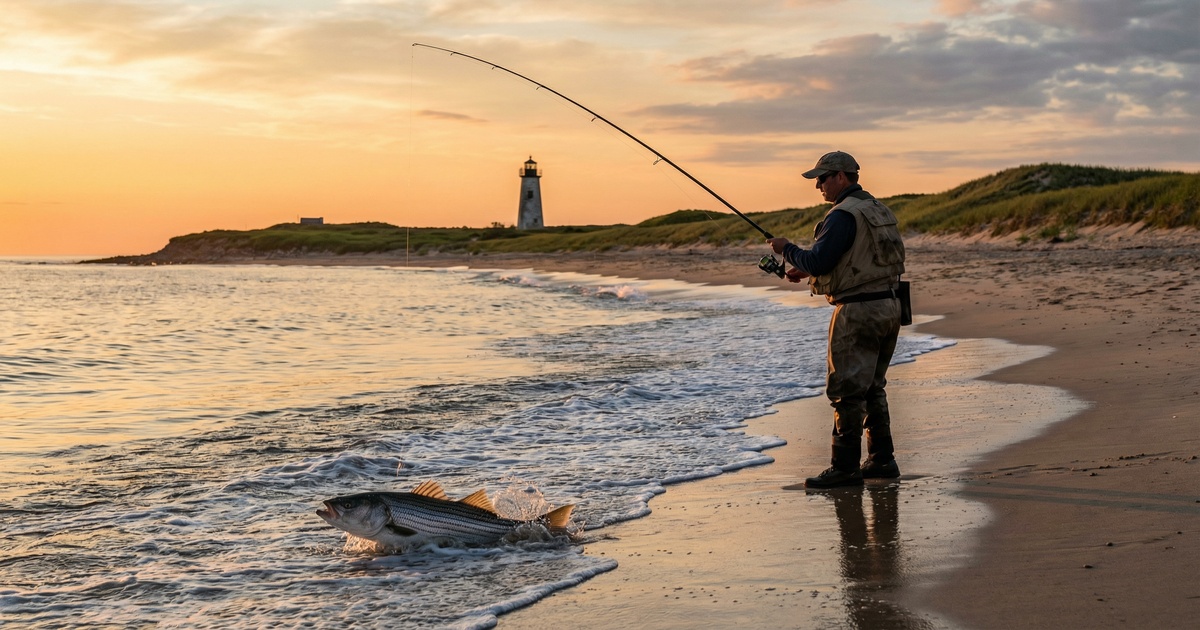
This is surf fishing season in full swing. The fish are post-spawn — lean, hungry, and moving fast through the surf zone looking for sand eels, bunker, and mullet.
Field note: The first big push of bunker (menhaden) up the Jersey coast is like a starter pistol for striper fishing. When you see bunker schools dimpling the surface, stripers are almost certainly underneath or right behind them. Watch for diving birds. That slick, oily smell on the beach? That's ground-up bunker — the fish are here.
Reading the Spring Migration by Region
New York Bight and Long Island (Mid-May)
By mid-May, the migration has rounded Cape May and pushed into New York waters. The Hudson River estuary gets a resident population of stripers that spawn in freshwater sections near Kingston, and these fish mix with migrating coastal fish as temps warm.
Key spots:
- Montauk Point — the "end of the line" where stripers stack up on their way north
- Fire Island Inlet — incoming tides push bait through and concentrate fish
- The Race (eastern Long Island Sound) — one of the most productive tidal rips on the coast
Montauk deserves its reputation. The point creates a natural funnel — fish moving north along the south shore of Long Island hit the tip and get pushed into a zone of ripping currents and bait-holding structure. Locals call it "the blitz," and when it's happening, it's some of the most chaotic, rewarding surf fishing in the country.
Rhode Island and South Coast New England (Late May–June)
As water temps in Long Island Sound and Rhode Island Sound hit the 58-64°F zone, the migration accelerates. Block Island becomes a must-hit destination — the rips off its southwest corner hold fish for weeks as the wave passes through.
Narragansett Bay sees good early-season action too, particularly around bridge pilings and rocky points where current and structure meet.
What changes here compared to New Jersey:
- More rocky structure, less open beach — adjust from long casts to working structure tightly
- Tides are more dramatic (5-6 foot range) — the outgoing tide here is not a suggestion, it's an event
- Sand eels dominate the food chain, so slim profile lures and flies outperform chunky plugs
Cape Cod and the Canal (June)
The Cape Cod Canal is one of the most famous striper fisheries in the world for a reason. Twice daily, massive tidal flows rip through the 17-mile channel, and stripers position themselves at current edges waiting for disoriented baitfish to come to them.
Fishing the Canal:
- You're casting into current and retrieving back — think of it like fishing a river
- The best spots are where current creates seams and back-eddies
- Outgoing tide from the east end (Sandwich side) is traditionally productive
- Arrive 90 minutes before peak current — fish position themselves early
Rips off the outer Cape — Race Point, Nauset, and the back side beaches — also fire up in June. These beaches get long-distance migrants pushing north and offer some of the best surf fishing access on the entire East Coast.
Southern Maine (Late June–July)
By late June, the front edge of the migration is pushing into Maine's coastal waters. The fish don't flood Maine all at once — they filter in, and the best action follows the warming water as it creeps up the coast.
Where to focus early:
- York and Saco Bay — southernmost points, first to warm
- Kennebec River mouth — important striper estuary in its own right
- Penobscot Bay — mid-coast hotspot when temps reach the 60s
Maine stripers behave differently than Jersey fish. The water is colder, the structure is rockier, and the fish are often concentrated around warm water discharges, river mouths, or south-facing beaches that absorb more sun.
Tides and Timing: Why an Hour Makes All the Difference
Here's the thing most people miss: it's not just about being at the right spot. It's about being at the right spot at the right tidal phase.
I check the HookCast tide charts before I commit to any spring striper outing. The difference between incoming and outgoing tide can mean the difference between 10 fish and zero — at the same beach, on the same day.
How Tides Move Stripers
Striped bass are ambush predators. They don't want to chase bait across open water if they don't have to. They want current to do the work — bringing disoriented or funneled baitfish right to them.
What to look for:
- Outgoing tide off inlet mouths — baitfish get swept out and stripers wait in the deeper water just outside
- Incoming tide over shallow flats — stripers move up onto flats to feed on crabs, shrimp, and small baitfish as water rises
- Tidal rips and current edges — anywhere current speed changes, you'll find fish holding on the slow side and rushing into the fast current to grab food
- Two hours either side of high tide on surf beaches — this is when water is moving with enough energy to activate feeding, but not so fast it's uncomfortable for the fish
Pro tip: At spots like Montauk or the Cape Cod Canal, the bite can flip from dead to electric in 20 minutes as the tide changes phase. If you're not marking fish, sometimes the best move is to wait — not leave.
Moon Phase
Spring tides (full and new moon, when tidal range is greatest) amplify everything. More water movement means more bait displacement, which means more active striper feeding. Plan your best sessions around moon phases where possible. HookCast's solunar data gives you a solid combined view of tide timing and moon-influenced feeding windows so you're not guessing.
Spring Striper Tactics: What's Working Right Now
Surf Fishing
Long-range casts aren't always the answer. The fish are often closer than you think — working cuts in the sand bars 40-60 feet out. Learn to read the beach: darker water between sandbars is deeper, and that's where fish hold.
Go-to spring setups:
- Bucktail jigs (1-2 oz) with a white or chartreuse trailer — mirrors sand eels
- Swimmer plugs like the Gibbs Danny or custom bottle plugs — work the surface at dawn
- Live-lined bunker when pogies are around — nothing beats live bait when it's available
Jetty and Rocky Shore
Wading ability and footwear matter more than tackle. Felt-soled waders or aluminum cleats are worth the investment on slick New England rocks.
Position yourself where current hits structure and creates a defined edge. Work lures across the current, not into it — the natural presentation sweeps across where the fish are holding.
Fly Fishing
Spring is the best time for fly fishing stripers in the Northeast. Fish are shallow, aggressive, and chasing sand eels that fly patterns imitate perfectly.
Clouser Minnows and Deceiver patterns in white/chartreuse are workhorses. Intermediate or sinking lines help cut through any surface chop and keep your fly in the zone.
Quick Reference: Spring Migration Timeline
| Region | Peak Timing | Water Temp Target | Key Bait |
|---|---|---|---|
| Chesapeake Bay | Late March–April | 52–58°F | Herring, shad |
| New Jersey Coast | Late April–May | 55–62°F | Bunker (menhaden) |
| Long Island / Montauk | Mid May | 58–64°F | Bunker, sand eels |
| Rhode Island / Block Island | Late May–June | 58–65°F | Sand eels |
| Cape Cod Canal | June | 60–66°F | Sand eels, mackerel |
| Southern Maine | Late June–July | 58–64°F | Mackerel, herring |
Spring Striper Checklist Before You Go
- [ ] Check water temps — target locations in the 58-65°F zone
- [ ] Pull the tide chart — plan your session around incoming or outgoing tide at your spot
- [ ] Look for bait activity — bunker, sand eels, or mackerel near your beach are a green light
- [ ] Match your lure to local forage — slim profiles for sand eel, larger swimmers for bunker
- [ ] Arrive early — the first two hours of light are consistently the best in spring
- [ ] Pack layers — May mornings on Cape Cod or Block Island are cold
- [ ] Know the regs — size limits and slot rules vary by state and change year to year; check before you go
- [ ] Check HookCast the morning of — barometric pressure, solunar timing, and tide phase in one place
The migration is happening whether you're ready for it or not. Get your timing right, and you'll be in the middle of some of the best striper fishing on the East Coast instead of reading about someone else's blitz.
FAQ
What water temperature should I look for when targeting striped bass during the spring migration?
The critical threshold is 55°F. Below that, stripers are sluggish and unlikely to feed aggressively. The sweet spot for active hunting is between 55–65°F. Once water temps climb above 70°F, fish will push offshore or continue north into cooler water.
When and where is the best time to target trophy-sized striped bass?
If you're after large fish — females over 30 inches — late March to mid-April in the Chesapeake Bay is your best window. These bigger "cows" enter the bay ahead of smaller males to spawn, staging near tributary mouths like the Potomac, Rappahannock, and Susquehanna.
How do I know when stripers have arrived at my local beach?
Watch for bunker (menhaden) schools dimpling the surface, diving birds, and an oily smell along the shoreline — all signs that menhaden are present and stripers are likely close behind. Baitfish concentrations are one of the most reliable real-time indicators that fish are in the area.
Why did my buddy catch stripers at the same beach a week after I blanked?
Timing the migration is everything. Striped bass move in a wave up the coast, driven by water temperature and baitfish availability. A week's difference can mean the fish simply hadn't arrived yet — or had already pushed through. Monitoring water temps and local fishing reports is key to hitting the right window.
In what general direction and timeframe does the spring striper migration move up the coast?
The migration moves from south to north, following warming water temperatures. It typically begins with fish staging in the Chesapeake Bay in March–April, then pushing along the Delaware and New Jersey coasts in late April through May, and continuing northward toward Cape Cod and Maine as spring progresses.