Spring Tides vs Neap Tides: Which Produces Better Fishing?
It was a Tuesday in late October, and I'd taken a couple out to one of my favorite red drum spots on the Outer Banks — a deep slough running parallel to the beach about 80 yards from shore. The bait was perfect. The water temperature was right. We had fresh mullet in the water by 6 a.m.
By 10 o'clock, we'd landed four slot reds and lost two more at the wave line. It was one of those mornings where everything clicks.
Two weeks later, a different client wanted the same experience. Same spot, same setup, same tides — or so they thought. The fishing was slow. Not terrible, but a far cry from that October morning. What changed? The moon phase. We'd gone from fishing on a spring tide to fishing a neap tide, and the difference in water movement was significant enough to completely shift where the fish were holding and how aggressively they were feeding.
If you've ever had two identical-looking fishing trips produce wildly different results, tidal phase might be the variable you've been overlooking.
What Are Spring Tides and Neap Tides?
These terms confuse a lot of anglers — and honestly, the names don't help. Spring tides have nothing to do with the season. Neap tides aren't necessarily weak or insignificant. Both terms describe specific phases of a tidal cycle that repeats roughly every two weeks, driven entirely by the relative positions of the sun, Earth, and moon.
Spring Tides: Maximum Lunar Pull
Spring tides occur during the new moon and full moon phases, when the sun, Earth, and moon align in a straight line — a configuration astronomers call syzygy. At these points, the gravitational forces of the sun and moon combine rather than compete. The result is the strongest tidal range of the lunar cycle: higher high tides and lower low tides than you'd see at any other point in the month.
The word "spring" comes from the German springen, meaning to leap or surge — think of the water springing upward, not the season. NOAA's tidal prediction center tracks these cycles in real time for every coastal station in the US. Pull up any station during a new or full moon and you'll see the tidal range spike clearly.
On coasts like the Outer Banks or Cape Cod, a spring tide can push the tidal range 20 to 30 percent beyond a typical mid-cycle tide. That's a massive volume of water moving in and out of estuaries, inlets, and along beach structure — and that movement has real consequences for fishing.
Neap Tides: Balanced Forces, Moderate Movement
Neap tides occur during the first and third quarter moon phases, when the moon and sun form a 90-degree angle relative to Earth. Instead of combining, their gravitational pulls partially offset each other.
The result is a more moderate tidal range — higher lows and lower highs. Currents are gentler. The vertical swing between high and low tide compresses. Water movement becomes more predictable and consistent throughout the cycle.
Neap tides get overlooked by a lot of anglers. In many situations, that's a mistake — and we'll get into exactly why.
How Spring Tides Affect Fish Behavior
More water movement creates more disruption, and disruption is generally good for fishing. Here's what actually happens when a spring tide runs through coastal structure.
Baitfish Get Flushed and Funneled
The higher volume of water moving through inlets, tidal creeks, and cuts pushes baitfish in concentrated pulses. Mullet, menhaden, glass minnows — they get swept along with the current and funneled into predictable ambush points.
Anywhere current gets forced through a narrow passage or across structure — a jetty, a channel mouth, a sandbar edge — predators stack up during a spring tide. Stripers don't have to chase bait. The bait comes to them.
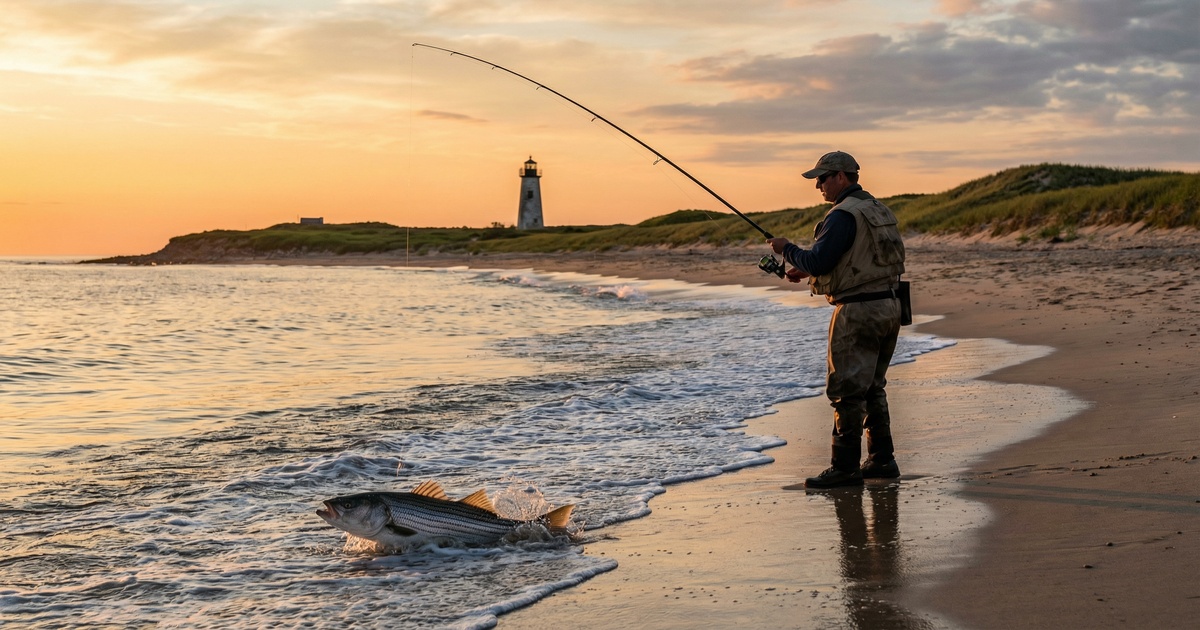
Field observation: During a spring tide in the fall striper run off Carolina Beach Inlet, I've watched the current create a foam line running almost 200 yards down the beach from the inlet mouth. That foam line marks the seam between fast and slow water — and it's almost always holding fish. Cast a bucktail into it and hold on.
Structure Gets Activated
Spring tides flood habitat that's inaccessible or too shallow at other times. Marsh grass edges, oyster bars, tidal flats — all of these come alive with feeding activity as the high end of a spring tide pushes bait into places where it's temporarily vulnerable.
Red drum and flounder especially take advantage of this. They'll push into flooded spartina grass edges to ambush crabs and shrimp that have nowhere to retreat. If you're fishing shallow flats during a big spring high tide, this is a prime spot-and-stalk situation.
When the Current Becomes Too Much
Here's the honest caveat: extreme spring tides can actually hurt the fishing in certain situations. In strong tidal inlets or narrow channel cuts, peak flow during a spring tide can make bait presentation nearly impossible. Weights that would normally hold bottom get dragged. Presentations go unnatural. Fish struggle to hold position against current that's running too hard.
The sweet spot on a spring tide is typically the last two hours of the outgoing and the first two hours of the incoming, when current velocity is building toward or tapering away from peak flow. Dead slack on a spring tide can be your best window in spots where the current was previously too fast to fish effectively.
Fishing Neap Tides: The Underrated Cycle
Most fishing reports and guide talk center on spring tides — strong current, active bait, fired-up fish. That reputation is often earned. But in years of running surf and nearshore trips along the Carolina coast, some of my best sessions have come on neap tides, and the reasons are worth understanding.
Cleaner Water, Better Sight Fishing
Spring tides stir sediment. The surge of water through shallow flats and inlets can cloud the water column significantly, especially over soft bottom. During neap tides, more moderate movement gives sediment time to settle. The result is often cleaner, clearer water — which matters enormously for species like red drum, pompano, or spotted seatrout that hunt by sight in shallow water.
I've had back-to-back days where spring tide runoff kept the water too murky to get a bite. The neap set in, the water cleared, and suddenly I could see tailing reds on the flat. Same spot. Completely different fishing.
Softer Current Means Better Presentations
If you're fishing light tackle, finesse rigs, or fly fishing in tidal water, neap tides are often your best friend. Softer current lets you fish smaller jigs, lighter leaders, and slower retrieves — changes that can make all the difference with pressured fish or finicky species.
Spotted seatrout are a good example. They'll sit in a tidal gutter and ambush passing bait, but when current is blasting through, getting a soft plastic to sink naturally into the strike zone is a real challenge. On a neap tide, your presentation drops cleaner, and you spend more time in front of the fish on every cast.
More Predictable Fish Location
Strong tides move fish. Moderate tides let them settle into patterns. During a neap cycle, you'll often find fish holding in the same places day after day — a trough behind a sandbar, a channel edge, a creek mouth. That predictability is valuable, especially when you're learning new water.
Pro tip: Use neap tide periods to pattern fish and identify productive structure. Mark your waypoints. When the spring tide returns, you'll know exactly where to set up to intercept fish as they push through.
Spring vs. Neap: A Side-by-Side Breakdown
| Factor | Spring Tide | Neap Tide |
|---|---|---|
| Tidal range | Maximum — biggest vertical swing | Moderate — smaller vertical swing |
| Current velocity | Strong, often very fast | Gentle to moderate |
| Bait movement | Aggressive flushing through structure | Slower, more predictable |
| Water clarity | Often reduced from stirred sediment | Often improved |
| Best for | Stripers, bluefish, drum in heavy current spots | Trout, flounder, sight fishing |
| Presentation difficulty | Higher — weight and drift management critical | Lower — finesse rigs work better |
| Prime windows | Last 2 hrs outgoing, first 2 hrs incoming | Extended windows near high and low |
| Species behavior | Ambush along current seams | Settled and patternable |
Matching Tide Phase to Target Species
Not all fish respond the same way to tidal phase, and understanding the why behind these differences is where the real planning advantage comes from.
Striped Bass and Bluefish: Spring Tide Specialists
These are current-oriented predators that use tidal flow to their advantage. During spring tides, stripers and blues position on current breaks — the downcurrent edge of a jetty, the backside of a point, the eddy behind a bridge piling — and let the tide deliver bait to them.
NOAA Fisheries notes that striped bass are highly responsive to environmental triggers including current velocity and prey availability during seasonal migrations. That tracks with what happens on the water. Peak spring tide striper action often comes in a two- to three-hour window of fast-moving water. Miss that window and the fish scatter.
Red Drum: Both Cycles, Different Tactics
Red drum are adaptable. On spring tides, they'll push into flooded marsh edges and cross tidal flats that are normally too shallow to hold them. On neap tides, they'll hold tight to channel edges and shell bars where bait concentrates in slower water.
The key with reds is that their location shifts with tidal phase. If you're fishing the same spot on a spring tide and a neap tide and wondering why the bite is inconsistent, the fish may simply have relocated to a different type of structure — not disappeared entirely.
Spotted Seatrout: The Neap Tide Favorite
Trout are ambush predators that prefer less chaos. They'll feed on spring tides, but their prime windows tend to compress around the slack periods when current slows. During neap tides, gentler flow allows them to hold in open water more comfortably, and feeding windows extend considerably.
If you're targeting trout on flats or in back-bay marshes, stacking the solunar table on top of tidal phase sharpens your timing significantly. HookCast's tide charts layer tidal data with lunar phase information, which gives you a cleaner picture of when conditions are actually aligned for a trout bite.
Flounder: Structure Ambushers in Any Phase
Flounder are less influenced by tidal phase than by current speed. They want moderate water movement that pushes bait past their position — enough to keep prey moving, not so much that they can't hold their spot. Peak spring tide current is often too fast. Dead neap slack is often too still.
The ideal for flounder is the transition zones — when current is building or fading — and that pattern holds whether you're in a spring or neap cycle.
Practical Planning: How to Read Tidal Phase Before Your Trip
Knowing which tidal phase you're fishing is only useful if you can turn it into an actual game plan. Here's the approach I use before any client trip or personal session.
Step 1: Check the moon phase.
This tells you immediately whether you're in a spring or neap cycle. New or full moon means spring tide. First or third quarter means neap tide.
Step 2: Pull the tidal range for your specific location.
A spring tide in Pamlico Sound doesn't produce the same range as a spring tide on the Cape Hatteras oceanside. Local geography changes everything. NOAA tidal predictions provide station-specific data for any location on the US coast.
Step 3: Match the tide to your target species and water type.
Use the breakdown above to decide whether you're hunting current seams on a spring tide or working structure in cleaner, softer water on a neap tide.
Step 4: Identify your prime windows.
For spring tides: target the two hours before and after the strongest current phase. For neap tides: windows are broader — aim for one hour before to two hours after the high or low.
Step 5: Cross-reference with solunar peaks.
Major and minor solunar periods mark feeding activity that's independent of tidal phase. When a solunar major aligns with a good tidal window — spring or neap — that's your best shot. I cross-check these on HookCast before committing to a launch time, especially on guided trips.
Key Takeaways
- Spring tides occur during new and full moons. They produce the largest tidal swing, the strongest currents, and the most aggressive bait movement through structure.
- Neap tides occur during quarter moon phases. They produce moderate water movement, better water clarity, and more predictable fish positioning.
- Spring tides favor current-dependent species like stripers and bluefish. Target current seams and structure edges.
- Neap tides favor sight fishing and finesse presentations. Target trout, drum on flats, and flounder on structure transitions.
- The prime fishing window on a spring tide is tight — usually two hours on either side of max current, not the peak itself.
- Neap tide windows are broader and more forgiving, which makes them valuable for learning new water and patterning fish.
- Neither cycle is universally better. The best anglers fish both effectively by adjusting tactics and location to match the conditions.
- Use NOAA's tidal prediction tools and HookCast's tide charts to plan around both lunar phase and local tidal range before your next trip.
FAQ
What is the difference between a spring tide and a neap tide?
A spring tide occurs during new and full moon phases, when the sun, Earth, and moon align and their gravitational forces combine to produce the largest tidal range of the lunar cycle — higher highs and lower lows. A neap tide occurs during the quarter moon phases, when the sun and moon form a 90-degree angle and their gravitational pulls partially offset each other, producing a more moderate, smaller tidal swing. Both cycles repeat approximately every two weeks throughout the year, in every season.
Is spring tide or neap tide better for fishing?
Neither is universally better — it depends on the species you're targeting and the type of water you're fishing. Spring tides produce stronger currents that flush baitfish through structure, making them ideal for stripers and bluefish on jetties, inlets, and channel edges. Neap tides offer cleaner water and softer current, which improves sight fishing and finesse presentations for species like spotted seatrout and red drum on shallow flats.
How does the moon phase affect tidal fishing?
The moon phase directly determines whether you're in a spring or neap tidal cycle. A new or full moon produces spring tides with maximum water movement and strong current. A first or third quarter moon produces neap tides with gentler, more moderate water movement. Because tidal strength affects how baitfish move, where predators hold, and how fast current runs through structure, the lunar cycle is one of the most consistent variables influencing coastal fishing conditions.
How do I find out if I'm fishing a spring tide or neap tide?
Check the current moon phase — new moon and full moon mean spring tides, while first and third quarter moons mean neap tides. You can confirm the tidal range for your specific location using NOAA's tidal predictions at tidesandcurrents.noaa.gov, which provides predicted high and low water heights for stations along the entire US coast. A noticeably larger-than-average tidal swing confirms you're in a spring tide period.
Do spring tides always produce better fishing than average tides?
Not always. While spring tides increase bait movement and feeding activity, extreme current velocity during peak flow can make presentations difficult and push fish off structure entirely. The most productive periods during a spring tide are typically the two hours before and after maximum current — not the peak itself. In areas with significant soft bottom, spring tides can also reduce water clarity enough to slow the bite, particularly for sight-feeding species like spotted seatrout and redfish on shallow flats.