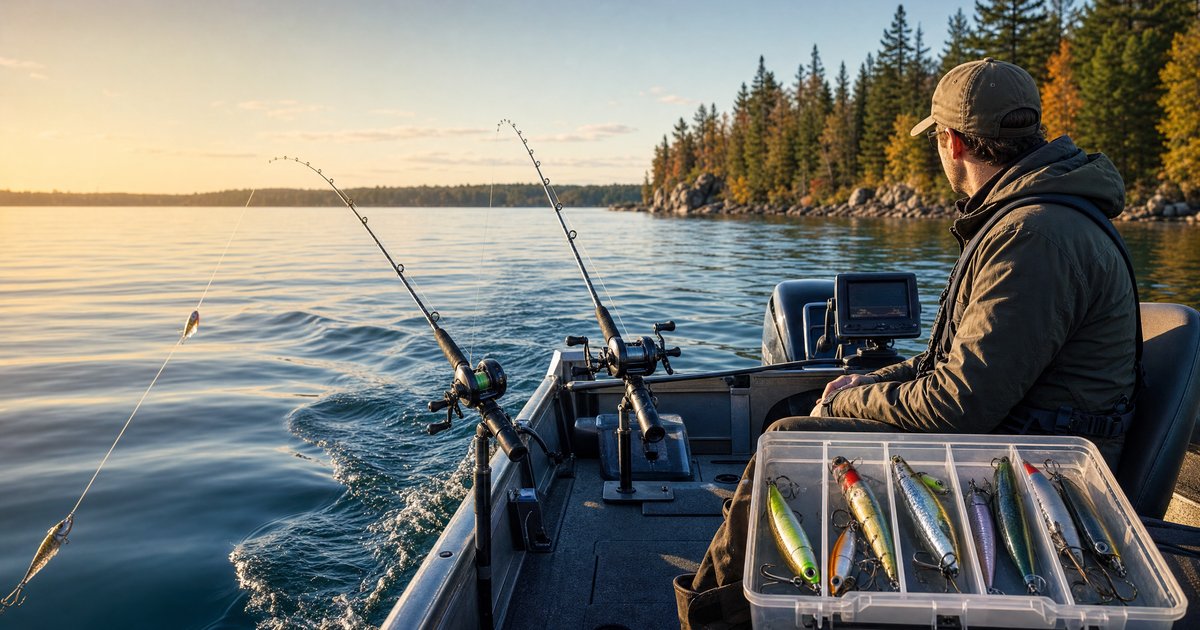
Trolling for Beginners: Speed, Depth, and Lure Selection Basics
My buddy Derek drove three hours to fish Lake Erie last spring. He had his downriggers set up, a cooler full of optimism, and zero fish to show for it by noon. When I asked what speed he was running, he shrugged. "Whatever the boat was doing." That's pretty much the whole problem with trolling for beginners — it looks simple from the outside but has a few variables that can completely make or break your day.
Here's the thing: trolling is actually one of the most forgiving techniques once you understand the basics. You're covering water, letting the boat do work, and presenting a lure at the right speed and depth without having to cast and retrieve all day. But those three words — speed, depth, lure — each have real science and real-world consequences behind them. Get them right and you go from skunked to limits. Get them wrong and you're just dragging hooks around a lake.
I came to trolling late. Grew up casting plugs for bass on Missouri farm ponds, and didn't take trolling seriously until I started chasing walleye on the Great Lakes a few years back. Once it clicked, I couldn't believe how systematic it could be. This guide is what I wish someone had handed me on day one.
Why Trolling Works (and When It Doesn't)
Trolling covers water. That's the whole point. Instead of sitting on a spot and hoping fish come to you, you're moving through the water column and putting your bait in front of whatever is holding in a given area.
It's especially effective when:
- Fish are scattered over a flat or suspended in open water.
- You're targeting a specific depth or temperature layer (more on that below).
- The bite is slow and fish need time to react to a moving presentation.
- You're on unfamiliar water and trying to locate fish before committing to a spot.
It's less effective when fish are tight to structure or holding in small, specific spots — like bass tucked under dock pilings. That's a casting game. Trolling shines on open-water species like walleye, lake trout, striped bass, salmon, and crappie (with lighter rigs), but plenty of anglers troll for bass too, especially during the post-spawn when they move to deeper main-lake structure.
One thing trolling won't do: guarantee results. The fish are still fish. Some days they're on, some days they're not. But controlling your variables — speed, depth, lure action — gives you a real shot instead of a guessing game.
Trolling Speed: The Most Underrated Variable
Speed is where most beginners blow it. Either they're going too fast and pulling lures past fish before they can react, or they're creeping along and the lure isn't tracking properly.
General Speed Ranges by Target Species
Here's a baseline trolling speed chart to start with. These are broad ranges based on species behavior and lure types — your specific lures and conditions will dictate where within the range you land.
| Target Species | Typical Trolling Speed |
|---|---|
| Walleye | 1.5–2.5 mph |
| Lake Trout | 1.5–2.5 mph |
| Salmon (Coho, Chinook) | 2.0–3.5 mph |
| Striped Bass | 2.5–4.0 mph |
| Largemouth/Smallmouth Bass | 2.0–3.5 mph |
| Crappie (slow trolling) | 0.5–1.5 mph |
| Northern Pike | 2.0–3.5 mph |
These are water-speed numbers, not GPS ground speed. In current, your boat GPS might show 3.0 mph but your actual speed through the water could be 1.5 mph if you're moving with the flow. Current matters — always try to have a sense of whether you're moving with or against it.
How Speed Affects Lure Action
Most crankbaits, spoons, and stick baits have a designed action range — usually printed on the box or listed in the product specs. Go too slow and a crankbait wobbles lazily or rolls out. Go too fast and it blows out, tracking incorrectly and losing its action entirely.
The easiest way to dial in speed? Watch your rod tip. A properly running lure creates a consistent, rhythmic tap or pulse on the rod tip. If the rod tip is dead, you're either too slow or the lure has fouled. If it's vibrating violently and inconsistently, you might be too fast.
Field note: In cold water — especially early spring — I almost always slow down. Fish are lethargic and won't chase. A slower, more subtle presentation often outfishes the "correct" textbook speed by a wide margin. Drop it down and see what happens.
Adjusting Speed on the Water
Don't set a speed and forget it. When you mark fish on your sonar but they won't commit, try these adjustments:
- Speed up slightly. Sometimes a reaction strike can be triggered by a lure suddenly accelerating.
- Slow down. This is especially productive in cold water or when targeting walleye in early season.
- Use speed bursts. Some trollers will briefly throttle up for five to ten seconds, then return to normal speed to imitate fleeing prey.
Getting to the Right Depth
This is where trolling gets a little technical, but it doesn't have to be overwhelming. The whole goal is to get your lure into the zone where fish are holding.
Finding the Fish First
Before worrying about how deep to run your lures, you need to know where the fish actually are. A basic fish finder is invaluable here. Look for:
- Suspended marks at a specific depth range.
- Temperature breaks if your unit reads water temp (fish often stack near the thermocline in summer).
- Bottom-hugging fish on defined structure like points or humps.
In summer, many species like walleye and lake trout stack near the thermocline — the layer where warm surface water meets cooler deep water. NOAA Fisheries notes that many pelagic and open-water species orient to temperature gradients when seeking comfortable oxygen and thermal conditions. Knowing where that break is helps you target the right depth band.
Tools for Getting Deep
Diving crankbaits are the simplest option. Every crankbait has a rated dive depth — typically tested with 10-pound monofilament at specific line lengths behind the boat. A long-lipped crankbait rated to 15 feet might only hit 10 feet on lighter line or a shorter lead. Check manufacturer specs and keep track of what you're actually fishing at different line lengths.
In-line planer boards pull lures out to the side of the boat, away from the prop wash, covering more horizontal water. They don't change depth much, but they're great for shy fish in clear water that spook from the boat.
Snap weights clip onto your line a set distance from the lure and pull it deeper. A one-ounce snap weight adds roughly two to four feet of depth depending on speed. They're stackable and adjustable without any fancy gear.
Downriggers are the precision tool for depth control. They lower a heavy ball to a specific depth and your lure rides at or near that level. They're more of an investment but give you repeatable, accurate depth targeting — great for salmon and lake trout fishing where you're hitting a precise temperature layer.
Lead core line is another old-school method still used heavily in walleye circles. Every color of lead core (each color is approximately 10 yards) dives a specific amount based on speed. Running three colors of lead core at 2.0 mph gets you to approximately 12–15 feet, though this varies by brand and conditions. USGS water temperature data can help you estimate seasonal thermocline depths when combined with local lake data.
A Simple Depth Framework
If you don't have downriggers, here's a workable system for most freshwater setups:
- 0–8 feet: Stick baits and shallow-diving cranks on straight monofilament or fluorocarbon, with short leads of 50–75 feet back.
- 8–15 feet: Medium-diving cranks rated to that range, or snap weights added to shallow runners.
- 15–25 feet: Deep-diving cranks, longer leads, or snap weights.
- 25+ feet: Lead core line, downriggers, or diving planers.
Lure Selection for Trolling
Walk into any tackle shop and the trolling aisle is overwhelming. The key is matching the lure to three things: the species, the depth you're targeting, and the current forage.
Core Trolling Lure Types
Crankbaits are the workhorse of trolling. They have built-in action, they dive on their own, and they come in every color and size imaginable. For walleye, something in the three- to four-inch range in natural shad or perch colors is a solid starting point. Stick with what the baitfish in your lake actually look like — chartreuse might catch fish, but a shad-colored bait in a shad lake is usually more consistent.
Spoons have been trolled for salmon and lake trout for decades. They flutter and flash, mimicking a wounded baitfish. Lighter spoons work at slower speeds, heavier spoons at higher speeds. They're simple to use, durable, and effective at triggering reaction strikes.
Stick baits (jerkbaits) like the Rapala Original work excellently at slow speeds for walleye and trout. They have a subtle action at lower trolling speeds and suspend or slowly rise when you pause, which can trigger hesitant fish.
Worm harnesses (spinner rigs) are extremely popular for walleye trolling in the Midwest. A spinner blade ahead of a nightcrawler or plastic worm adds flash and vibration. You can pair these with snap weights to hit specific depths. This hybrid approach — part traditional lure trolling, part live-bait rig — is highly effective in stained or low-visibility water where flash and vibration do the work.
Blade baits and flutter spoons excel for suspended fish in the Great Lakes and deep-water scenarios, especially for perch and crappie in winter and early spring.
Color Selection
This is where anglers overthink it. Here's a practical framework:
- Clear water: Natural, realistic colors — silver, gold, shad patterns, perch, blue/chrome.
- Stained water: High-contrast and bright — chartreuse, orange, firetiger.
- Low light / overcast: Darker colors with flash — black/gold, purple/chrome.
- Deep water: UV-reactive colors — fish can detect UV light that standard colors don't reflect at depth.
Pro tip: If you're not getting bites after an hour of trolling at what you believe is the right speed and depth, change color before changing everything else. It's the quickest variable to adjust and costs you nothing.
Matching the Hatch in Freshwater
Before you hit the water, check HookCast's fishing forecast for your area to see current conditions — water temperature especially helps you gauge what forage is active and where fish might be staging. Cold snaps often push baitfish deep, which means moving your lures down. Warm fronts bring bait shallow, and the fish usually follow.
In my experience on Midwest lakes — everything from Table Rock to the upper Great Lakes — the biggest mistake I see is anglers running lures that don't match the predominant baitfish. Alewife water wants different lures than gizzard shad water. Know what's in the system.
Putting It All Together: A Practical Trolling System
Here's how to build a simple trolling run from scratch when you get to a new lake.
Step 1: Find the fish, not just the spot. Run your fish finder over main-lake structure, flats, and any marked breaklines before dropping lines. Mark the depth of suspended fish or note bottom-hugging marks.
Step 2: Set your starting speed. Based on species and water temperature, start at the lower end of the recommended range. Cold water means slowing down. Warm water means you can push faster.
Step 3: Choose your depth tools. If fish are at 12 feet and you're running deep-diving cranks, check the rated dive depth and set your line accordingly. If they're deeper, rig snap weights or lead core.
Step 4: Set your rod spread. Run different depths and colors on each rod until something produces. That's your locating phase.
Step 5: Identify the pattern. When a rod fires, note the depth, speed, color, and location. Duplicate it on the other rods immediately.
Step 6: Adjust as conditions change. Before heading out, I always pull up HookCast's weather tool to check barometric pressure trends. A rising barometer after a cold front often means fish go tight-lipped or move deeper — you'll need to slow down and adjust depth accordingly. Standard atmospheric pressure is 1013.25 hPa per NOAA, and any meaningful swing (more than 5–7 hPa in 24 hours, based on my experience) affects fish behavior noticeably.
A Note on Fish Care
When you're trolling, you're often covering miles of water and can occasionally land fish faster than you expect — or bring up fish from significant depth. Deep-water fish (especially lake trout and salmon) can experience barotrauma from rapid pressure change. Handle them quickly, support the body horizontally, and use a descending device or vent carefully if the fish is showing signs of barotrauma before release. Keep fish in the water as much as possible and minimize air exposure. NOAA Fisheries has solid guidance on fish handling and release practices if you want to dig deeper into proper technique.
Always check local regulations before you go. Trolling setups vary in legality — some waters restrict the number of lines per angler, others restrict lead core or wire line. Size and bag limits for walleye, salmon, and lake trout especially can vary dramatically by lake and state. No article replaces a quick check of your state DNR regulations before launching.
Quick-Reference Trolling Checklist
Before you run your first line, run through this.
Pre-Trip:
- [ ] Check water temperature and barometric trend (helps dial in speed and depth zone).
- [ ] Identify target species and likely depth range.
- [ ] Pack at least three to four color options in the same lure profile.
- [ ] Know your depth-reaching tool (crank dive depth, snap weights, lead core, downrigger).
On the Water:
- [ ] Mark fish on sonar before setting lines.
- [ ] Start at the lower speed range for the species, then adjust from there.
- [ ] Watch rod tips — consistent rhythm means correct action.
- [ ] Run different depths and colors until one pattern fires.
- [ ] When a rod fires, duplicate the winning setup.
When It's Not Working:
- [ ] Change color first.
- [ ] Adjust speed (up or down by 0.3–0.5 mph).
- [ ] Check your line — lures foul constantly, especially with weeds.
- [ ] Adjust depth — go deeper in cold or post-frontal conditions.
- [ ] Slow way down in cold water.
Trolling isn't complicated once you stop treating it like a black box. Speed, depth, lure — work those three variables systematically and you'll figure out the pattern most days. You don't need a full tournament rig to do it right. I've run basic snap-weight setups from my kayak for walleye and caught just as many fish as guys with downrigger towers. Work the system, stay patient, and adjust when it's not clicking.
FAQ
What is a good trolling speed for beginners?
A good starting point for most freshwater species is 1.5 to 2.5 mph through the water. Walleye and lake trout are typically targeted at the slower end of that range, while salmon and striped bass can handle speeds up to 3.5 mph. Cold water generally calls for slower speeds, so if you're fishing in spring or fall, start slow and only increase if you're not getting results.
How deep does a crankbait run when trolling?
Dive depth depends on the specific crankbait, your line diameter, and how much line you have out behind the boat. Most manufacturers publish dive-curve charts — a crankbait rated to 15 feet typically hits that depth with around 100 feet of 10-pound monofilament at standard trolling speed. Thinner fluorocarbon or longer leads will get you slightly deeper, while heavier line or shorter leads will keep it shallower.
What lures are best for trolling beginners?
Diving crankbaits are the best starting lure for trolling beginners because they have built-in action, a rated dive depth, and are easy to run straight behind the boat without additional gear. Spoons are another great option for salmon and lake trout — they're durable, inexpensive, and very effective at generating flash and strikes. Start with natural colors (shad, perch, silver) in clear water and switch to brighter colors like chartreuse in stained conditions.
How do I know if my trolling lure is running at the right depth?
The most reliable method is to track how much line you have out and compare it to your lure's manufacturer dive chart. On the water, your fish finder helps confirm — if you're marking fish at 18 feet and your rod isn't firing, adjust until your lure tracks through that depth band. Rod tip action also tells you a lot: a consistent rhythmic pulse means the lure is running correctly, while a dead rod tip usually means the lure has fouled or you're moving too slowly.
Can you troll from a kayak?
Yes, kayak trolling is very effective and growing in popularity, especially for walleye, bass, and crappie in lakes and slow rivers. Kayaks move at a natural trolling speed when paddling steadily or using a pedal-drive system, which puts you right in the 1.5–2.5 mph range for most freshwater species. Snap weights and shallow-diving crankbaits are the most practical depth tools for kayak trollers, since downriggers are bulky and generally impractical on small craft.