Trout Stocking Schedules 2026: When and Where States Stock Trout This Spring
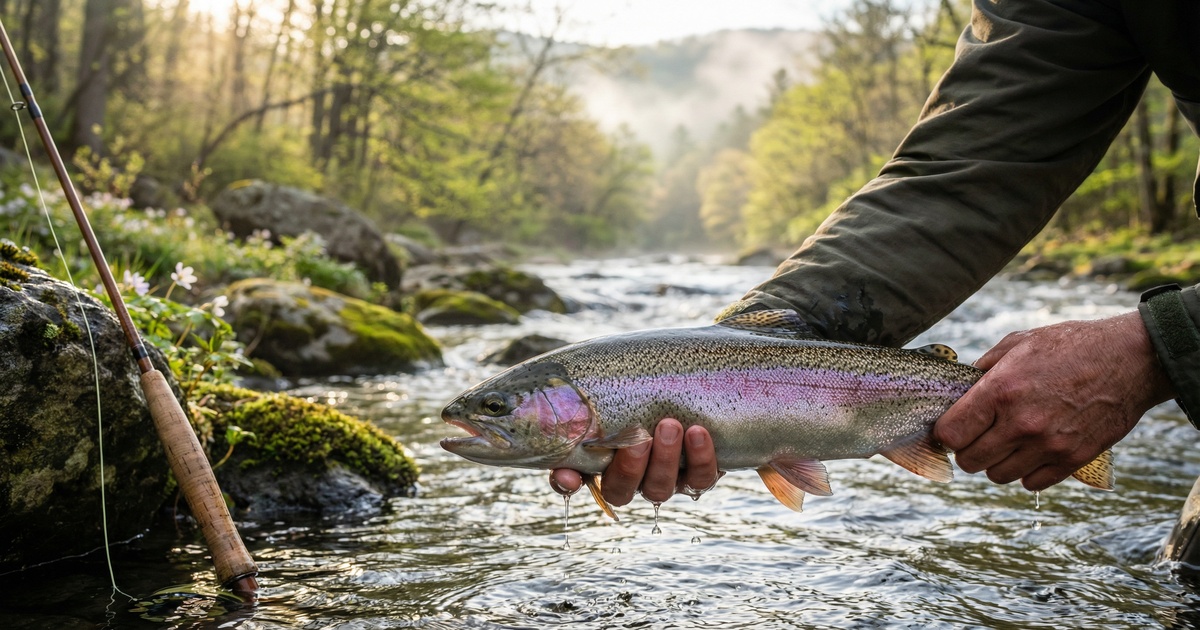
Picture this: You check your state fish and wildlife Facebook page on a Tuesday morning, see "Stocking truck hits the Farmington River tomorrow," and by 6 a.m. Wednesday you're standing in the riffle with a 14-inch rainbow eating your Parachute Adams. That's the best-case scenario.
The worst case? You show up Saturday afternoon to a stretch that got stocked Monday, got hammered by 40 other anglers Tuesday through Friday, and the remaining fish have lockjaw. You drive home with nothing but a sunburn and a bad attitude.
I've been on both ends of that situation. The difference almost always comes down to information — knowing when stocking happens, where to check the schedules, and what to do when you get there. This guide breaks down how the Northeast and Mid-Atlantic handle spring trout stocking in 2026, which waters to target, and how to actually catch fish once you're on the water.
Why Spring Trout Stocking Matters (And How It Works)
Most states in the Northeast and Mid-Atlantic operate hatchery systems that raise rainbow trout, brown trout, brook trout, and tiger trout to legal size — typically 9 to 14 inches — then truck them to public waters throughout the year. Spring is by far the biggest stocking season.
The reason is simple: trout struggle in warm water. Most species experience stress above 68°F and can die in temperatures above 75°F. Spring gives fish the longest window of comfortable temperatures before summer heat sets in, especially in lowland streams. States push heavy stockings from late February through May to give anglers maximum opportunity.
Here's roughly how the system works in most states:
- Hatcheries raise fish over 12-18 months to reach stocking size
- Stocking trucks run scheduled routes based on water temperature and accessibility
- Priority waters — called Class A, Approved Trout Waters, or similar designations depending on the state — get stocked first and most frequently
- Catch-and-release sections and wild trout streams are managed separately, often with reduced or no stocking to protect wild populations
Field observation: In my experience, the first truck of the season on a given stretch almost always produces the best fishing. Fish haven't been pressured yet, and they're feeding aggressively after transport stress wears off — usually within 24 to 48 hours of stocking.
Before you fish any stocked water, pull up your state's regulations. Size limits, bag limits, and gear restrictions vary by water and by designated season. Some streams are artificials-only or catch-and-release only even during stocking season. Don't assume.
Northeast State Stocking Schedules for Spring 2026
Connecticut
Connecticut's Department of Energy and Environmental Protection (DEEP) runs one of the more angler-friendly stocking programs in the region. Spring stocking typically kicks off in late February or early March, with the bulk of activity running through late April.
Key points for 2026:
- DEEP publishes a Stocking Status page that updates within 24-48 hours of each truck run — bookmark it
- The Farmington River (Hartford County), the Housatonic River, and the Salmon River are flagship waters that get stocked early and often
- Connecticut also maintains Trout Management Areas (TMAs) on portions of these rivers — artificials-only, catch-and-release, and managed for quality fishing
- Opening Day for most trout waters falls on the third Saturday in April — expect crowds
The Farmington TMA in particular is worth timing carefully. It holds wild browns year-round, but stocked fish supplement numbers significantly in spring. Water temps and flows are trackable via USGS stream gauges — I pull that data the night before a trip to make sure the river is fishable, not blown out.
Massachusetts
Massachusetts Division of Fisheries and Wildlife stocks approximately 500,000 trout annually, with the majority hitting the water between March and May. They publish a weekly stocking report on their website, updated every Thursday.
Notable spring fisheries:
- Deerfield River — excellent brown and rainbow habitat, TMA sections hold fish well into summer
- Swift River — the stretch below Quabbin Reservoir runs cold year-round and holds wild rainbows; stocked fish supplement the fishery in spring
- Westfield River — underrated, less pressure than the marquee rivers, solid early-season brook trout
Massachusetts also allows some urban stocking in smaller ponds and reservoirs closer to population centers — great option if you're not driving 2 hours to the Deerfield.
Vermont
Vermont Fish and Wildlife starts stocking as early as late March on lower-elevation streams and works up in elevation as temperatures warm through April and May. They operate nine hatcheries and stock over 800 waters statewide.
The Winooski River drainage, the Black River, and the Lamoille River are reliable early-season targets. Vermont's stocking reports are posted online and updated frequently — they also include the species stocked, which matters because brown trout and rainbows behave differently post-stocking.
New Hampshire and Maine
Both states run robust spring stocking programs, though their seasons tend to start slightly later given colder baseline temperatures.
New Hampshire typically starts stocking April 1 on designated trout waters, with most activity through May. The Merrimack River tributaries and the Contoocook River are popular early targets. NH Fish and Game posts stocking reports by county, which makes planning straightforward.
Maine has a massive wild trout and landlocked salmon fishery, so stocking is more targeted. Spring stocking runs late April through May on most waters. The Kennebec River and various western Maine lakes see significant rainbow and brown trout stockings. Check the Maine IF&W stocking database — it's searchable by town or water body, which is genuinely useful.
Mid-Atlantic State Stocking Schedules for Spring 2026
Pennsylvania
Pennsylvania Fish and Boat Commission (PFBC) runs one of the largest stocking programs in the country — approximately 3.2 million trout stocked annually. Spring is their biggest season.
Pre-Season Stocking runs from roughly January through mid-April, with fish going into Class A and Class B waters before the regular season opener. Opening Day for most PA waters is the first Saturday after April 11 — one of the most anticipated fishing days in the region.
Key PA waters for spring 2026:
- Brodhead Creek (Monroe County) — historic stream, good wild brown trout water with supplemental stocking
- Yellow Breeches Creek (Cumberland County) — limestone stream, exceptional clarity, fly fishing pressure is high but fish numbers are too
- Penns Creek — arguably PA's most famous wild trout stream; stocking is limited here to preserve wild fish, so manage expectations
PFBC publishes a Trout Stocking Reports section on their website that lists stockings by county, water name, date, and fish count. That fish count data is useful — a stream getting 500 fish on a 2-mile section is a very different proposition than 50 fish on 10 miles.
Pro tip: Pennsylvania's Delayed Harvest Artificial Lures Only (DHALO) sections offer some of the best quality fishing in the state. Fish must be released until Memorial Day weekend, which means by mid-spring you're fishing water that's held fish for weeks without harvest pressure. Worth the drive.
New York
New York DEC stocks rainbow, brown, brook, and tiger trout across hundreds of waters statewide. Spring stocking typically runs late March through May, with some Catskill streams receiving fish as early as mid-March when temperatures cooperate.
Signature spring fisheries:
- Delaware River (upper branches) — wild brown trout fishery of national significance, supplemental stocking adds numbers; the East and West Branches and the main stem below Hancock all fish well in spring
- Beaverkill River — legendary fly fishing water; primarily wild browns but stocked fish fill in during early spring
- Willowemoc Creek — less pressure than the Beaverkill, intersects it at Livingston Manor, and fishes well in early season
NY DEC posts stocking reports on their website by region and water body. The Catskill region report is worth following closely starting in late February.
New Jersey
New Jersey Division of Fish and Wildlife stocks trout in over 100 streams and lakes each spring. The season typically opens the first Saturday in April, with pre-season stocking happening throughout March.
Stocked waters in South Jersey tend to warm faster, so the window is shorter — focus on Morris, Warren, and Sussex counties in the north for the most productive spring fishing. The South Branch Raritan River and Pequest River are reliable producers.
NJ also has a delayed harvest program on portions of key streams — similar to PA's system, these sections hold fish longer and offer better quality fishing.
Maryland and Virginia
Both states stock primarily in mountain streams running off the Blue Ridge and Appalachian ranges, with spring stocking starting in late March and running through May.
Maryland: Deep Creek Lake receives significant stocking, and mountain streams in Garrett and Allegany counties are the main spring targets. Maryland DNR posts stocking by county and water.
Virginia: VDGIF (Virginia Department of Wildlife Resources) operates an extensive stocking program across the Shenandoah Valley and mountain counties. The South Fork of the Shenandoah, the Rapidan River, and countless smaller Blue Ridge streams receive fish through April and May. They also stock several urban fishing locations — reservoirs and ponds near population centers — which often get overlooked but can be surprisingly productive.
How to Find Your State's Stocking Schedule
The most reliable source is always your state fish and wildlife agency's website. Here's a quick reference:
| State | Agency | Stocking Report URL |
|---|---|---|
| Connecticut | CT DEEP | portal.ct.gov/DEEP |
| Massachusetts | MassWildlife | mass.gov/masswildlife |
| Vermont | VT Fish & Wildlife | vtfishandwildlife.com |
| New Hampshire | NH Fish & Game | wildlife.nh.gov |
| Maine | Maine IF&W | maine.gov/ifw |
| New York | NY DEC | dec.ny.gov |
| New Jersey | NJ DivFW | njfishandwildlife.com |
| Pennsylvania | PFBC | fishandboat.com |
| Maryland | MD DNR | dnr.maryland.gov |
| Virginia | VDWR | dwr.virginia.gov |
A few tips for using these reports effectively:
- Bookmark the stocking report page directly, not the agency homepage — you'll use it frequently
- Most states update reports weekly; some update within 24 hours of a truck run
- Follow your state agency on social media — Facebook and Twitter/X posts about fresh stockings often go up same-day
- For river fishing, cross-reference stocking dates with USGS stream gauge data to check current conditions — a stocked river running 3x normal flow after rain isn't going to fish well
You can also check the fishing forecast for your region on HookCast to combine water temperature trends, weather patterns, and barometric pressure data in one place before planning a trip.
Tactics for Freshly Stocked Trout
Catching recently stocked trout is different from fishing for wild fish. Here's what actually works in my experience:
The First 48 Hours
Fresh stockies are disoriented but hungry. They've been conditioned to eat at hatchery feeding times, and their diet was typically pellet food. Lures and baits that imitate that profile — small, dense, sinking — work well immediately after stocking.
Best early-season approaches:
- Inline spinners (Rooster Tail, Panther Martin) in gold or silver — the flash and vibration trigger strikes from fish that aren't yet pressured
- Small spoons — a 1/8 oz Kastmaster or Little Cleo covers water efficiently
- Powerbait and similar dough baits — yes, it works; hatchery fish associate the smell profile with food
- Small jigs (1/16 to 1/8 oz marabou or soft plastic) fished under a float in slower pools
After Pressure Sets In
Once a stocked stretch has been fished hard for a few days, fish get selective. This is when more refined presentations matter:
- Nymphs and wet flies under an indicator — size 14-18 Hare's Ear, Pheasant Tail, or Zebra Midge
- Small Rapala-style minnow imitations worked slowly through pools
- Worms fished naturally in current seams — less glamorous but effective on educated fish
Reading the Water
Whether you're fishing wild or stocked trout, the fish will stack in the same types of water:
- Head of pools where fast water slows — fish hold here to intercept food
- Current seams between fast and slow water
- Structure — undercut banks, boulders, woody debris
- Tailouts of pools — often overlooked, but fish stage here in evening
Field observation: In my experience, stocked trout that have been in a stream for 2+ weeks start behaving more like wild fish. They move into cover, become more selective, and respond better to natural presentations. If you're fishing a stream that was stocked 2-3 weeks ago, approach it like wild trout water.
Gear Notes
For stream trout, a light spinning setup (6-foot ultralight, 4-6 lb mono or fluorocarbon) handles most situations. If you're getting into fly fishing, a 9-foot 5-weight is the workhorse setup for the Northeast. You don't need expensive gear — the presentation and reading water matter far more than what rod you're holding.
Handling and Ethics on Stocked Waters
Crowded stocking waters can create bad habits around fish handling. A few things worth mentioning:
Catch-and-release on C&R sections:
- Wet your hands before handling fish
- Keep fish in the water as much as possible
- Use barbless hooks or pinch barbs — it makes release faster and less damaging
- Don't squeeze fish or hold them vertically
On waters where harvest is allowed:
- Know your daily bag limit and size limit before you fish — they vary by water and state
- A stocked fish you plan to keep should be dispatched quickly and cleanly
- Don't waste fish; if you're not going to eat them, release them
The NOAA Fisheries guidelines on catch-and-release cover proper handling across species if you want the full breakdown.
Stocked trout waters serve a huge number of anglers, many of whom are beginners or families getting into fishing. Being a decent human being at the water matters — give others space, don't crowd a productive run, and treat hatchery fish with the same care you'd give a wild brown.
Quick-Reference Checklist: Planning Your Spring Stocking Trip
Before you go:
- [ ] Check your state's stocking report (update frequency varies — check the day before)
- [ ] Verify the water body is open and confirm gear/method restrictions
- [ ] Look up size and bag limits for that specific water
- [ ] Check stream gauge for flows if fishing a river (USGS real-time data)
- [ ] Pull the 3-day weather and pressure trend on HookCast — a rising barometer post-cold-front usually means active fish
- [ ] Check water temperature if you can — trout are most active between 50°F and 65°F
At the water:
- [ ] Fish pressure first — early morning or evening beats midday on weekends
- [ ] Start downstream of access points; crowds push fish down
- [ ] Try spinners or spoons first on fresh stockings; switch to natural presentations on pressured fish
- [ ] Watch where other anglers are NOT fishing
Responsible angling:
- [ ] License in your pocket (or on your phone)
- [ ] Wet hands before handling fish
- [ ] Know catch limits before you start
- [ ] Follow posted signs — some sections have gear restrictions that differ from general regulations
FAQ
When do states start stocking trout in spring 2026?
Most Northeast and Mid-Atlantic states begin spring trout stocking between late February and early April, depending on water temperatures and elevation. Lower-elevation streams in states like Connecticut, Pennsylvania, and New Jersey often see the first trucks in March, while higher-elevation and more northern states like Vermont and Maine typically start in April. Check your specific state agency's stocking report for exact dates by water body.
How do I find out when my local stream gets stocked?
Your state fish and wildlife agency publishes stocking reports on their website, usually updated weekly or within 24-48 hours of each truck run. Bookmarking the stocking report page directly (not the agency homepage) saves time. Many state agencies also post same-day stocking updates on Facebook or Twitter, so following their social accounts is worth it if you want to be first on the water.
What's the best bait or lure for stocked trout?
In the first 48 hours after stocking, inline spinners, small spoons, and Powerbait-style dough baits are consistently effective — hatchery fish are conditioned to pellet food and respond to similar profiles. After a stretch has been fished for several days, stocked trout become more selective and respond better to small nymphs, natural bait presentations, and slow-worked minnow imitations.
Do I need a special license or permit to fish stocked trout waters?
A standard state fishing license covers most stocked trout waters, but some states require an additional trout stamp or inland trout permit — Pennsylvania and New York both have this requirement. Certain designated trout management areas may also have gear restrictions (artificials only, no-kill sections) that don't apply to general trout waters. Always check the regulations specific to the water you're fishing before your trip.
How soon after stocking should I fish a stream?
The first 24 to 48 hours after a stocking truck visit typically offers the most active bite. Fish are disoriented but hungry, haven't been pressured yet, and are concentrated near stocking points. If you can't make it out that first week, wait 10-14 days — by then crowds have thinned, surviving fish have dispersed into better holding lies, and they start behaving more like wild trout, which makes for a more interesting fishing experience.