Water Temperature and Fish Activity: The Complete Angler's Thermometer Guide
Last April I paddled out to a cove I'd been dreaming about all winter. Air temps were in the low 60s, sun was out, conditions looked perfect on paper. I had three hours and high hopes. Caught nothing.
On the way back to the ramp I stuck my hand thermometer in the water out of habit. 46°F. The bass I'd been targeting weren't going to chase anything I threw. They were still in that slow, cold-blooded stupor — metabolically parked, basically waiting for the world to warm up. I'd driven 90 minutes based on air temperature and calendar date, not the one number that actually matters.
That was an expensive lesson. Since then, a cheap digital thermometer and a solid understanding of water temperature windows has changed how I plan every single trip.
If you've ever wondered why the bite died after a cold front, why fish seem to vanish in August, or why spring fishing can be incredible one week and dead the next — water temperature is almost always the answer. Let's break it down.
Why Water Temperature Controls Fish Behavior
Fish are ectotherms, meaning their body temperature — and therefore their metabolism — is regulated by the surrounding water rather than their own biology. Unlike mammals, they can't burn calories to stay warm. When the water cools down, their entire system slows down. Digestion slows. Movement slows. The urgency to feed drops off dramatically.
The flip side is equally true. When water hits that optimal temperature range for a given species, their metabolism fires up. They need to eat more, they're more aggressive, and they're willing to move further and faster to chase food. That's the window you want to be on the water.
NOAA Fisheries documents this relationship extensively across species — it's not angler folklore, it's basic fish physiology. Water temperature affects:
- Feeding frequency and aggression — colder water means less frequent, less aggressive feeding
- Preferred depth and location — fish seek their comfort zone, which shifts with seasons
- Spawning triggers — most species spawn within narrow temperature bands
- Dissolved oxygen levels — warmer water holds less oxygen, which drives fish deeper or toward moving water in summer
Understanding these connections means you stop guessing and start predicting.
The Temperature Ranges That Actually Matter (By Species)
Here's where it gets practical. Every species has a comfort zone, a feeding zone, and temperatures where they essentially shut down. These aren't exact cutoffs — fish didn't read the textbook — but they're solid guidelines based on field experience and broadly documented biology.
Largemouth and Smallmouth Bass
Bass are probably the species most anglers care about, so let's start here.
| Temperature Range | Bass Behavior |
|---|---|
| Below 45°F | Near dormant, rarely feed, holding deep |
| 45–55°F | Slow, occasional feeding, finesse presentations only |
| 55–65°F | Pre-spawn activity increasing, moving shallower |
| 65–75°F | Prime feeding window, most aggressive |
| 75–85°F | Active but moving deeper during midday heat |
| Above 85°F | Stress zone, lethargic, seek cooler oxygen-rich areas |
Largemouth bass have their sweet spot right around 68–78°F. That's when you'll see them crushing topwater, chasing swimbaits into shallow cover, and generally behaving like the fish you see in tournament highlights.
Smallmouth bass run a few degrees cooler in preference. In my experience fishing Ozark streams and some of the Lake Erie tributaries, smallies really get dialed in between 62–72°F. They'll also move to current seams and rocky structure when surface temps spike in summer — the cooler water and higher dissolved oxygen near moving water is the draw.
Field note: In rivers, surface temperature doesn't tell the whole story. Check shaded cuts, spring-fed tributaries, and deeper pools — those spots can run 5–8°F cooler than main channel shallows during summer.
Walleye
Walleye are a different animal. They're built for low-light and cooler conditions, which is why dawn and dusk fishing — especially in spring and fall — is so productive.
| Temperature Range | Walleye Behavior |
|---|---|
| Below 40°F | Minimal movement, holding deep |
| 40–50°F | Early spring staging, beginning to show interest |
| 50–60°F | Pre-spawn to spawn, feeding aggressively |
| 60–70°F | Post-spawn, transitional, active during low light |
| 70–75°F | Retreating deeper, primarily nocturnal feeding |
| Above 75°F | Thermal stress, seek thermocline edges |
Walleye spawn in water between 42–50°F, which makes early spring one of the most reliable windows of the year. I've had some of my best walleye trips on Lake Erie tributaries when water temps are barely cresting 48°F — they're stacked up and feeding before most guys have swapped out their winter gear.
Trout (Stream and Lake)
Trout are the most temperature-sensitive freshwater species most of us encounter. They need cold, well-oxygenated water, which is why they thrive in tailwaters, spring creeks, and high-altitude lakes.
- Brown and rainbow trout: Most active between 52–64°F
- Brook trout: Prefer even cooler water, 45–60°F
- Above 68°F: Trout experience physiological stress. Above 75°F, mortality risk increases significantly for many stream trout.
Ethics note: If you're chasing stream trout in summer and water temps are pushing above 68°F, consider calling it a day. Catch-and-release mortality goes up significantly in warm water — the fish you release might not make it. Check USGS stream temperature gauges for real-time data before heading out to your favorite trout stream.
Panfish (Crappie, Bluegill, Perch)
These species are fantastic targets in spring because they respond dramatically to warming water.
- Crappie start biting hard when water hits 55–60°F and spawn around 62–68°F
- Bluegill turn aggressive at 65–80°F, making them nearly perfect summer targets
- Yellow perch are most active in 50–65°F water, which makes them ideal fall and early spring targets
Panfish are also a great "teaching temperature" species — their behavior swings so obviously with temperature changes that watching them helps you understand the concept for bigger species.
Seasonal Temperature Patterns and How to Fish Them
Spring: The Temperature Chase
Spring is all about tracking warming water. Fish aren't following the calendar — they're following degrees. A late cold snap in April can delay the bass spawn by two weeks. An early warm stretch in March can have crappie moving to brush piles a month ahead of "schedule."
What to watch for:
- Shallow bays and coves warm first — dark bottom, protected from wind, south-facing shorelines
- The first consistent stretch of 50°F+ nights signals fish to start staging
- Water temps fluctuate wildly day-to-day in spring; one cold night can drop a flat by 5–6 degrees
Presentation tip: In spring, fish are moving but often still not fully committed. Slow down. A finesse approach in 55°F water outfishes a reaction bait almost every time.
Summer: Finding the Comfort Zone
Summer fishing gets harder as surface temps climb. By mid-July in most Midwest lakes, surface temps can hit 82–86°F — outside the comfort zone for bass, walleye, and most trout.
Fish respond by doing one of three things:
- Going deep — following the thermocline where oxygen and temperature stabilize
- Moving to shade and current — docks, bridge pilings, river channels
- Going nocturnal — feeding heavily after sunset when surface temps drop
The thermocline is worth understanding. In summer, lakes stratify into warm surface water and cold, oxygen-depleted deep water, with a middle band — the thermocline — where temperature drops sharply. Most gamefish locate just above or within this band. In my kayak I can't run electronics like a big boat, but a fish-finder shows the thermocline clearly as a distinct band on the screen.
Dissolved oxygen is the hidden variable in summer. Even if temperatures look okay at 20 feet, if oxygen is depleted, fish won't be there. USGS water quality data can give you dissolved oxygen readings at monitoring stations on larger lakes and rivers.
Pro tip: On Midwest reservoirs in July, I target creek channel ledges at 12–18 feet during midday. Fish are there, just bunched tighter and less willing to chase. Drop a shaky head straight down to their faces instead of burning a swimbait through the shallows.
Fall: The Feeding Window
Fall is arguably the best all-around season for freshwater fishing, and temperature is exactly why. As water cools back through that 62–72°F sweet spot, fish that spent summer in survival mode flip back into aggressive, pre-winter feeding.
Key patterns:
- Topwater comes back to life — bass feed on baitfish pushed to the surface in cooling water
- Walleye go on a feeding binge — actively hunting shallower at dusk and dawn
- Crappie school heavily — look for suspended fish over deep brush or creek channels
- Baitfish (shad, shiners) school in massive numbers as water cools — follow them and you find predators
Fall temperature drops trigger feeding aggression, but there's a tipping point. Once water drops below 50°F, the bite transitions back to slow-and-finesse territory.
Winter: Slow Down or Stay Home
I won't tell you winter fishing is my favorite. It's cold, it's slow, and you can go long stretches without a bite. But fish are still catchable — you just have to completely change your approach.
- Slow presentations are non-negotiable — a jig barely crawled along the bottom, a shaky head sitting still
- Midday is your window — water temperature is at its daily peak around 2–4 PM even in winter
- Target deep, stable structure — fish don't want to chase in cold water, they want to sit near food sources
Bass in the upper Midwest will school in 20–35 foot depths through winter. I've caught them in December in water that registered 42°F — but it took a jig moved an inch at a time to get the bite.
How to Measure and Use Water Temperature in the Field
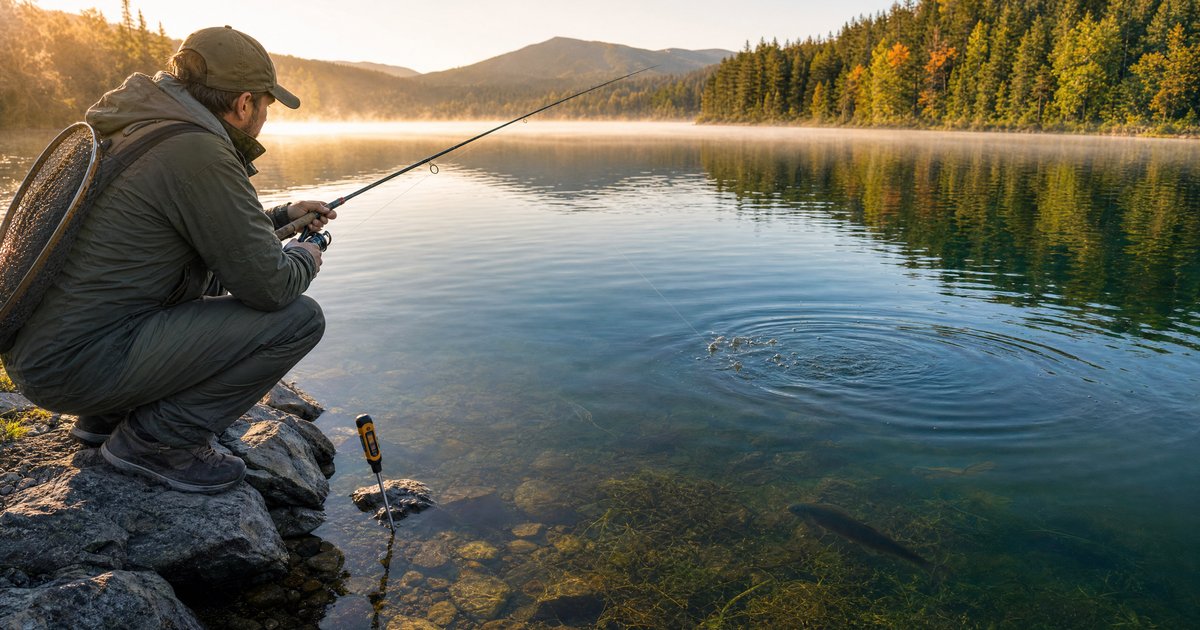
You don't need expensive gear here. A digital probe thermometer costs under $20 and will tell you everything you need to know. I keep one clipped to my kayak tackle bag at all times.
What to measure:
- Surface temperature at your launch point
- Surface temperature at your first spot (especially important in spring/fall when water varies)
- If you wade fish, temperature at different depths and in different current seams
What to do with the information:
- Compare to the species-specific charts above
- Note whether temp is rising or falling — fish often feed more aggressively on a rising temperature than a stable one at the same reading
- In spring, use it to identify which areas are warming fastest
Observational note: In my experience, a flat that's reading 58°F and trending up toward 60°F will fish better than a flat sitting stable at 62°F. The warming trend seems to trigger activity even before the "ideal" number is reached. This matches what a lot of experienced tournament anglers have noticed, though it's hard to quantify precisely.
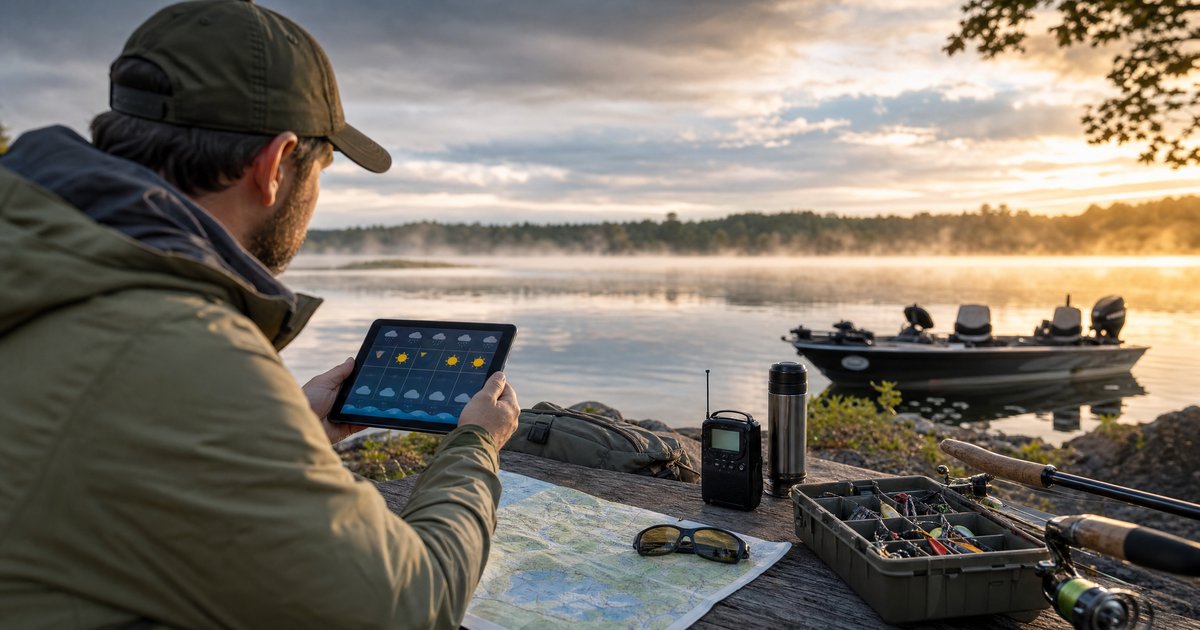
For planning ahead — especially multi-day trips — I'll pull up HookCast's fishing forecast to look at upcoming air temperature trends as a proxy for where water temps are likely to head over the next several days.
Temperature Fluctuations: Cold Fronts and Warm Snaps
Cold fronts deserve their own conversation because they're the single biggest source of fishing frustration I hear from anglers.
What a cold front does:
A cold front doesn't just lower air temperature. It drops barometric pressure ahead of it (which can actually trigger feeding), then slams it back up as the front passes with cold, clear air behind it. Water temperature drops — but the bigger immediate impact is the sky clearing, the light penetrating deeper, and fish pulling tight to cover and becoming much less willing to commit to a lure.
The temperature drop in the water itself takes longer — usually 24–48 hours for surface temperatures to fully reflect a cold air mass. But bass and other fish seem to sense it coming. I've had incredible bites in the few hours ahead of an approaching front, followed by a complete shutdown after it passes.
Post-front strategy:
- Fish slower and smaller
- Target the deepest adjacent structure to where fish were active pre-front
- Low-light windows become even more important — that golden hour at dawn may be your only real shot
- Give it 48–72 hours after a cold front for the bite to recover as fish adjust
Warm snaps in early spring and fall work in reverse — fish often turn on faster than the water temperature technically "justifies," responding to the system of rising temps and changing pressure together.
Quick-Reference Takeaways
The core rules:
- Water temperature controls fish metabolism — it's the single most important variable in predicting activity
- Every species has a sweet spot — know yours for the fish you're targeting
- A rising temperature trend often matters more than the exact number
- Spring and fall are transitional feeding frenzies — track the thermocline between 60–72°F for most Midwest species
- Summer pushes fish deep or nocturnal — find the thermocline or fish at dawn/dusk
- Cold fronts shut fish down for 24–72 hours post-passage; warm fronts speed up the bite
- Carry a cheap digital thermometer on every trip — it takes 10 seconds and changes your decision-making
Before your next trip:
- [ ] Check current water temp for your target lake/river (local fishing reports, USGS gauges)
- [ ] Compare to optimal range for your target species
- [ ] Note the temperature trend over the past 3–5 days
- [ ] Check the upcoming weather forecast for frontal systems
- [ ] Plan your presentation speed to match — slower in cold water, more aggressive in warm
- [ ] If trout fishing in summer, verify stream temps before releasing fish in thermal stress conditions
FAQ
What water temperature do bass bite best?
Largemouth bass are most active and aggressive when water temperatures fall between 65–78°F. Smallmouth bass tend to run a few degrees cooler, peaking around 62–72°F. Outside these ranges bass will still bite, but presentations need to slow down significantly in cold water and shift deeper during summer heat.
Does water temperature affect fishing more than weather?
Water temperature is generally a more reliable predictor of fish activity than air temperature or weather alone, because fish respond directly to the water around them — not the air above it. That said, weather events like cold fronts and warm snaps shift water temperature over time, and rapid barometric pressure changes can trigger or shut down feeding even before the water temperature has fully changed.
How do I check water temperature before a fishing trip?
The simplest method is to bring a digital probe thermometer to the water yourself — they cost under $20 and give you real-time readings at the spot you're fishing. For pre-trip planning, USGS stream gauge data provides real-time water temperature at monitoring stations on many rivers and larger lakes. Local bait shops and fishing forums often post current conditions as well.
Why do fish stop biting after a cold front?
Cold fronts cause a sharp rise in barometric pressure after they pass, along with clear skies and bright light conditions. Fish — especially bass — pull tight to cover and become far less willing to chase lures in these high-pressure, high-visibility conditions. The water temperature drop that follows also slows metabolism. Most anglers find the bite recovers within 48–72 hours as fish adjust to the new conditions.
What water temperature is too warm for trout fishing?
Most stream trout species, including rainbow and brown trout, experience physiological stress when water temperatures exceed 68°F. At 75°F and above, catch-and-release mortality increases significantly. If you're fishing a trout stream on a hot summer day and your thermometer reads above 67–68°F, the most responsible move is to hold off fishing until cooler water conditions return — typically in evening hours or after a cooler weather pattern sets in.