Best Lures for Cloudy and Overcast Days: Color, Action & Presentation
Last spring I paddled out onto a local reservoir at 7 a.m. under a thick gray sky. No wind, no sun, just a low ceiling of clouds that had rolled in overnight. The guy at the boat ramp shook his head and said, "Tough day to be out there." By 10 a.m. I'd caught and released a half-dozen largemouth, including a four-pounder that ate a black-and-blue spinnerbait about six inches under the surface. The other guy was already loading his trailer.
Cloudy days get a bad reputation with casual anglers. Most people associate good fishing with sunshine, blue skies, and perfect Instagram weather. But if you've been fishing for a while, you start to notice a pattern: the bite often fires up the moment the sun disappears behind the clouds.
There's real science behind that. When cloud cover reduces light penetration, fish behavior shifts in ways that work in your favor. Once you understand why, you can choose the right lures, colors, and presentations to consistently capitalize on it.
Why Overcast Days Change the Game (And Fish Behavior)
Before we talk gear, it helps to understand what's actually happening underwater when the sky goes gray.
Light Penetration and the Predator Advantage
Fish are visual predators, but they're also ambush predators. Largemouth bass, walleye, pike, and most other freshwater gamefish spend a lot of energy managing their exposure to sunlight. On bright days, species like largemouth bass push deeper or tuck tight to shaded cover to avoid the discomfort of direct light. Their strike zones shrink and they get more selective.
When cloud cover moves in, light penetration through the water column drops significantly. NOAA Fisheries notes that light availability directly influences fish habitat use and feeding behavior throughout the day. With less light, fish feel less exposed. They roam further from cover, move shallower, and expand their strike zones.
That's the short version of why you catch more fish on cloudy days: the fish come to you instead of you having to dig them out of tight structure.
Barometric Pressure: The Other Half of the Story
Cloud cover doesn't happen in a vacuum. It usually arrives with a shift in barometric pressure, and pressure changes are arguably more important than light levels for predicting fish activity.
A falling barometer — which often precedes a storm or extended cloud cover — tends to trigger a feeding frenzy. Fish sense pressure changes through their lateral lines and swim bladders, and many anglers (myself included) have noticed that the hour or two before a storm rolls in can produce some of the best action of the year. Standard atmospheric pressure sits at 1013.25 hPa per NOAA, and drops below that threshold often signal incoming weather systems.
The tricky part is the aftermath. After a cold front passes and the sky stays overcast but pressure is rapidly rising, fishing can actually slow down, especially in fall and winter. Before your next trip, check current pressure trends on HookCast to get a better read on whether you're fishing a pre-front opportunity or grinding through the post-front lull.
Field observation: In my experience, the hour before a significant cold front is some of the most productive water I've ever fished. The bite shuts off like a switch once the front actually arrives, but the buildup is electric. Get out early.
Lure Color Selection for Cloudy Conditions
This is where most anglers overthink it. You've probably heard a hundred different rules about lure color — match the hatch, use natural colors in clear water, use bright colors in dirty water. Most of those rules still apply, but overcast conditions introduce some specific nuances worth knowing.
Why Color Visibility Changes Under Cloud Cover
On a sunny day, lure color is influenced heavily by how light bends and scatters through the water. Reds and oranges lose their color at surprisingly shallow depths in direct sunlight — they wash out or turn brown. Blues and greens read more naturally.
Under cloud cover, contrast becomes more important than matching a specific hue. Fish are working with less light, so lures that create strong silhouettes or have high-contrast patterns tend to draw more attention.
Top Color Patterns That Produce on Cloudy Days
Dark, high-contrast colors:
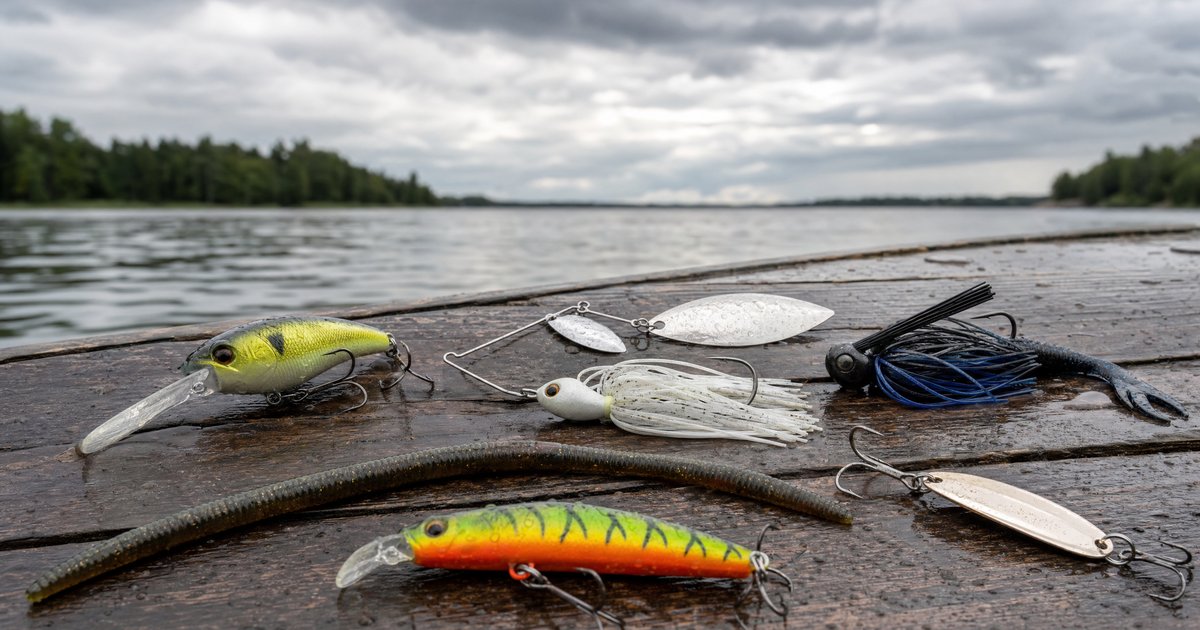
- Black and blue — This combo is a cloudy-day classic, especially for bass. The dark silhouette reads clearly in low light, and the blue flash mimics the shimmer of a fleeing baitfish or crawfish.
- Black and chartreuse — Excellent visibility in stained water under cloud cover. The contrast between the two colors creates a profile that fish can track at distance.
- Junebug — That purple-black tone is almost custom-made for low light. Works exceptionally well on soft plastics and tube baits for both smallmouth and largemouth.
Bright, high-visibility patterns:
- Chartreuse — In murky or stained conditions combined with overcast skies, chartreuse cuts through water like nothing else.
- White and chartreuse — Great for spinnerbaits and bladed jigs. The white provides the silhouette; the chartreuse adds the flash-and-trigger element.
- Fire tiger — Garish on land, deadly in low-light stained water. That orange-green-black pattern creates enough visual chaos to trigger reaction strikes.
Natural forage patterns (for clear water):
- Bluegill and sunfish patterns — Under overcast skies in clear lakes, a lure that mimics the profile of a bluegill works well because fish are roaming more and hunting actively.
- Shad patterns in gray, silver, and white — Overcast days in clear reservoirs call for shad-matching crankbaits and swimbaits.
| Water Clarity | Sky Condition | Top Color Choice |
|---|---|---|
| Clear | Overcast | Natural shad, bluegill patterns |
| Lightly stained | Overcast | Black/blue, white/chartreuse |
| Stained/murky | Overcast | Chartreuse, fire tiger |
| Dingy/dark | Overcast | Black/chartreuse, white |
Best Lure Types for Overcast Conditions
Color gets all the attention, but lure type and action matter just as much. Overcast conditions change how aggressive fish are willing to be, and that means you can often lean into faster, louder, and more reaction-oriented presentations.
Spinnerbaits and Bladed Jigs
If I had to pick one lure category purpose-built for cloudy skies, it's spinnerbaits. The combination of thump, vibration, and flash makes them incredibly effective when light is low. Fish can track them with their lateral lines even when visibility is reduced.
On overcast days, go bigger. Don't be afraid to throw 3/8 oz to 1/2 oz spinnerbaits. Willow-leaf blades give you more flash and run faster; Colorado blades give you more thump and vibration for stained water.
Bladed jigs (chatterbaits) are a close cousin. The erratic wobble and blade kick on a chatterbait in dark colors — especially black/blue or black/chartreuse — can be absolutely deadly on largemouth when skies are gray.
Topwater Lures
This is the one that surprises people the most. A lot of anglers think topwater is strictly a dawn-and-dusk presentation, but overcast conditions can extend topwater effectiveness well into midday. When clouds reduce surface glare, fish holding near the top are less wary and more willing to blow up on surface lures.
Best topwater picks for cloudy days:
- Buzzbaits — The surface disturbance and noise work even when you can't see your lure's color clearly. Go with white, black, or chartreuse.
- Poppers and walking baits — The erratic walk-the-dog action on overcast days can trigger bass that are patrolling open flats and shallow cover.
- Hollow-body frogs — Especially effective over matted vegetation that bass push into when skies are low.
Pro tip: If you're fishing topwater under cloud cover and the bite feels slow, pause longer than you normally would. Fish pushing up from slightly deeper water need that extra beat to commit.
Swim Jigs and Soft Plastic Swimbaits
Cloudy days move fish into a cruising, hunting mode, and that makes moving baits like swim jigs deadly — especially along weed edges, laydowns, and channel transitions. Rig a paddletail swimbait on a 1/4 oz swim jig head in black/blue or white/chartreuse and work it at a steady medium retrieve just below the surface.
For walleye anglers specifically, overcast conditions are premium time. Walleye are notorious light-avoiders; their specially adapted eyes actually make them more light-sensitive than most gamefish. Under cloud cover, walleye push shallow and actively feed. A white or chartreuse paddletail swimbait on a 1/4 oz jig head, fished on a slow retrieve near the bottom, is a simple and effective setup.
Crankbaits
Squarebills and medium-diving crankbaits shine on overcast days because fish are less spooky and more willing to chase. The deflection action off hard cover — rocks, stumps, laydowns — triggers reflex strikes, and on cloudy days fish position themselves higher in the water column, meaning you can often keep a medium-diver running right through their strike zone.
Go louder. If you fish crankbaits with internal rattles, choose louder models on overcast days. Fish are hunting by feel as much as sight when light is low, and the added sound can make a real difference.
Color-wise, stick to the principles outlined above: shad patterns in clear water, chartreuse-based patterns in stained water.
Jigs and Soft Plastics
Don't overlook slower, bottom-contact presentations on cloudy days, especially jigs. A 3/8 oz to 1/2 oz football jig in black/blue with a craw trailer is a bread-and-butter overcast presentation for both largemouth and smallmouth. The heavier head keeps contact with the bottom while the full profile of the craw trailer pushes water and creates vibration.
For a finesse approach in clear water — even on cloudy days — a Ned rig or drop shot in a dark worm color (oxblood, purple, or junebug) can be a killer backup when faster presentations don't produce.
Presentation Tips That Make a Difference
Having the right lure and color is half the equation. How you work it matters just as much.
Speed Up Your Retrieve
One of the biggest adjustments I make on overcast days is speeding up. When fish are in a more aggressive, active feeding mode, faster retrieves trigger reaction strikes and help you cover more water. Bass that would've needed a slow roll in direct sunlight will crush a medium-to-fast-moving spinnerbait under cloud cover.
This doesn't apply to every situation — bottom-contact lures like jigs still benefit from a methodical approach — but as a general rule, overcast days reward anglers who cover water efficiently.
Work the Shallows
Under bright sun, fish push to the deepest practical cover or find shade. Under cloud cover, they scatter into shallower zones: flats adjacent to deeper water, the back ends of coves, reed edges, and weed flats. Don't ignore water that looks "too shallow" on a cloudy day. Some of my best overcast-day fish have come from barely a foot of water.
Target Open Water Structure
Fish aren't just shallow on overcast days — they're also less confined to specific cover. A bass that would've been locked on a particular stump in 12 feet under sunny skies might now be cruising an entire flat. Look for current-related structure, depth changes, and transitions — points, channel edges, and creek mouths — rather than individual pieces of cover.
Vary Your Cadence
Even on active, cloudy-day bites, fish can get conditioned to a steady retrieve if you're working the same water. Introduce pauses, twitches, or direction changes to break the pattern. A swimming paddletail that suddenly hesitates and falls often gets eaten on the drop — the change triggers a reaction that a straight retrieve wouldn't.
Before your next trip: I always pull up HookCast's weather page to check whether cloud cover is building or breaking. A day that starts overcast and goes sunny by 10 a.m. calls for a completely different game plan than a day that stays gray until evening.
Putting It Together: Overcast Fishing by Species
Largemouth Bass
Overcast days are arguably the best largemouth bass conditions you'll find. Start with reaction baits — spinnerbaits, bladed jigs, squarebill crankbaits, and buzzbaits. Cover shallow and mid-depth water quickly, then slow down with a swim jig or jig-and-craw if the reaction bite doesn't fire. Black and blue, black and chartreuse, and white are your core cloudy-day colors.
Smallmouth Bass
Smallmouth in rivers and rocky lakes tend to respond extremely well to cloudy conditions. Tube baits in smoke/green or brown/orange on a 1/4 oz jig head, worked along rocky transitions, are a personal favorite. Swimbaits in shad patterns also produce well on cloudy days in clear, rocky lakes. Per USGS stream gauge data, water clarity in many stream systems varies significantly with seasonal runoff, so check local conditions before choosing your color.
Walleye
As mentioned, cloudy days are peak time for walleye. They push shallow, feed aggressively, and are far less skittish than usual. Leadhead jigs with paddletail plastics in white, chartreuse, or pink are reliable producers. Crankbaits in shad or firetiger patterns, trolled along depth breaks, can also produce well on overcast days on bigger water.
Pike and Muskie
If you're targeting toothy predators, overcast days are prime time. These ambush hunters love reduced light and will cover a lot of water when skies are gray. Big spinnerbaits, glide baits, and large soft plastic swimbaits in high-contrast colors (black and white, black and chartreuse) are top picks. Work the edges of weed beds and points systematically.
Quick-Reference Checklist: Cloudy Day Lure Strategy
Before you head out:
- [ ] Check barometric pressure trend — is it falling (good), stable (good), or rising post-front (tough)?
- [ ] Check water clarity — this determines how aggressive your color choice should be
- [ ] Confirm cloud cover duration — all-day gray vs. morning overcast calls for different strategies
Lure selection:
- [ ] Spinnerbait or bladed jig in black/blue or white/chartreuse
- [ ] Topwater (buzzbait or walking bait) in black or white
- [ ] Squarebill crankbait in shad or chartreuse pattern
- [ ] Swim jig with paddletail in dark or chartreuse colors
- [ ] Football jig or swim jig with craw trailer as a slower backup
Presentation adjustments:
- [ ] Speed up retrieves compared to sunny-day approach
- [ ] Target shallower water and open flats
- [ ] Cover more water with moving baits before slowing down
- [ ] Work pauses and direction changes into your retrieve cadence
Fish behavior reminders:
- [ ] Fish strike zones expand — don't ignore mid-water and shallow zones
- [ ] Bass, pike, and walleye all feed more aggressively under low light
- [ ] Post-cold-front overcast is different — expect a slower bite and adjust expectations
FAQ
What color lures work best on cloudy and overcast days?
On overcast days, high-contrast and darker color patterns tend to outperform natural colors because fish rely more on silhouette and vibration in reduced light. Black and blue, black and chartreuse, and white or chartreuse are reliable choices for most freshwater species. In clear water under overcast skies, natural shad and bluegill patterns can still produce well, but in any stained or murky water, lean toward the brighter, high-contrast options.
Is fishing better on cloudy days than sunny days?
In most freshwater situations, yes — overcast conditions genuinely improve fishing for species like bass, walleye, and pike. Cloud cover reduces light penetration, which causes fish to expand their strike zones, move shallower, and feed more actively. The exception is the period immediately after a cold front passes, when rising barometric pressure can shut the bite down even if skies remain overcast.
What are the best lures for bass on overcast days?
Spinnerbaits, bladed jigs (chatterbaits), buzzbaits, and squarebill crankbaits are top picks for bass on cloudy days because they cover water quickly and trigger reaction strikes from fish that are actively roaming. Swim jigs with paddletail trailers and football jigs in black and blue are solid follow-up presentations if faster moving baits don't produce. The key is to fish faster and cover more water than you would on a bright, sunny day.
Does barometric pressure matter more than cloud cover for fishing?
Both matter, but they're often connected. Falling barometric pressure — which typically precedes cloud cover and storms — is one of the strongest triggers for aggressive fish feeding. Stable or slowly falling pressure under all-day cloud cover is usually ideal. Rapidly rising pressure after a cold front passes can suppress the bite even under overcast skies. Monitoring pressure trends alongside cloud cover gives you the most complete picture of what the bite is likely to do.
Should I use loud or rattling lures on overcast days?
Yes, louder presentations with rattles or significant water displacement can be an advantage on cloudy days, especially in stained water. Fish use their lateral lines to detect vibration and pressure changes, and lures that combine visual contrast with sound or vibration — like a rattling crankbait or a Colorado-blade spinnerbait — give fish multiple ways to track and commit to the lure in reduced light conditions.