Fog and Low Visibility Fishing: Tactics When You Can't See the Water
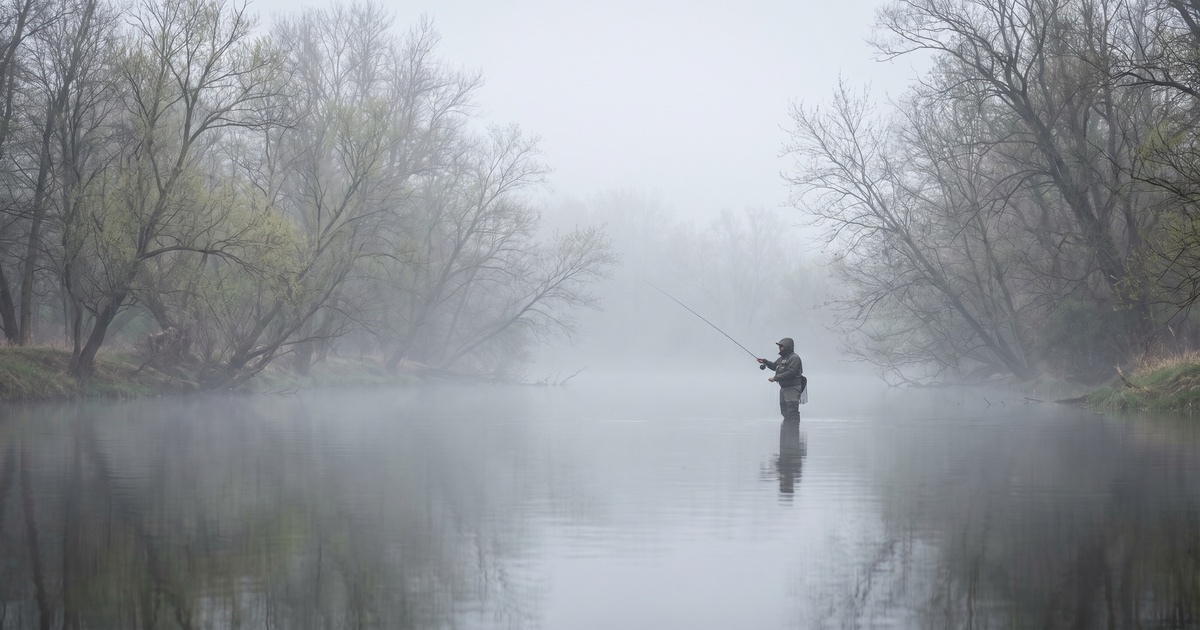
It was mid-April on a Missouri reservoir I know pretty well. I launched my kayak around 6 a.m., and by the time I'd paddled 200 yards from the ramp, I couldn't see the bank anymore. Full pea-soup fog — the kind where you can hear a great blue heron but can't find it until it lifts off right next to you. My first instinct was to turn back and wait it out.
I didn't. I caught seven largemouth before 9 a.m., including my personal best for that lake at the time.
That morning taught me something I've since confirmed dozens of times: foggy conditions can produce some of the best fishing of the year, especially in spring. But they also demand a different approach — to safety, to lure selection, to how you read water you literally cannot see. If you've been writing foggy days off as a lost cause, you're leaving fish in the water.
Here's how I handle it.
Why Fog Actually Helps Fishing (The Science Side)
Most anglers treat fog as a problem to fish around. Flip that thinking. Fog is often a symptom of conditions that make fish genuinely more active.
Fog Forms When Fish Are Most Active
Radiation fog — the most common type on inland lakes and rivers — forms when air cools rapidly overnight and moisture condenses near the water's surface. That typically means:
- Calm winds and minimal surface pressure on the water
- Stable, mild overnight temperatures that didn't push fish into deeper, lethargic holding areas
- High humidity, often associated with low-pressure systems that trigger feeding behavior
According to NOAA's weather education resources, radiation fog most commonly forms during calm, clear nights in spring and fall — which maps almost perfectly onto prime feeding windows for bass and walleye.
Low Light Reduces Fish Wariness
Predatory fish are visual hunters. Bass, walleye, pike — they all use light to their advantage when ambushing prey. But so does their prey. In bright conditions, baitfish can spot a predator approaching and react in time.
In fog and low light, that dynamic shifts. Bass push shallower with less caution. Walleye — which have tapetum lucidum-enhanced eyes built specifically for low-light environments — become measurably more aggressive. I've had my best topwater sessions of the year on foggy spring mornings for exactly this reason.
The Barometric Pressure Connection
Fog often correlates with relatively stable or slightly falling barometric pressure, which tends to keep fish in active feeding postures rather than the lethargic, hunkered-down behavior that follows a front. Before any foggy morning trip, I pull up HookCast's weather tool to check the pressure trend. A steady or slowly dropping reading is a green light. A rapidly falling pressure ahead of a storm system is an entirely different situation — and one I'll address in the safety section.
Standard atmospheric pressure sits at 1013.25 hPa per NOAA. When I'm seeing 1010–1015 hPa with a stable trend on a foggy morning, I'm confident the bite will be on.
Safety First: This Section Isn't Optional
I want to be direct: fog is genuinely dangerous on the water, especially from a kayak. I fish in it regularly, but only with clear protocols I don't skip. If you're not willing to follow basic fog safety — honestly, wait it out. No fish is worth a serious accident.
The Core Risks in a Kayak
- Boat traffic: In a kayak, you're nearly invisible in fog. Powerboats can't see you, and you often can't hear them until they're dangerously close.
- Disorientation: Without visual landmarks, it's surprisingly easy to get turned around on a large lake. What feels like paddling toward shore can take you further out into open water.
- Hypothermia exposure: Spring water temperatures are often still dangerously cold. A capsize in foggy conditions with no one to spot you is a serious emergency.
What I Always Do Before Launching in Fog
Navigation and visibility gear:
- Wear your PFD — not clipped to your kayak, but on your body.
- Mount a white 360-degree light on your kayak. Per U.S. Coast Guard regulations, kayaks operated in restricted visibility are required to have a white light available. A clip-on LED works fine.
- Bring a waterproof handheld VHF radio or a fully charged phone sealed in a dry bag.
- Use GPS — either on your phone or through a fish finder — and save your launch point as a waypoint before you leave the ramp.
Boat traffic mitigation:
- Stay off main channels and open-water travel routes.
- Hug shoreline structure rather than cutting across open water.
- Make noise periodically — I knock my paddle on the kayak hull when I hear an engine nearby.
- Text someone a float plan before you launch.
Field observation: On busy reservoirs, I won't launch in fog at all until after 8 or 9 a.m. on weekends when boat traffic is heavy. The bass will still be biting when the fog thins — and you'll be alive to catch them.
Know when to pull off the water. If you hear a boat approaching and can't determine its direction, get to the nearest bank and wait. There's no pride in getting run over.
Reading Water You Can't See: Using Your Other Senses
This is where kayak fishing in fog becomes almost meditative. You slow down, you pay attention differently, and you start picking up on things powerboat anglers will never notice.
Listen for Feeding Activity
In calm, foggy conditions, sound carries remarkably well across the water's surface. I've located actively feeding fish purely by listening:
- Topwater blowups: Bass crushing baitfish on the surface make a distinct, loud report. You'll hear them before you see them.
- Shad flickering and jumping: Nervous baitfish create a light, irregular splashing sound that's different from a predator strike — learn to distinguish the two.
- Wood knocking: In timber or heavy brush, active fish will sometimes bump structure in ways you can hear if you're paying attention.
When I hear a blowup in fog, I stop paddling and try to triangulate the direction before moving. Rushing toward the sound usually spooks the fish before you get a cast in.
Use Structure as Your Map
Without a visual reference to the bank, your electronics become your eyes. Even a basic fish finder with a depth graph tells you a great deal about where you are relative to underwater structure.
Here's how I navigate fogged-in water by feel and electronics:
- Drop-offs: A sharp depth change on the graph tells me I'm on a ledge edge — classic spring staging structure for bass.
- Submerged timber: Near known timber areas, I slow way down and fan cast methodically rather than trying to visually locate trees.
- Current seams on rivers: Even when you can't see the bank, you can feel when you cross from slack water into current. Fish those transitions deliberately.
If you're fishing water you know well, fog is actually far less limiting than it sounds. Your muscle memory of the lake or river does a lot of the navigating for you.
Wind Direction as an Orientation Aid
A consistent light wind can help maintain your bearings. In the absence of GPS, I'll note wind direction at launch and use it as a rough reference point throughout the session. Wind can shift, so don't rely on it entirely — but it's a useful backup.
Lure Selection for Low Visibility Conditions
This is where I see most anglers make mistakes. They fish fog exactly like they'd fish any other morning and wonder why it's not working. Fog changes how fish relate to the water column and how they use their senses to find prey. Match your presentation to those changes.
Go Louder, Bigger, and Darker
In low visibility, fish rely more heavily on their lateral line — the pressure-sensing system that detects vibration and water displacement. That sensory shift changes your lure selection significantly.
High-vibration lures that consistently produce in fog:
| Lure Type | Why It Works | Retrieve Style |
|---|---|---|
| Lipless crankbait | Strong thump and vibration | Fast and steady, or yo-yo |
| Colorado blade spinnerbait | Maximum water displacement | Slow roll near the surface |
| Chatterbait | Erratic vibration with flash | Medium pace, pause occasionally |
| Topwater popper or chugger | Loud surface commotion | Slow and deliberate |
| Buzzbait | Surface noise plus vibration | Slow enough to stay on top |
Color selection: Dark colors — black, dark blue, June bug — create a stronger silhouette against what little light filters from above. Chartreuse performs well in the upper water column because of its contrast in low-light conditions. Some of my best fog sessions have been on a black-and-blue chatterbait and an all-black buzzbait.
Topwater in the Fog: Why the Surface Works
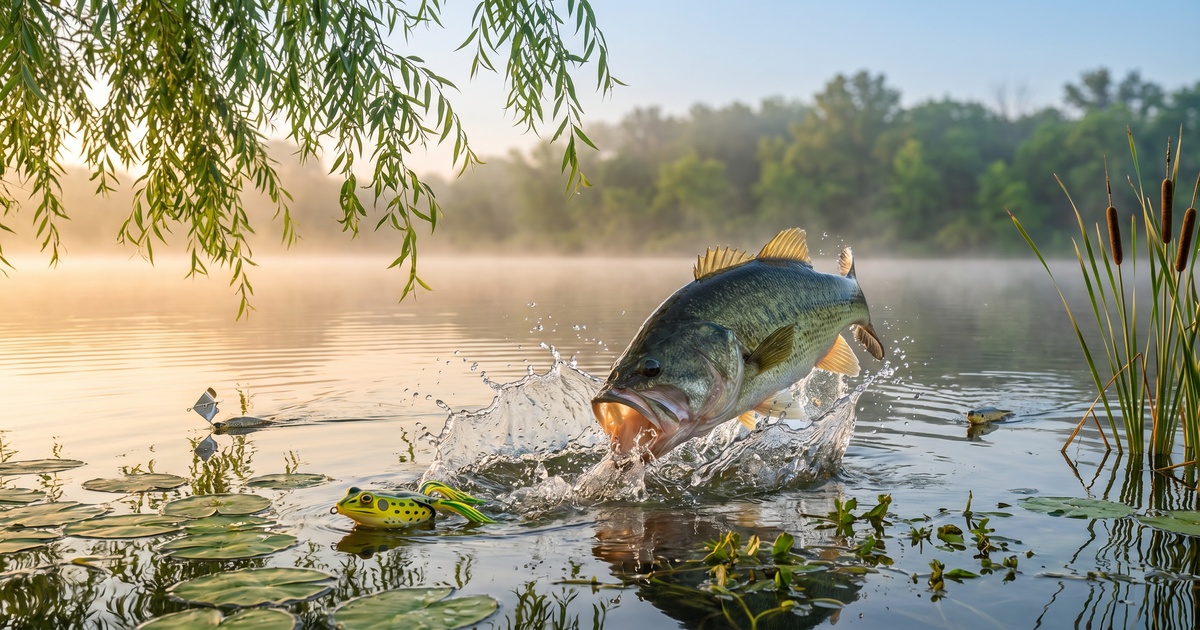
Spring fog on calm mornings is one of my favorite topwater setups all year. When the surface is glassy and visibility is low, bass that would normally hold in deeper transition zones push shallow. They use the water's surface as a ceiling to trap baitfish. A slow-walked Zara Spook or a deliberately worked popper over submerged grass, dock edges, or wood will draw blowups you'll remember for a long time.
The key is patience. In fog, I slow my retrieve down by about 30 percent compared to what I'd normally run. The fish aren't going to miss the lure — they can feel it coming. Let them fully commit before setting the hook.
Walleye in the Fog: A Different Game
If you're targeting walleye in early spring fog — prime time on systems like Lake Erie or the Detroit River — their low-light-adapted vision puts them at a genuine predatory advantage. The fog that makes your morning harder makes their hunting easier.
For walleye in foggy conditions:
- Jigging with curly tail or paddle tail grubs in natural colors (white, chartreuse, smoke) triggers reaction strikes effectively
- Slow-rolling a swimbait along bottom transitions covers feeding lanes efficiently
- Crankbaits in natural perch or shad patterns on a steady retrieve mimic disoriented baitfish
According to NOAA Fisheries, walleye possess a reflective layer behind their retina — the tapetum lucidum — that gives them exceptional low-light vision. Foggy, overcast conditions don't hinder walleye; they put them firmly into hunting mode.
Where to Fish When You Can't See the Bank
Location matters even more in fog because visual adjustments are harder to make on the fly. In spring, you want to be efficient and work high-percentage water.
Shoreline Structure: Stay Tight
The bank itself becomes your guide rope in fog. I stay within comfortable casting distance of shore and work parallel to it. This approach:
- Keeps me oriented relative to a fixed landmark
- Covers the shallow-to-mid depth transition where spring bass stage
- Lets me use visible micro-structure — rocks, stumps, dock posts — as target reference points even when visibility is poor
Creek Mouths and Feeder Channels
Spring fog often settles into creek arms before it clears the main lake. Those same creek mouths are prime feeding grounds for bass following baitfish movements after the spring turnover. Warm incoming water, spawning staging areas, and foggy low-light conditions combine to make these spots some of the most reliable targets you can fish.
I'll position my kayak at the mouth of a creek arm and alternate casts — one toward the back of the pocket, one toward the main lake channel edge. Two casts cover both the warming water and the depth transition simultaneously.
River Fishing in Fog: Slow Down Considerably
River fog can be especially dense and disorienting, and current adds a navigation variable that lake fishing doesn't present. My approach on foggy river days:
- Fish eddies and slack water behind large rocks or structure — let fish come to you rather than chasing them
- Anchor or use a stake-out pole rather than drifting blind if you can't see the next bend
- Wade stretches you know well rather than kayaking unfamiliar water with limited visibility
- Check USGS stream gauge data before your trip — fog combined with rising water from recent rain demands extra caution
Field observation: On Ozark streams, some of my best smallmouth sessions have come during May morning fog. The fish are active, the water runs clear, and fog keeps canoe traffic off the river entirely. Anchor near a gravel bar, throw swimbaits upstream, and let the current do the work.
Making the Call: When to Go vs. When to Wait
Not every foggy day is worth fishing, and knowing when to stay home is part of fishing smart.
Fish in fog when:
- Fog formed overnight from calm, clear conditions — radiation fog typically burns off by mid-morning
- Pressure is stable or slowly falling
- You know the water well enough to navigate it safely
- You're on a smaller, low-traffic lake or creek
- You have proper lighting and a float plan in place
Consider waiting it out when:
- Fog is associated with an approaching storm system — check HookCast's weather page for pressure trends and wind forecasts
- You're on a large, busy reservoir during peak boat traffic hours
- You don't know the water you're fishing
- The fog has sat for hours with no sign of lifting
- Water temperatures are still dangerously cold (early spring, below 45°F at the surface)
Radiation fog that forms on calm overnight air often lifts within a few hours of sunrise. The bite frequently continues after it clears — so even waiting an hour won't cost you much, and you'll fish with considerably more visibility and safety margin.
Key Takeaways: Foggy Day Fishing Checklist
Before you launch on a foggy morning, run through this quickly:
Safety:
- [ ] PFD on your body
- [ ] 360-degree white light mounted and functioning
- [ ] GPS or phone with launch point waypoint saved
- [ ] Float plan texted to someone onshore
- [ ] VHF radio or charged phone sealed in a dry bag
Conditions check:
- [ ] Pressure stable or slowly falling (check HookCast)
- [ ] Radiation fog, not storm-related fog
- [ ] Water temperature not dangerously cold
- [ ] Familiar water or confirmed low-traffic area
Tactics:
- [ ] High-vibration lures rigged and ready (lipless crankbait, chatterbait, buzzbait)
- [ ] Dark or high-contrast color selection
- [ ] Electronics on with depth graph active
- [ ] Retrieve slowed 20–30 percent from normal
- [ ] Staying tight to shoreline structure
- [ ] Listening for surface feeding activity before moving
Some of my best spring days on the water started with a fog so thick I almost turned back at the ramp. Don't let low visibility make the decision for you — make it yourself, with the right information and the right gear. Fish smart, stay safe, and let the fog work in your favor.
FAQ
Is fishing in fog actually good, or is it overstated?
Foggy conditions genuinely improve fishing in many situations, particularly in spring and fall. Fog typically accompanies calm winds, stable barometric pressure, and low light — all of which reduce fish wariness and trigger feeding behavior. Bass and walleye are especially active in low-visibility conditions because reduced light levels shift the predator-prey advantage toward the hunters rather than the hunted.
What lures work best for fishing in fog?
High-vibration and high-noise lures consistently outperform finesse presentations in foggy conditions because fish rely more on their lateral line than their eyesight. Lipless crankbaits, spinnerbaits with Colorado blades, chatterbaits, buzzbaits, and topwater poppers are all strong choices. Dark colors like black, dark blue, and June bug create a stronger silhouette in low light, while chartreuse provides contrast in the upper water column.
How do I stay safe kayak fishing in fog?
Always wear your PFD, mount a white 360-degree light on your kayak (required by U.S. Coast Guard in restricted visibility), and save your launch point as a GPS waypoint before leaving the ramp. Stay tight to shoreline rather than crossing open water, text a float plan to someone before you launch, and keep a charged phone in a sealed dry bag. Avoid busy lakes during peak boat traffic hours when visibility is limited.
What causes fishing fog and how long does it typically last?
The most common type on inland lakes is radiation fog, which forms when overnight air cools rapidly and moisture condenses near the water's surface. It typically occurs on calm, clear spring and fall nights and usually burns off within a few hours of sunrise as the sun heats the air. Fog associated with an approaching storm system behaves differently — it can persist longer and often signals deteriorating weather conditions that warrant staying off the water.
Does fog affect walleye fishing differently than bass fishing?
Yes — walleye thrive in foggy and low-light conditions more than almost any other common freshwater species. Their tapetum lucidum gives them exceptional low-light vision, putting them at a real hunting advantage when visibility drops for everything else. Spring fog on walleye-rich systems like Lake Erie can produce outstanding feeding windows, particularly with slow-rolled swimbaits and curly tail jigs worked along bottom transitions.