King Tide Fishing: Why the Highest Tides of the Year Produce Monster Catches
Picture this: you pull into your usual parking spot at the boat ramp on a Tuesday morning in October, and the water is somewhere it has no business being. The spartina grass is submerged past your knees. That marsh flat you walked across last spring is completely under. A great blue heron is standing in what used to be the parking lot median.
That's a king tide. And if you know what you're doing, it's one of the best fishing opportunities of the entire year.
I'll be straight with you — I'm primarily a freshwater guy. Kayak bass and walleye are my wheelhouse. But I've spent enough time down on the Gulf Coast visiting my brother-in-law in the Tampa Bay area to understand what inshore saltwater anglers already know: extreme high tides are not an inconvenience. They're an event. The fish know it, the baitfish know it, and after reading this, you'll know exactly how to exploit it.
What Actually Is a King Tide?
King tide isn't an official meteorological or oceanographic term — it's a popular name for the perigean spring tide, which occurs when the moon is both at its closest point to Earth (perigee) and aligned with the sun to create a spring tide. According to NOAA tidal predictions, these events push water levels significantly higher than the average high tide, sometimes a foot or more above predicted monthly highs depending on your location.
They happen several times a year, typically in fall and early spring. The exact dates shift annually as the lunar cycle realigns, but you can plan for them weeks in advance.
What Separates King Tides from Regular High Tides
Most anglers understand that high tides move baitfish and gamefish into shallower water. King tides take that process and amplify it dramatically:
- Regular high tide might flood the edges of a grass flat.
- King tide floods the grass flat, the upper marsh behind it, the spartina cordgrass, the mangrove prop roots — places fish literally cannot access 360 days a year.
That last part is the key. When new feeding habitat opens up, predators follow. They're not just moving around their usual territory — they're exploring real estate that's been locked off since the last king tide cycle.
How to Know When King Tides Are Coming
You don't need to be a marine biologist or track lunar calendars manually. Pull up your local tide charts and look for tide heights that are significantly above your seasonal average — typically 1.0 to 1.5+ feet above mean higher high water (MHHW). When you see that spike, circle it on your calendar.
A few other factors can stack on top of a king tide and make it even more extreme:
- Onshore winds pushing water into bays and estuaries
- Low barometric pressure (storms) drawing water upward
- Sea level anomalies from seasonal warming along the coast
Why King Tides Produce Bigger Fish (The Biology Behind It)
Here's the "why" that most fishing articles skip over.
Coastal ecosystems — marshes, mangroves, tidal flats — function as nursery habitat for a massive range of baitfish, crustaceans, and juvenile gamefish. SeaGrant research on tidal wetlands has documented how frequently inundated marsh areas rank among the most productive nursery zones in North American coastal ecosystems. All that biological productivity — fiddler crabs, grass shrimp, minnows, juvenile mullet — concentrates in areas that are normally too shallow for larger predators to access.
King tides briefly open the door.
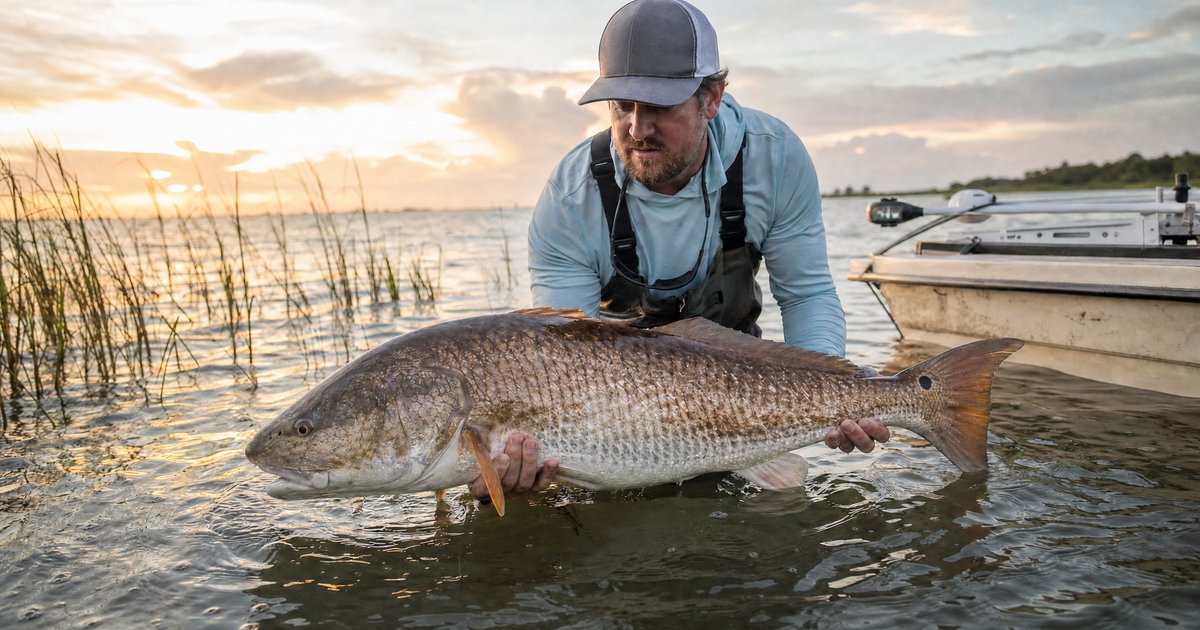
Field observation: The first time I watched redfish push up into flooded cordgrass during a king tide, it looked wrong — like they'd made a navigational error. But they were actively feeding, fins and tails breaking the surface, mousing through grass that was barely eight inches deep. They weren't lost. They'd been waiting for exactly this.
When those flooded zones open up, here's what happens from a food chain perspective:
- Baitfish and crustaceans that were concentrated at the marsh edge scatter into the newly flooded areas.
- Gamefish follow immediately — redfish, snook, flounder, trout, and juvenile tarpon in the right regions.
- Competition among predators increases, which means fish are in an active, aggressive feeding mode.
- Ambush points shift — the structure that normally holds fish (grass edges, oyster bars, channel drops) becomes less important because food is everywhere.
That aggressive, opportunistic mindset is exactly what you want when you're fishing. A fish that's casually cruising a feeding flat is catchable. A fish that's actively competing for resources in a tight space is extremely catchable.
Target Species During King Tides (By Region)
Depending on where you fish, the species you're targeting will vary — but the behavior pattern is consistent across all of them.
Redfish (Red Drum) — Gulf Coast & Southeast Atlantic
Redfish are the king tide species. If there's one fish that seems genetically programmed to exploit extreme high water, it's the red drum. From Galveston Bay to the Chesapeake, they push into flooded spartina and mangrove prop roots and just absolutely feed.
According to NOAA Fisheries data on red drum, red drum are opportunistic feeders that readily consume crustaceans, small finfish, and mollusks — the exact prey items flooding out of inundated marshes during king tides.
Best techniques:
- Weedless soft plastics (Gulp! shrimp, paddle tails) worked slowly through flooded grass
- Weedless gold spoons — a classic redfish presentation that stays snag-free
- Topwater plugs when fish are visibly tailing or pushing wakes
Where to look: Target the back edges of flooded marshes — places where fish push to the farthest accessible point. The front of the flat near the channel is less productive during peak king tide because that's where the fish came from.
Snook — Florida's Gulf Coast
Snook are structure-oriented ambush predators, but king tides temporarily relocate their ambush points. Instead of sitting under a dock or along a seawall, they push into flooded mangroves and shallow backwater areas chasing mullet and pilchards.
Best techniques:
- Swimbaits and paddle tails worked parallel to flooded mangrove roots
- Live pilchards or finger mullet pitched into pockets (if you have them and local regulations allow)
- Suspending jerkbaits worked slowly
One note on snook: Florida has seasonal closures on snook harvest. Always check current regulations with the Florida Fish and Wildlife Conservation Commission before keeping anything. These fish are too valuable to the ecosystem to risk on a reg violation.
Flounder — Gulf Coast & Mid-Atlantic
Flounder are ambush predators that don't move much — but during king tides, the ambush points come to them. Flounder will stage at transition zones where flooded marsh drains back into deeper water, especially as the tide begins to fall.
Best techniques:
- Bucktail jigs worked slowly along the bottom at the edges of drain channels
- Gulp! alive grubs dragged through the mud
- Fish the falling tide specifically — flounder stack at the mouths of drains as baitfish get flushed out
Spotted Seatrout — Southeast Atlantic & Gulf
Speckled trout are slightly more selective about extreme high water than reds or flounder — they tend to stay at the outer edges of flooded areas rather than pushing all the way back. But during king tides, you'll find larger trout staging near grass edges waiting for baitfish to spill out.
Best techniques:
- Soft plastic jerkbaits (Mirrolure Lil John style)
- Topwater lures early morning
- Slow-sinking plugs worked along grass edges
How to Fish a King Tide: Tactics and Timing
Knowing the biology is one thing. Fishing it effectively requires adjusting how you approach the water.
Arrive Before Peak High Water
This is the single biggest mistake anglers make. They see a massive high tide and show up at the peak — when the water is already as high as it's going to get and fish have spread out across an enormous area. You want to fish the incoming tide during a king tide event, not the peak.
Here's why: as water rises, fish are actively moving and feeding. There's directional movement and prey concentration happening in real time. At peak high, everything has settled. As the tide starts dropping, fish that pushed deep into the marsh begin staging to exit — which creates a second opportunity.
The optimal window:
| Phase | What Fish Are Doing | Best Tactic |
|---|---|---|
| 2 hrs before peak high | Moving into flooded areas | Fan-cast ahead of fish movement |
| Peak high | Spread out, actively feeding | Sight fish, work back pockets |
| 1–2 hrs after peak | Staging at drain exits | Ambush at drain mouths and channels |
Downsizing Is Usually Wrong
A lot of anglers default to smaller presentations in skinny water. During king tides, resist that instinct. Fish are feeding aggressively and competing for food — bigger presentations often outperform finesse setups. I've heard from several Tampa Bay guides that oversized gold spoons and large paddle tails on 1/4 oz heads consistently outproduce smaller lures during extreme high water events.
Read the Escape Routes
As the king tide recedes, baitfish and crustaceans get flushed back out through the same channels, drains, and cuts they entered through. Position yourself at these exit points during the outgoing tide and you can intercept both the bait and the fish following it.
Pro tip: On a kayak or on foot, this is where you have a massive advantage over boaters. You can get into the shallow drains and channel edges where fish are concentrating without spooking them with a big hull.
Don't Neglect the Structure Nearby
While the flooded marsh is the headline, don't abandon the adjacent structure entirely. Oyster bars, dock pilings, and seawall edges adjacent to flooded marsh areas often get overlooked during king tides because everyone is focused on the grass. Larger fish — especially big snook and bull reds — sometimes stage near the flooded habitat rather than pushing all the way into it.
Practical Prep: Before You Leave the House
King tides are predictable. You can be ready for them weeks in advance if you do a little homework.
Check Tidal Data and Weather Together
A king tide on paper can get cancelled out by strong offshore winds that hold water back, or amplified by an onshore flow. Before committing to a king tide session, check:
- Predicted tide height — is it significantly above your area's normal high?
- Wind direction — onshore winds amplify inundation, offshore winds reduce it
- Barometric pressure — lower pressure can add several inches to tidal height
You can layer all of this in one place using HookCast's weather and tide tools to see if conditions are stacking in your favor.
Gear Adjustments
You don't need special equipment for king tide fishing, but a few small adjustments help:
- Weedless rigged hooks are almost mandatory in flooded grass — standard hooks will snag constantly.
- Polarized sunglasses are essential for sight fishing in shallow, clear water.
- Waders or water shoes if you're fishing on foot — flooded areas can be mucky and uneven.
- Safety note: If you're wading flooded marsh during a king tide, be aware of your footing. Submerged structure, sharp oyster shells, and sinkholes in the mud can turn a wade trip dangerous quickly. Don't wade alone in unfamiliar flooded areas.
Know the Regulations for Your Target Species
King tides can produce exceptional fishing, but that doesn't mean anything goes. Before you head out:
- Check size and bag limits for redfish, snook, flounder, and trout in your specific state.
- Be aware of seasonal closures — Florida snook seasons, for example, have closed periods designed to protect the spawn.
- If you're targeting redfish in areas with specific slot limits (common in Florida and Texas), measure everything carefully.
- Practice proper fish handling — large redfish especially need support under their belly if held for a photo, and should be revived fully before release.
Quick Reference: King Tide Fishing Checklist
Before you go:
- [ ] Confirm king tide dates using NOAA tidal predictions or HookCast tide charts
- [ ] Check wind direction — onshore winds amplify flooding
- [ ] Verify current regulations for your target species
- [ ] Rig weedless presentations the night before
On the water:
- [ ] Arrive 2 hours before peak high water
- [ ] Target the farthest back accessible areas during incoming tide
- [ ] Switch to drain mouths and channel edges on outgoing
- [ ] Watch for tailing fish, pushing wakes, nervous bait
- [ ] Downsize only if fish are spooky — don't default to finesse
Safety:
- [ ] Wade carefully in unfamiliar flooded terrain
- [ ] Watch for submerged oyster bars and structure
- [ ] Don't wade alone in new areas during extreme tidal events
King tides don't happen every weekend. That's exactly what makes them worth paying attention to. When one lines up with decent weather and you're positioned right, it can genuinely be one of those days you talk about for a couple of seasons. The fish are in places they're not supposed to be, doing things they don't usually do, and they're far less cautious than they would be in normal conditions.
Check your tide charts now. If a king tide is coming up in your region, start planning your approach. The marshes open up for a few hours — and the fish that flood in won't be there long.
Frequently Asked Questions
What is a king tide and when does it happen?
A king tide is an informal term for a perigean spring tide — an exceptionally high tide that occurs when the moon is at its closest point to Earth (perigee) and aligned with the sun. These events push water significantly higher than average high tides, sometimes a foot or more. They typically occur several times a year, most commonly in fall and early spring, and can be tracked weeks in advance using NOAA tidal predictions.
Is king tide fishing better on the incoming or outgoing tide?
The incoming tide leading up to peak high water is generally the most productive window for king tide fishing, because fish are actively moving into newly flooded habitat and feeding aggressively on prey being flushed into the marsh. A second productive window occurs on the outgoing tide, when baitfish get flushed back through drain channels and cuts — a great time to position yourself at those exit points and intercept both bait and predators.
What fish are most affected by king tides?
Redfish (red drum) are arguably the species most associated with king tide fishing, particularly along the Gulf Coast and Southeast Atlantic. Other species that actively exploit extreme high tides include snook, flounder, and spotted seatrout. All of these fish follow baitfish and crustaceans that flood out of marsh grass and mangroves when king tides inundate normally dry or very shallow areas.
Do king tides affect freshwater fishing at all?
King tides primarily affect coastal saltwater and brackish water environments. However, estuaries and tidal rivers that connect to the ocean can see king tide effects extending inland, temporarily pushing saltwater or brackish conditions further up river systems. This can affect species like striped bass or juvenile redfish that use tidal rivers. Standard freshwater lakes and ponds away from the coast are not affected by king tides.
What gear should I use for king tide redfish in flooded grass?
Weedless rigged soft plastics are the go-to choice for flooded grass during king tides — Gulp! shrimp, paddle tails, and soft jerkbaits on weighted weedless hooks work well. Weedless gold spoons are another proven option that moves quickly and stays snag-free. Topwater lures work when fish are actively tailing or pushing visible wakes. Standard treble-hook setups will snag constantly in flooded spartina grass and are best left at home.