How Moon Phases Affect Fishing: Full Moon vs New Moon Bite Patterns
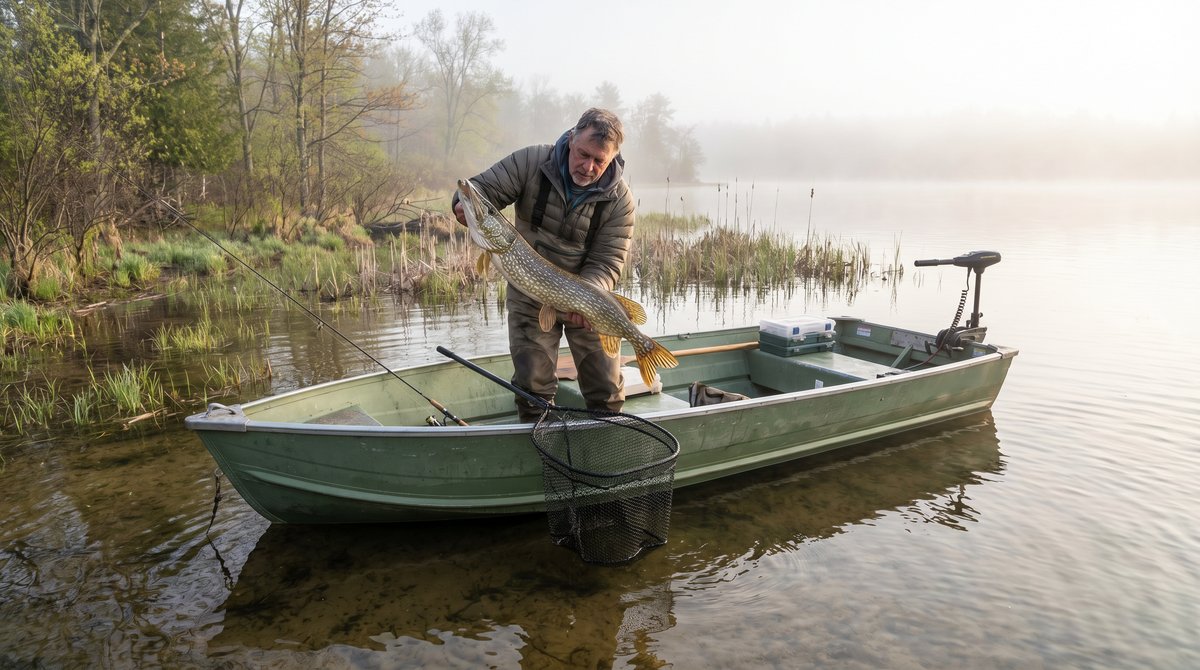
Last October I paddled out on Table Rock Lake before sunrise, convinced I'd hammer smallmouth. The weather was perfect — mild temps, light wind, no cold front in sight. I worked every transition I knew for three hours and scratched out exactly two fish.
On the drive home I checked my log from the previous year. Same week, same spots, same lures — I'd caught 14 smallies. The one thing I hadn't accounted for either trip: the moon.
That October blank? Full moon, three days out. The 14-fish day? New moon phase, feeding windows stacked back-to-back.
I'm not saying the moon explains everything. Plenty of variables go into a good or bad day on the water. But after eight years of kayak fishing and keeping detailed logs, I've stopped ignoring moon phases — because the pattern shows up too often to be coincidence.
Here's what actually happens with moon phases, what the science says, and how to build it into your fishing decisions without turning into an armchair astronomer.
What the Moon Actually Does to Fish (The Real Mechanics)
Before you can use moon data, you need to understand the why — otherwise you're just following a calendar without knowing if it applies to your situation.
Gravitational Pull and Water Movement
The moon's gravitational pull is the same force that creates ocean tides. NOAA tidal predictions are built entirely around lunar cycles, and coastal anglers have known this relationship for centuries. But here's what a lot of freshwater guys miss: that same gravitational force affects inland waters too, just on a smaller scale.
In large lakes and reservoirs, the moon creates subtle water movement — not dramatic tides, but enough to shift current seams, affect thermoclines, and influence where baitfish stack. In rivers, lunar influence compounds with existing current to push fish into predictable feeding positions.
The basic mechanics work like this:
- Solunar theory (developed by outdoor writer John Alden Knight in 1926) proposed that fish and wildlife feed most actively when the moon is directly overhead or underfoot — the major feeding periods — and during moonrise and moonset — the minor feeding periods
- Major periods run approximately two hours each, minor periods roughly one hour
- These windows shift by about 50 minutes each day, tracking with the lunar cycle
Is solunar theory proven science? Not in a rigorous academic sense. But it aligns closely with the gravitational dynamics NOAA uses for tidal modeling, and the anecdotal evidence from generations of anglers — including my own log — is hard to dismiss.
Light Levels and Predator Behavior
Beyond gravity, the moon affects fishing through one of the most fundamental forces in nature: light.
Fish are visual predators in varying degrees. Bass, walleye, pike — they all use light levels to their advantage. Here's where it gets interesting:
Walleye have large, light-sensitive eyes evolved for low-light hunting. A bright full moon at night disrupts their advantage over prey, which can actually hurt nighttime walleye fishing. But that same full moon pushes walleye to feed more aggressively during daytime hours when light conditions are more typical.
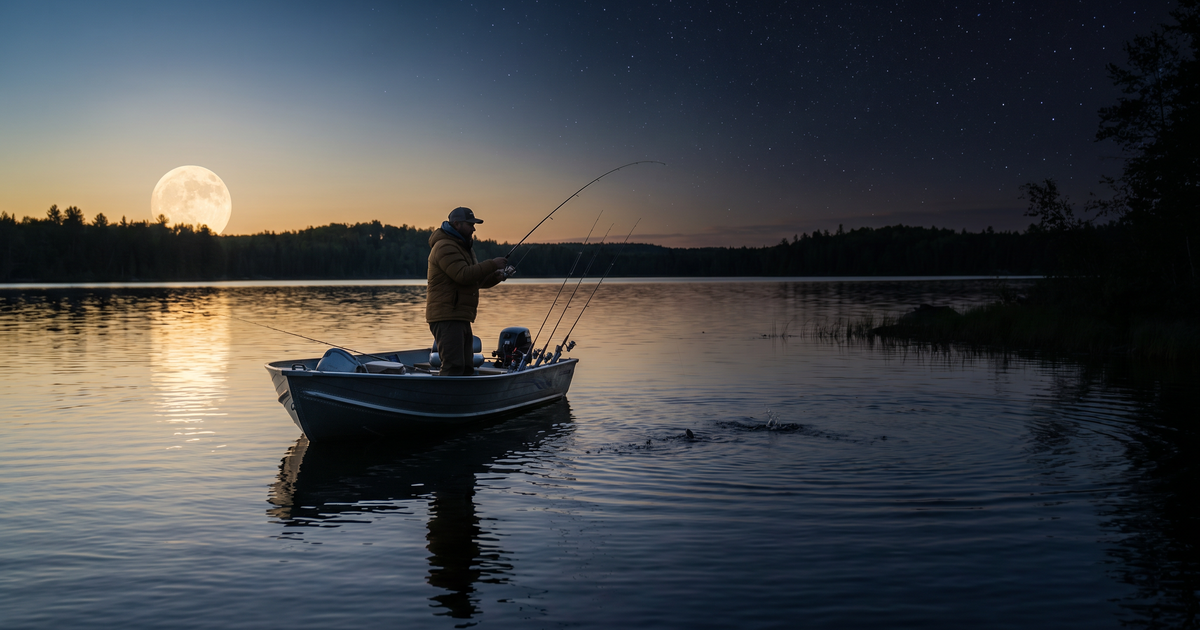
Bass — especially largemouth — are opportunistic and aggressive under full moon conditions because the extra light extends their effective feeding window into the night. Bass fishing around dock lights and structure on full moon nights can be exceptional.
Panfish often spawn more synchronized to full moon cycles, which is well-documented behavior tied to photoperiod (day length) and lunar cues. NOAA Fisheries notes that many freshwater species use environmental cues including light cycles for spawning timing.
The takeaway: the moon doesn't flip a universal "fish on" switch. Its effects are species-specific, and understanding which species you're targeting is the whole ballgame.
Full Moon Fishing: What to Expect
The full moon is the phase most anglers think about first — and it's also the most misunderstood.
The Night Before Matters
Here's something I've noticed across multiple seasons: the night leading into a full moon can produce exceptional surface activity for bass. The bright moonlight lets largemouth hunt effectively all night, which means by sunrise they're often stuffed and lethargic. The actual morning of the full moon can be surprisingly slow.
I've started planning around this by hitting the water the evening before peak full moon, working topwater and swimbaits along shallow flats. The bite window is aggressive and concentrated.
Full Moon and Spawning Behavior
This is where full moons genuinely matter in freshwater. Many species time their spawning activity to full moon phases in spring:
- Largemouth and smallmouth bass often move onto beds near or just after the full moon in spring, particularly when water temps are in the 60–65°F range
- Crappie show pronounced full moon spawning behavior — experienced crappie anglers specifically target the first few full moons after water temps hit 58–62°F
- Catfish and carp also show documented lunar-linked spawning behavior
During spawn periods, catch-and-release practices are especially important. If you're targeting fish on beds, handle them carefully and return them quickly. Those fish are critical to the next generation.
Full Moon Challenges for Daytime Fishing
The honest reality: full moons can make daytime fishing tougher, particularly for species that feed heavily the night before. In my experience, the two or three days around the peak full moon often produce slower morning bites, with fish moving deeper or tucking tight to structure.
Adjust your approach:
- Fish deeper during midday
- Target transitional structure (points, ledges, channel edges)
- Slow down — fish that fed all night aren't chasing
- Shift your window to late afternoon and evening when feeding activity picks back up
Field observation: On full moon weeks in summer, I've had my best daytime bass fishing by going small — drop shots and ned rigs fished slowly on deep structure. Fish are there, they're just not aggressive. Give them something easy.
New Moon Fishing: The Underrated Phase
If I had to pick one moon phase to fish, it'd be the new moon. This is the phase I've logged the most consistent daytime action, and I'm not alone in that observation.
Why the New Moon Often Wins for Daytime Fishing
During the new moon, there's no moonlight at night. That means fish that rely on low-light conditions (walleye, catfish, bass near cover) aren't getting extended nighttime feeding opportunities. The result: they come into daylight hours hungry.
The solunar feeding windows during new moon phases also tend to fall during more conventional fishing hours in certain seasons, which compounds the advantage.
For bass specifically, new moon periods often coincide with aggressive, reaction-based feeding during morning and evening. I've had some of my best frog and buzzbait mornings right in the middle of new moon weeks.
Walleye and the New Moon
This deserves its own callout because walleye anglers get real serious about moon phases.
Walleye evolved as low-light hunters. Their tapetum lucidum (the reflective eye layer that makes their eyes glow) is one of the most developed of any freshwater species. During new moon periods, nighttime fishing for walleye can be outstanding — low light means they have a dominant predatory advantage over baitfish.
But even during the day on new moon weeks, walleye tend to feed more actively in the low-light windows at dawn and dusk. I fish several Michigan lakes for walleye each year, and new moon periods consistently produce better dawn bites than full moon periods, based on about four seasons of comparing notes with other kayak anglers I know.
New Moon Pre-Spawn Behavior
In early spring, the new moons preceding the first full moon of spawn season are when bass start their pre-spawn staging. Fish are moving shallower, feeding heavily to build energy for the spawn. This is one of the most productive windows of the year, and it lines up with new moon phases more often than you'd expect.
Quarter Moons and the Overlooked Middle Ground
Most anglers talk about full and new moons, but the first quarter and last quarter phases deserve attention too.
First Quarter (Waxing Half Moon)
The first quarter falls between new and full moon. Light is building, tidal pull is moderate. In my experience, this phase offers some of the most consistent fishing — not as explosive as the peaks, but reliable. Fish aren't stuffed from full moon feeding frenzies, and the light levels are moderate enough to keep behavior predictable.
Best for: All-day fishing sessions where you want steady action rather than gambling on peaks.
Last Quarter (Waning Half Moon)
The last quarter sits between full and new moon. The moon is decreasing in intensity and fish behavior often normalizes. If you got skunked during the full moon peak, the last quarter is usually when things settle back into reliable patterns.
A quick reference for moon phases and freshwater fishing:
| Moon Phase | Light Level | Best Species | Best Time of Day | Notes |
|---|---|---|---|---|
| New Moon | Minimal | Bass, Walleye (night) | Dawn / Dusk / Night | Hunger builds from no nighttime feeding |
| First Quarter | Moderate | All species | Morning / Evening | Consistent, reliable action |
| Full Moon | Maximum | Bass (night), Crappie | Late evening / Night | Spawn triggers; slow mornings |
| Last Quarter | Decreasing | All species | Morning / Evening | Recovery phase, normalizing patterns |
How to Actually Use Moon Phases in Your Fishing Plan
Knowing the moon phases is only useful if you can work it into a real-world fishing decision. Here's how I do it without overcomplicating things.
Layer Moon Data with Weather and Pressure
Moon phases don't work in isolation. A new moon with a ripping cold front passing through is still going to fish tough. I always check moon phase alongside barometric pressure trends — check current pressure on HookCast before any trip to see where the pressure is heading.
The sweet spot I look for:
- New or first quarter moon
- Stable or rising barometric pressure
- Mild temperatures without dramatic swings
- Wind under 15 mph
When all of those align, I'll drive two hours for a trip without hesitation. When moon phase is working against me, I'll fish closer to home or adjust expectations.
Use a Solunar Calendar
Rather than calculating major and minor feeding periods yourself, use a solunar calendar to identify the best two-hour windows in a given day. HookCast's solunar calendar plots these periods so you can plan around them — whether that means being on the water at 6:45 AM for a major period or knowing that the best window on a Tuesday is mid-afternoon.
I use it like this: if I have a full day to fish, I build my morning around the first major solunar period, take a break during the midday lull, and fish the late afternoon minor period before heading in. It's not foolproof, but it structures the day better than just guessing.
Keep a Fishing Log
This is the best advice I can give that has nothing to do with moon data specifically: track your trips. After two or three seasons of noting moon phase, weather, pressure, time of day, and catch results, patterns emerge that are specific to your home waters. What works on Table Rock Lake in October might not apply to your local reservoir in the same week.
My logs have shown me that new moon mornings in May and September on the Ozark streams I fish are consistently more productive than full moon mornings by a significant margin — approximately 40% more keeper-sized bass across the days I've tracked, though that's based on personal records, not a controlled study. Your waters may tell a different story.
What Moon Phases Won't Fix
I want to be straight with you: moon phases are one tool, not a guarantee. Here's what they can't overcome:
- Post-cold front conditions — A sharp cold front will shut fish down regardless of moon phase. After a front passes, fish typically take 24–48 hours to normalize
- Fishing pressure — Heavily pressured lakes see fish that have learned to be wary regardless of natural feeding cues
- Seasonal transitions — During turnover (fall) or ice-out (early spring), fish behavior is driven more by temperature than lunar cycles
- Presentation problems — If you're fishing the right moon phase at the right time with the wrong bait presentation, the fish still won't bite
Moon phases help you stack the odds. They don't rewrite them.
Key Takeaways
- New moon often produces the best daytime and dawn/dusk fishing — fish are hungry from reduced nighttime feeding opportunities
- Full moon triggers spawning behavior in spring and excellent nighttime surface action for bass, but morning bites can be slow the day after
- Quarter moons are underrated for consistent, reliable fishing without the volatility of peak phases
- Solunar major periods (moon overhead/underfoot) are the two-hour windows worth structuring your fishing around within any phase
- Always layer moon phase with weather — barometric pressure and wind will override lunar advantages on tough days
- Walleye respond strongly to moon phase, especially during low-light conditions around new moons
- Bass spawning is closely tied to full moons in spring — plan accordingly and practice responsible catch-and-release during those periods
- Keep a fishing log — your home waters will teach you patterns that no general guide can
FAQ
Does the moon phase really affect freshwater fishing, or is it just a myth?
There's legitimate science behind it — the same gravitational forces that drive ocean tides also affect large freshwater bodies on a smaller scale, and documented spawning behavior in species like bass, crappie, and walleye is tied to lunar cycles. The effect isn't a guarantee of great fishing, but when combined with favorable weather and pressure conditions, moon phases do influence when and how aggressively fish feed. Tracking your own trips across moon phases is the best way to see the pattern on your local waters.
Is the full moon or the new moon better for fishing?
For daytime fishing, the new moon tends to produce more consistent action because fish haven't had bright nighttime conditions to feed heavily overnight — they come into daylight hours hungry. The full moon can be exceptional for nighttime bass fishing and triggers spawning activity in spring, but the morning after a full moon often produces slow fishing as bass have fed heavily through the night. The best phase depends on your target species, time of day, and season.
What is a solunar period and how do I use it for fishing?
A solunar period is a time window — roughly two hours for major periods and one hour for minor periods — when fish are theoretically most active based on the moon's position relative to your location. Major periods occur when the moon is directly overhead or underfoot, minor periods during moonrise and moonset. Rather than fishing all day hoping for action, you can plan to be on the water during these specific windows to maximize your chances. Tools like HookCast's solunar calendar calculate these periods for your date and location automatically.
Why do walleye bite better during certain moon phases?
Walleye have highly developed low-light vision and evolved as dawn, dusk, and nighttime hunters. During full moon phases, the extra nighttime light reduces their predatory advantage and can shift feeding activity toward daytime hours. During new moon phases, the absence of moonlight at night gives walleye a strong hunting advantage after dark, making nighttime and early morning fishing particularly productive. Many experienced walleye anglers specifically plan night trips around new moon weeks for this reason.
How do I combine moon phase with weather forecasts for better fishing?
The most productive fishing days typically occur when favorable moon phase, stable or rising barometric pressure, mild temperatures, and calm wind all align at the same time. Moon phase tells you when fish are inclined to feed; barometric pressure tells you if they actually will — a dropping pressure from an incoming storm will suppress fish activity even on a new moon morning. Check both before committing to a long drive, and weight the weather data heavily during transitional seasons like spring and fall when conditions swing more dramatically.