Fishing the Spawn: Ethics, Catch-and-Release Best Practices & Seasonal Rules
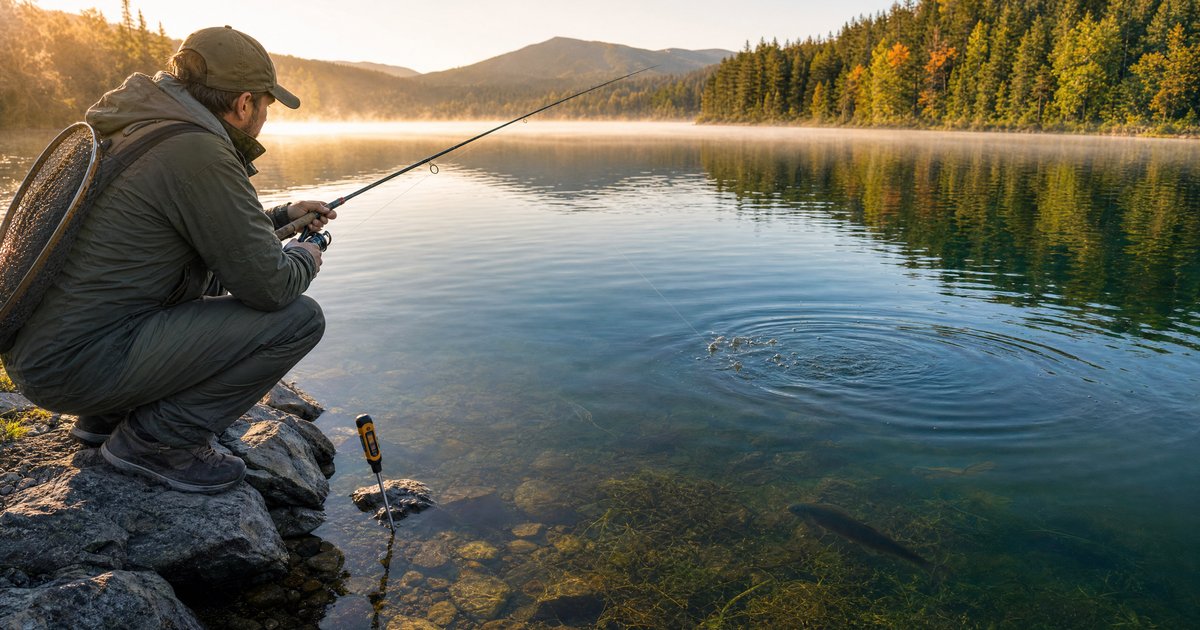
Last April I paddled into a shallow cove on Table Rock Lake just as the sun cleared the ridge. My fish finder read 62°F. And there they were — three largemouth cruising the flats, moving into position. You could already see the beds forming in the gravel.
That heart-punch feeling never gets old.
But I had a tournament the following weekend. I wanted to catch those fish badly. And I sat there for a minute, just thinking: should I?
That pause — that moment of actually asking the question — matters more than most anglers realize.
Spawn fishing is legal on most waters. In many cases it's the best fishing of the entire year. But how you approach it, and how you handle fish afterward, has real consequences that ripple into the seasons ahead. Here's what eight years of kayak fishing through Ozark springs, Great Lakes shorelines, and every farm pond in between has taught me.
What's Actually Happening During the Spawn
Good decisions on the water start with understanding what spawning fish are doing biologically — and why that makes them both vulnerable and worth protecting.
The Three Phases
Bass spawn unfolds in three stages, and each one fishes differently:
- Pre-spawn — Water temps 50–60°F. Fish stage in deeper water near spawning flats, actively feeding to build energy reserves. This is prime time.
- Spawn — Temps reach 60–75°F. Fish move shallow. Males build beds, females deposit eggs, and both guard the nest. Fish are aggressive but territorial — they're attacking out of protection, not hunger.
- Post-spawn — Females retreat to deeper water to recover. Males stay on nests guarding fry for several more weeks.
Walleye follow a different schedule, spawning in cooler water — typically 42–50°F, from late March through April — over rocky shoals and gravel in rivers. They tend to go off feed more completely during egg deposit, which makes them harder to target during the actual spawn.
Field note: On Missouri Ozark streams, I've watched smallmouth males guard nests well into June in shaded, cooler stretches. Those fish will hit a swimbait almost purely out of aggression. That's exactly what makes the ethical question so loaded.
Why Spawning Fish Are Vulnerable
Largemouth and smallmouth bass exhibit strong nest-guarding behavior, with males staying on beds for extended periods after eggs hatch. Pull a guarding male off the nest — even temporarily — and that nest is exposed. Bluegill, perch, and crayfish move in fast.
Fisheries research suggests repeated disturbance of nesting males can lead to significant fry mortality. I won't cite a precise number, but any bass guide who's fished the same lake for 20 years will tell you: shallows that were thick with juvenile bass one July can look completely empty the next if spring pressure was brutal. The pattern is consistent enough to take seriously.
The Ethics Question — Where Most Anglers Get It Wrong
This isn't about shaming anyone. I've caught bed fish. I'll probably catch some again. But there's a real spectrum between "I saw a fish, I caught it" and "I spent 45 minutes throwing at the same nesting male until he finally snapped."
The Case for Leaving Spawning Fish Alone
The ethical argument against targeting nesting fish comes down to a few practical points:
- A bedded fish isn't really feeding. That male attacking your bait is defending eggs, not chasing a meal. You're exploiting a parental instinct.
- Every minute he's off the bed costs fry. Even a five-minute fight and release leaves a nest exposed.
- Females are especially valuable. A large female largemouth can carry roughly 7,000–10,000 eggs. Stressing or injuring her during spawn has downstream population effects that compound over time.
The Case That Spawn Fishing Is Fine — If Done Right
On the flip side, catch-and-release bed fishing done properly — short fight, careful handling, quick return to the exact capture location — has minimal long-term impact on healthy populations. That's not rationalization. It's what good fisheries science supports when handling protocols are actually followed.
The problem is that most anglers don't follow them.
"You don't need to stop fishing the spawn entirely. You need to stop being careless about it."
The bigger issue I see on the water isn't that people fish the spawn — it's that they fight fish too long, hold them in the air for two-minute grip-and-grin photos, release them 30 yards from where they were caught, and consider it done. That's where real damage happens.
Catch-and-Release Best Practices During the Spawn
If you're going to fish during the spawn — and plenty of people will, legally and reasonably — these are the practices that actually protect the fishery.
Before the Catch
- Know your water temps. Temperature tells you exactly what spawn phase you're in. Check current conditions with a fishing weather app like HookCast before you head out. Pre-spawn fishing is significantly less impactful than targeting active nesters.
- Pinch your barbs or switch to barbless hooks. Faster hook removal means less time the fish spends out of the water.
- Match your tackle to the fish. Use gear heavy enough to finish the fight quickly. A long battle on light line exhausts a spawning fish far more than the catch itself justifies.
The Fight
- Fight fish fast. Most smallmouth on 10–12 lb fluorocarbon and medium-heavy gear should be at the kayak in under two minutes if you're applying consistent pressure.
- Don't run sight-fishing marathons. Throwing 40 casts at the same fish until he finally cracks isn't sport — it's attrition. If he won't bite in a few presentations, move on.
Handling Out of the Water
This is where most anglers do the real damage.
| Do This | Don't Do This |
|---|---|
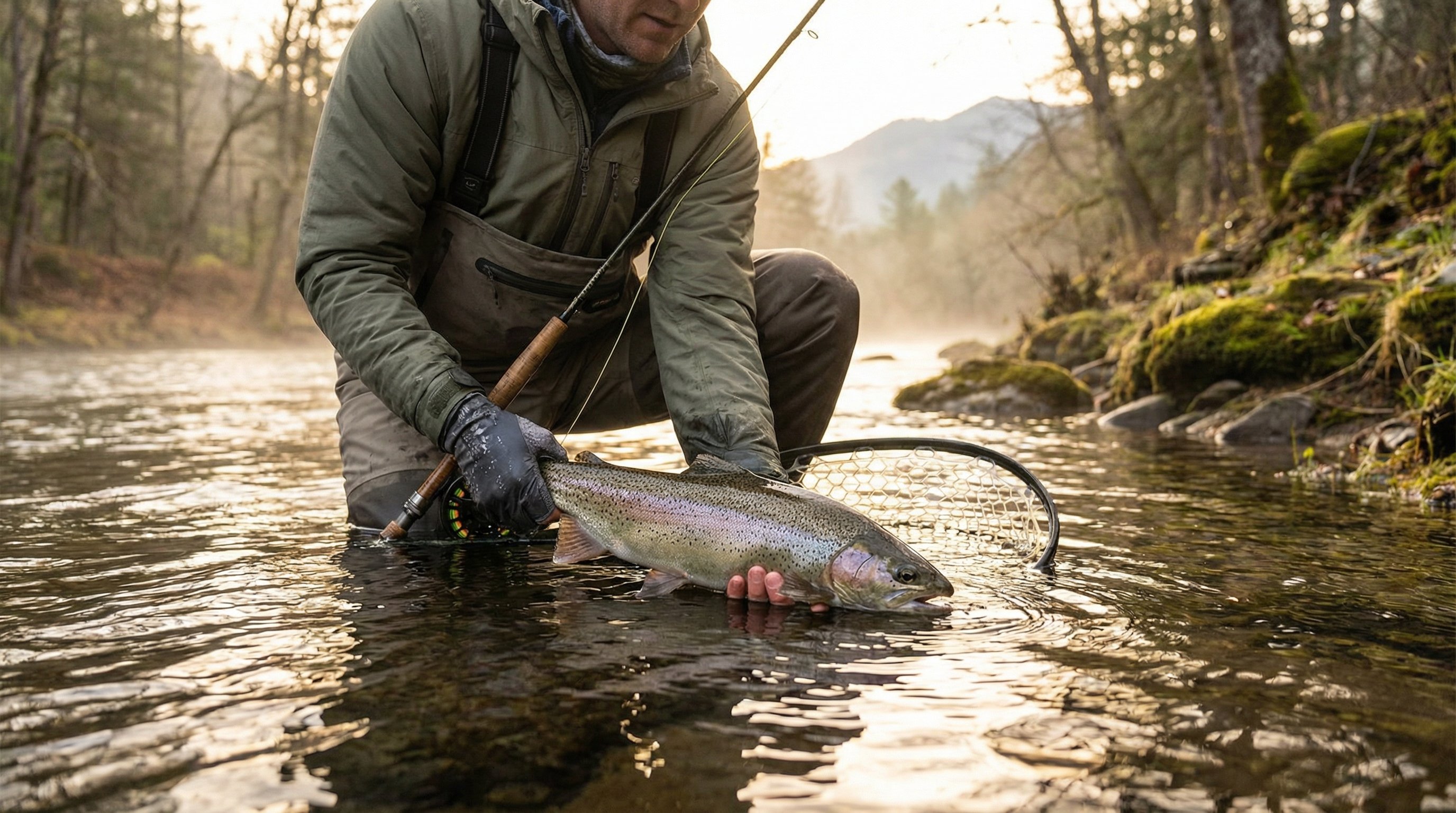
| Keep the fish horizontal | Dangle it vertically by the lip |
| Wet your hands first | Use dry gloves |
| Keep air exposure under 30 seconds | Take two-minute phone photos |
| Support the belly on large fish | Hold big fish by the jaw only |
| Release at the exact capture location | Drop it 30–50 yards away |
That last point is more important than most anglers realize. A spawning male released 50 yards from his bed may or may not find his way back. Return him right where you caught him and he's back on the nest within seconds.
After the Release
- Hold the fish upright at boat-side and wait for it to kick away under its own power.
- If it's lethargic, support it gently facing any current until it swims off on its own.
- For tournament anglers, livewell conditions during spawn season deserve their own attention — see below.
State Regulations: What You Need to Know Before You Go
Regulations vary by state, water body, and sometimes by specific management zones within a single lake. There's no universal national rule, and that makes it your responsibility to verify before you launch.
What's Common Across Most States
- Bass: Most Midwestern and Southern states allow bass fishing year-round, including through the spawn. Several Northern states — Michigan, Wisconsin, Minnesota, New York, Vermont — have closed seasons specifically protecting bass during spawning periods, typically running from mid-May through late June depending on the zone.
- Walleye: Many Great Lakes states and Canadian border waters carry closed seasons or size restrictions during spring spawning runs.
- Trout and Salmon: Some of the strictest protections in fishing regulations exist for salmonids during the spawn. Many streams close entirely.
States with Notable Spawn Protections for Bass
| State | Bass Closed Season | Notes |
|---|---|---|
| Michigan | Late April – late June (varies by zone) | Applies to inland lakes |
| Minnesota | Mid-May – late May | Year-round open on some waters |
| Wisconsin | First Saturday in May – June (varies) | Zone-dependent |
| New York | Third Saturday in June (opener) | Protects spawn statewide |
| Vermont | Third Saturday in June | Statewide bass opener |
Always verify current regulations with your state fish and wildlife agency before fishing. The table above reflects general patterns — not current law. Regulations change, zones shift, and individual water bodies can carry additional restrictions beyond the statewide baseline.
Quick tip: Most state fish and wildlife agencies now offer regulation lookup by specific water body through their apps or websites. It takes two minutes. There's no reason to catch a citation on a technicality.
Special Regulations and Protected Waters
Beyond state closed seasons, individual lakes and reservoirs can carry slot limits that protect large females during spring, or no-take zones around known spawning flats. Corps of Engineers impoundments and state-managed waters sometimes layer additional rules on top of general statewide regulations.
USGS stream gauge data is useful for tracking spring water levels on rivers — high, turbid water during spawn periods can affect both fish behavior and when regulations practically align with actual spawning activity.
Regional Spawn Timing: A Practical Calendar
"The spawn" isn't a single moment. It's a rolling window that varies by latitude, elevation, and the thermal characteristics of specific water bodies.
Approximate Spawn Windows by Region
South (Florida, Texas, Louisiana)
- Largemouth: February – April
- Florida fish are capable of multiple spawn cycles in a season
Midwest (Missouri, Indiana, Illinois, Kentucky)
- Largemouth: Late April – May
- Smallmouth: Mid-May – June (stream fish often run later than lake fish)
- Walleye: March – April
Great Lakes Region (Michigan, Wisconsin, Minnesota)
- Largemouth: Late May – June
- Smallmouth: Late May – early July in northern lakes
- Walleye: April – May
Northeast (New York, Pennsylvania, New England)
- Largemouth: Late May – June
- Smallmouth: June – July in colder systems
From my kayak: I've caught Niangua River smallmouth in Missouri sitting on beds in late May while the same stretch of water was still running cold from spring rains. The calendar on your phone is a rough estimate at best. Water temp is the real indicator. I track warming trends with HookCast before deciding which stretches are likely holding active nesters versus fish still staging in pre-spawn.
The Tournament Angle: Extra Responsibility
Tournament bass fishing during the spawn carries its own ethical weight. Most tournaments practice mandatory catch-and-release, which helps — but tournament stress on spawning fish is still a real concern.
- Livewell time during warm May afternoons
- Multiple fish confined in close quarters
- Weigh-in stress followed by release in an unfamiliar location, far from the original bed
Some tournament organizations have moved to discourage or formally ban targeting fish during active spawn periods as part of their conservation policy. B.A.S.S. and FLW have both addressed this in various rule discussions, though consistent enforcement remains difficult.
If you're fishing a tournament during spawn season:
- Keep livewell temperature stable, ideally matching lake temperature
- Run quality aerators and consider livewell additives
- Advocate for boat launch releases so fish are returned to the general vicinity of where they were caught, rather than a centralized weigh-in location miles away
Key Takeaways: Quick Reference Checklist
Run through this before your next spring trip.
Before You Go
- [ ] Check water temps — confirm what spawn phase you're fishing
- [ ] Verify state regulations for your specific water body
- [ ] Confirm whether a closed season or slot limit applies
- [ ] Pinch barbs or switch to barbless hooks
On the Water
- [ ] Target pre-spawn staging fish over active nesters when possible
- [ ] Fight fish quickly — minimize exhaustion
- [ ] Don't grind on the same bedded fish for 30+ minutes
- [ ] Keep fish horizontal, wet-handed, and out of the air
- [ ] Limit air exposure to under 30 seconds
- [ ] Release the fish exactly where you caught it
After the Release
- [ ] Wait at boat-side until the fish swims away on its own
- [ ] Support any lethargic fish into the current until it kicks off
- [ ] Log your water temps and spawn phase notes — the data pays dividends in future seasons
Spawn season is the best fishing of the year. There's nothing quite like watching a heavy pre-spawn female slide up into the shallows on a warm May morning, or loading up on a chunky smallmouth that's been stacking calories since ice-out. But the fishing next spring — and the spring after that — depends on how we handle fish this year.
Fish it smart. Release it right. Give those fry a fighting chance.
FAQ
Is it legal to fish for bass during the spawn?
In most U.S. states, bass fishing is legal year-round, including during the spawn. However, several Northern states — Michigan, Wisconsin, Minnesota, New York, and Vermont among them — have closed seasons specifically designed to protect bass during spawning periods, typically running from mid-May through late June depending on the management zone. Always check your state's current fishing regulations and verify rules for the specific water body before fishing in spring.
Does catching and releasing a bass off its nest harm the eggs?
It can, depending on how long the male is kept off the nest. A nest-guarding male removed for even a few minutes leaves eggs exposed to predators like bluegill and crayfish. The key variables are fight duration, handling time, and release location. A male returned immediately to his exact capture spot gets back on the nest within seconds. Extended fights, prolonged handling, and releasing fish at a distance from the bed significantly increase the risk of egg or fry loss.
What water temperature triggers the bass spawn?
Largemouth bass typically begin moving onto beds when water temperatures reach 60–65°F, with spawning activity peaking between 65–75°F. Smallmouth spawn in a similar range but often slightly earlier, around 60–70°F. Water temperature is more reliable than the calendar for predicting spawn timing — the same lake can run two to three weeks apart between a cold spring and a warm one. A streamside thermometer or fishing weather app is worth using before every spring trip.
What's the best way to handle a spawning bass after catching it?
Wet your hands before touching the fish, keep it horizontal to reduce stress on internal organs, limit air exposure to under 30 seconds, and release it at the exact spot where you caught it. Avoid holding large fish vertically by the jaw for photos, and support the belly of any fish over roughly three pounds. For tournament anglers, maintaining proper livewell temperature and oxygenation through spawn season is critical to post-release survival.
Should I avoid fishing the spawn entirely for conservation reasons?
Avoiding it entirely is the most conservative approach, and some anglers choose it — particularly for catch-and-keep fishing. But catch-and-release spawn fishing done with proper handling and quick returns is widely supported as having minimal long-term impact on healthy populations. The greater conservation concern is poor handling: prolonged fights, extended air exposure, and releasing fish away from their beds. If you're going to fish the spawn, focus on pre-spawn staging fish when you can, and commit to fast, careful releases every time.