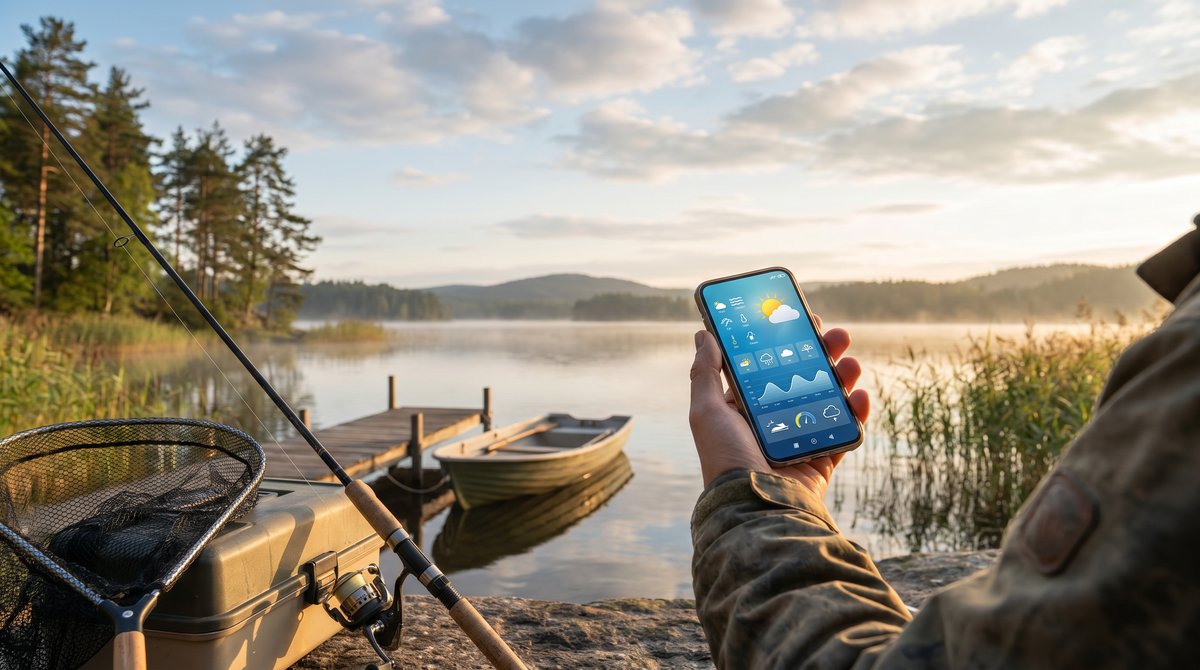
How to Use a Fishing Weather App to Plan Perfect Fishing Trips
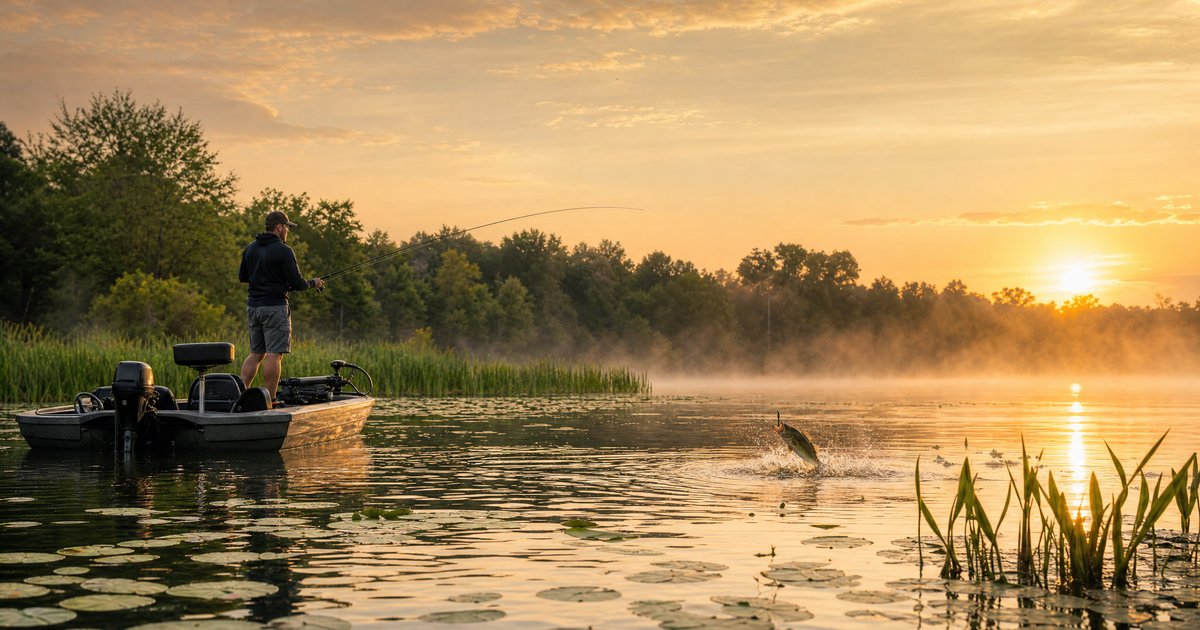
It was a Tuesday in late September. My buddy Dave texted me at 6 a.m.: "Heading to the reservoir today, you in?"
I checked the sky — looked fine, no rain — and said sure. We drove 90 minutes, launched by 7:30, and caught absolutely nothing. Three hours of dead water and confused looks at each other.
On the drive home, I pulled up my phone and dug into what had actually happened. Barometric pressure had been falling sharply since the night before. The solunar major period had already peaked at 5:45 a.m. The wind had shifted northwest overnight. In other words, we'd walked straight into one of the worst possible windows for bass fishing and didn't even know it.
That was the trip that made me start treating fishing planning like actual planning — not just "weather looks okay, let's go."
A fishing weather app doesn't magically put fish on your hook. But it gives you the context to stop showing up blind. Here's how to actually use one.
Why "Just Checking the Weather" Isn't Enough
Most anglers check the basic forecast. Temperature, chance of rain, wind speed. That's a start, but it misses most of what actually drives fish behavior.
Fish don't respond to weather the way we do. They're not uncomfortable in the rain — they're responding to pressure changes before the rain ever arrives. They don't care if it's 72°F and sunny up top. They care about water temperature at three feet versus twelve feet, and whether a pressure drop is signaling their lateral line that something's shifting.
The variables that actually matter to fish:
- Barometric pressure and the direction it's trending
- Solunar periods — peak feeding windows based on moon and sun position
- Water temperature — which drives metabolism and depth preference
- Wind direction and speed — affects baitfish positioning and oxygen levels
- Tidal movement — for coastal and tidal freshwater anglers
- Cloud cover — impacts light penetration and surface feeding activity
- Frontal systems — especially post-cold-front conditions
A basic weather app gives you maybe two of those. A dedicated fishing forecast app is built around the rest.
Reading Barometric Pressure Like a Fisherman
This is the single most underused variable in recreational fishing, and the one I wish someone had explained to me ten years ago.
Standard atmospheric pressure is 1013.25 hPa, according to NOAA's baseline measurements. Fish — especially bass, walleye, and panfish — are highly sensitive to pressure changes through their swim bladders, which regulate buoyancy. When pressure shifts, the swim bladder has to adjust, and that directly affects their comfort level and willingness to feed aggressively.
What the Pressure Trend Tells You
| Pressure Condition | What Fish Typically Do |
|---|---|
| Rising pressure (stable high) | Feed actively near the surface or mid-column |
| High and steady | Best overall conditions; fish are comfortable |
| Falling pressure (front incoming) | Short feeding flurry, then slowdown |
| Low and steady | Fish are lethargic; go finesse or go home |
| Rapidly falling | Bite can go completely dead |
| Post-front rising | Tough bite for 24–48 hours, then recovery |
The key word in that table is trend. A single pressure reading tells you very little. What you want to know is whether it's been rising, falling, or holding steady over the past 6–12 hours. That's what a good fishing weather app shows you — the trend line, not just a snapshot.
You can check current pressure and its recent trend on HookCast before deciding whether a trip is worth the drive. That trend is what I'm actually looking at before I commit to an hour on the road.
Field observation: On the Ozark streams I fish in Missouri, the best smallmouth days almost always fall during a 24–48 hour window of stable or gently rising pressure after a front has passed. The fish come out of their funk and feed hard. Miss that window and you might be staring at dead water again.
Practical Pressure Strategy
- Falling pressure: Slow down. Finesse rigs, drop shots, shaky heads. Fish are less aggressive but still catchable.
- Rapidly falling: Consider fishing closer to home. Not worth the gas.
- Stable high: This is your window. Fish topwater, cover water, be aggressive.
- Post-front (Day 3+): Conditions improve daily. The third day after a cold front is often exceptional.
Solunar Periods: Timing the Bite Window
When I first heard about solunar theory, I was skeptical. It felt like astrology for fishermen. Then I started logging my trips against solunar periods, and the correlation was hard to ignore.
Solunar theory, developed by outdoor writer John Alden Knight in the 1930s, proposes that fish and wildlife are most active during specific windows tied to the moon's position relative to Earth. There are two major periods and two minor periods each day.
- Major periods (approximately 2 hours): When the moon is directly overhead or underfoot
- Minor periods (approximately 1 hour): When the moon rises or sets
Does every fish in every lake follow this schedule? No. But as a tool for prioritizing when to be on the water versus when to grab coffee and re-rig, it's genuinely useful.
How I Actually Use Solunar Data
When I've got a half-day window and need to choose between a morning or afternoon session, I pull up HookCast's solunar calendar and check where the major periods fall. I try to be on the water 30 minutes before a major period starts and fish through it.
The real value isn't believing fish eat only during solunar peaks. It's that during those windows, fish tend to be more active, higher in the water column, and more willing to commit to a bait. That's when you throw a topwater or crankbait instead of dragging a worm.
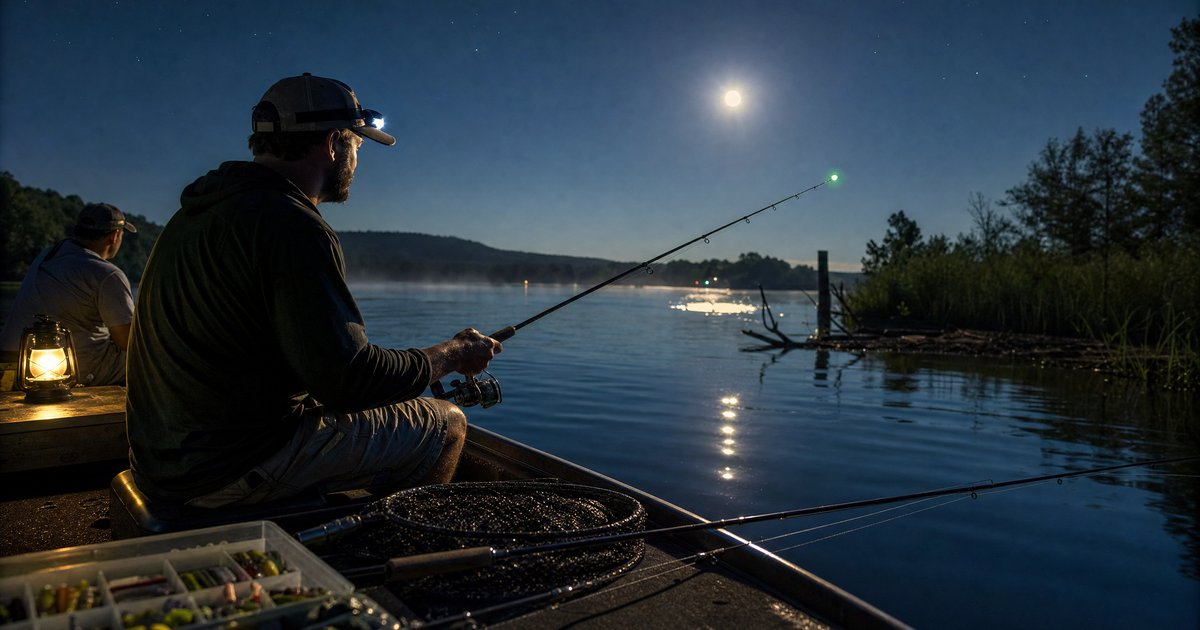
Pro tip: Combine a solunar major period with rising barometric pressure and you've got a legitimate reason to call in sick. Those two factors overlapping is about as good as it gets on a freshwater lake.
Wind, Water Temperature, and the Variables Most Anglers Ignore
Wind Direction Matters More Than Wind Speed
Most anglers look at wind speed and either say "too windy" or "fine." Wind direction is the more important variable.
A basic framework for freshwater lakes:
- South or southwest wind: Classic warming wind; often pushes baitfish toward northern shorelines. Largemouth love this setup.
- North or northwest wind: Cold front indicator. Baitfish scatter, fish go deep or tight to cover.
- East wind: Old-timers say fish don't bite on an east wind, and in my experience there's something to it — though the bigger driver is usually the frontal system that comes with it.
- West wind: Generally neutral to favorable, especially in summer.
Wind also creates a windward shoreline effect — waves pushing baitfish and oxygenated water against a bank or point. On calm days I'll fish the main lake; on windy days I target the wind-blown end.
Water Temperature and Depth Layering
NOAA Fisheries documents how water temperature directly influences metabolic rates in fish. Warmer water speeds up metabolism — fish feed more often but burn energy faster. Colder water slows everything down.
For bass specifically:
- Below 50°F: Fish are sluggish. Slow presentations, deep structure, small bait profiles.
- 50–65°F: Pre-spawn and post-spawn transition. Feeding picks up. Fish moving shallow.
- 65–75°F: Prime feeding range. Topwater and reaction baits are fully on the table.
- Above 80°F: Fish push deep during midday; feed near the surface in early morning and evening.
A fishing planning app that shows water temperature trends helps you understand not just where fish are today, but where they're likely to move over the next few days as temperatures shift.
Cloud Cover and Light Penetration
An overcast day isn't just "okay" for fishing — in many situations it's better than bluebird skies. Reduced light penetration means fish aren't as tight to shaded cover and are more willing to feed in open water. Topwater bites on overcast days can be exceptional, even midday.
Clear skies push fish under docks, into deep water, or into heavy vegetation. You can still catch them, but you'll need slower presentations, lighter line, and a focus on shaded edges.
Tides and Tidal Freshwater: What Coastal and River Anglers Need to Know
If you're fishing saltwater or brackish tidal areas, tide timing isn't optional — it's the foundation of your planning.
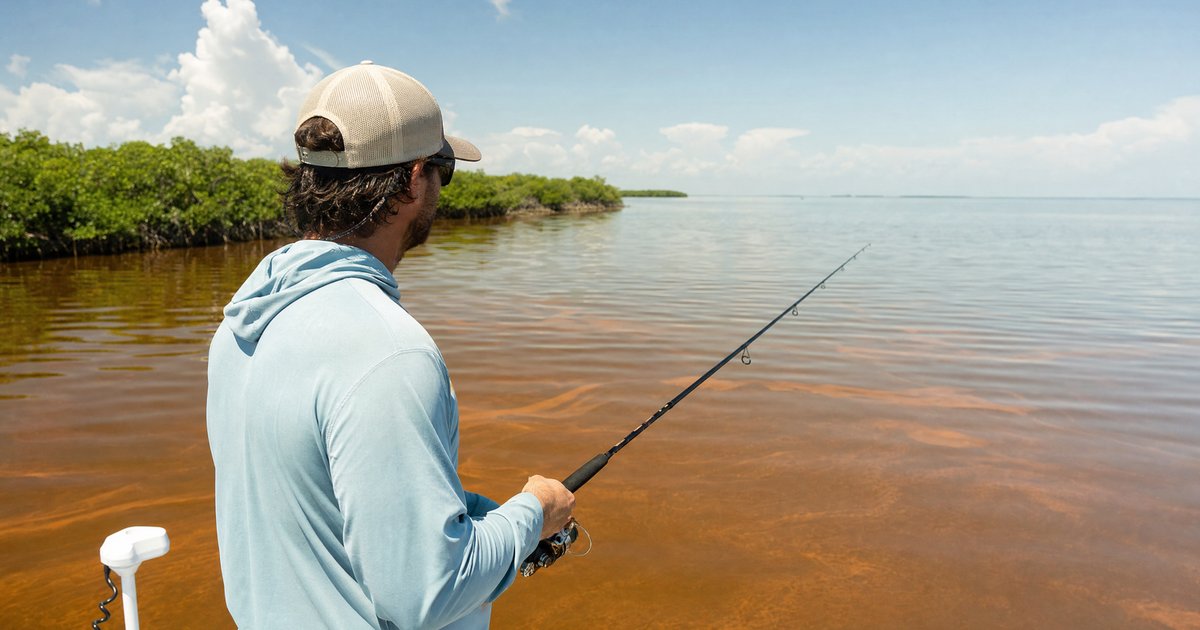
NOAA's tidal prediction service provides tide data for thousands of stations across the U.S. coastline. The core rule: fish feed during moving water. Incoming tide pushes baitfish and nutrients into shallows and estuaries. Outgoing tide flushes them back through channels and cuts. The two hours around a tide change — especially on the incoming — are typically your best windows.
What most anglers miss is that tidal influence extends well into freshwater. If you're fishing a tidal river — the Hudson, the Potomac, the lower Savannah — tidal fluctuation affects current speed, water clarity, and baitfish position even miles from the coast. I've seen this catch freshwater anglers completely off guard. They're fishing a river, no ocean in sight, wondering why the current reversed on them.
You can check tide charts and tidal coefficients for your area on HookCast. The tidal coefficient tells you how strong that particular cycle will be — a high coefficient means stronger movement and generally more active fish.
Reading Tidal Data for Trip Planning
| Tide Phase | Fish Behavior |
|---|---|
| Incoming (flood) | Fish move into shallows; active feeding |
| High slack | Brief pause; good for topwater |
| Outgoing (ebb) | Fish funnel through channels and cuts |
| Low slack | Fish often push off structure; tougher bite |
Safety note for wade and kayak anglers: Always check tide times before launching. A spot that's easily accessible at high tide can strand you or create dangerous current on the ebb. Plan your exit before you plan your entry.
Building a Pre-Trip Weather Checklist
After eight years of kayak fishing — including plenty of trips that taught me expensive lessons — here's my actual process the night before.
The Night Before
- Check barometric pressure trend — Rising, stable, or falling? Look at the 12–24 hour trend, not just the current reading.
- Pull up solunar periods — Note major period times. Build your launch around being on the water 30 minutes early.
- Check wind forecast — Speed and direction at launch and through midday. Flag any direction shifts.
- Look at frontal systems — Is a cold front arriving? Just passed? How many days out are you from the last front?
- Water temperature — Trending up or down? Is thermal stratification a factor?
- Tide charts (if applicable) — Note the schedule and peak movement windows.
The Morning Of
- Re-check pressure — did it shift overnight from the forecast?
- Wind speed and direction at launch
- Any unexpected frontal movement?
This whole process takes about 10 minutes in HookCast. The app layers these variables in one view instead of bouncing between five different websites.
Trip Decision Framework
| Conditions | Recommended Approach |
|---|---|
| Stable high pressure + major solunar + warm water | Go aggressive. Cover water. Topwater and reaction baits. |
| Falling pressure, front incoming | Fish if you have to. Go finesse. Be efficient. |
| Post-cold-front (Day 1) | Tough bite. Deep, slow, small presentations. |
| Post-cold-front (Day 3+) | Often excellent. Fish are hungry and comfortable again. |
| Rising pressure + overcast | One of the best setups. Target the transition zones. |
Quick-Reference Key Takeaways
Here's the short version for your phone screen before you launch.
The Five Variables That Actually Drive Fish Activity:
- ✅ Barometric pressure trend — Rising is good; falling means slow down
- ✅ Solunar periods — Prioritize being on the water during major periods
- ✅ Wind direction — South/southwest often pushes baitfish to north banks in lakes
- ✅ Water temperature — 65–75°F is the sweet spot for most freshwater bass
- ✅ Tidal movement — For coastal and tidal river anglers, fish the moving water
When to Go vs. When to Wait:
- Best conditions: Stable or rising pressure, overcast skies, warm water, morning major solunar
- Tough conditions: First day post-cold-front, rapidly falling pressure, east wind with dropping temps
- Don't write it off: Day two or three post-front with rising pressure is often excellent
What a Good Fishing Weather App Shows You:
- Pressure trend — not just the current reading
- Solunar calendar with major and minor periods
- Wind direction, not just speed
- Tide charts with tidal coefficient
- Water temperature layer
You don't need perfect conditions every trip — half the fun is solving the puzzle when it's not ideal. But walking onto the water with context instead of guesses makes you a better angler, and it turns hard days from frustrating into educational.
FAQ
What is a fishing weather app and how is it different from a regular weather app?
A fishing weather app goes beyond basic temperature and rain forecasts to include variables that directly affect fish behavior: barometric pressure trends, solunar feeding periods, water temperature, wind direction, and tide charts. Regular weather apps give you human-comfort metrics. Fishing apps translate those same atmospheric conditions into how fish are likely to behave, helping you decide when and where to fish rather than just whether to bring a rain jacket.
How does barometric pressure affect fishing?
Fish have a swim bladder that regulates buoyancy, and it's sensitive to changes in atmospheric pressure. When pressure is rising and stable, fish tend to be active and feed aggressively. When pressure is falling — especially rapidly — fish become lethargic and feeding slows significantly. The pressure trend over the past 6–12 hours is more useful than any single snapshot reading. Standard atmospheric pressure is 1013.25 hPa per NOAA; readings and trend direction above or below that baseline help predict how fish are likely to behave.
What is the best time to go fishing according to solunar theory?
Solunar theory suggests fish are most active during two major periods and two minor periods each day, based on the moon's position. Major periods last approximately two hours and occur when the moon is directly overhead or underfoot; minor periods last about one hour at moonrise and moonset. Arriving on the water 30 minutes before a major period and fishing through it often produces the most active bite of the day. Combining a major solunar period with stable or rising barometric pressure is one of the better setups you'll find in freshwater fishing.
Do tides affect freshwater fishing?
More than most anglers realize. Tidal rivers — including stretches of the Hudson, Potomac, and other systems connected to coastal water — experience real current reversals and shifts in water clarity and baitfish position even miles from the coast. For coastal and brackish water fishing, tidal movement is fundamental: fish feed most actively during moving water, particularly during the two hours around an incoming tide. NOAA's tidal prediction service provides detailed tide schedules for thousands of U.S. stations.
Should I cancel a fishing trip because of a cold front?
Not necessarily — but adjust your expectations and approach. The day a cold front arrives typically brings a brief pre-front feeding flurry followed by a tough bite. The first day post-front is usually the slowest, with fish pushed deep and reluctant to commit. By day two or three, as pressure stabilizes or rises, fishing often rebounds strongly. If you can time your trip for that recovery window rather than the immediate aftermath, you'll have a much better day on the water.