Columbia River Fishing Guide: Salmon, Steelhead, and Sturgeon in the Pacific Northwest
I pulled up to the boat launch at Astoria on a foggy April morning feeling completely out of my depth. I'm a Midwest kayak angler — raised on Missouri farm pond bass and Ozark smallmouth. The Columbia River is a different universe entirely. It's wide, powerful, tidal-influenced, and holds fish I'd spent years admiring in magazine photos. My Portland buddy had been telling me to make the trip for years. I finally listened.
That first day humbled me thoroughly. We drifted wrong, positioned wrong, and got the timing wrong. But by day three — after long conversations at the boat launch and some serious homework — things started clicking. We hooked Chinook. We watched a white sturgeon breach like a submarine with fins. That trip permanently rewired my understanding of what freshwater fishing can actually be.
Whether you're local or making the pilgrimage from elsewhere, this guide is designed to help you skip the rookie mistakes and fish smarter from your very first morning on the water.
Understanding the Columbia River: Scale, Flow, and Why It Matters
The Columbia is no ordinary river. Stretching more than 1,200 miles from British Columbia down through Washington and Oregon before emptying into the Pacific near Astoria, it's the largest river in the Pacific Northwest and one of the most productive salmon and steelhead systems on the continent. Most visiting anglers focus on the lower Columbia — roughly the stretch from Bonneville Dam downstream to the mouth — and for good reason. That's where the fish concentrate, the access is practical, and the infrastructure for guided trips and boat launches is well established.
One thing that catches many inland anglers off guard: the lower Columbia is tidal. NOAA's tidal prediction data shows tidal influence extending well over 100 miles upstream from the ocean. Current direction, water clarity, and fish movement all shift with the tides in ways that directly affect how, where, and when you should be fishing. Factor this in from the start.
Above Bonneville Dam, the river is dam-controlled, and flow rates matter. USGS stream gauge data is worth bookmarking before any trip — spring snowmelt can spike flows and blow out visibility quickly, changing the entire character of the fishing in ways that affect presentation depth, fish positioning, and tackle choices.
The Three Species You're Here For
Most spring anglers on the Columbia are targeting one of three fish:
- Chinook salmon (spring run) — the main event for most visitors, April through June
- Steelhead — winter-run fish linger into early spring; summer-run fish begin showing by late April
- White sturgeon — a year-round target with tight regulations and specific retention windows
Each species holds in different water, responds to different conditions, and demands different techniques. Tactics that work beautifully for one won't translate automatically to another. Plan accordingly.
Columbia River Spring Chinook Salmon Fishing
Spring Chinook — known locally as "springers" — are widely considered the best-eating salmon in the world. The spring run on the Columbia typically peaks between late March and late May, with fish staging in the lower river before pushing toward spawning tributaries including the Sandy, Wind, and Klickitat rivers.
Where Spring Chinook Hold
Springers aren't randomly distributed across the river. They stage in predictable areas tied to current seams, depth transitions, and temperature breaks. Key zones include:
- Buoy 10 area near the river mouth — one of the most heavily fished salmon fisheries in the country, but productive for a reason
- Tongue Point and Bradford Island near Astoria
- The Gorge section above Bonneville Dam, where fish stack while waiting for conditions to push them upstream
Fish typically hold in 15–45 feet of water along current edges. The upstream migration moves in pulses, often tied to tidal rhythms and barometric shifts. I check the HookCast fishing forecast for Portland before planning any salmon day — a rising barometer following a low-pressure system reliably opens feeding windows that flatline during the pressure drop itself.
Proven Techniques for Spring Chinook
Trolling is the dominant method on the lower Columbia, and there's no shame in that — it covers water efficiently and keeps your presentation in the strike zone:
- Spinners and herring combos on a 3-way swivel are a regional staple
- Kwikfish or FlatFish plugs wrapped with cured sardine or herring — the scent trail is a meaningful part of the presentation
- Brad's Wigglers and similar deep-diving plugs are popular above Bonneville where the water tightens up
Back-trolling — motoring upstream slowly while the lure drifts back and down — gives you precise depth control in strong current. Many guides swear by it in the Gorge.
Anchor fishing works well when fish are stacked. Drop into a known holding zone, set the hook, and work cut-plug herring or cured roe on a sliding sinker rig. This is a patience game — the anglers who do it well aren't constantly moving.
Field note: The anglers who consistently catch springers aren't the ones fishing the most water — they're the ones who've identified two or three specific spots and know exactly what tide stage makes each one fish. Time on the water beats fancy gear, every time.
Regulations and Handling
Columbia River salmon fishing is heavily regulated, with distinct zones, seasons, and quota limits that can change mid-season based on real-time run projections. Before you go, check the Oregon Department of Fish and Wildlife and Washington Department of Fish and Wildlife for current rules. Both states require a combined angling license plus a Columbia River Salmon and Steelhead Tag.
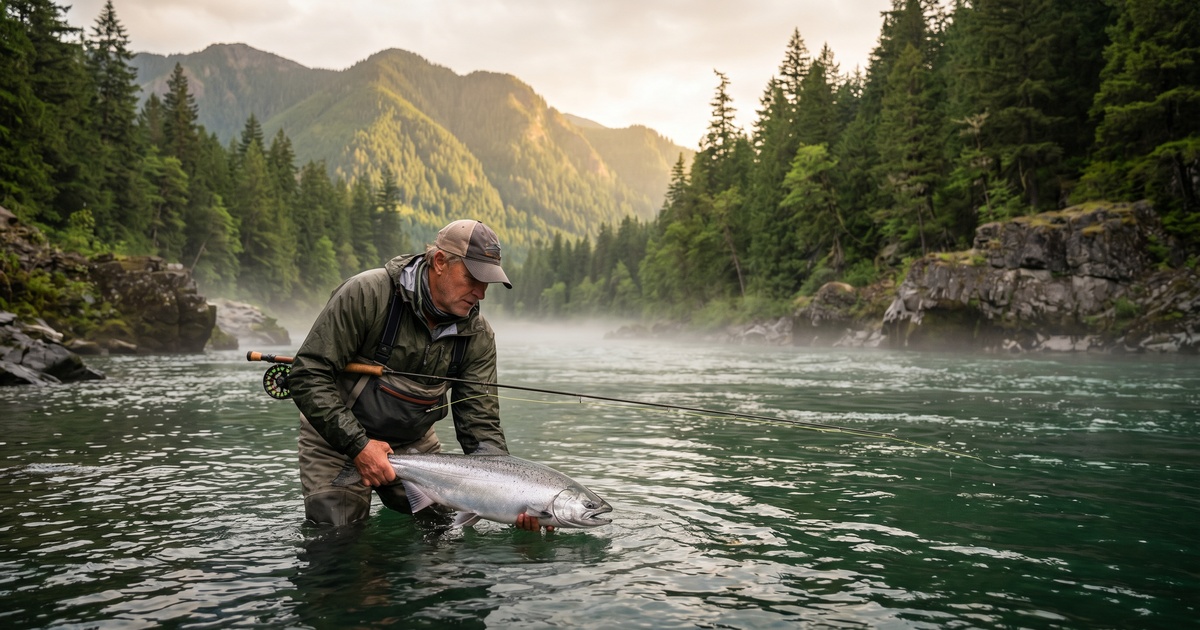
Wild Chinook are often required to be released, so proper handling isn't optional. Support the belly, minimize air exposure, and revive the fish fully before release. A fish that swims away strong is the goal.
Steelhead in the Columbia System
Steelhead are rainbow trout that migrate to the ocean and return to freshwater to spawn — NOAA Fisheries describes them as one of the most complex anadromous fish in North America, with distinct summer-run and winter-run populations using the same river system at different times of year.
In spring, you're working the tail end of the winter run and the early arrival of summer-run fish, which typically begin entering the river in late April and May. Summer-run steelhead will hold in the river for months before spawning the following spring — they're catchable well into summer once they arrive.
Where to Target Steelhead
Steelhead are more aggressive than salmon and respond readily to lures and flies. They tend to hold in:
- Tailouts and runs with moderate current — water 3–8 feet deep over gravel or cobble bottom
- Tributary mouths — the Sandy, Deschutes, and Klickitat rivers all receive significant runs and concentrate fish at their confluences
- Slack-water edges adjacent to fast current seams, especially during high water when fish seek refuge from the full force of the main flow
The Deschutes River — which enters the Columbia near The Dalles — is a legendary steelhead fishery in its own right. If you're fishing without a boat, it provides wade-fishing access that simply isn't practical on the main Columbia.
Techniques That Work
Side-drifting is the go-to method from a boat. You drift broadside to the current while presenting bead-head nymphs, cured roe clusters, or shrimp imitations through likely holding water. The naturalistic drift presentation is the core of its effectiveness.
Float fishing is deadly in slower, deeper water. Run a 1/4 to 1/2 oz jig under a slip float sized appropriately for the depth and let it work through the run. This setup is simple, effective, and easy to adjust.
Spinners and spoons — Blue Fox, Mepps, and similar in-line patterns — are reliable for covering water and triggering aggressive fish. A basic silver or chartreuse spinner on a bright morning is never a bad choice.
Fly fishing has a passionate following on the Columbia tributaries, particularly the Deschutes. Swinging wet flies and two-handed spey fishing are traditions here. If that's your style, a spring morning on the Deschutes is worth the trip on its own.
Pro tip: Summer-run steelhead that have been holding in the river for weeks can get finicky in the middle of the day. Early morning and late afternoon are your best windows. Pair this with a fishing weather forecast for Portland to build your days around favorable pressure and temperature trends.
White Sturgeon: Fishing a Living Dinosaur
Nothing quite prepares you for the first time a white sturgeon takes your bait. These fish are prehistoric in the most literal sense. White sturgeon are the largest freshwater fish in North America — specimens in the Columbia regularly exceed 100 inches — and the population includes individuals pushing 60 to 80 years old. A legal keeper runs approximately 38–54 inches fork length depending on zone, and everything above that is strictly catch-and-release.
The Columbia River sturgeon fishery is year-round, though specific retention seasons and slot limits are strictly managed and change annually. The rules are detailed and zone-specific — read them carefully before you go.
Where Sturgeon Hold
Sturgeon are bottom feeders drawn toward:
- Deep holes — 30–80+ feet is common holding depth
- Current edges adjacent to deep water — fish move shallower to actively feed, especially during tidal outflows
- Areas below dam discharge — organic material concentrates near fish ladder outlets and consistently attracts sturgeon
The stretch from Bonneville Dam downstream to the mouth is the most accessible and most productive. Portland-area anglers frequently work the zone near the Willamette River confluence.
Sturgeon Fishing Tactics
Sturgeon fishing is bottom fishing. No mystery here — these fish find food by scent along the river floor, and your job is to put fresh, aromatic bait directly in their path.
| Bait | Notes |
|---|---|
| Lamprey (Pacific lamprey) | Often considered the top bait; availability is seasonal |
| Cured salmon roe | Widely available and effective year-round |
| Shrimp (sand or ghost shrimp) | Excellent in spring when river shrimp are active |
| Smelt or herring | Fresh cut bait works well when available |
A sliding sinker rig with an 8–12 oz pyramid or sputnik sinker is the standard setup. Run a heavy fluorocarbon or monofilament leader in the 60–80 lb range. Circle hooks are increasingly preferred — and required in some zones — because they reduce gut-hooking and make clean releases much easier.
Anchor in your target zone, drop baits to the bottom, and put the rod in a holder. Sturgeon bites can start subtly — a tick, tick, tick telegraphed through the rod — before the rod loads up with authority. Wait for a solid load before committing to the hookset.
Catch-and-Release Best Practices for Sturgeon
The Columbia holds a significant population of oversized sturgeon that must be released. Handle them accordingly:
- Keep the fish in the water for photos whenever possible — extended time out of water is harmful, and a fish suffering for a grip-and-grin photo is not a good look
- Support the body if lifting is absolutely necessary; never hold a sturgeon vertically by the jaw
- Wait for recovery at boatside before releasing — look for the strong tail kick that signals the fish is ready to go
- Use barbless or crushed-barb hooks where regulations allow to minimize handling time
Seasonal Timing and Conditions for Spring Fishing
Spring on the Columbia is dynamic. Snowpack melt, rainfall, and dam operations shift river conditions week to week in ways that directly affect fish behavior and fishing success. Here's a practical roadmap:
March and Early April
- Winter steelhead still present, often in good numbers near the river mouth
- Spring Chinook beginning to show at the Buoy 10 area
- Water temperatures typically 42–50°F — fish are active but deliberate
- High runoff potential from snowmelt — monitor USGS gauge data for sudden flow spikes
Mid-April Through May
- Peak springer run across most of the lower Columbia
- Summer steelhead beginning to enter the system by late April
- Water warming toward the 52–58°F range that really accelerates salmon movement
- Tidal influence at its most pronounced — time sessions around incoming tides when possible
Late May Into June
- Spring Chinook run tapering off in the lower river
- Strong summer steelhead fishing underway
- Sturgeon consistently active
- Water clarity typically improving as snowmelt slows
Barometric pressure matters here as it does everywhere. Standard atmospheric pressure is 1013.25 hPa, and drops of 8–10 hPa over 24 hours ahead of a storm front consistently slow the bite on both salmon and steelhead. A stable or slowly rising pressure window is your best fishing opportunity — check HookCast for pressure trend forecasts before locking in a trip.
Practical Planning: Gear, Access, and Safety
Gear Essentials for the Columbia
You don't need to overhaul your entire tackle setup, but a few Columbia-specific items are worth having before you launch:
For salmon trolling:
- Downrigger or heavy trolling weights (2–6 oz minimum in current)
- Bait thread and curing supplies if you're sourcing your own herring
- Heavy-action rod in the 9–10 ft range for back-bouncing
For steelhead:
- Medium-heavy spinning or baitcasting rod, 8.5–10 ft for side-drifting
- Fluorocarbon leader material in the 8–15 lb range
- Selection of beads, jigs, and spinners in pink, chartreuse, and orange
For sturgeon:
- Stout rod with serious backbone — these fish run hard and heavy
- Heavy-duty reel with reliable drag capacity
- Sputnik sinkers in a range of weights for varying current strength
Boat Access and Shore Fishing
Most productive Columbia fishing requires a boat. The river is simply too wide to effectively access the right depth and current seams from the bank. Charter boats operating out of Astoria, Portland, and Cascade Locks are an excellent option for first-timers — they bring local knowledge that's genuinely difficult to replicate on your own.
Shore and wade-fishing opportunities are better on the tributaries, particularly the Deschutes and Sandy rivers, where the water is proportionate to fishing from the bank.
Safety note: The main Columbia is not a casual wade-fishing river. Current is powerful, depths drop without warning, and commercial barge traffic is constant. If you're running a small boat or kayak, stay well clear of the shipping lane and always wear your PFD. Respect what this river is capable of.
License and Regulation Reminders
- Oregon and Washington have separate licensing requirements — purchase both if you plan to fish either bank
- A Columbia River Salmon and Steelhead Tag is required in addition to your base license
- Regulations change annually and sometimes mid-season based on real-time run counts
- Confirm current rules with ODFW and WDFW before every trip
Key Takeaways
- Time sessions around tidal movement — incoming tides in the lower Columbia consistently produce the best salmon and steelhead activity
- Spring Chinook peak late March through May — know the difference between wild fish (intact adipose fin, must release) and hatchery fish (clipped adipose fin, potentially retainable)
- Steelhead respond to lures — spinners, drift rigs, and floats all produce; the Deschutes River is the best shore-accessible option
- Sturgeon is a bottom game — scent-forward bait on a sliding sinker rig, heavy tackle, and patience are the formula
- Check regulations before every trip — the Columbia is one of the most tightly managed fisheries in the country, and rules shift often
- Monitor flow and pressure — use USGS gauge data for runoff conditions and HookCast for barometric trends to time your trips effectively
- Handle fish with care — wild salmon and oversized sturgeon are irreplaceable; proper release technique is part of the responsibility that comes with fishing here
FAQ
When is the best time to fish for salmon on the Columbia River?
Spring Chinook fishing on the Columbia typically peaks between late March and late May, with the strongest fishing often in April and early May. Fish show up first at the Buoy 10 area near the river mouth and move progressively upstream through the season. Timing your trip around stable or rising barometric pressure and incoming tides will noticeably improve your odds.
Do I need separate licenses to fish the Columbia River in both Oregon and Washington?
Yes. The Columbia forms the border between Oregon and Washington, and fishing from either bank — or on the water itself — technically requires valid licenses from both states. Beyond the base fishing licenses, you'll need a Columbia River Salmon and Steelhead Tag, which covers both states. Verify current requirements with the Oregon Department of Fish and Wildlife and the Washington Department of Fish and Wildlife before your trip, as rules do change.
What is the best bait for Columbia River sturgeon?
Pacific lamprey is widely regarded as the top bait for white sturgeon, though it can be difficult to source depending on the season. Cured salmon roe, fresh shrimp, and cut smelt or herring are reliable alternatives. All sturgeon bait fishing is done on the bottom with a sliding sinker rig — sturgeon locate food by scent along the river floor, so fresh or well-cured bait presented directly on the bottom gives you the best chance.
Can you fish for Columbia River steelhead from shore?
Shore and wade-fishing on the main Columbia is limited by the river's size and depth, but several tributaries offer solid access. The Deschutes River, which enters the Columbia near The Dalles, is one of the most accessible and productive shore steelhead fisheries in the region, drawing both spin anglers and fly fishers. The Sandy River near Portland also offers wade-fishing opportunities for spring steelhead.
How do I tell the difference between a hatchery and wild salmon on the Columbia?
Look at the adipose fin — the small fin between the dorsal fin and the tail. Hatchery salmon have this fin clipped before release. A missing adipose fin means the fish is a hatchery fish and may be legally retainable, subject to season rules and daily quotas. An intact adipose fin means the fish is wild and must be released. Always confirm retention rules in the specific zone and time period you're fishing before keeping anything.