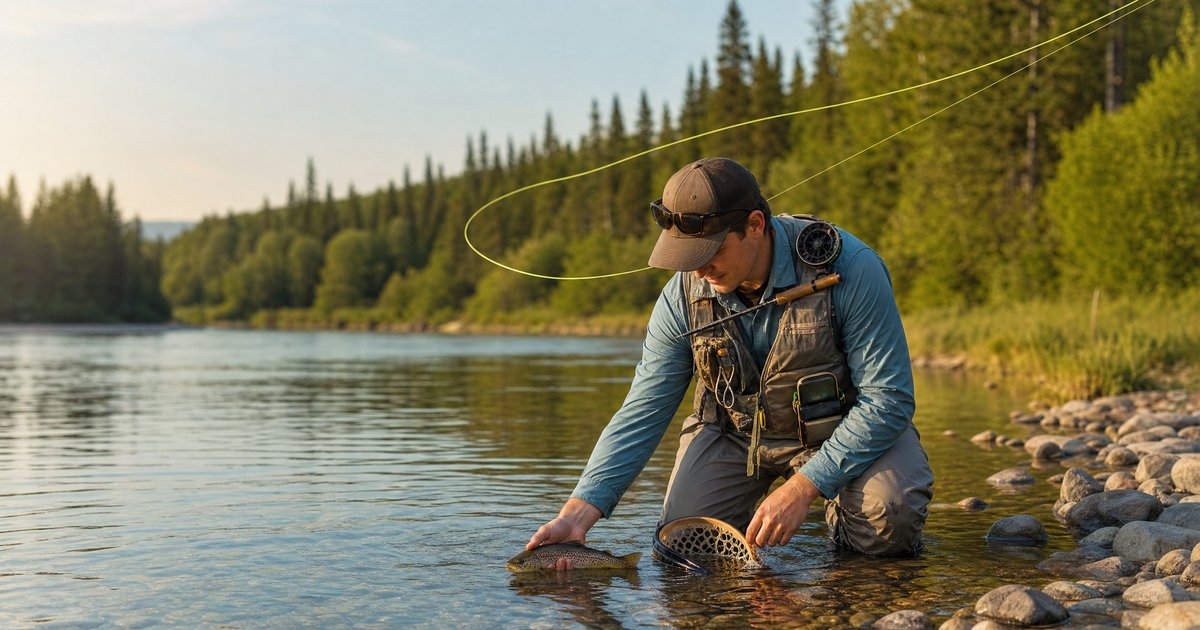
Fly Fishing for Beginners: Essential Gear, Casting Basics, and Your First Fish
My buddy Dave showed up to a Midwest trout stream a few years back with a brand-new fly rod still in the tube, a YouTube-educated casting stroke, and about as much confidence as a kid on the first day of school. Three hours later, he'd untangled his line from a tree twice, put a fly through his hat once, and caught exactly zero fish.
He called me that night half-ready to sell the whole setup.
I told him what I wish someone had told me when I started: fly fishing has a learning curve, but it's not as steep as people make it out to be. Most beginners get tripped up because they bought the wrong gear, skipped the fundamentals, or fished the wrong places first. Fix those three things and you'll be catching fish on a fly rod a lot sooner than you think.
Here's how to actually get started.
Why Fly Fishing Is Worth the Learning Curve
Before we get into gear lists, let me be straight with you — fly fishing isn't the fastest path to catching fish. If you just want numbers, go throw a spinner. Fly fishing is something different.
It puts you in smaller water. It slows you down. And honestly, it makes you a better angler overall because you start paying attention to things like insect hatches, current seams, and where trout are actually feeding versus where they're just holding.
I came to fly fishing from bass and walleye, and I'll tell you — what I learned reading water for trout completely changed how I approach river smallmouth. The two styles cross-pollinate in ways you don't expect.
The payoff when it clicks? Watching a brown trout rise and sip your dry fly off the surface is one of those fishing moments you don't forget.
Beginner Fly Fishing Gear: What You Actually Need
Walk into a fly shop and you'll see gear that runs from $100 to well over $1,000. Here's what matters and what you can skip when you're starting out.
The Rod and Reel
For most beginners targeting trout, panfish, or small bass, a 5-weight fly rod is the sweet spot. It's versatile enough to handle everything from small bluegill to 18-inch brown trout, and most beginner-friendly setups are built around it.
Rod length: Go with a 9-foot rod. It gives you better line control, easier mending, and more room to handle the backcast in open areas.
You don't need to spend a fortune here. Outfits from Redington, Orvis Clearwater, and Echo Base run $150–$300 for a rod-and-reel combo and fish well right out of the box. I've seen beginners catch just as many fish on those as guys with $600 rods.
Field note: I started on a $120 combo from a local shop. Caught plenty of trout on it for two seasons before I upgraded. Don't let gear be the reason you don't start.
Fly Line, Leader, and Tippet
This is where beginners often get confused because there are several connected components.
- Fly line: A weight-forward floating line matched to your rod weight (5-weight rod = 5-weight line) is what you want. Most rod-and-reel combos include this.
- Leader: The clear tapered monofilament that connects your fly line to your fly. A standard 9-foot tapered leader works for most situations.
- Tippet: Extra clear mono you add to the end of your leader as it gets cut back from changing flies. Match tippet diameter to your fly size — a general starting point is 4X or 5X tippet for trout fishing.
The American Museum of Fly Fishing has solid introductory resources on how these components work together if you want to go deeper on the technical side.
Flies
Beginners don't need 200 flies. They need maybe 20 of the right ones.
Start with this basic four-category box:
| Category | Examples | When to Use |
|---|---|---|
| Dry flies | Elk Hair Caddis, Adams | Hatch or rising fish |
| Nymphs | Hare's Ear, Pheasant Tail | Subsurface, most of the day |
| Streamers | Woolly Bugger | Searching, cold water, big fish |
| Strike indicators | Small foam or yarn | Nymph fishing rigs |
If I could only pick three flies to hand a beginner, it'd be a size 14 Adams, a size 14 Hare's Ear nymph, and a size 8 Woolly Bugger. That covers probably 80% of trout fishing situations.
Waders and Wading Boots (Optional but Useful)
You don't need waders to start fly fishing — shorts and sandals work fine in warm months. But if you're serious about it, breathable chest waders paired with felt or rubber-soled wading boots give you access to water you can't reach from the bank.
Budget option: neoprene hip waders run around $50–$80 and work fine for shallow streams.
Safety note: Always wear a wading belt to trap air in waders if you fall, and never wade water you can't safely cross. Fast water is deceptive. If you're uncertain, wade fishing in unfamiliar rivers deserves real caution — the current can move you faster than you expect.
Other Gear Worth Having
- Polarized sunglasses: Non-negotiable. They cut glare so you can actually see fish and read the water. Also protect your eyes from errant hooks.
- Forceps or hemostats: For unhooking fish quickly without damaging them.
- Fly floatant: Keeps dry flies riding high on the surface.
- Net: A rubber-mesh landing net is easier on fish than nylon.
Fly Casting Basics: The Foundation Matters
Most beginners want to skip straight to fishing. I get it. But 30 minutes practicing the cast in your backyard will save you three hours of frustration on the water. This is the one part of fly fishing where shortcuts cost you.
How Fly Casting Is Different
In conventional fishing, you cast a weighted lure. The lure carries the line.
In fly fishing, the line itself carries the fly — which is nearly weightless. That fundamental difference is why the casting technique is completely different. You're loading the rod with the weight of the line, not the weight of the lure.
The Basic Overhead Cast
This is the cast you'll use 90% of the time starting out.
Step 1 — The setup.
Start with about 20–25 feet of fly line extended on the water or ground in front of you. Hold the rod at roughly the 10 o'clock position, grip comfortable but not tight.
Step 2 — The backcast.
Lift the rod smoothly and accelerate to a stop at roughly 1 o'clock (just past vertical). Let the line roll out behind you. This is where most beginners rush — pause here and let the line straighten behind you. That pause loads the rod.
Step 3 — The forward cast.
Drive the rod forward, accelerating to a stop at about 10 o'clock. The loop of line will roll out in front of you. Lower the rod tip as the line settles on the water.
The key concept is tight loops. A good cast produces a narrow, tight loop of line rolling forward. Wide, sloppy loops mean you're breaking your wrist too much or not stopping crisply.
Pro tip: Practice on grass first. Tie on a piece of yarn instead of a fly. Watch your loops. If the line is slapping the grass behind you before you start the forward cast, you're not waiting long enough on the pause.
The Roll Cast
When trees or brush close in behind you and a full backcast isn't possible, the roll cast is your go-to. You load the rod by dragging line along the water's surface, then drive the rod forward. It's a smaller, more compact motion and essential for most real fishing situations.
Mending Line
Once the fly is on the water, mending means repositioning the fly line upstream or downstream to control the drift of your fly. Drag — when the current catches your line and pulls the fly unnaturally — is the number-one reason beginners get refused by trout. A quick upstream mend immediately after the cast buys you a longer, drag-free drift.
This takes time to feel. Don't overthink it early on. Just watch your fly and ask yourself: is it drifting naturally, the way a real insect would?
Reading the Water: Where to Make Your First Cast
Good presentation in the wrong spot still doesn't catch fish. Understanding where trout hold is half the game.
The Three Key Spots
Current seams. Where fast water meets slow water. Trout sit on the slow side and dart into the fast side to grab food. Look for the distinct line where the two currents meet.
Pools. The deeper, slower sections downstream of faster riffles. Bigger fish often hold here, especially in midday heat. Fish the head and tail of the pool, not just the middle.
Riffles. Shallow, fast, broken water. Less intimidating to fish than it looks, and often loaded with feeding fish because oxygen levels are high and invertebrates are active. Nymphing riffles is one of the most productive beginner approaches.
Think About Water Temperature
Trout are cold-water fish. Optimal feeding temperature for most trout species falls roughly between 50–65°F. Outside that range — especially above 68°F — trout become stressed and feeding slows significantly.
On hot summer days, fish early morning or evening. Look for cold-water inputs like springs or tributary mouths. If water temps are pushing 70°F or higher, consider catching and releasing quickly or giving the fish a break altogether — they're already under thermal stress.
Before any trip, I check conditions on HookCast to get a read on air temps and weather trends. A stable barometric pressure after a couple of calm days almost always means more active fish — this holds true for trout just as it does for bass.
How to Catch Your First Fish on a Fly Rod
All the gear and casting in the world doesn't help if you don't have a strategy for that first fish. Here's how to simplify it.
Target Easy, Forgiving Species First
Your first fly-rod fish doesn't have to be a wild brown trout from a technical spring creek. Honestly, starting on bluegill and sunfish in a local pond is one of the best things you can do.
They're aggressive, they'll hit dry flies on top, and they'll teach you the basics of presenting a fly and setting the hook without the pressure of selective wild trout. I still fish for bluegill on a fly rod in July — it's genuinely fun and great for sharpening the cast.
Stocked trout streams are another great starting point. Most state fish and wildlife agencies stock trout in accessible streams and ponds, and recently stocked fish are less conditioned to reject flies than wild fish. Check your state agency's stocking reports for locations near you.
Start Nymphing
I know dry-fly fishing looks cooler in the movies. But nymph fishing — drifting an artificial insect imitation below the surface — is what catches the most trout, most of the time. According to most experienced guides, trout eat subsurface roughly 80–90% of the time. (That figure is based on guide experience, not an official study — your mileage will vary by season and hatch activity.)
Basic nymph rig:
- Attach a small foam or yarn strike indicator to your leader, about 1.5 times the depth of the water you're fishing.
- Tie on a size 12–16 Hare's Ear or Pheasant Tail nymph.
- Optionally add a small split shot about eight inches above the fly to get it down.
Cast upstream, mend your line, and watch the indicator. When it hesitates, dips, or moves sideways — set the hook. Many beginners miss strikes because they're watching the water instead of the indicator.
The Hook Set
Trout have soft mouths, but they eject flies fast. When you see the strike indicator move, lift the rod tip quickly but not violently. In fly fishing this is sometimes called a "trout set" — a smooth, upward lift versus the hard hookset you'd use for bass. Too hard and you'll snap fine tippet. Too slow and the fish is already gone.
Handling and Releasing Fish
If you're practicing catch and release — which I'd encourage, especially on wild trout streams — handle fish with care:
- Wet your hands before touching fish.
- Keep them in the water as much as possible.
- Use barbless hooks or crimp the barb — it makes release much faster.
- Don't squeeze or cover the fish's gills.
- Let the fish recover in calm water before releasing. Hold it facing upstream until it swims off on its own.
Wild trout populations are a resource worth protecting. Many Ozark and Appalachian streams carry wild brook and brown trout that can't easily replace themselves under fishing pressure. Treat them right.
Always verify your local fishing regulations, license requirements, and any seasonal closures before you go — you can find state-by-state info through your state's fish and wildlife agency. The USGS StreamStats tool is also useful for finding stream information and flow data when you're scouting new water.
Quick-Reference Checklist: Fly Fishing Starter Kit
Essential Gear
- [ ] 9-foot, 5-weight fly rod and matching reel
- [ ] Weight-forward floating fly line (5-weight)
- [ ] 9-foot tapered leader (4X or 5X)
- [ ] Extra tippet spools (4X, 5X)
- [ ] Small fly box with Adams, Hare's Ear, Pheasant Tail, and Woolly Bugger
- [ ] Polarized sunglasses
- [ ] Forceps or hemostats
- [ ] Fly floatant (Gink or similar)
- [ ] Rubber-mesh landing net
Before You Go
- [ ] Check water temps and weather on HookCast
- [ ] Confirm fishing license and local regulations
- [ ] Check stream flows (USGS gauge if available)
- [ ] Pack wading belt if wading
On the Water
- [ ] Start with nymphs subsurface
- [ ] Focus on current seams and riffles
- [ ] Mend upstream to prevent drag
- [ ] Watch the strike indicator, not the water
- [ ] Wet hands before handling fish
FAQ
What is the best fly rod setup for a beginner?
A 9-foot, 5-weight fly rod paired with a matching reel and weight-forward floating line is the standard starting recommendation for most beginners. This setup handles trout, panfish, and small bass across a wide range of freshwater conditions. Entry-level outfits from brands like Redington or Orvis Clearwater run $150–$300 and perform well enough to learn on and then some.
How long does it take to learn fly casting?
Most beginners can develop a functional overhead cast within a few hours of focused practice. Getting consistently tight loops and accurate presentation takes longer — roughly a full season of regular fishing. The roll cast, mending, and reading drift take time to feel naturally, but none of it requires athletic ability. Just patience and repetition.
What fish can you catch fly fishing as a beginner?
Trout — including rainbow, brown, and brook trout — are the classic target, but beginners often find more early success targeting bluegill and sunfish in ponds and lakes. Both species hit dry flies aggressively and teach the fundamentals of presentation and hook-setting without the added challenge of selective feeding behavior common in wild trout streams.
Do I need waders to fly fish?
No — waders are helpful but not required to start. Many productive fly fishing spots can be accessed from the bank or waded in shorts and old sneakers during warmer months. Waders expand your reach and keep you comfortable in cold water, but they're an upgrade, not a day-one requirement.
How do I know what fly to use?
Start by observing the water for five to ten minutes before casting. If you see insects on the surface or fish rising, try a dry fly that matches the size and color of what's hatching. If nothing is visibly happening, default to a nymph like a Hare's Ear drifted below a strike indicator — this subsurface approach is productive the majority of the time and a reliable starting point for any new piece of water.