Mille Lacs Lake Minnesota Walleye Fishing: Tactics and Regulations Guide
The first time I fished Mille Lacs, I thought I knew what I was doing. I'd caught walleye on plenty of Midwest lakes, had decent gear, and figured a big, famous fishery would practically fish itself. I spent two days grinding through textbook walleye spots and came away with exactly four fish — all small.
The guy at the bait shop on my way out wasn't surprised. "Mille Lacs is different," he said. "You gotta fish it like it wants to be fished, not like every other lake."
He wasn't wrong. Mille Lacs is massive, roughly 132,000 acres sitting in central Minnesota, and it has its own personality. The fish are there — the lake has historically been one of the most productive walleye fisheries in the country. But it demands patience, adaptability, and a real understanding of how walleye move through its seasons.
Spring is when serious walleye anglers make their pilgrimage here. If you're planning a trip, this guide will help you fish smarter from day one.
Understanding Mille Lacs: The Lake Itself
Before you talk tactics, you need to understand what makes Mille Lacs tick. It's shallow — surprisingly so for a lake this size. Average depth is around 22 feet, with maximum depths pushing 42 feet in spots. That means the entire lake is essentially productive walleye habitat, which sounds like a good thing until you realize it also means fish can be literally anywhere.
The lake sits on what geologists call a glacial lake bed, which gives it a relatively flat bottom structure with subtle humps, rock reefs, and gravel flats that don't always show up well on cheap electronics. Water clarity fluctuates significantly, but Mille Lacs is generally a stained-water fishery, which works in your favor — walleye in low-clarity water are less spooky and more aggressive during daylight hours.
Key structural features to know:
- Rock reefs scattered throughout the lake — these hold walleye in spring and fall
- Gravel flats near shorelines — spawning areas in spring that transition to daytime feeding zones
- Sand flats that extend into open water — mid-summer staging areas
- The "mud" in the center — the deep, soft-bottom basin where walleye stage during cold snaps
The Minnesota DNR actively monitors Mille Lacs and publishes creel surveys and population assessments that are actually worth reading before a trip. Their data will give you a realistic picture of year-class strength and what size fish to expect.
Mille Lacs Walleye Regulations: Read This Before You Go
Here's the part most anglers skim and shouldn't. Mille Lacs has some of the most closely managed — and frequently adjusted — walleye regulations in Minnesota. The lake is subject to both state regulation and tribal harvest agreements, which creates a regulatory environment that can change from year to year, sometimes mid-season.
This is not a lake where you assume last year's rules still apply. Check current regulations every single trip.
As of recent seasons, key regulations have included:
- Slot limits protecting larger fish — typically a slot where fish between certain lengths must be released
- Reduced bag limits compared to the statewide walleye limit
- Seasonal closures or delayed openers in certain areas
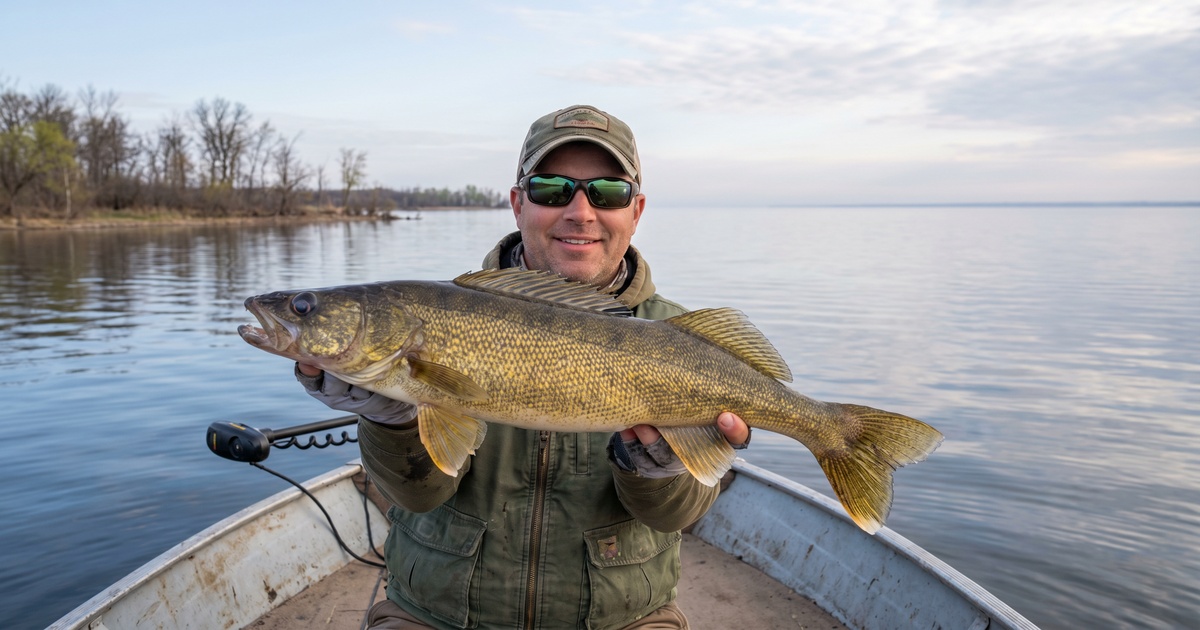
- Sauger regulations that differ from walleye regulations, and misidentifying the two can be a problem
Always verify current rules directly through the Minnesota DNR fishing regulations page before your trip. The tribal co-management framework means that some areas and time periods have additional restrictions that the standard summary booklet may not fully detail.
Practical checklist before you launch:
- [ ] Verify current walleye bag limit for Mille Lacs specifically
- [ ] Confirm slot limit size range for this season
- [ ] Check for any area-specific closures (some bays and reefs have seasonal restrictions)
- [ ] Know how to identify walleye vs. sauger — the sauger has distinct spot patterns on dorsal fin
- [ ] Have your Minnesota fishing license and any required stamps
If you're bringing out-of-state guests, they'll need Minnesota non-resident licenses. Don't assume your in-state license covers them.
Spring Walleye Patterns on Mille Lacs
Spring is the best time to be on Mille Lacs. Full stop. The walleye spawn from roughly late April into May depending on water temperature, and the weeks surrounding the spawn concentrate fish in predictable locations — rock reefs, gravel points, and hard-bottom shorelines in 4 to 10 feet of water.
Pre-Spawn: The Window You Don't Want to Miss
When water temps climb into the mid-40°F range, walleye begin moving from deeper staging areas toward shallow structure. This pre-spawn period, typically mid-April in most years, is arguably the most aggressive feeding window of the entire season.
Fish are stacking up, they're hungry, and they're competitive. I've had some of my best walleye hours during pre-spawn — fish hitting jigs hard in broad daylight in less than 8 feet of water.
Where to look:
- Rocky points with quick access to deeper water
- Wind-blown gravel flats — walleye push into wave-churned shallows
- The north and northeast shorelines tend to warm first in spring
Best presentations in pre-spawn:
- 1/4 to 3/8 oz jig heads tipped with a minnow, worked slow along bottom
- Paddle tail swimbaits on a light jig — good when fish are slightly active but not crushing
- Lindy-style live bait rigs dragged slowly over gravel — old school but devastatingly effective
Spawn and Post-Spawn: Handle With Care
During the actual spawn, walleye are on the shallows but focused on reproduction, not feeding. On Mille Lacs specifically, regulations may restrict or close access to certain spawning areas during this window — another reason to check current rules.
If you do fish during the spawn period, please think about catch-and-release, especially for large females. These fish are carrying the eggs that sustain the fishery. Keep them in the water when possible, minimize fight time, and use wet hands or a rubberized net. Mille Lacs has had population pressures over the years — every careful release matters.
Field note: A walleye dropped on a rocky shoreline during spawn can sustain real damage. Keep the net in the water, unhook quickly, and let her swim on her own terms.
Post-spawn, fish scatter briefly before regrouping on structure. This transition period, usually mid to late May, can be tricky. Smaller males linger near spawning areas while larger females move back toward deeper transitional structure. Targeting the 8 to 15 foot depth range with slower presentations tends to work through this lull.
Reading the Weather: Barometric Pressure and Spring Fishing
Spring walleye fishing on Mille Lacs is particularly sensitive to weather swings, and Mille Lacs' shallow nature amplifies this. A cold front that drops barometric pressure sharply will often kill the bite within hours — fish go tight to bottom and stop chasing.
Standard atmospheric pressure sits at 1013.25 hPa, and walleye feeding activity typically improves during stable or slowly rising pressure. Rapid drops correlate strongly with negative bites in my experience. Before any spring trip on Mille Lacs, I pull up HookCast's fishing forecast to get a read on the pressure trend over the coming 24-48 hours. If a front is rolling through, I'll either adjust my target depth or wait it out.
Tackle and Presentations That Work
Mille Lacs walleye fishing has a regional tradition, and local techniques have evolved specifically for this lake. You don't need to reinvent the wheel — you need to trust proven setups and dial in the details.
Jigging: The Foundation
The jig and minnow combo is the bread and butter of Mille Lacs walleye fishing. Simple, effective, and endlessly adjustable.
Standard setup:
- 1/8 to 3/8 oz stand-up or round head jig (heavier in wind or current, lighter in calm conditions)
- Fathead minnow or shiner hooked through the lips
- 6 to 8 lb fluorocarbon leader off a light spinning rod
Work it slow. Mille Lacs walleye can be deliberate biters, especially in cold spring water. A drag-and-lift presentation — lift the rod 6-12 inches, let the jig fall back on a semi-slack line, pause — gets more bites than aggressive hopping in most conditions.
Color selection:
In stained water, chartreuse and orange are reliable. On overcast days or at dawn/dusk, glow colors can trigger extra bites. In clearer post-turnover conditions, natural whites and grays often outperform flashy colors.
Live Bait Rigging
Live bait rigs — sometimes called Lindy rigs or slip sinker rigs — are deeply embedded in Mille Lacs fishing culture for good reason. They excel for covering gravel flats slowly and presenting a minnow or leech in the most natural way possible.
Basic setup:
- Walking sinker (1/4 to 1/2 oz) on main line
- Small barrel swivel to stop the sinker
- 4-6 foot fluorocarbon leader to a small live bait hook (size 4 or 6)
- Fathead minnow, shiner, or large leech
Drag this rig slowly behind your boat at trolling speeds of 0.5 to 1.0 mph. When a walleye picks up the bait, drop the rod tip and give it a few seconds before setting the hook — they'll often mouth the bait and move off before committing.
Trolling Cranks: Covering Water
Once surface temps push into the upper 50s and fish scatter after the spawn, trolling crankbaits becomes an efficient way to locate active fish. Shad-style cranks and minnow-style plugs in the 2-3 inch range, trolled at 1.5-2.5 mph along weed transitions and sand/rock edges, will dial in both location and depth quickly.
Use a planer board system if you're fishing from a larger boat to spread lines and cover more of the water column. If you're in a kayak like me, keep it simple — two rods, flat lines, watch your depth finder for structure changes.
Local Knowledge and Finding Fish Without a Guide
First-time visitors to Mille Lacs often hire a guide, which I think is genuinely worth it for at least one trip. Local guides have years of lake-specific knowledge that no article can fully replicate. But if you're going it alone, here's how to shortcut the learning curve.
Use Public Resources
The Minnesota DNR publishes lake contour maps for Mille Lacs that are freely available online. Download these before your trip and study them. Look for rock reef complexes on the north end and the structural edges on the south shore.
Navionics and Lakemaster both have detailed chip coverage for Mille Lacs — worth the investment before a serious trip.
Fish the Wind
On a lake this exposed, wind direction shapes everything. Walleye push into wave-washed points and shorelines when the wind has been blowing consistently from one direction for 12+ hours. The northwest and northeast shores tend to be productive windward targets in spring. Don't fight the wind — fish into it.
Talk to Local Shops
Garrison, Isle, and the communities along the south shore have tackle shops and resorts staffed by people who fish Mille Lacs constantly. A $20 bag of tackle and five minutes of conversation at a local shop will often give you more actionable intel than hours of forum browsing. Be genuine, buy something, and ask open-ended questions.
Pro tip: Ask what depth the locals are fishing, not just what they're using. Depth is the real tell on Mille Lacs because the fish can be anywhere horizontally, but depth windows tend to be consistent within a weather pattern.
Planning Your Trip: Timing, Logistics, and a Few Honest Expectations
Best spring timing: Late April through late May. The opener (typically mid-May for walleye in Minnesota) draws significant pressure, so if you can fish the week after opener on a weekday, you'll have more water to yourself.
Lodging: Resorts around the lake book up early, especially for opener weekend. Places like Eddy's Resort on the east shore or the properties around Garrison are popular and book months out.
Boat considerations: You don't need a massive boat on Mille Lacs, but you do need to respect it. This lake can build waves quickly — 2 to 3 foot chop is common when wind picks up. If you're kayak fishing, fish only on days with calm forecasts, stay near shore, and always wear your PFD. I've fished the south shoreline structure from a kayak and it's excellent, but I pick my weather windows carefully.
Realistic expectations: Mille Lacs is a world-class fishery, but it has also faced documented population challenges over the past decade due to regulatory complexity and environmental pressures. Don't plan a trip expecting to limit out every day. A consistent catch of 10-15 inch fish with occasional larger ones is a great trip. A limit of 15+ inch fish in current regulations would be an exceptional trip.
Fish it honestly, respect the resource, and you'll have a great time.
Quick-Reference: Mille Lacs Spring Walleye
| Factor | Spring Recommendation |
|---|---|
| Target depth | 4–15 ft (pre-spawn), 8–20 ft (post-spawn) |
| Water temp trigger | Mid-40s°F (pre-spawn movement) |
| Best presentations | Jig + minnow, live bait rig, slow-roll crankbaits |
| Top colors | Chartreuse, orange, natural white |
| Prime time of day | Dawn, dusk, overcast midday |
| Weather preference | Stable or rising pressure, steady winds |
| Key regulation check | Bag limit, slot size, area closures |
Before every Mille Lacs trip:
- [ ] Check current Minnesota DNR walleye regulations for Mille Lacs specifically
- [ ] Verify no mid-season regulation changes
- [ ] Check pressure trend on HookCast
- [ ] Know your depths and structure before launching
- [ ] Have a net, rubberized or rubberized mesh, for proper catch handling
- [ ] File a float plan if kayak fishing or fishing alone
FAQ
What is the walleye bag limit on Mille Lacs Lake in Minnesota?
The walleye bag limit on Mille Lacs is set independently from Minnesota's statewide limit and is subject to change each season based on population assessments and co-management agreements with tribal partners. In recent seasons, limits have been reduced to one or two walleye per day with a protective slot limit requiring certain size fish to be released. Always verify the current season's specific regulations at the Minnesota DNR website before fishing.
When is the best time of year to fish walleye on Mille Lacs Lake?
Spring, from late April through May, is widely considered the best time to catch walleye on Mille Lacs. Fish concentrate in predictable shallow areas during pre-spawn feeding and the spawn itself, making them more accessible and aggressive. Fall is also productive as walleye feed heavily before winter, but spring offers the most reliable window for anglers targeting structure in 4 to 15 feet of water.
What are the best lures and presentations for Mille Lacs walleye?
The most reliable presentations on Mille Lacs are the classic jig and minnow combo, live bait rigs (slip sinker rigs with a minnow or leech), and slow-trolled minnow-style crankbaits. Jig weights between 1/8 and 3/8 oz work well in most conditions, with chartreuse and orange being strong color choices in the lake's typically stained water. Slow, deliberate presentations usually outperform aggressive retrieves, especially in cold spring water temperatures.
Is Mille Lacs Lake good for kayak fishing?
Mille Lacs can be excellent for kayak fishing, particularly along the south and east shorelines where protected bays and gradual structure hold spring walleye. However, the lake is large and exposed, capable of building 2 to 3 foot waves quickly when wind picks up. Kayak anglers should fish only during calm weather windows, stay within paddling distance of shore, always wear a PFD, and check the forecast carefully before launching.
Do I need a special license to fish Mille Lacs Lake in Minnesota?
A standard Minnesota fishing license covers Mille Lacs Lake — there is no special stamp or permit required beyond the base license. However, tribal co-management of the lake means some areas and seasons may have additional restrictions under the terms of existing agreements, which are reflected in the DNR's annual special regulations for Mille Lacs. Non-residents need a Minnesota non-resident license, and all anglers should review the current Mille Lacs-specific regulations before fishing.