I'll rewrite this article to sound more natural, authoritative, and engaging while preserving all substantive content, internal/external links, and the FAQ section.
Solunar Tables Explained: Major and Minor Periods and How to Use Them
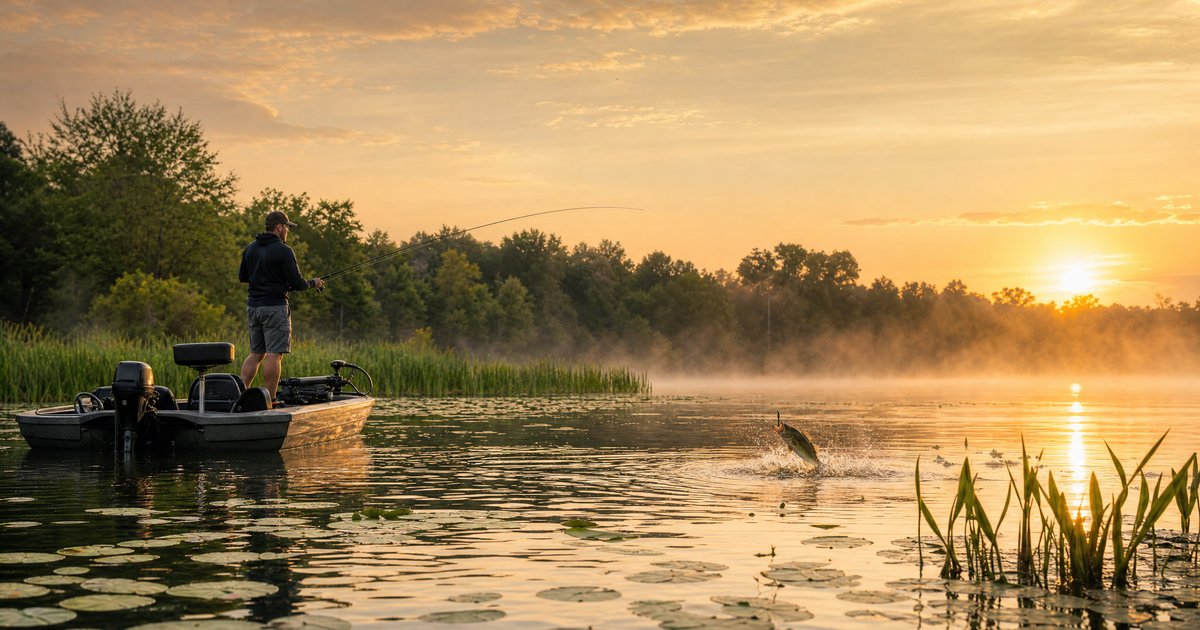
It was a Tuesday morning in late September, and I'd paddled out on a reservoir I know pretty well. Water temperature was perfect — mid-60s, just turning. I had all the right lures tied on. And for the first two hours? Nothing. Not a bump. I was starting to question every decision I'd made that morning.
Then, right around 9:15, something flipped like a switch. Three casts, three bass. The bite lasted maybe 45 minutes and went completely cold again.
I've had this happen enough times that I stopped calling it luck a while ago. That 9:15 window lined up almost exactly with a major solunar period I'd noted the night before — and promptly forgot about while rushing to load the kayak.
Lesson learned. Again.
If you've ever had a morning like that, where the fish turned on hard for a short window and then vanished, solunar periods might explain a lot. They're not magic, and they don't guarantee fish in the boat. But after eight years of cross-referencing them with my fishing logs, I can tell you they're worth understanding.
What Solunar Tables Actually Are
Solunar theory traces back to American outdoorsman John Alden Knight, who began developing the concept in 1926. Knight compiled a list of factors he believed influenced fish and wildlife activity — weather, wind, moon phase, and the relative positions of the sun and moon among them. After testing his theory against fishing catch records, he narrowed the framework down and published the first solunar tables in 1936.
The central claim is straightforward: fish and other wildlife feed more actively when the sun and moon align in specific ways relative to your position on Earth. These alignments happen in a predictable daily cycle and produce four feeding windows — two major periods and two minor periods.
I know it sounds like astrology for anglers. But Knight's argument wasn't that the moon causes fish to bite through some mystical force. It's that the gravitational and light forces exerted by the sun and moon shape biological rhythms — including feeding behavior — across many species. NOAA Fisheries acknowledges that lunar cycles influence spawning and migration patterns in numerous fish species, which at least confirms the moon exerts real biological effects on aquatic life.
The Gravitational Basics
Here's the simplified version. The moon's gravity creates tidal forces that move large bodies of water — ocean tides being the most obvious example. Even in freshwater lakes and rivers, subtle shifts in pressure and current occur in response to those same forces. Beyond that, a growing body of Many animals carry internal biological clocks tuned to lunar and solar cycles.
Think of it this way: if the moon can move billions of gallons of ocean water twice a day, it's not much of a stretch to think it's nudging the behavior of a 5-pound largemouth somewhere in Missouri.
How the Periods Are Calculated
Solunar periods are derived from the moon's transit — when it passes directly overhead, often called the upper transit — and its anti-transit, when it sits directly below you on the opposite side of the Earth, known as the lower transit. The sun's position introduces a secondary influence layer on top of that framework.
- Major periods occur when the moon is directly overhead or directly underfoot. These windows generally last around two hours and are considered the prime activity windows of the day.
- Minor periods occur at moonrise and moonset. They're shorter — typically one to one-and-a-half hours — and tend to produce moderate bumps in fish activity rather than full-blown feeding frenzies.
Every 24-hour cycle gives you two major and two minor periods. The times shift roughly 50 minutes later each day as the moon progresses through its orbit, so the windows move around the clock over the course of a month.
Reading a Solunar Table
A solunar table looks a little like a tide chart the first time you see one. Once you understand the structure, though, it's simple. Here's a representative layout:
| Time | Period Type | Duration |
|---|---|---|
| 6:14 AM | Minor | 1 hr |
| 12:22 PM | Major | 2 hr |
| 6:38 PM | Minor | 1 hr |
| 12:50 AM | Major | 2 hr |
Each row represents a window of predicted peak fish activity. These tables are location-specific — a solunar table calculated for central Missouri will differ from one for northern Minnesota because the moon's overhead position shifts with longitude and latitude.
Moon Phase Matters
Not all solunar periods carry equal weight. The moon phase functions as a multiplier on the base prediction.
- New moon and full moon: These are the power days. When a major solunar period coincides with a new or full moon, you've got what many anglers call a peak solunar day. In my experience, these are worth rearranging your schedule for.
- Quarter moons: Solunar influence runs moderate. Minor periods may barely register in terms of observable fish behavior, but major periods can still produce solid bites.
- Days approaching new or full moon: Activity tends to ramp up in the two to three days before and taper down in the two to three days after a peak phase.
Knight originally graded his tables on a scale from "poor" to "excellent" based on the moon phase. Most modern apps and solunar tools carry that convention forward with ratings or numerical scores.
The Sun's Role
The sun plays into solunar activity as well, though less dramatically than the moon. When a solunar period — especially a major one — coincides with sunrise or sunset, the effect tends to amplify. Those golden-hour windows every angler has been told to prioritize? There's a celestial reason behind them beyond flattering light. The combined gravitational and light influence from both bodies concentrates into a narrow timeframe that tends to spike feeding behavior.
When a major solunar period falls right at dawn or dusk during a new or full moon, conditions are about as stacked in your favor as solunar theory can offer.
How to Use Solunar Tables for Trip Planning
Here's where the theory becomes practical. Solunar tables are a planning tool, not a fishing guarantee. I use them primarily to narrow down when to be on the water, not where to fish.
Step 1: Check the Solunar Calendar First
Before I commit to a launch date, I pull up the solunar forecast for the week. If Saturday has all four periods in awkward spots — majors at 2 AM and 2 PM, minors bunched at dawn and late evening — I might lean toward Sunday instead if its windows line up better with the hours I actually plan to fish.
I check HookCast's solunar fishing calendar when I'm planning trips because it layers solunar data alongside weather and barometric pressure in a single view. That combination matters a lot, which I'll get to shortly.
Step 2: Prioritize Major Periods During Fishable Hours
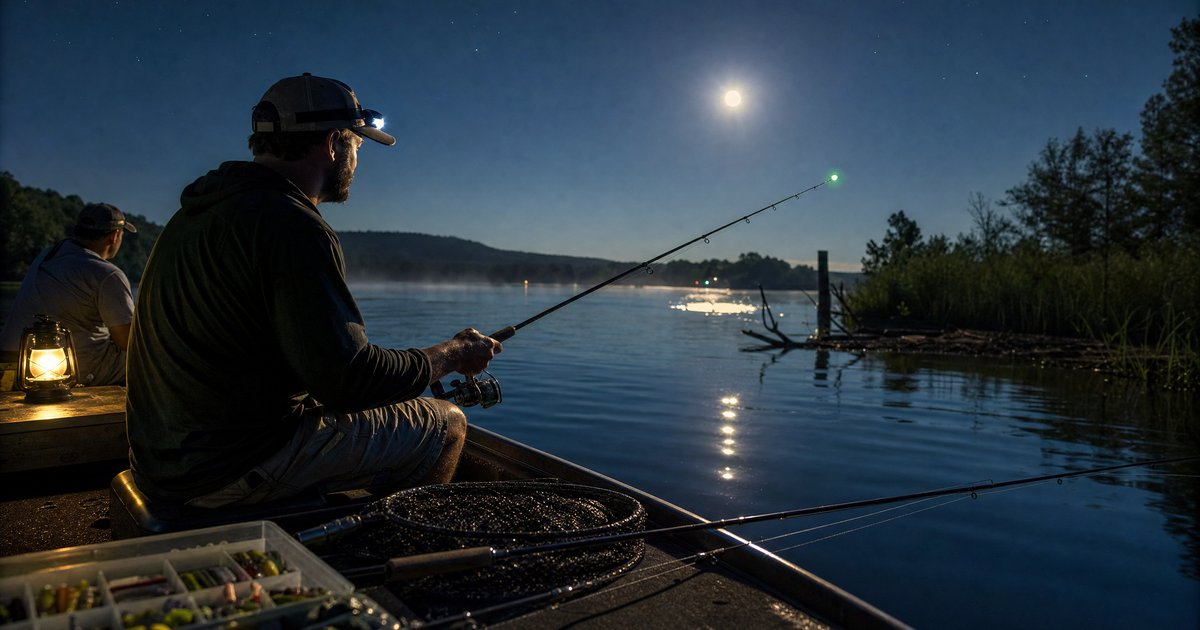
Not every major period on the chart is useful to you. A major period at 3 AM is technically prime, but unless you're running catfish jug lines or deliberately planning a night session, it's irrelevant to your trip.
Here's my approach:
- Identify which major periods fall between roughly 5 AM and 7 PM for the day I'm fishing.
- Mark minor periods that bracket those majors — the bite often starts building 30 to 45 minutes before a major window officially opens.
- Plan my most active, aggressive presentations for those windows and fish slower or more methodically outside of them.
Step 3: Layer in Other Conditions
Solunar data works best as one layer in your decision-making process, not the whole picture. Here's how I stack the variables.
Barometric pressure is probably the single biggest factor I combine with solunar timing. A rising barometer heading into a major period? That can be outstanding. A major period hitting right after a cold front slammed pressure down hard? You might still get some action, but expect the fish to be finicky.
Standard atmospheric pressure sits at 1013.25 hPa according to NOAA's atmospheric data standards. When pressure is falling fast — dropping more than 0.2 inches of mercury in a few hours — fish often get active ahead of the change. When pressure is climbing back after a front, recovery tends to be slow. Knowing where you stand in that barometric cycle relative to your solunar window is genuinely useful.
Water temperature matters for timing too. In colder water, below 50°F or so, fish metabolism slows significantly and solunar periods may produce briefer, less explosive responses. In the sweet spot — say 62 to 72°F for bass — solunar windows can trigger aggressive, concentrated feeding. Some of the most consistent 45-minute flurries I've fished came during fall major periods in 65°F water on Ozark reservoirs.
Wind and cloud cover also play a role. Heavy overcast can actually extend a solunar period's effectiveness. Fish tend to roam more confidently and feed more openly when light penetration is reduced, so a cloudy major period can outperform a bluebird one.
Step 4: Be at Your Spot Early
The single biggest mistake I see anglers make with solunar tables is showing up at the predicted time. In practice, the bite often starts building 20 to 30 minutes before a major window and tapers off 15 to 20 minutes after it closes. If you're still paddling to your spot when the major kicks in, you're playing catch-up for the best part of the window.
Field observation: I start positioning at least 30 minutes before any major period. If I'm targeting a specific piece of structure — a point, a dock line, a channel drop — I want to be dialed in and making casts when that window opens, not still rigging up on the bank.
Solunar Tables and Specific Species
Solunar theory was originally applied broadly — deer, turkey, fish, even insects. But not all fish respond to solunar periods in the same way, and it helps to understand the species-level nuances.
Bass (Largemouth and Smallmouth)
Bass are probably the species most frequently discussed in solunar circles, partly because the sheer number of bass anglers keeping detailed logs produces a big data set. In my experience, largemouth bass respond strongly to major solunar periods, especially during spring and fall when metabolic demand pushes them into more aggressive feeding patterns. Smallmouth — which I chase a lot on Ozark streams — seem to key on solunar timing plus current changes. When a tributary has a little extra push from overnight rain and a major period hits mid-morning, smallies can stack on feeding lanes and turn genuinely aggressive.
Walleye
Walleye are famously crepuscular — most active during low-light transitions at dawn and dusk. When those natural low-light windows happen to coincide with a major solunar period, the results can be exceptional. I've talked to guys fishing Lake Erie who are convinced the best walleye trolling of the entire season happens during full-moon major periods at last light. That tracks with what I've seen on smaller inland waters too.
Panfish (Bluegill, Crappie)
Panfish seem highly responsive to solunar timing in my observation — possibly because, as prey species, their feeding instincts are wired tightly around windows of opportunity. Crappie in particular will stack near structure during major periods and scatter during the midday lull. If you're after slab crappie in spring, combining solunar timing with HookCast's weather and forecast data can seriously sharpen your planning.
Trout
Trout in moving water add an extra variable: insect hatches, which are themselves influenced by temperature, barometric pressure, and — yes — lunar cycles. Some hatch timing correlates with solunar periods, which is one reason fly fishing guides have relied on lunar calendars for decades. USGS stream gauge data adds another useful layer if you're fishing tailwaters, since flow fluctuations from dam releases don't follow the moon's schedule and you need to account for both.
Common Mistakes with Solunar Tables
After years of paying close attention to this, I see the same handful of errors come up repeatedly.
Treating solunar tables as guarantees. They aren't. If the water's been sitting at 45°F for three weeks and you've just weathered back-to-back cold fronts, a major solunar period isn't going to override those conditions. The baseline has to be at least somewhat favorable.
Ignoring the quality rating. Most modern solunar calendars rate the overall day, not just the individual periods. A "fair" day means the majors will be softer. An "excellent" day near a full or new moon deserves real attention. Don't give every day on the calendar equal weight.
Only fishing peak windows and quitting outside them. Some of my most interesting catches have come during the slow periods — fish repositioning between feeding zones, suspended and catchable with the right finesse presentation. Use the off-peak time to cover water and locate fish. Then slow down and work those areas thoroughly when the major period arrives.
Using the wrong location. Solunar tables are calculated based on longitude and latitude. A table generated for New York isn't accurate for Kansas City. Always use a tool that lets you input your actual fishing location.
Ignoring the moon phase entirely. A major period on a quarter moon is a fundamentally different prospect than a major period on a new moon. The phase context matters as much as the time on the chart.
Quick Reference Checklist
Run through this before your next trip:
- [ ] Check the solunar table for your specific fishing location
- [ ] Identify which major and minor periods fall during fishable daylight hours
- [ ] Note the current moon phase — new and full moon days get priority
- [ ] Look for solunar periods that overlap with sunrise or sunset
- [ ] Check the barometric pressure trend — rising pressure heading into a major period is ideal
- [ ] Plan to be on your target water at least 30 minutes before the major period starts
- [ ] Note water temperature — solunar periods are most effective in species-appropriate temp ranges
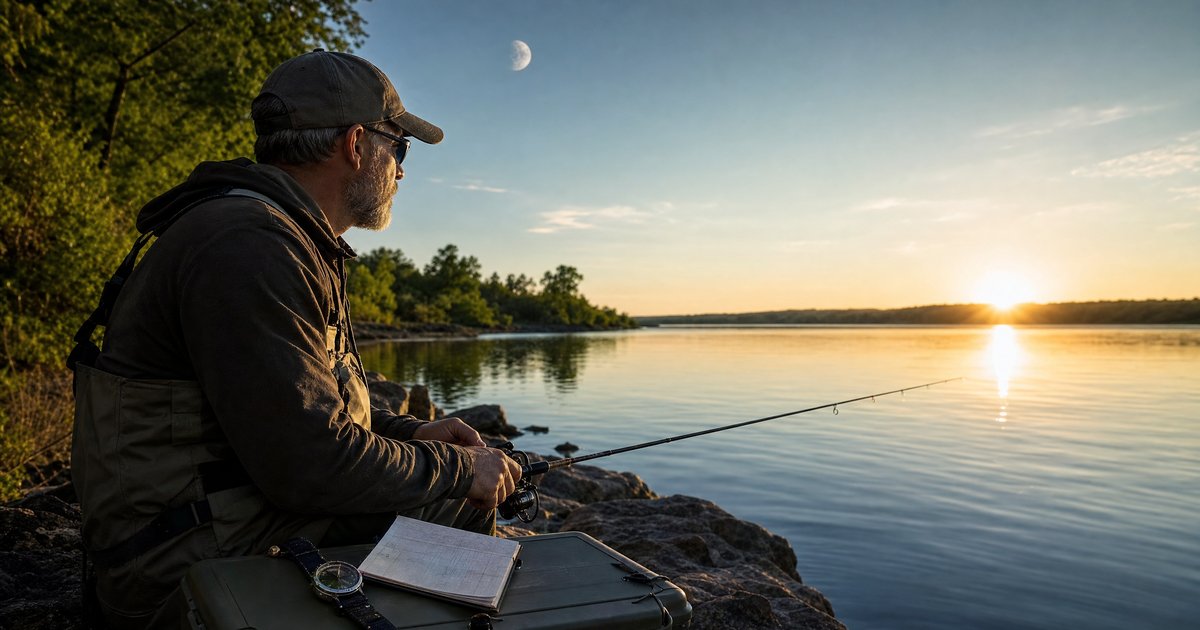
- [ ] Keep a simple log: date, solunar rating, periods fished, conditions, catch results
That last point deserves emphasis. After even one full season of logging basic notes, you'll start seeing your own patterns emerge. The data you collect on your home water will always be more valuable than any generalized theory.
Solunar tables aren't a crystal ball. But they're a legitimate, time-tested tool for narrowing your productive windows — and when you layer them with pressure trends, water temperature, and solid knowledge of where fish position seasonally, they become a real edge. Especially when you're working within the limited time most of us actually have to fish.
Fish smart. Get there early. And write down what happened afterward.
FAQ
What are solunar tables and how do they work?
Solunar tables are charts that predict peak fish and wildlife activity based on the relative positions of the sun and moon. Developed by John Alden Knight in 1926, they identify four feeding windows each day — two major periods (when the moon is directly overhead or underfoot) and two minor periods (at moonrise and moonset). The theory holds that gravitational and light forces from these alignments influence the biological rhythms of fish and other animals.
What is the difference between major and minor solunar periods?
Major solunar periods occur when the moon is at its highest or lowest point relative to your location — directly overhead or directly beneath the Earth. These windows typically last around two hours and produce the strongest predicted feeding activity. Minor periods occur at moonrise and moonset, usually lasting one to one-and-a-half hours, and tend to produce shorter, less intense feeding bursts.
How do I use solunar tables to plan a fishing trip?
Look up a solunar table specific to your fishing location and identify which major and minor periods fall during daylight hours. Prioritize days when major periods align with sunrise, sunset, or a new or full moon — those combinations typically produce the best action. Combine the solunar data with barometric pressure trends and water temperature for a more complete picture before you decide when and where to launch.
Do solunar tables work for freshwater fishing?
Yes, solunar tables are widely used for freshwater fishing and many anglers — especially bass and walleye fishermen — report consistent correlations between major solunar periods and feeding activity. The effect may be less dramatic in freshwater than in tidal saltwater environments, but species like largemouth bass, smallmouth bass, crappie, and walleye all show behavioral patterns that align reasonably well with solunar timing, particularly around new and full moon phases.
Are solunar tables accurate — do fish always bite during major periods?
Solunar tables reflect general patterns based on celestial mechanics, but they don't override conditions like cold fronts, rapidly dropping barometric pressure, extreme water temperatures, or heavy fishing pressure. Think of them as one useful layer in your planning — a major solunar period during a stable weather window and comfortable water temps gives you a real advantage, but a major period right after a hard cold front may produce very little. Keeping a personal log of solunar timing vs. actual catch data on your home water will give you the most relevant and reliable picture over time.