标题:Saltwater Inshore Fishing for Beginners: Essential Guide to Gear, Tides & Technique
【重写稿】
Saltwater Inshore Fishing for Beginners: Essential Guide to Gear, Tides & Technique
First time I took a complete beginner out on Tampa Bay, he spent twenty minutes casting into water that hadn't held a fish in three hours. Wrong tide stage, wrong depth, wrong presentation. He was doing everything technically right — good cast, decent retrieve — just in completely the wrong place at the wrong time.
That's the gap between beginners and experienced inshore anglers. It's rarely about gear. It's about understanding why fish are where they are, and when they're willing to eat. Get those two things dialed in, and the rest follows.
This guide covers everything you need to get started inshore fishing on the coast — gear, tides, reading structure, and basic technique. No fluff. Just what actually works.
What Is Inshore Fishing, Exactly?
Inshore fishing means fishing in shallow coastal waters — typically from the shoreline out to about 30 feet deep. This includes:
- Bays and estuaries
- Tidal flats (grass flats, sand flats, mud flats)
- Mangrove shorelines
- Tidal creeks and rivers
- Bridges, docks, and coastal structure
The target species vary by region, but across most of coastal America you're chasing redfish (red drum), speckled trout (spotted seatrout), snook, flounder, striped bass, and tarpon, depending on where you are and what time of year.
Inshore fishing is accessible. You don't need a massive offshore boat or thousands of dollars in tackle. A kayak, a small skiff, or even wading in knee-deep water can put you on fish — if you understand how the system works.
Inshore Gear Setup for Beginners
Rod and Reel
You don't need to spend a fortune. A solid beginner inshore setup runs between $150–$300 for rod and reel combined.
Spinning gear is the right call for beginners. It's easier to cast, handles light lures well, and forgives mistakes. Here's what to look for:
| Component | Recommended Spec | Why |
|---|---|---|
| Rod | 7' medium-light to medium power, moderate-fast action | Versatile for most inshore species |
| Reel | 2500–3000 size spinning reel | Matches the rod, handles 10–20 lb braid |
| Line | 10–20 lb braided mainline | Low stretch, better sensitivity |
| Leader | 20–30 lb fluorocarbon, 18–24" | Abrasion resistance near structure |
Braid-to-fluorocarbon is the standard inshore setup. Braid gives you sensitivity and casting distance. Fluoro leader is nearly invisible in clear water and handles the abuse of mangroves, oyster bars, and dock pilings.
Terminal Tackle
Keep it simple to start:
- 1/4 oz and 3/8 oz jigheads — workhorse for soft plastics
- Owner or Gamakatsu 2/0–4/0 hooks for live bait or soft plastic rigging
- 1/4 oz–1/2 oz weedless spoons for grass flat fishing
- Topwater walking baits (Zara Spook style) for dawn/dusk
- Soft plastic paddle tails and shrimp imitations (3–5 inch)
Pro tip: If you only buy one lure type, make it a 3-inch white or chartreuse paddle tail on a 1/4 oz jighead. I've caught everything from trout to snook to flounder on that exact setup. It's boring, it works.
Live Bait vs. Artificial
Both work. Live bait — shrimp, pinfish, mullet — is hard to beat for raw effectiveness, especially when fish are sluggish after a front. But artificials give you more water coverage and are less fuss day-to-day.
For beginners, I'd say start with live shrimp if you can get them at a local bait shop. It takes presentation variables out of the equation while you're learning to read the water. Once you're confident in where the fish are, start experimenting with artificials.
Understanding Tides: The Single Biggest Factor in Inshore Fishing
If you learn nothing else from this article, learn this: tides move fish more than any other single variable in inshore fishing.
Fish in shallow coastal systems are oriented almost entirely around tidal movement. It affects where baitfish stack up, where predators position themselves, how much current flows past a piece of structure, and how much oxygen is in the water.
How Tides Work
Tides are driven by the gravitational pull of the moon and sun on ocean water. NOAA's tidal prediction service publishes tide data for thousands of stations across the US coast — and the predictions are accurate enough that you can plan your entire day around them.
There are two basic tide types:
- Semidiurnal — two high tides and two low tides per day (common along the Atlantic coast)
- Diurnal — one high and one low per day (common along parts of the Gulf Coast, including portions of northwest Florida)
Tidal stages are what matter to anglers:
| Stage | What's Happening | Fishing Impact |
|---|---|---|
| Incoming (flood) | Water rising, pushing onto flats | Baitfish move onto flats, predators follow |
| High Slack | Water at peak height, minimal movement | Bite often slows temporarily |
| Outgoing (ebb) | Water draining off flats, funneling through cuts | Fish stack in current seams and tidal drains |
| Low Slack | Water at its lowest, minimal movement | Bite can go quiet; fish pull into deeper channels |
Moving water is almost always better than slack water. The hour before and after a tide change — when current is running strongest — is typically your best window. I call it the "money hour." On my home waters around Tampa Bay, in fifteen-plus years of guiding, the pattern holds probably 80% of the time.
Reading Tidal Current vs. Tidal Height
These are not the same thing, and beginners often confuse them.
Tidal height tells you how deep the water is. Tidal current tells you how fast it's moving. For inshore fishing, current movement matters more than raw depth. A moderate incoming tide with good current flow will fish better than a big tide that rises and falls slowly with weak movement.
Check the tide charts for your area on HookCast before your trip — it'll show you the tide curve and help you identify those peak movement windows.
High vs. Low Tide: What to Fish
High tide: Fish push up onto flooded grass flats, into mangrove edges, around submerged structure. Wade fishermen can reach spots that are dry at low water. Target the shallow edges.
Low tide: Water funnels through tidal creeks and cuts, concentrating baitfish and the predators chasing them. Deep holes adjacent to flats become refuges for fish. Work the edges of channels and any current-funneling structure.
Reading Inshore Structure and Water
Gear and tides get you in the game. Reading water is what separates the anglers who consistently catch from the ones who get lucky.
Key Inshore Structure Types
Grass flats — Seagrass beds are the foundation of most inshore ecosystems. They hold shrimp, crabs, and small baitfish, which in turn attract redfish and trout. Look for edges where grass meets sand or shell bottom — that transition zone is where fish hunt.
Oyster bars — Hard structure that creates current seams and ambush points. Redfish in particular love to root around oyster bars on falling tides. Oyster shell is also tough on monofilament, which is why you run a fluorocarbon leader.
Mangrove shorelines — The overhanging root systems of red mangroves create shaded ambush cover that snook and redfish use heavily. Cast tight to the roots — within 12 inches. "Close" to a mangrove line is a foot away. Six inches is better.
Tidal creeks and drains — As the tide falls, water drains off flats through these channels. Baitfish get funneled through, and predators position at the mouths and current seams to intercept them. Some of the most reliable fishing I've ever had came from finding a small tidal drain on a falling tide.
Docks and bridges — Structure creates shade and current breaks. Sheepshead, snook, flounder, and trout all use dock structure. Fish the downcurrent side on a moving tide — that's where fish position to ambush prey washing past.
Water Clarity and Color
Clear water — Fish can see better, which means they can see you and your lure better too. Downsize your leader, slow your retrieve, and use more natural colors.
Stained or tannin water — Common in backcountry creeks with heavy mangrove influence. Fish rely more on vibration and lateral line detection. Go louder — rattles, bigger profile baits, chartreuse or gold colors.
Muddy water after rain — Fishing is usually tough. Give it a day or two for clarity to return. One exception: if you can find a clean-water pocket near a creek mouth where clear tidal water meets stained backwater, that transition line can hold fish.
Basic Inshore Techniques That Actually Catch Fish
The Drift and Bounce
This is the foundational inshore technique. You're covering a grass flat by letting the wind or current move your boat (or kayak) slowly while you cast ahead of the drift.
- Cast your jig or soft plastic ahead and slightly to the side
- Let it sink to the bottom
- Lift the rod tip to hop the bait off bottom, then let it fall again
- The bite usually comes on the fall
Redfish often pick up a bait sitting on the bottom. Don't be in too big a hurry. A slow, deliberate hop-and-pause will out-fish a fast retrieve most days.
Working Mangrove Edges
Cast parallel to the shoreline, tight to the roots. Let the lure sink briefly, then work it back with a slow, twitchy retrieve. Snook will blow up on a lure almost immediately after it lands near the roots — or won't touch it at all. Their mood is dictated heavily by tide stage and barometric pressure, which I'll cover below.
For live bait along mangroves, a live shrimp on a light jighead (1/8 oz) fished under a popping cork works extremely well, especially for trout and redfish.
Fishing Tidal Drains and Current Seams
Position upcurrent of the structure and cast into the moving water. Let your bait wash through naturally, then work it back. Think like the fish: they're facing into the current, waiting for something to wash past them. Your retrieve should mimic that — going with the current, not fighting it.
Topwater Early and Late
First light and last light on a calm morning are when topwater baits shine. A walking topwater (Zara Spook, Rapala Skitter Walk) worked across a flat will draw explosive surface strikes from snook, trout, and redfish. The trick is the "walk the dog" action — rhythmic rod tip twitches while keeping light tension on the line.
Don't set the hook the instant you see the explosion. Wait until you feel the weight of the fish. Beginners lose more fish by reacting too fast on topwater bites than with any other technique.
Barometric Pressure, Weather, and the Inshore Bite
Tides are the primary driver, but barometric pressure runs a close second — especially when it changes fast.
Standard atmospheric pressure is 1013.25 hPa. What matters to anglers isn't the absolute number — it's the trend.
Rising pressure (especially after a cold front has passed and cleared out): Typically good. Fish become more active as conditions stabilize. On my best Tampa Bay trips, I was almost always seeing a rising barometer after a 24–48 hour stabilization period post-front.
Steady, stable pressure (high pressure): Good. Fish are feeding on predictable schedules, often keyed to tide.
Falling pressure (front approaching): Can trigger a brief feeding frenzy as fish sense the change. Get out and fish it if you can — the few hours before a front moves through can be excellent.
Post-front, cold front conditions: Tough. Especially in Florida and along the Gulf, a hard cold front in winter will shut the bite down hard for 24–48 hours. The water cools, fish go lethargic, and your best move is targeting deeper channels where water temps are more stable.
Field observation: Cold fronts are the #1 reason I get clients calling me to reschedule charters. A 15-degree water temperature drop over two days will kill the inshore bite almost entirely. Give it time. Fish it when the barometer steadies and water temps start recovering.
Pull up HookCast's weather and pressure data before your trip. If you see a pressure trend that's been rising for 24+ hours, prioritize getting out. If it's falling and a front is incoming, plan around the morning window before the weather deteriorates.
Regulations, Licenses, and Ethics
This is non-negotiable. Before you fish any coastal state, you need to:
- Purchase a valid saltwater fishing license for that state. Requirements and fees vary — check your state's fish and wildlife agency website.
- Know your size and bag limits for target species. Redfish, snook, and trout all have specific size slots and daily bag limits that differ by region.
- Check for seasonal closures. Snook in Florida, for example, have defined closed seasons tied to spawning periods. Fishing during a closed season isn't a gray area — it's a fine.
On the handling side:
- Wet your hands before handling fish for photos
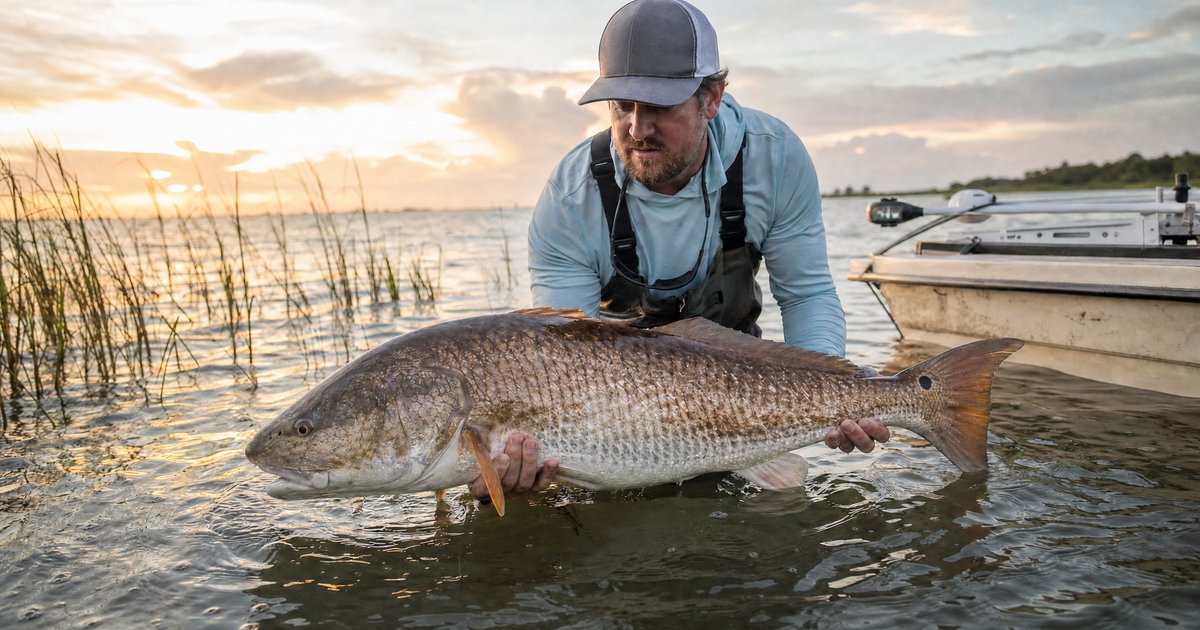
- Support the fish horizontally — don't hold a large redfish or snook vertically by the jaw; it damages their spine
- Minimize air exposure — keep the fish out of water for 30 seconds or less
- Revive before release — hold the fish upright in the water until it swims away under its own power
Inshore fisheries are more fragile than most anglers realize. NOAA Fisheries data on Atlantic coastal species repeatedly shows that responsible catch-and-release practices have a measurable positive impact on population health. Treat the resource right.
Quick-Reference Checklist: Beginner Inshore Fishing
Before you head out, run through this:
Gear
- [ ] 7' medium spinning rod, 2500–3000 reel
- [ ] 10–20 lb braid with 20–30 lb fluorocarbon leader
- [ ] 1/4 and 3/8 oz jigheads, soft plastics, weedless spoon, topwater
- [ ] Needle-nose pliers, dehooker, fish gripper
Pre-Trip Research
- [ ] Check tide chart — identify peak movement windows
- [ ] Check barometric pressure trend (rising = go)
- [ ] Check wind forecast — under 15 mph is comfortable, over 20 mph gets tough for a skiff
- [ ] Confirm valid fishing license and know your size/bag limits
On the Water
- [ ] Fish moving water, not slack tide
- [ ] Start at tidal drains, channel edges, and grass flat transitions
- [ ] Cast to structure — mangroves, docks, oyster bars
- [ ] Slow down your retrieve. Slower than feels right.
- [ ] Practice proper catch-and-release handling
Safety
- [ ] Tell someone where you're going and when you'll be back
- [ ] Wear a PFD if you're wading in current or in a kayak
- [ ] Watch afternoon thunderstorm windows, especially spring through fall on the Gulf Coast
FAQ
What gear do I need to start saltwater inshore fishing as a beginner?
A 7-foot medium-light to medium spinning rod paired with a 2500–3000 size reel is the go-to beginner setup. Spool it with 10–20 lb braided line and attach an 18–24 inch fluorocarbon leader for abrasion resistance. Add a small selection of jigheads, soft plastic paddle tails, and a weedless spoon, and you're equipped for the majority of inshore species along the US coast.
When is the best time to go inshore fishing?
Moving tides are the biggest factor — fish the one to two hours before and after a tide change when current is running strongest. Early morning is generally the most productive time of day, especially for topwater fishing. A rising barometric pressure after a weather system clears also signals strong feeding activity. Checking a tide chart and pressure forecast before you leave the dock will put you ahead of most anglers.
How do tides affect inshore fishing?
Tidal movement drives baitfish behavior, which drives where predators position themselves. On a rising tide, fish push onto shallow flats and mangrove edges to feed. On a falling tide, water funnels through tidal drains and channels, concentrating bait and the fish chasing them. Slack tide — the brief period when water stops moving before reversing — often produces a slower bite. Most experienced inshore anglers plan their trips around peak tidal current windows rather than just tide height.
What species can beginners target inshore?
Speckled trout (spotted seatrout) are widely considered the best beginner inshore target because they're generally abundant, not too leader-shy, and will hit both live shrimp and soft plastic lures readily. Redfish (red drum) are also excellent beginner targets and are found in most coastal states from the Gulf of Mexico up through the mid-Atlantic. Flounder, sheepshead, and jack crevalle round out the accessible inshore options depending on your region and season.
Do I need a fishing license for saltwater inshore fishing?
Yes. Every US coastal state requires a valid saltwater fishing license for recreational anglers, though requirements, costs, and exemptions vary by state. Some states offer annual licenses, others offer short-term options for visiting anglers. You'll also need to know the specific size slots and bag limits for your target species — regulations differ significantly between states and sometimes between coastal regions within the same state. Always check with your state's fish and wildlife agency before heading out.