How Thunderstorms Affect Fishing: Before, During, and After the Storm
Last spring I was paddling a smallmouth river in the Ozarks when the sky turned that particular shade of green-gray that means business. I'd been grinding all morning — maybe two fish in four hours. Then, about ninety minutes before the storm hit, something switched. Every cast connected. Smallies were hammering topwater in water that had been dead since dawn. I scrambled back to my takeout as lightning crackled in the distance, wet and grinning, with more fish in that final stretch than the entire session before it.
That afternoon taught me more about thunderstorm fishing than a decade of reading could have. Weather doesn't just change conditions — it changes fish behavior at a biological level. Understand why, and you can stop guessing and start planning around it.
What's Actually Happening When a Storm Rolls In
Thunderstorms aren't random. They're driven by dramatic shifts in atmospheric pressure, temperature, and humidity — the same forces you feel in your sinuses. Those same forces reach every fish in the water column.
Barometric Pressure: The Invisible Trigger
Barometric pressure is the weight of the atmosphere pressing down on everything, including lakes, rivers, and the fish inside them. Standard atmospheric pressure sits at 1013.25 hPa. As a storm approaches, that pressure drops — sometimes 5–10 hPa in just a few hours.
Fish with swim bladders — bass, walleye, crappie, perch — are acutely sensitive to this change. The swim bladder regulates buoyancy, and when outside pressure drops, fish compensate by adjusting their depth. That adjustment often triggers feeding. Fish seem to recognize that something is changing and respond with urgency.
Field note: On a falling barometer, I've found bass feeding faster and more aggressively than in almost any other condition. It's not guaranteed, but it's consistent enough that I watch pressure trends before every trip — not just the current reading, but the direction and speed of change.
Temperature and Oxygen Shifts
Storms also bring wind, and wind does something underrated: it oxygenates surface water. In spring, when water temperatures are already swinging, a breezy pre-storm period pushes baitfish toward the surface and windward banks. Predators follow.
The immediate pre-storm window often brings a warmth spike before the cold front moves through. That brief warming triggers the same opportunistic feeding you'd see on a warming spring afternoon — just compressed into a tighter timeframe.
Before the Storm: Your Best Fishing Window
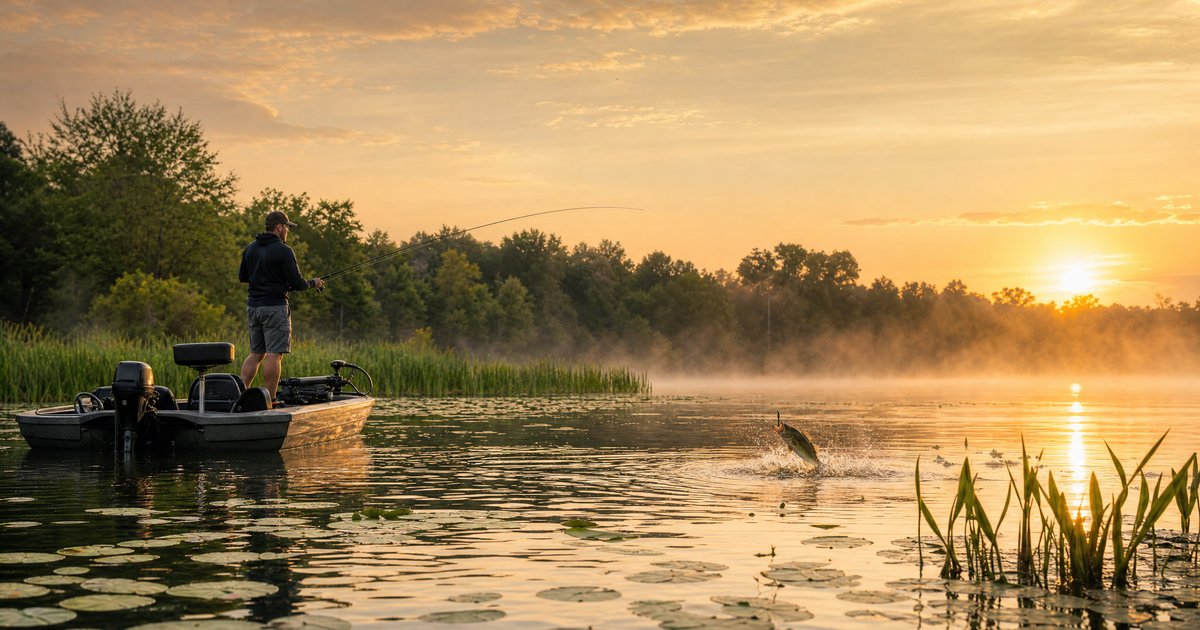
This is the money window. Across eight years of kayak fishing rivers and lakes throughout the Midwest, the one to three hours before a significant thunderstorm consistently produces some of the best freshwater action of the year — particularly in spring.
Why Fish Feed So Aggressively Pre-Storm
The falling pressure acts like a dinner bell. Fish that were suspended mid-column or tucked into structure move shallower and become willing to chase. That moody late-morning largemouth that won't touch anything suddenly hammers a buzzbait.
Here's the typical sequence:
- Barometer begins dropping — fish start moving and feeding opportunistically
- Wind picks up — baitfish concentrate along windward shores and current edges
- Cloud cover builds — reduces light penetration, pulling fish out of deep structure into shallower feeding zones
- Insects blow onto the surface — triggers topwater activity, especially for bass and panfish
Best Pre-Storm Tactics and Lures
In spring, fish have moved shallow to feed. Match that reality.
Largemouth and smallmouth bass:
- Topwater — buzzbaits, poppers, hollow-body frogs over weedy areas
- Reaction baits — spinnerbaits, chatterbaits, lipless crankbaits
- Fast retrieves — fish are aggressive, match that energy
Walleye:
- Jerkbaits worked along main-lake points
- Live-bait rigs on transition edges if you prefer a slower approach
- Pre-storm walleye push shallower than most anglers expect
Where to fish:
- Windward banks, where baitfish pile up
- Shallower structure than you'd normally target — points, flats, inside weed edges
- Work efficiently — the window can close fast once the storm arrives
Pay attention to rate of change, not just current pressure. A barometer dropping 3–4 hPa per hour triggers a sharper bite than a slow overnight drift. Watching the trend line rather than a single snapshot gives you a much better picture of how fish are likely to behave.
When to Call It
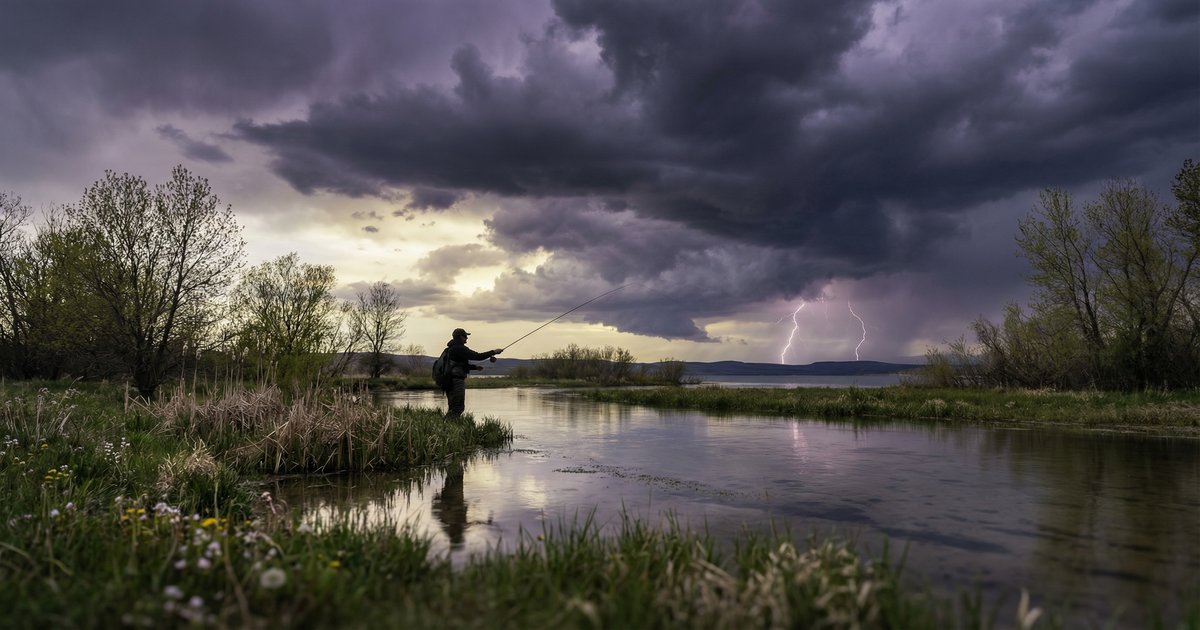
Here's where I have to be direct: don't push your luck when thunderstorms are approaching. I fish a kayak. There is no shelter on a kayak. I've misjudged the timing before, and watching lightning hit a tree on shore when you're a hundred yards from takeout is a feeling you don't want twice.
Lightning safety on the water is non-negotiable:
- Get off the water when you hear thunder — if you can hear it, you're in strike range
- Aim to be off the water before the storm arrives, not when it does
- Watch radar actively during a pre-storm bite, not just the sky and wind
- On open water, you're often the tallest object around — that's a serious problem
The National Weather Service recommends the 30-30 rule: if the gap between lightning flash and thunder is 30 seconds or less, seek shelter immediately, then wait 30 minutes after the last thunder before returning to the water. Fishing from a kayak, I apply that logic at 60 seconds minimum.
The pre-storm bite is excellent. It's not worth dying for.
During the Storm: Stay Off the Water
If there is lightning, you should not be on open water. Full stop.
Fish during an active thunderstorm from:
- A boat with a proper enclosure, ideally docked under a covered structure
- Shore, well away from isolated tall trees and elevated terrain
- Inside your vehicle, watching radar
Rivers and streams carry a second risk: flash flooding. The USGS stream gauge network tracks real-time water levels across the country. If you fish Ozark streams, you know how fast a clear river becomes a roaring muddy torrent. A gauge reading that seems manageable at launch can spike dramatically in under an hour when a severe storm hits upstream.
Have a plan before you launch. Know what the gauge triggers are for your stretch of river. Know your exit points. This isn't timidity — it's what keeps you fishing next weekend too.
After the Storm: Reading the Aftermath
Post-storm fishing is more complicated than pre-storm fishing. Unlike the pre-storm window — which is almost universally good — the aftermath depends heavily on what kind of storm just came through and how long it lasted.
The First 2–4 Hours After a Fast-Moving Storm
When a squall line moves through quickly, the aftermath can still be productive:
- Pressure begins rising, and there's often a brief feeding window during that stabilization period
- Surface water is oxygenated from rain and wind
- Shad and baitfish are frequently disoriented near the surface
- Overcast skies persist, keeping light levels low and fish active in the shallows
The best post-storm bass fishing I've had comes after a fast storm, when cool and cloudy skies settle over calm water. That window is almost as good as the pre-storm bite, and I've had memorable topwater sessions in exactly those conditions.
When the Post-Storm Period Gets Tough
Slow-moving systems — the kind that park over an area for six to twelve hours — create harder conditions:
| Condition | Effect on Fish | What to Try |
|---|---|---|
| Heavy runoff | Turbid, muddy water with debris | Bright and noisy lures; fish near cleaner water inflows |
| Rapid temperature drop | Fish move deeper, metabolism slows | Drop shot, ned rig, slow presentations |
| Sharp barometric rise | Fish go neutral or suspend | Deep structure, finesse techniques |
| Prolonged overcast | Extended shallow feeding windows | Stay in the shallows and mid-depth zones |
Muddy water deserves special attention. After a heavy spring storm, creek runoff can cloud an entire lake or river. Fish can't see well in turbid water, so they rely on their lateral line to detect vibration. Adapt accordingly:
- Bright colors — chartreuse, white, orange
- Noisy lures — rattling lipless crankbaits, spinnerbaits with large willow blades, bladed jigs
- Slower presentations near the bottom, giving fish time to home in on the bait
Cold Front After a Storm: The Hard Days
Sometimes a thunderstorm is the leading edge of a cold front, and that's when fishing gets genuinely difficult. When pressure rises sharply and temperatures fall, fish — bass especially — go neutral or shut down almost entirely.
This is why anglers drive two hours, find water that looks perfect, and catch nothing. A cold front just came through. The fish are there — they're just not interested.
Post-cold-front approaches:
- Fish slow — work a shaky head or drop shot along the bottom with minimal movement
- Downsize — smaller profiles, lighter line, finesse presentations
- Target transition areas — fish stack on specific spots like outside bends, deep channel edges, and main-lake points
- Fish midday — post-front fish are most active when sun warms the water, roughly 10 a.m. to 2 p.m.
Give it 24 to 48 hours after a cold front and conditions usually stabilize. The bite comes back.
Spring-Specific Patterns Worth Knowing
Spring is when all of this matters most. Thunderstorms are frequent, temperatures are volatile, and fish are already in transition — moving from winter patterns toward the spawn. That makes them more responsive to pressure changes than at almost any other time of year.
Pre-Spawn Bass and Storm Windows
In early to mid-spring, bass are staging near spawning flats but haven't committed yet. A falling barometer during this period can pull fish up onto the flats early, even when water temperatures aren't quite there.
I've caught legitimately big bass in 48–50°F water during a pre-storm window because the pressure drop triggered movement before the water temperature did. These fish weren't feeding because they were comfortable — something in their biology told them to go.
A note on fish care: Bass in the pre-spawn and spawn deserve extra consideration. Handle fish quickly, minimize time out of the water, and return them carefully. These are the fish that fuel future seasons. If you're fishing catch-and-release during the spawn — which I'd encourage — confirm your local regulations on size and bag limits before you head out.
Walleye and Spring Storms
Walleye are low-light feeders by nature, and spring thunderstorm conditions are genuinely ideal for them. Overcast skies, falling pressure, and wind-churned water is one of the best walleye setups of the year.
Where to target:
- Rocky points and main-lake structure in 8–15 feet of water
- Wind-blown shorelines where baitfish concentrate
- River mouths during peak spawning migration (check your state regulations on spawning closures before you go)
Work jigs or jerkbaits along the bottom and stay alert for subtle strikes — walleye don't always hit hard.
Quick Reference: Thunderstorm Fishing
Before the Storm (1–3 hours out)
- ✅ Fish aggressively — this is your best window
- ✅ Target shallow structure and windward banks
- ✅ Use fast, reaction-style lures
- ✅ Watch radar constantly
- ⚠️ Get off the water before lightning arrives — no exceptions
During the Storm
- ❌ Do not fish open water with lightning present
- ✅ Wait in shelter — covered structure, vehicle, or away from tall trees on shore
- ✅ Use the time to watch radar and plan your post-storm approach
After the Storm
- ✅ Fast-moving storm with clearing skies — get back out, fish topwater or reaction baits
- ✅ Muddy water — bright colors, noisy lures, fish near cleaner water inflows
- ⚠️ Cold front attached — slow down, go finesse, be patient
- ✅ Check USGS stream gauges before returning to any river or stream
Thunderstorms don't ruin fishing — they change it. The anglers who understand what pressure and weather do to fish behavior aren't home when the radar lights up. They're on the water two hours before the storm, rods bent, knowing exactly when to quit. That's the real edge. Not gear, not secret spots — just understanding what the weather is already telling the fish.
FAQ
Do fish bite before a thunderstorm?
Yes — consistently. The one to three hours before a thunderstorm is often the best bite window of the day, especially in spring. As barometric pressure drops ahead of the storm, fish with swim bladders become more active and move shallower to feed. That said, anglers should monitor radar throughout and get off the water well before lightning arrives.
Is it safe to fish during a thunderstorm?
No. Fishing on open water during an active thunderstorm is genuinely dangerous. Water and fishing rods are both excellent lightning conductors, and kayak anglers are especially exposed with no shelter available. Seek cover when thunder is audible, and wait at least 30 minutes after the last thunderclap before returning to the water.
Why is fishing so tough after a cold front?
Cold fronts drive barometric pressure sharply upward and drop water temperatures, which puts fish — especially bass and walleye — into a neutral or inactive state. They move deeper, tighten up on structure, and stop chasing. Fishing typically improves 24 to 48 hours after a cold front passes, once conditions stabilize. Finesse tactics work best in the immediate aftermath: slow presentations, smaller lures, light line.
What lures work best in muddy water after a storm?
When visibility is low, fish rely on their lateral line to detect vibration rather than sight. Use bright colors like chartreuse, white, and orange, and choose lures that generate noise and movement — rattling lipless crankbaits, spinnerbaits with large willow blades, and bladed jigs. Slow the retrieve near the bottom, giving fish time to find the bait by feel.
How does barometric pressure affect fish behavior?
The swim bladder — the gas-filled organ fish use to control buoyancy — responds to changes in outside pressure. When pressure falls ahead of a storm, fish adjust their depth and often feed aggressively. When pressure rises sharply after a storm or cold front, fish tend to suspend and go neutral, making them much harder to catch. Tracking the direction and speed of pressure change, not just the current reading, gives you the clearest picture of what the fish are likely doing.