Wading for Fish: How to Read the Water, Wade Safely & Find Fish on Foot
There's a stretch of river in the Ozarks I fish every summer. No ramp, no parking lot — just a gravel shoulder to park on and a steep bank to scramble down. Most people drive right past it. The ones who stop and wade it catch smallmouth. Good ones.
That's the thing about wade fishing nobody really talks about: the access barrier works in your favor. Inconvenient water is unpressured water. No bass boats, no jet skis — just you, the current, and however many smallies are stacked under that far bank.
But wade fishing is about more than finding quiet water. Done right, it's one of the most effective ways to cover a fishery — freshwater or salt. Done wrong, you'll spook every fish within 40 yards before your first cast. And done carelessly, it can put you in real danger fast.
This guide covers all of it: how to read the water, how to move without blowing up the bite, and how to stay safe while you're out there.
Why Wade Fishing Works
The obvious advantage is access. Wade fishing opens up water that boats and even kayaks can't reach — shallow flats, tight creek bends, braided river channels. But the tactical advantages go deeper than that.
You're at eye level with the fish. From a boat, you're looking down into the water. Wade fishing, you're scanning across it. You start noticing things — nervous baitfish, subtle current seams, the slight color change that marks a drop-off — that you'd miss from above.
You can slow down. Boat anglers cover water. Waders work water. There's a difference. When you find a productive seam or a rock pile that's holding fish, you can stay on it without drifting through and work every angle until you figure out what they want.
Stealth is built in. A kayak is quiet. A wade angler who knows how to move is nearly invisible. Fish conditioned to flee from boat wakes and trolling motor hum will hold right in front of you if you approach correctly.
The trade-off? You earn every fish. Your legs are your trolling motor, your waders are your boat, and if you misread the water, you'll find yourself chest-deep in a hole you never saw coming.
Reading the Water Before You Step In
This is the skill that separates productive wade anglers from people who splash around hoping to get lucky. Before you ever touch the water, spend five minutes on the bank reading it.
Current and Structure in Rivers
Moving water is organized. Once you start seeing the patterns, you'll read a river like a map.
Current seams are the transition zones between fast and slow water. Fish hold on the slow side, facing upstream, waiting for food to come to them. The seam is the conveyor belt. Cast upstream and let your lure or fly swing through — that's where strikes happen.
Eddies form on the downstream side of any obstruction: a boulder, a logjam, a bridge piling. Current curls back on itself, creating a low-pressure zone where baitfish get trapped. Predators know it.
Tailouts — the shallow, tapering end of a pool where current picks back up — are prime feeding lies, especially early morning and evening. Trout stack in tailouts. So do smallmouth.
Undercut banks are fish hotels, especially on the outside bends where current has been cutting into the bank for years. Bass and big brown trout sit tight under those banks through the heat of the day. You often can't see them, but they're there.
Reading Depth and Bottom Composition
Before wading unfamiliar water, look for:
- Color changes — darker water usually means deeper; lighter, sandy-looking water is typically shallow
- Surface texture — smooth, glassy water over a riffle signals shallow depth; a broken surface over a deeper run means current is moving over structure below
- Bottom material — gravel and rock hold fish; mucky silt bottoms are usually dead zones
When scouting a new stretch of river, I check the USGS StreamStats tool for flow rates and historical water levels. High, off-color water after rain means visibility is shot and fish push to the edges. Low, clear water means you need to be precise about your approach.
Saltwater Flats and Channels
Inshore saltwater wading is its own game. The water-reading skills transfer, but the specifics change.
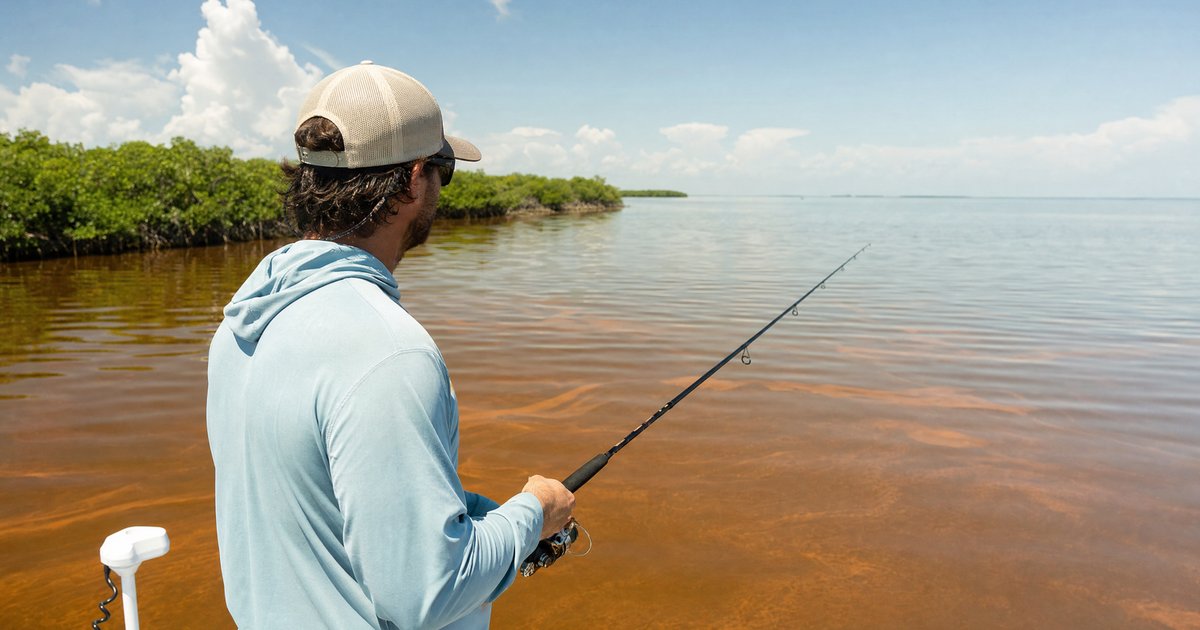
On a grass flat, look for potholes — circular sandy openings in the grass where redfish and trout stage. They're easy to miss if you're moving too fast. Slow down, look for dark outlines against the lighter grass, and work each pothole thoroughly before moving on.
Tidal flow drives everything in saltwater. An outgoing tide drains baitfish from the backwater and concentrates them at cuts and channel edges — that's where reds stack up. Check tide charts for your area before planning any coastal wade trip. A flat that looks promising at high tide can be knee-deep mud on a hard low.
Channel edges adjacent to flats work the same way as river seams: fish cruise the transition between shallow and deep, feeding on the flat during moving water and dropping back when the tide slacks.
How to Wade Without Spooking the Fish
Movement is the biggest mistake wade anglers make. Walk into the water like you're crossing a parking lot and you'll wonder why you can't buy a bite.
Slow Down More Than You Think
Moving slowly covers more productive water than moving quickly. When you rush, you push pressure waves ahead of you. Fish feel that through their lateral line long before they see or hear you. In clear, shallow water, you can spook fish 30 feet away just by walking too fast.
The rule I use: move half as fast as you think you need to. Take two or three steps, pause, scan ahead, cast to any target, then move again.
Enter Upstream or Downstream of Your Target
Current carries your disturbance and scent downstream. Enter the water upstream of your target area and work down, or enter below it and cast upstream. Never wade directly into the water you're trying to fish.
Cross Current at an Angle
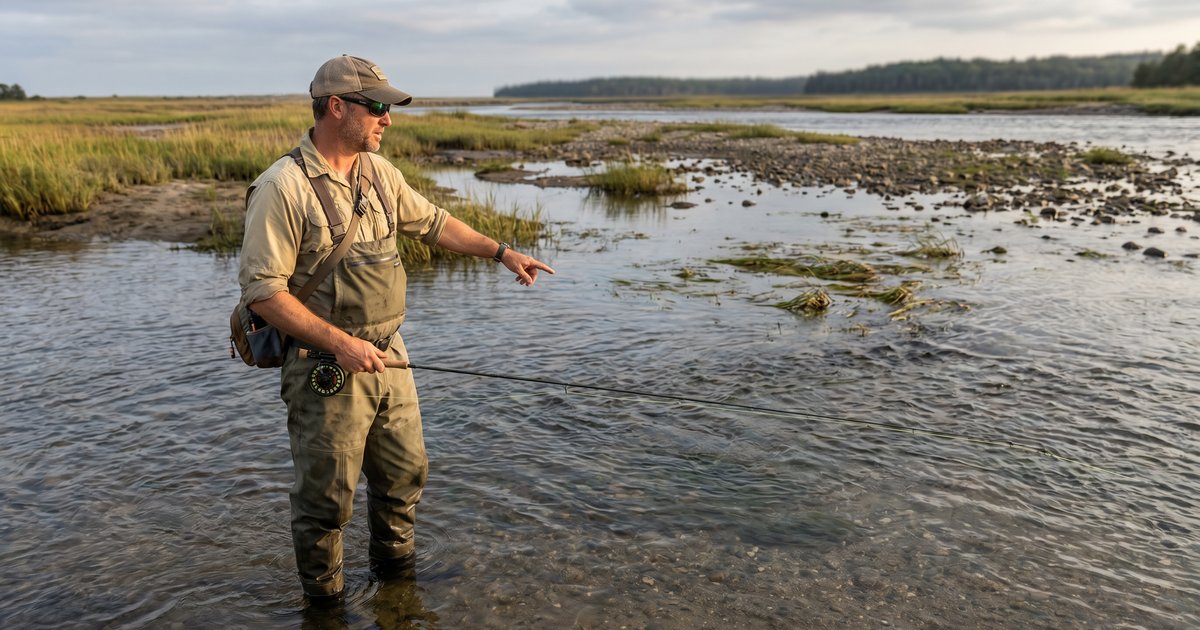
When you need to cross moving water, angle slightly downstream so the current helps push you across rather than fighting against you. Keep your feet sliding along the bottom — don't lift them high, which breaks your balance — and take short, shuffling steps.
Dress to Blend In
Bright colors visible to fish from a surprising distance. Earth tones — khaki, olive, tan, gray — help you blend in. Bass in clear Ozark streams will spook at a bright-colored angler moving along the bank.
Watch Your Shadow
On sunny days, your shadow can extend 20 feet or more ahead of you. Keep the sun at your back when possible and stay aware of where your shadow falls relative to where you're about to cast.
Wade Fishing Safety
I'm putting this before the fishing tactics section because it belongs there. Safety is part of the skill set, and overlooking it can turn a good fishing day into an emergency.
The Hazards That Actually Get People
Foot entrapment is one of the most dangerous risks wade anglers face — and one of the least understood. If you slip in moving current and your foot wedges between rocks on the bottom, the force of the water can pin you face-down. This is why you never wade with your feet pointing downstream in strong current. Always shuffle sideways or angle upstream.
Hypothermia comes on fast in cold water, even when air temperatures feel comfortable. Water below 60°F accelerates heat loss dramatically. In Ozark streams in early spring, the water can be 45°F while the air is 65°F and sunny. That temperature differential can impair motor function quickly if you go in unexpectedly.
Flash flooding is a serious and underappreciated risk. Clear sky where you're standing doesn't mean clear skies 20 miles upstream where that river drains. According to NOAA, wading conditions can change rapidly with upstream weather events. If the water starts rising, get out immediately. Don't wait to see how bad it gets.
Slippery rocks cause more falls than anything else. Algae-covered rocks underwater are like ice. Test your footing before committing your weight.
Gear That Matters
| Gear Item | Why It Matters |
|---|---|
| Wading staff | Third point of contact in current; critical on slippery rock |
| Felt-sole or studded wading boots | Traction on slick substrate |
| Wading belt on chest waders | Prevents waders from filling like a bucket if you go in |
| Inflatable wading belt | Additional insurance if you go fully under |
| Wool or synthetic base layers | Retain warmth even when wet |
| Personal flotation device (PFD) | Required in many states for moving water |
Always cinch your wading belt tight. Without it, chest waders fill with water faster than you'd expect, and that weight is hard to fight against current.
I also check weather conditions on HookCast before heading out — specifically for thunderstorm timing. Getting caught in lightning while standing mid-river is a situation you don't want to find yourself in.
Before You Commit to Unfamiliar Water
Talk to local bait shops. Ask about deep holes, submerged hazards, and where the current gets nasty after rain. Local knowledge is worth more than any map. On unfamiliar water, probe ahead of each step with a wading staff before putting your weight down.
Don't wade alone in strong current if you can avoid it. If you do go solo, tell someone where you're fishing and when to expect you back.
Finding Fish on Foot: Patterns by Species and Season
Reading water is the foundation. Knowing where specific fish want to be throughout the season turns that foundation into caught fish.
Smallmouth Bass in Rivers
Smallmouth are structure-oriented year-round, but their position within that structure shifts with conditions.
Summer: They push shallow early and late, pulling back to deeper pools during the heat of the day. The seam below a riffle is a consistent producer from first light to about 9 a.m. After that, target the tailouts of deep pools and shaded undercut banks.
Fall: One of the best wade fishing windows of the year. Water cools, baitfish migrate downstream, and smallmouth feed aggressively to put on weight before winter. They're less predictable in exact position but more aggressive when you find them. Cover lots of water.
Spring: Spawning smallmouth move to sheltered gravel flats when water temperatures reach the upper 50s to mid-60s°F. Handle fish carefully during the spawn — keep them in the water as much as possible and release them where you caught them so they can return to the nest.
Redfish and Speckled Trout on Gulf Coast Flats
Inshore saltwater wade fishing in Texas, Louisiana, and along the Florida Gulf Coast is a legitimate art form. Redfish tailing on a flat — their backs breaking the surface while they root for crabs in the grass — is one of the most memorable sights in fishing.
Moving tide is key. Both redfish and speckled trout feed most aggressively during water movement. The first two hours of an outgoing tide on a grass flat, as baitfish and crabs get pushed out of the backwater, is consistently the most productive window.
Sight fishing: On calm, bright mornings, you can spot reds before you cast. Polarized sunglasses are non-negotiable. Look for wakes, tails, or the bronze flash of a turning fish. Lead the fish by 3-4 feet with your cast and let the bait settle in its path. Don't cast directly at the fish.
Seasonal adjustment: In summer, fish the cooler parts of the tidal cycle. In winter, look for reds in deeper, darker-bottom potholes — those areas absorb heat and hold warmer water on cold days, and redfish know it. NOAA Fisheries research on inshore species consistently identifies water temperature and tidal movement as the primary drivers of redfish feeding behavior.
Trout in Streams and Tailwaters
Trout wade fishing is the archetype of the whole discipline. Most of the technique knowledge — reading seams, approaching from downstream, moving slowly — originated here.
Presentation matters more than location with trout, because they can afford to be selective. A perfect drift through a prime seam with the wrong fly catches nothing. A natural-looking presentation through a secondary lie can produce fish.
In tailwaters below dams, check generation schedules before you wade. Water releases can raise river levels 2-3 feet in minutes and the current can become genuinely dangerous without warning. This is not a remote possibility — it happens, and people drown when they ignore it. Contact the managing authority for the dam you're fishing below, or check their website for current generation schedules.
Wade Fishing Checklist
Before you step in:
Water Reading
- [ ] Identified current seams and likely holding water
- [ ] Noted depth changes, color transitions, and bottom composition
- [ ] Checked flow conditions via USGS gauge or local report
- [ ] For saltwater: confirmed tide stage and direction
Safety
- [ ] Wading belt cinched tight on chest waders
- [ ] Wading boots appropriate for the substrate
- [ ] Wading staff in hand for unfamiliar water
- [ ] Weather checked — no approaching storms
- [ ] Someone knows your location and expected return time
- [ ] Water temperature noted and layered accordingly
Approach
- [ ] Entering upstream of or below target water
- [ ] Moving slowly, shuffling feet
- [ ] Sun position noted relative to shadow
- [ ] Wearing earth-tone clothing
Regulations
- [ ] Valid fishing license for the state
- [ ] Size and bag limits confirmed for target species
- [ ] Seasonal closures and special regulations checked for this water
Frequently Asked Questions
What gear do wade fishing beginners actually need?
Start with breathable chest waders, wading boots with felt or rubber studded soles for traction on slick rock, and a wading staff. A wading belt is essential safety gear and should stay cinched at all times. Polarized sunglasses help you see into the water and spot fish before you cast to them. You don't need to spend a fortune — a solid entry-level wader setup runs under $200 and covers most freshwater wade fishing situations.
Is wade fishing safe in rivers with strong current?
It's manageable with the right approach, but the risks are real. Shuffle your feet rather than lifting them, angle your body sideways to the current when crossing, and use a wading staff as a third point of contact. Avoid wading above mid-thigh depth in strong current, always wear a cinched wading belt, and exit the water immediately if levels start rising. Never wade alone in fast water if you can avoid it.
When is the best time to wade fish for redfish on flats?
Redfish feed most actively during moving water — typically the first two hours of an outgoing tide as draining water concentrates baitfish and crabs along flat edges and tidal cuts. Early morning on a falling tide, especially in summer, is often the most productive window. Low-light conditions combined with moving water give you the best chance at actively feeding fish in skinny water without giving yourself away.
How do I avoid spooking fish while wade fishing?
Move at half the pace you think you need to, and shuffle your feet along the bottom rather than stepping high and creating splashing disturbance. Enter the water upstream of or below your target area so current carries your wake away from the fish. Wear earth tones, stay aware of where your shadow falls, and make your first casts before you get close to prime holding water. In clear, shallow conditions, fish can detect pressure waves from a moving wader well before they see or hear you.
Do I need a fishing license for wade fishing on public rivers?
Yes. Wade fishing on public waters requires a valid state fishing license in all 50 states, regardless of whether you're fishing from a boat, kayak, or on foot. Species-specific regulations — size limits, bag limits, seasonal closures — apply the same way they would from any other platform. Always check regulations for the specific state and water body you're fishing, since some rivers may carry special regulations for certain species.