标题:Walleye Fishing Guide: Seasonal Patterns, Jigging, and Trolling Tactics
Walleye Fishing Guide: Seasonal Patterns, Jigging, and Trolling Tactics
It was a Tuesday evening in late April on Lake Erie's western basin. I'd launched my kayak out of a public ramp near Sandusky, Ohio, and paddled about 400 yards to a rocky point I'd marked the previous fall. Wind was out of the southwest at maybe 10 mph, water temp just cresting 48°F on my Garmin unit. By the time the sun kissed the treeline, I'd boated six walleye — four of them solid keepers — on nothing more than a half-ounce jig and a paddle tail plastic.
The guy at the ramp the next morning asked what I was using. I told him. He shook his head. "I've been trolling crankbaits all week and can barely get a bite."
Same lake. Same night. Completely different results.
That's the thing about walleye — they're not random. They have patterns, preferences, and predictable behaviors that shift with the seasons, the water temp, and the light conditions. Once you understand the why behind where they are and what they want, you stop guessing and start fishing with intention.
This guide covers the full walleye playbook: where they are through the seasons, how to jig them effectively, when to switch to trolling, and what gear actually matters.
Understanding Walleye Behavior (The Foundation)
Before you can catch walleye consistently, you need to understand what drives them. These aren't bass — they don't slam topwaters in the shallows at noon. Walleye are light-sensitive, structure-oriented predators that live by their own set of rules.
Light Sensitivity Is Everything
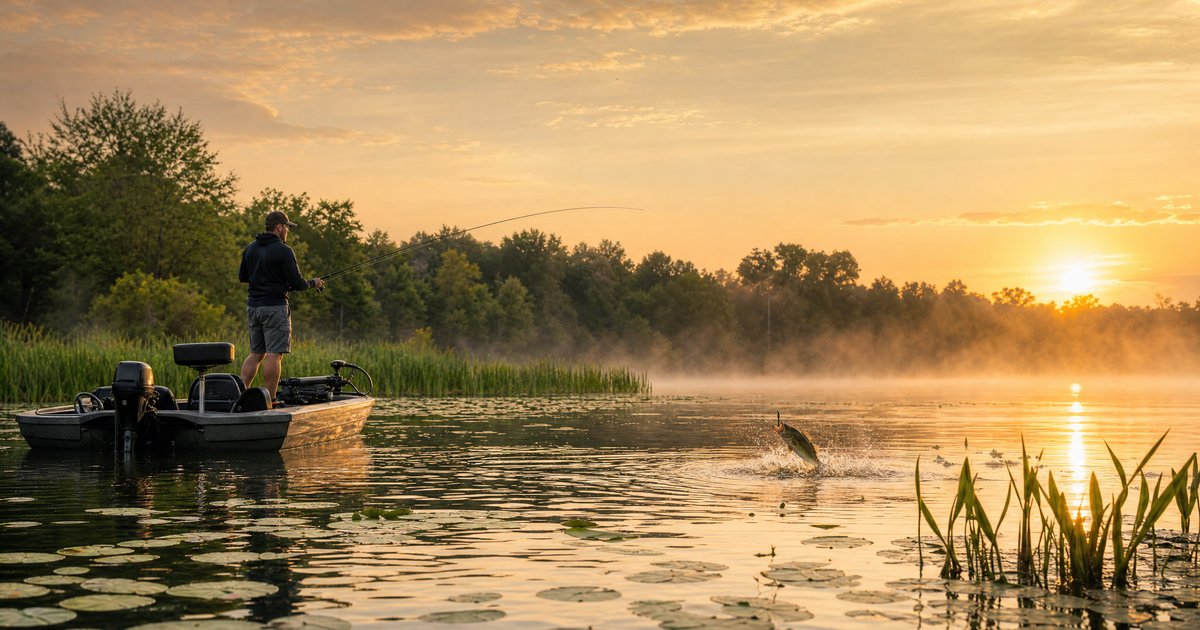
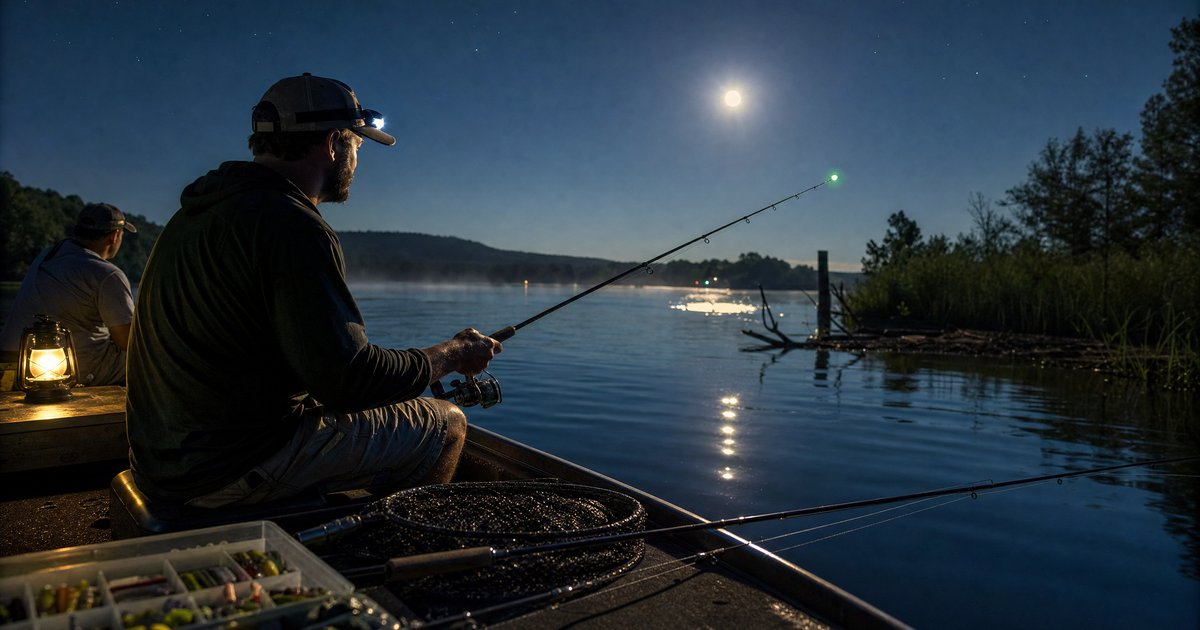
Walleye have a tapetum lucidum — a reflective layer behind the retina that makes them exceptional low-light predators. This is why walleye feed most aggressively at dawn, dusk, and after dark, and why they pull back to deeper, darker water or hunker tight against structure during bright midday conditions.
This photoreceptor advantage is one of the defining traits of the species and directly shapes its feeding behavior. In practical terms: if you're fishing walleye at high noon in clear water without adjusting your depth, you're going to struggle.
Temperature and Walleye Activity
Walleye are most active when water temps sit between 50°F and 70°F. Below 45°F, their metabolism slows dramatically. Above 75°F, they push deep to find thermal relief and become sluggish feeders.
The sweet spot is that 55–68°F window — typically spring and fall in the Midwest and Great Lakes region. That's when they're most aggressive, most accessible, and most likely to commit to a fast-moving presentation.
Barometric Pressure Matters More Than People Think
A stable or slowly rising barometer tends to fire walleye up. A rapid pressure drop after a front can kill the bite for 24–48 hours. I always check current pressure before loading the kayak — not to talk myself out of going, but to set realistic expectations and adjust my presentation accordingly. Slow-roll the jig when pressure is falling. Pick it up when it's rising.
Seasonal Walleye Patterns: Where They Are and Why
Spring: The Spawn Push
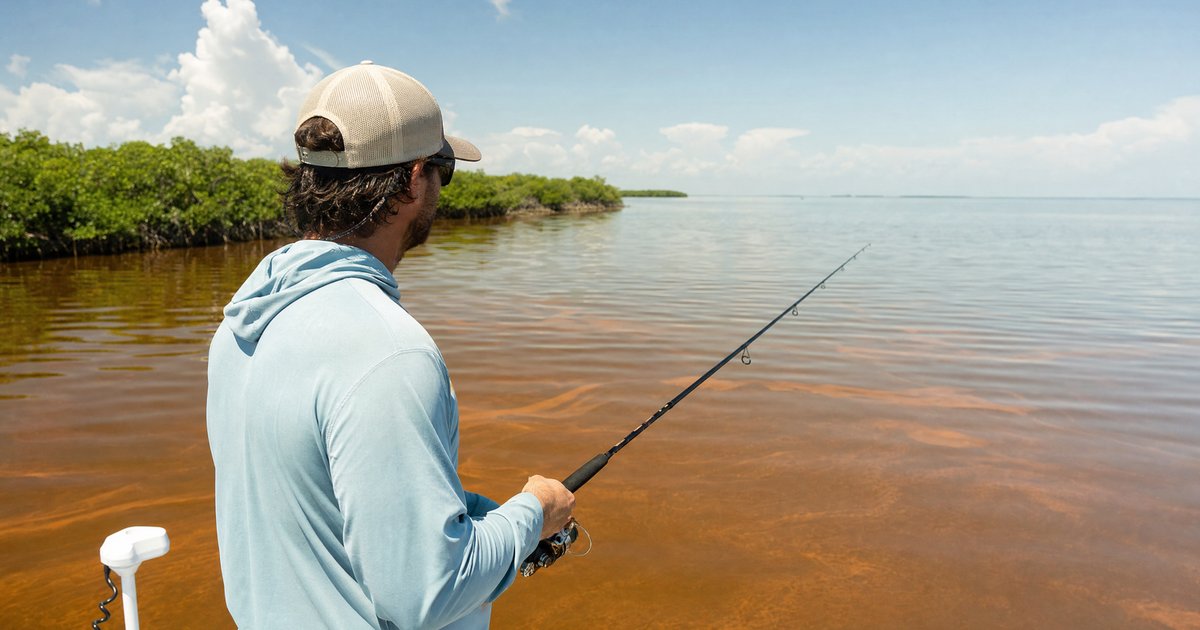
Spring is the prime walleye season across the Great Lakes and Midwest. As water temps climb from the low 40s toward 50°F, walleye begin their pre-spawn migration toward rocky shoals, gravel bars, river tributaries, and windswept points.
On Lake Erie — the most productive walleye fishery in North America — this migration is well documented. Fish push from deeper wintering areas toward the western basin's rocky reefs and the mouths of rivers like the Maumee, which draws some of the largest walleye runs in the country.
Key spring locations:
- Rocky points with wind-generated wave action that oxygenates the water
- Tributary mouths where rivers meet lakes
- Gravel shoals in 4–12 feet of water
- Riprap along causeways and dam faces
One thing worth addressing directly: walleye spawning runs attract a ton of angler pressure, and it pays to keep a few things in mind. Handle fish carefully — their eggs are fragile, and stressed fish that are out-of-season or undersized should be released quickly and properly. Always check your state's regulations on size limits and season closures. Ohio, Michigan, Wisconsin, and Minnesota all have specific rules around walleye during spawn periods. Don't assume what's legal in one state applies across the border.
Field note: In my experience on the Maumee River below Defiance, the best bite window in early April is that 45-minute stretch just before dark. Water clarity dictates depth — stained water means shallower fish, clearer water pushes them tight to current breaks.
Summer: The Deep Game
Once water temps climb into the 70s, walleye in most Midwest lakes slide off into thermoclines — that transition layer between warm surface water and cooler depths. In a lake with a pronounced thermocline, you might find fish stacked at 22–28 feet even though all your intuition says to fish shallower.
Summer walleye adjustments:
- Fish at night or during low-light hours when walleye move shallower to feed
- Target main lake points, humps, and rock piles that top out near the thermocline
- Drift fishing with live bait rigs becomes more effective when fish are lethargic
- On river systems, walleye retreat to deep holes and tailwaters below dams
This is also the season where trolling crankbaits at precise depths becomes really effective — more on that below.
Fall: Feeding Up Before Winter
Fall is criminally underrated for walleye. As water temps drop back into that 55–65°F range, walleye go on a feeding binge before winter. They're fattening up, less finicky, and often found shallower than you'd expect.
Look for walleye to follow shad and perch schools along main lake points, secondary points adjacent to creek channels, and the same rocky structures they used in spring. The difference is they'll often be more aggressive and willing to chase a faster presentation.
Fall location breakdown:
| Water Temp | Primary Location | Best Presentation |
|---|---|---|
| 65–70°F | Main lake humps, 15–25 ft | Jigging, crankbaits |
| 55–65°F | Rocky points, 8–18 ft | Jigging, blade baits |
| 45–55°F | Channel edges, deeper structure | Slow-roll jigs, live bait |
Winter: The Slow Grind
In ice country — and I've done my share of hard water fishing in Minnesota — walleye are catchable but demand the slowest presentations imaginable. Deadstick rigs with a small shiner, or a jigging spoon worked with subtle 2–3 inch lifts, account for most winter walleye through the ice.
For open-water winter fishing (common on Lake Erie through much of December), slow-roll jigs along steep channel drops in 20–35 feet. The bite window is even tighter in winter — you're basically targeting the last 30 minutes of daylight.
Walleye Jigging Techniques: The Bread and Butter
If I had to pick one method for the majority of my walleye fishing from a kayak, it's jigging. It's versatile, effective in all seasons, and lets you cover both shallow and deep water efficiently.
Jig Weight and Head Selection
Jig weight is determined by depth and current:
- 1/8 to 1/4 oz: 4–10 feet, calm conditions, stained water
- 3/8 to 1/2 oz: 10–18 feet, light current
- 5/8 to 3/4 oz: 18–30 feet or heavy current
Head shape matters too. A round head works well in calm water. A stand-up head is better when you want the jig to sit on bottom with the hook angled up — great for a slow pause retrieve. A swim jig or dart head cuts through current efficiently in river settings.
Plastics vs. Live Bait Tipping
Most of my jigging is done with plastic — specifically paddle tail swimbaits in 3–4 inch sizes and curly tail grubs. In clear water, natural colors (smoke, white, green pumpkin) tend to outperform. In stained or off-color water, go bright: chartreuse, orange, or pink.
When the bite gets tough — usually during a cold front recovery or in ultra-clear midsummer water — tipping the jig with a minnow head or crawler tail can make a real difference. It adds scent and a different action profile that finicky fish sometimes prefer.
The Lift-Drop Technique
The most effective walleye jigging motion for most conditions is the lift-drop:
- Cast out and let the jig hit bottom
- Lift the rod tip 12–18 inches, slowly
- Let the jig fall back on semi-slack line
- Most strikes happen on the fall — watch for a "tick" or line going slack unexpectedly
- Repeat with a 2–3 second pause on bottom between lifts
In colder water, slow that cadence down dramatically. In warmer, more active conditions, you can speed it up and make the jig more erratic.
Pro tip: Pay attention to your line, not just the rod tip. Walleye often pick up a jig on the fall so gently that you barely feel it. A slight bow in the line or unexpected slack is your cue to set the hook.
Vertical Jigging from a Kayak
One advantage of kayak fishing is the ability to position directly over structure and jig vertically — no drift to manage, no fighting the current to get back on spot. When I find a productive hump or rock pile, I'll use a small anchor or Power-Pole stake to hold position and work the jig straight up and down.
This is especially deadly on Lake Erie in fall when walleye stack on offshore humps in 18–25 feet.
Trolling for Walleye: When to Cover Water
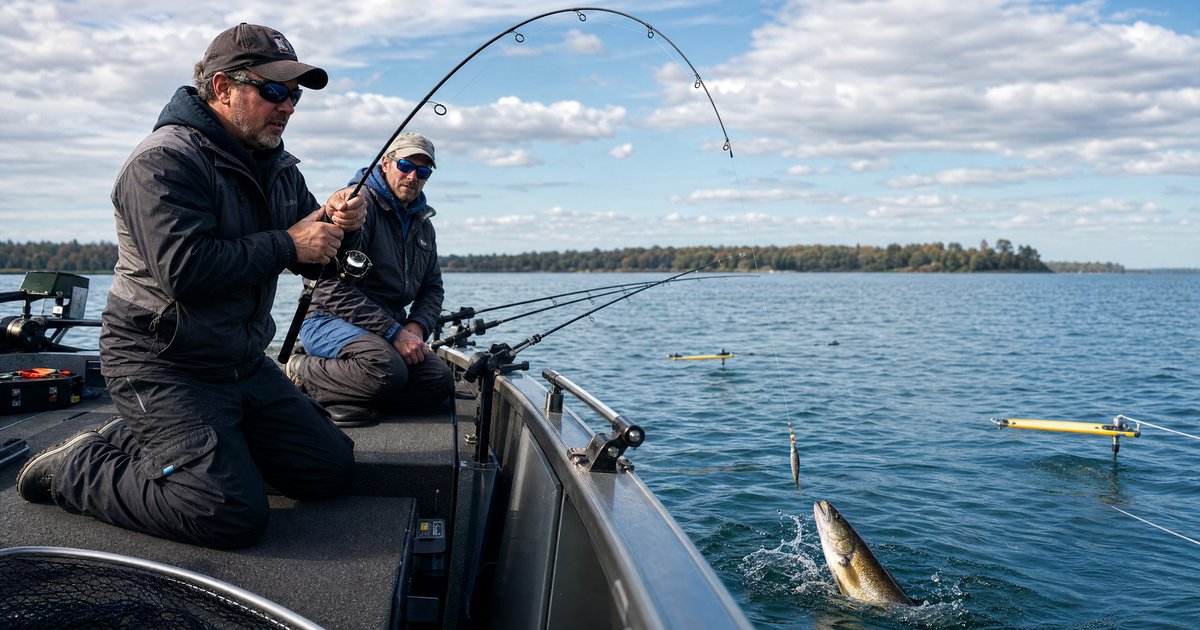
Trolling gets a bad reputation in some fishing circles for being passive. But when walleye are scattered across a large flat or suspended along a break at a specific depth, trolling crankbaits is genuinely the most efficient way to find and catch fish.
Crankbait Depth Control
The most common mistake I see trollers make is not knowing the actual running depth of their lures. Each crankbait model has a specific depth range at a given speed and line length.
General trolling framework:
- Speed: 1.5–2.5 mph is the walleye wheelhouse. Start at 2 mph and adjust based on response.
- Line length: More line out means a deeper running lure. Most divers max out around 100 feet of 10–14 lb monofilament or fluorocarbon.
- Lead core and snap weights: When you need to get deeper than your crankbait can dive naturally, add a snap weight (1–3 oz) or switch to lead core line.
Key Trolling Setups
Shallow trolling (8–14 ft): Stick with thin-bodied shallow-diving minnow baits like Shad Raps or Flicker Minnows. Natural shad patterns work in clear water; bright UV or chartreuse colors stand out in stained water.
Mid-depth trolling (14–22 ft): Larger deep-diving crankbaits or shallow divers with snap weights. Stickbaits on longer leads also work this zone.
Deep trolling (22–35 ft): Lead core line, diving disks, or planer boards with snap weights. This is where most of the summer Erie bite happens when fish are suspending over the thermocline.
Planer Boards: A Game Changer
Planer boards run your lines out to the side of the boat (or kayak — yes, you can run them from a kayak with practice), which accomplishes two things: it lets you cover more water, and it keeps your lines away from the hull disturbance in the strike zone.
For most kayak trolling situations, a single inline planer board per side is manageable. I use Off Shore Tackle OR-12s, but any reliable inline board works. Just make sure you're not running so many lines that managing a fish becomes a tangled mess.
Gear That Actually Matters
I'm not going to tell you to buy a $400 rod to catch walleye. Here's what genuinely makes a difference:
Rod and Reel
A medium-light to medium power rod, 6'6" to 7', with a fast action tip is the jigging gold standard. You want enough sensitivity to feel that subtle pick-up, but enough backbone to drive the hook home.
For trolling, go medium power, moderate action — you want the rod to load up against the lure's action and absorb head shakes without pulling the hooks.
Spinning reels in the 2500–3500 class with a smooth drag handle most jigging situations fine.
Line
Braided main line (8–10 lb) with a fluorocarbon leader (8–12 lb, 6–10 ft) is my go-to for jigging. Braid gives you zero-stretch sensitivity. Fluoro gives you low visibility at the business end.
For trolling, many anglers prefer monofilament for its stretch — it acts as a shock absorber — and its role in controlling running depth. 10–14 lb mono is the standard.
Favorite Lures and Rigs
| Category | Examples | When to Use |
|---|---|---|
| Paddle tail jigs | Berkley Gulp Minnow, Keitech | All seasons, clear to stained water |
| Crankbaits | Rapala Shad Rap, Flicker Shad | Trolling, fall and spring |
| Blade baits | Swedish Pimple, Silver Buddy | Cold water, fall and winter jigging |
| Live bait rigs | Lindy rig with crawler or shiner | Tough bites, summer heat |
Quick-Reference Walleye Checklist
Before You Go:
- [ ] Check local size and bag limits (varies by state and water body)
- [ ] Verify season is open — especially near tributary spawning areas in spring
- [ ] Check barometric pressure trend — rising or stable generally means a better bite
- [ ] Note water temp and target depth accordingly
- [ ] Plan your launch around dawn and dusk windows
On the Water:
- [ ] Start shallow, go deeper if no action in the first 30 minutes
- [ ] Slow your retrieve if the bite is tough (post-front conditions)
- [ ] Pay attention to line on the jig fall — most strikes are subtle
- [ ] Mark productive depth on your fish finder and stay disciplined
- [ ] Handle fish quickly and keep them in the water during release — especially during spring
Gear Checklist:
- [ ] Jig assortment: 1/4, 3/8, 1/2 oz with multiple plastics
- [ ] Crankbaits in natural and bright patterns
- [ ] 8 lb braid with 10 lb fluoro leader
- [ ] Pliers and hook remover for quick, safe release
- [ ] Landing net (rubber mesh preferred)
FAQ
What is the best time of day to catch walleye?
Walleye are most active during low-light periods — dawn, dusk, and after dark. Their eyes are built for low-light feeding thanks to a reflective layer behind the retina that gives them a serious advantage over prey in dim conditions. During midday, especially in clear water, walleye retreat to deeper structure or hold tight to shade and cover, making them harder to target effectively.
What depth do walleye typically hold at?
Depth varies significantly by season and water temperature. In spring and fall, walleye are often found in 8–18 feet near rocky structure and points. In summer, they push deeper — commonly 20–30 feet — following the thermocline where water temps are more comfortable. In rivers, they hold in deep holes and slack water adjacent to current breaks regardless of season.
What is the best jig for walleye?
A 3/8 to 1/2 oz round or stand-up jig head paired with a 3–4 inch paddle tail swimbait or curly tail grub covers the most situations. In clear water, go with natural shad or white colors. In stained or low-visibility water, chartreuse and orange produce better. Tipping the jig with a minnow or crawler piece can make a difference during tough, post-front conditions.
How fast should you troll for walleye?
Most walleye trolling is done between 1.5 and 2.5 mph. Starting at 2 mph and adjusting up or down based on bite response is a solid approach. Colder water conditions generally call for slower speeds (1.5 mph or less), while warmer, more active fish in fall may respond better to slightly faster presentations around 2.2–2.5 mph.
Do you need a special license to fish for walleye in the Great Lakes?
Licensing requirements vary by state. Each Great Lakes state — Ohio, Michigan, Wisconsin, Minnesota, New York, and Pennsylvania — has its own fishing license requirements, and some waters require a separate inland or Great Lakes stamp. Size and bag limits also differ by location and season. Always check with your state's fish and wildlife agency before fishing, especially near state border waters where regulations can get complicated.