Ancient cultures around the world — from Pacific Islander fishermen to Polynesian navigators to Native American hunters — tracked the moon to time their fishing and hunting. They had no scientific explanation, but generations of empirical observation confirmed what we now understand through physics: the moon profoundly influences life on Earth, particularly in aquatic environments.
How the Moon Influences Fish
The moon's gravitational influence affects fish through two primary mechanisms:
Tidal movement: The moon's gravity pulls ocean water, creating tides. Even in freshwater bodies far from the coast, the moon's gravitational field creates micro-tides and barometric pressure changes that fish detect. In saltwater, the connection is direct and dramatic.
Biological rhythms: Many species — particularly fish — evolved with lunar cycles deeply embedded in their biology. Spawning behavior, migration, and feeding patterns often correlate with specific moon phases. Scientists believe this evolved because lunar cycles provided reliable timing signals across millions of years before other environmental cues existed.
The Four Moon Phases and Fishing Activity
New Moon: The Dark Giant
During the new moon, the sun and moon are on the same side of Earth, their gravitational forces combining to create the strongest tidal flows of the month (spring tides). This produces:
- Maximum tidal current — more bait movement, more predator activity
- Darkest nights — fish that feed partially by sight become bolder and more active at night
- Strongest solunar periods — the overhead and underfoot transits are at peak intensity
Fishing during new moon: The few days before and after the new moon are consistently the highest-probability fishing period of the month for both inshore and offshore species. Night fishing during the new moon phase can be extraordinary — redfish, snook, tarpon, and striped bass feed aggressively in the dark water.
Full Moon: Visible Power
The full moon puts sun and moon on opposite sides of Earth. Tidal forces are nearly as strong as during new moon (the second highest tidal range of the month). The major difference: the moon rises as the sun sets, creating a night brilliantly lit by moonlight.
Day fishing near full moon: The intense tidal currents and strong solunar periods make the days around the full moon excellent for daytime fishing — especially in the final hours before sunset when solunar and tidal factors often align.
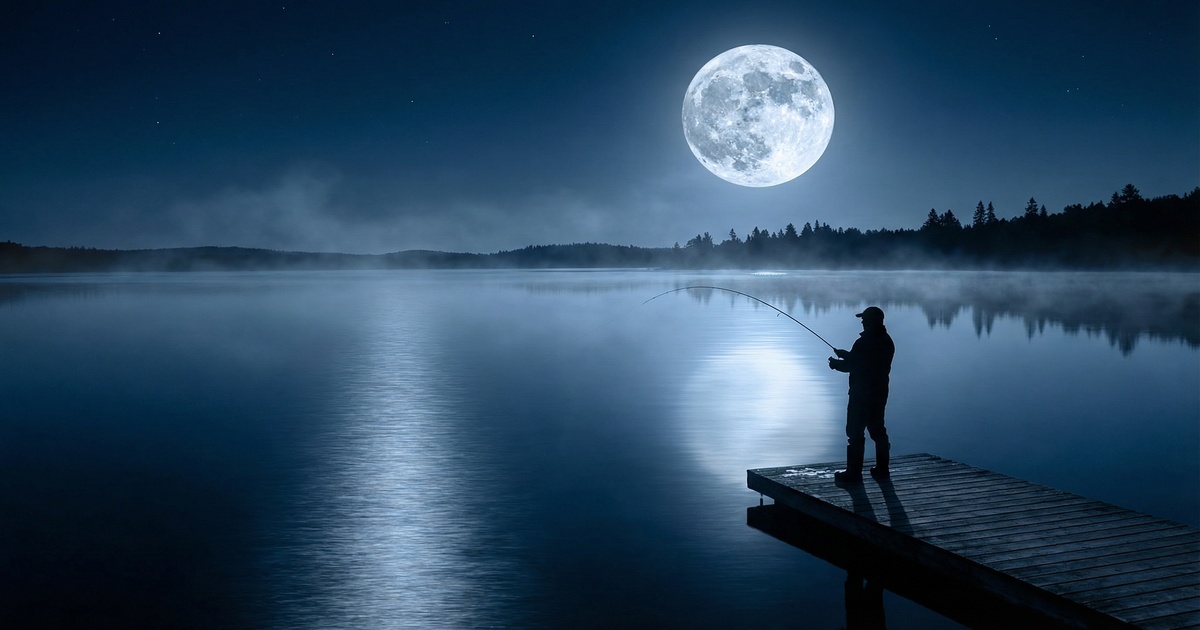
Night fishing during full moon: This is where it gets counterintuitive. The bright moon allows fish to see prey easily, which sounds like it would improve fishing. In reality, fish often feed throughout the night by moonlight, which means they arrive at dawn already partially sated and less aggressive during morning hours. Experienced anglers often fish the full moon night itself for spectacular action, then sleep in the next morning.
First and Last Quarter Moons
These phases occur when sun and moon are 90 degrees apart. Their gravitational forces partially cancel each other, creating neap tides — the smallest tidal ranges of the month. This means:
- Weaker tidal currents
- Less bait concentration at pinch points
- Shorter, less intense solunar periods
Quarter moon fishing isn't bad — fishing is possible every day — but you're working against reduced gravitational influence. Focus on locations with natural current (inlets, bridges, river mouths) where tidal influence is amplified even when the moon's contribution is reduced.
Moon Phase Fishing Calendar: Monthly Strategy
Here's a practical framework for planning around the moon:
Days 1–3 after new moon: Best inshore saltwater fishing of the month. Strong tidal currents, maximum bait movement, dark nights. Target structure, points, and current-breaking features.
Days 12–17 (approaching and during full moon): Second-best window. Prioritize afternoon fishing when pressure, tide, and solunar periods align. Consider a full moon night trip for extraordinary action.
Days 7–10 (first quarter) and 21–24 (last quarter): These are the weakest lunar windows. Compensate with location selection — fish where current is amplified naturally. Focus on pressure trends and solunar timing more than moon phase.
Moon and Freshwater Fishing
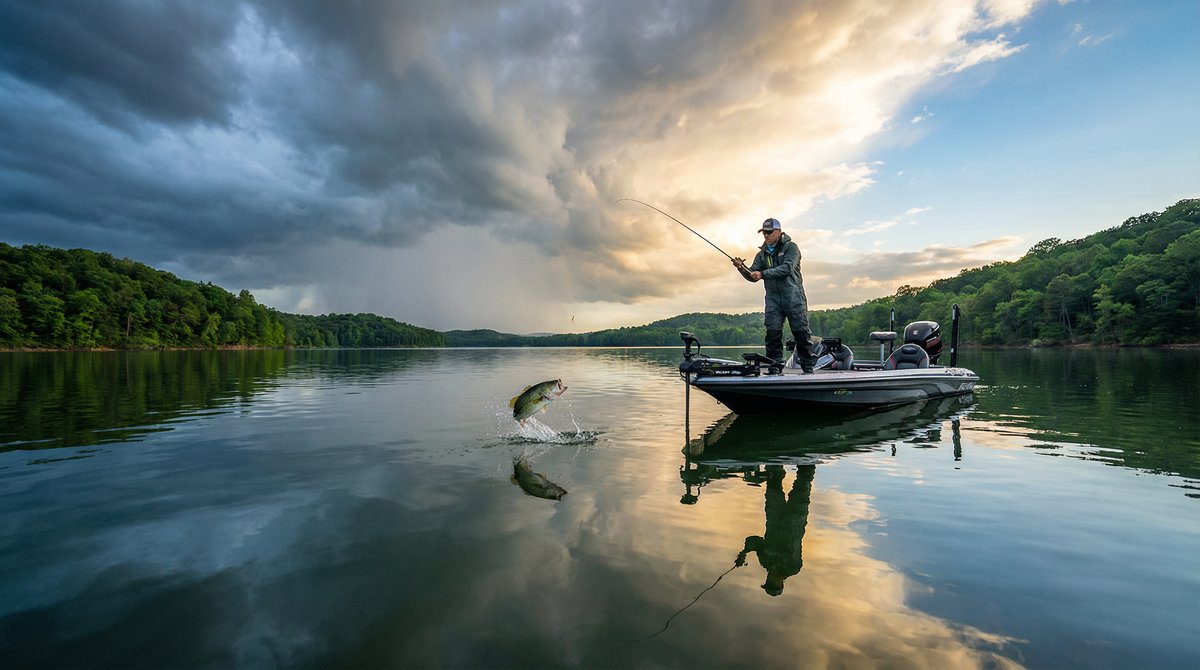
Moon phase fishing isn't limited to saltwater. Bass, walleye, crappie, and muskie all show correlations with lunar cycles. Research on reservoir systems has found that bass move more (and feed more aggressively) during major solunar periods, with peak activity during new and full moon windows.
The spawning connection: Largemouth and smallmouth bass typically spawn during the full moon phase when water temperatures reach 60–65°F. The lunar cycle coordinates the spawn across entire lake populations, ensuring mass spawning that maximizes fertilization success.
Muskie and pike: These ambush predators are notoriously difficult to catch on demand, but experienced muskie hunters time their big-water trips around full moon periods in fall, when trophy fish are at maximum aggression before winter.
Reading the Moon Phase Fishing Calendar
A moon phase fishing calendar provides:
- Daily moon phase (new, waxing crescent, first quarter, waxing gibbous, full, waning gibbous, last quarter, waning crescent)
- Moonrise and moonset times — These are minor solunar period triggers
- Moon overhead and underfoot times — These are major solunar period triggers
- Rating for each day — Many calendars rate each day 1–5 stars based on moon phase intensity
For best results, combine the calendar rating with your tide chart, barometric pressure forecast, and local knowledge of seasonal fish movement.
HookCast's Moon Phase Integration
HookCast displays current moon phase and illumination percentage alongside each location's fishing score. More importantly, our solunar calculations are embedded directly into the hourly fishing score — so on days when a major solunar period (amplified by a full or new moon) coincides with peak tidal current and stable pressure, the score automatically reflects those exceptional conditions.
Check the moon icon on any HookCast location page to see today's phase and the next new/full moon date. Plan your most important trips around those windows.
FAQ
Do moon phases affect fishing in freshwater lakes and rivers, or only in the ocean?
Moon phases influence fishing in both saltwater and freshwater environments. While the tidal connection is most direct and dramatic in the ocean, the moon's gravitational field still creates subtle micro-tides and barometric pressure changes in inland lakes and rivers. Freshwater fish have the same lunar-influenced biological rhythms as saltwater species, so solunar periods and moon phase timing remain relevant regardless of where you fish.
What is a solunar period, and how do I use it when planning a fishing trip?
Solunar periods are windows of peak fish activity that occur when the moon is directly overhead or directly underfoot (on the opposite side of Earth). These transits create the strongest gravitational influence on a given location and tend to trigger feeding behavior. Solunar tables and apps can calculate these periods for your specific location and date, allowing you to plan your time on the water around the highest-activity windows of the day.
Which moon phase is the best overall for fishing?
The days immediately before and after the new moon are generally considered the highest-probability fishing period of the month. The combined gravitational pull of the sun and moon creates the strongest tidal currents, and the dark nights encourage bolder feeding behavior in many species. That said, the full moon produces nearly as strong tidal forces and can offer excellent daytime fishing and spectacular night fishing on the moon itself.
Why can fishing be slower the morning after a full moon night?
During a full moon, the bright moonlight allows fish to see and hunt prey easily throughout the entire night. As a result, fish may feed continuously and arrive at dawn already partially full, making them less aggressive and harder to catch during what would otherwise be a prime morning window. Experienced anglers often target the full moon night itself for the best action rather than the following morning.
Are moon phases the only factor I should consider when planning a fishing trip?
No — moon phases are one important variable among many. Water temperature, weather patterns, wind, water clarity, seasonal migrations, and local baitfish activity all play significant roles in fish behavior. Moon phases work best as a planning tool when combined with knowledge of local conditions. Think of a favorable moon phase as increasing your odds rather than guaranteeing success.