Offshore Fishing Weather: Swells, Wind Windows & Safe Conditions in the Gulf & Atlantic
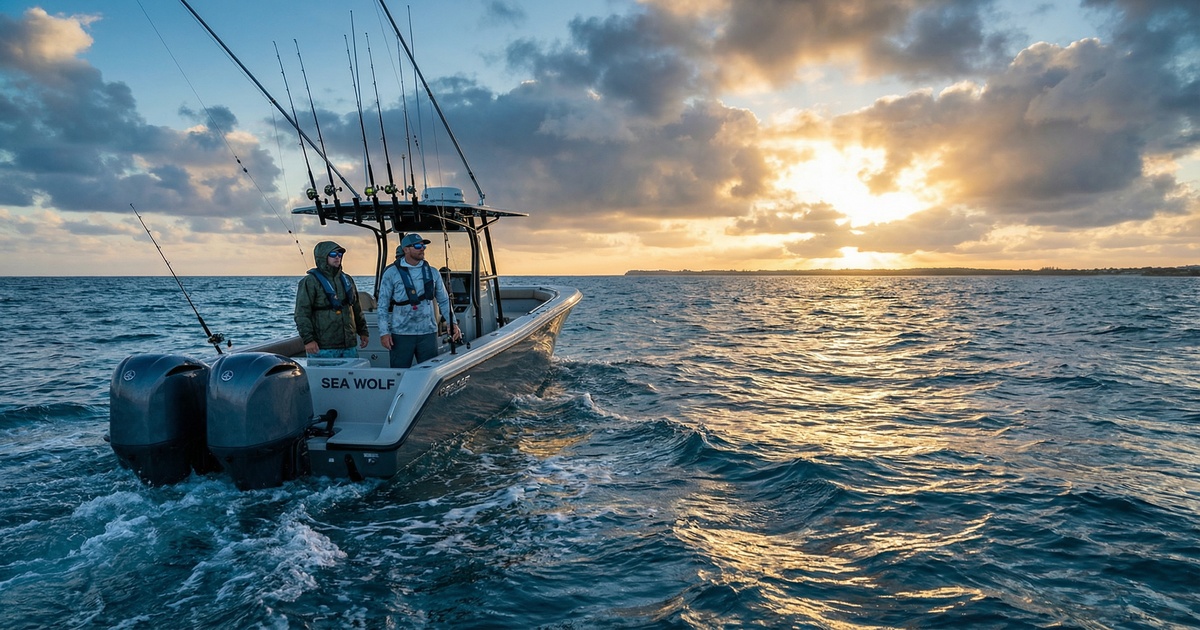
Last spring, a group of anglers pulled out of Madeira Beach at 6 a.m. into a 3-foot chop with a small craft advisory already posted. They were back at the dock by 8:30 — seasick, soaked, and empty-handed. The snapper were biting 30 miles out. But none of that matters if you can't get there safely, or if the ride home becomes a survival situation.
Offshore fishing weather is a different discipline than checking whether rain will interrupt your bass tournament. When you're running 20 to 50 miles into the Gulf of Mexico or the Atlantic, the margin for error shrinks fast. Wind speed, swell height, swell period, barometric pressure, storm cells — you need to understand all of it before you leave the dock, not just glance at your phone and hope for the best.
Here's what experienced Gulf charter captains know about reading offshore conditions, and what every offshore angler should understand before making the run.
Why Offshore Weather Is More Complex Than Most Anglers Expect
Inshore fishing weather is forgiving. A 15-knot wind on Tampa Bay is annoying. That same wind 40 miles offshore — depending on fetch — can kick up 5- to 6-foot seas, putting a 24-foot center console in a genuinely uncomfortable or dangerous situation.
The Gulf of Mexico and the Atlantic behave differently from each other, and both can change faster than most newcomers expect.
The Gulf vs. The Atlantic: Same Rules, Different Playbook
The Gulf of Mexico is a relatively shallow, semi-enclosed body of water. That combination means it builds seas quickly when wind gets going — often faster than the open Atlantic. A 20-knot Gulf wind running for 12 hours can stack up short, steep waves that are far more punishing than their height suggests. What separates a comfortable offshore run from a brutal one in the Gulf is frequently swell period, not swell height.
The Atlantic has more open fetch and deeper water, so swells tend to be longer and more rolling — but they can also build to serious size after a sustained storm system. The Gulf Stream adds another variable on the Atlantic side: when wind runs against the current, particularly off Florida's east coast, it creates steep, confused seas that can turn a manageable forecast ugly in short order.
In both bodies of water, afternoon conditions are routinely worse than morning conditions during summer months. The sea breeze effect — driven by land heating faster than water — generates onshore wind by late morning or early afternoon. Runs planned around this pattern, going out early and returning before midday, account for one of the most reliable weather windows available to Gulf and Atlantic offshore anglers.
What "Sea State" Actually Means
Sea state describes the combined condition of wind-driven waves and ocean swells — two distinct phenomena:
- Wind waves are locally generated by current wind conditions. They tend to be short, steep, and choppy.
- Swells are waves that have traveled from a distant storm or sustained wind event. They move in longer, more predictable intervals.
When a marine forecast reads "seas 3 to 4 feet," that figure represents significant wave height — the average height of the top one-third of waves in a given area. Roughly one in ten waves will be notably higher than that number. NOAA's National Weather Service marine forecasts provide this breakdown by offshore zone and are worth bookmarking before any offshore trip.
Reading the Marine Forecast: The Numbers That Matter
Most recreational anglers focus on a single number: wave height. That's understandable, but it's an incomplete picture. A 3-foot sea at a 4-second period is a wall of water hitting your hull every few seconds — jarring, fatiguing, and potentially dangerous. A 3-foot sea at a 10-second period is a gentle roll you'll barely notice. Same height, completely different experience and risk profile.
Swell Period: The Number Most Anglers Overlook
Swell period is the time in seconds between successive wave crests. It's the single most underrated number in a marine forecast, and experienced offshore anglers treat it as seriously as wave height. Here's a practical reference:
| Swell Period | What It Means Offshore |
|---|---|
| Under 5 seconds | Short, steep chop — rough, uncomfortable, and fatiguing |
| 5–7 seconds | Moderate chop; manageable on most center consoles |
| 8–11 seconds | Longer roll; significantly more comfortable offshore |
| 12+ seconds | Smooth groundswell conditions — near ideal |
When planning an offshore trip, a swell period under 6 seconds warrants serious reconsideration — not because of timidity, but because short-period chop beats up crew and equipment and makes for a miserable, unproductive day. The fish will still be there when conditions improve.
Wind Direction and Speed
Wind speed gets most of the attention, but wind direction is equally important when evaluating offshore conditions:
- Offshore wind (blowing from land toward sea): Generally flattens nearshore waters but can be deceptive — conditions may deteriorate further out where the wind has more fetch to work with.
- Onshore wind (blowing from sea toward land): Builds seas, particularly along the Atlantic coast. Southeast and northeast winds deserve close attention.
- Wind opposing current: Especially problematic in areas with strong tidal flow or Gulf Stream influence, where opposing wind and current create steep, disorganized seas that exceed what raw forecast numbers suggest.
A commonly used personal threshold for comfortable offshore fishing on a center console in the 24 to 27-foot range is winds under 15 knots with seas under 3 feet. Above 20 knots, rescheduling or pivoting to a protected inshore location is a reasonable and often prudent decision.
Wind trend across the day matters as much as conditions at departure. If winds are 12 knots at 6 a.m. but forecast to reach 20-plus by noon, you're either committing to an early departure and early return, or you're staying inshore. Checking hourly wind forecasts — not just a snapshot — is part of responsible offshore trip planning.
Barometric Pressure and Fish Behavior Offshore
Barometric pressure influences both sea conditions and fish feeding behavior. Standard atmospheric pressure sits at 1013.25 hPa according to NOAA, and meaningful swings above or below that baseline affect how fish feed and how aggressively they chase baits.
A rising barometer following a frontal passage typically signals improving sea conditions and increased fish activity. Pelagic species like mahi-mahi and kingfish tend to respond quickly to stabilizing and rising pressure — feeding aggressively near the surface, particularly around weedlines and current edges. A falling barometer ahead of an approaching storm can trigger feeding bursts, but must be weighed against the deteriorating sea conditions that accompany it.
For pressure trend data before a trip, tools like HookCast's weather features provide a trend view rather than a single snapshot — showing whether pressure is rising, falling, or holding steady over time, which is more useful than the raw number alone.
Wind Windows: How to Find and Use Them
A wind window is a stretch of time — sometimes just four to six hours — when conditions are calm enough to run offshore safely and fish effectively. Learning to identify and capitalize on these windows is one of the most practical skills separating anglers who consistently get offshore from those who keep getting weathered out.
Morning Calm and Afternoon Buildup
Along the Gulf of Mexico and Florida coasts, a predictable summer pattern emerges: mornings begin calm or with light winds, then the sea breeze develops by late morning or early afternoon as land heats faster than water. That thermal differential drives onshore wind, and seas can build surprisingly quickly — particularly in the Gulf, where shallow water amplifies the effect.
The tactical response is straightforward: leave early, return early. A 5:30 a.m. departure on a summer offshore day allows anglers to reach target areas before the sea breeze develops. Planning to be back at the inlet by noon to 1 p.m. — when afternoon wind forecasts show building conditions — takes advantage of the morning window while avoiding deteriorating afternoon seas.
Frontal Passages: Before and After
Cold fronts are among the most significant weather patterns affecting offshore fishing in the Gulf and Atlantic, particularly from fall through early spring. Understanding each phase of a frontal passage helps anglers position themselves for both safety and fish activity:
- Before the front: Falling pressure drives increasing south to southwest winds and building seas. Fish can feed aggressively ahead of approaching weather. However, if a front is strong and moving fast, deteriorating conditions can outpace a return trip. Caution is warranted.
- During the front: Typically unfishable offshore. Winds shift abruptly to the northwest, seas become chaotic, and water temperature drops.
- After the front: Clear skies, cooler temperatures, and northwest to north winds arrive — but offshore conditions remain rough for 24 to 48 hours. Once the barometer stabilizes and begins climbing, and northwest winds lay down, a productive window often opens. Some of the best offshore bites of the season — particularly for pelagics like mahi-mahi — occur two to three days after a cold front, when water clarity improves, baitfish concentrate, and fish become highly active along weedlines and temperature breaks.
A Pre-Trip Forecast Workflow
A practical planning sequence before any offshore trip:
- Review the 7-day NOAA marine forecast for your offshore zone
- Evaluate wave height, swell period, and wind speed and direction across a 24-hour window around your planned departure
- Check the pressure trend — stable or rising indicates green conditions; falling warrants caution
- Examine the hourly wind forecast to identify the calmest window within the day
- Identify a backup inshore or nearshore location to pivot to if offshore conditions don't materialize
Safe Offshore Conditions: Know Your Boat and Your Limits
There is no universal threshold for safe offshore fishing weather. A 35-foot sportfisher can handle seas that would swamp a 19-foot skiff. The relevant variables — hull design, engine reliability, crew experience, distance from port — vary too widely for a single standard to apply. What's useful instead is a general framework calibrated by vessel size.
General Guidelines by Boat Size
| Boat Length | Comfortable Seas | Maximum Recommended |
|---|---|---|
| Under 20 ft | 1–2 feet | 2–3 feet (with experience) |
| 20–24 ft | 2–3 feet | 3–4 feet |
| 24–30 ft | 3–4 feet | 4–5 feet |
| 30 ft+ | 4–5 feet | Varies widely by design |
These are general guidelines, not guarantees. A 22-foot bay boat is not designed for open offshore water regardless of sea height. A 26-foot center console with twin outboards, proper safety equipment, and an experienced captain presents a meaningfully different risk profile. Hull type, freeboard, and sea conditions at the specific departure inlet and return all factor into the real-world assessment.
Small Craft Advisories: Take Them Seriously
A Small Craft Advisory is issued by NOAA when winds are forecast at 21 to 33 knots and/or seas reach 7 feet or higher in the Gulf of Mexico (thresholds vary slightly by region). A Gale Warning steps that threshold up to 34 to 47 knots. These designations are not conservative suggestions to be overridden by confidence or schedule pressure. For vessels under 26 feet, a posted Small Craft Advisory for an offshore zone is a legitimate reason to stay at the dock.
Pre-Departure Safety Checklist
Weather is only part of the offshore safety equation. Before any run beyond the nearshore zone:
- VHF radio operational and tuned to weather channels (WX1, WX2, WX3)
- Float plan filed with someone onshore before departure
- EPIRB or PLB on board and properly registered
- Life jackets accessible — not buried in a hatch
- Fuel calculation confirmed — at least one-third out, one-third back, one-third reserve
NOAA Fisheries recommends anglers verify all safety equipment before every offshore trip, not once per season. These checks take minutes and have, without exaggeration, saved lives.
How Weather Affects Offshore Fish Behavior
All of this planning matters for safety — but it also determines whether fish are actively feeding when you arrive. Weather doesn't just govern whether you can get offshore. It governs what you'll find when you get there.
Pelagics and Pressure
Mahi-mahi, wahoo, and kingfish are surface-oriented, highly mobile species that respond quickly to atmospheric changes. General behavioral patterns offshore:
- Stable or rising pressure: Pelagics feed aggressively near the surface, particularly around weedlines and current edges
- Falling pressure: Initial feeding activity can occur, but fish tend to move deeper as pressure drops significantly
- Post-frontal clarity: Two to three days after a front, improved water clarity and concentrated baitfish often trigger sustained feeding activity along temperature breaks and sargassum lines
Water Color and Weedlines
Offshore fish key on water color transitions and sargassum weedlines more reliably than specific GPS coordinates. The productive zone is typically where clean blue water meets off-color or greenish water — that boundary concentrates bait, and gamefish follow. Post-frontal conditions frequently deliver cleaner, bluer water closer to shore than normal, which can reduce run time to quality fishing.
Bottom Fish: Grouper and Snapper
Grouper and snapper are less reactive to surface weather than pelagics, but current and pressure still influence their feeding behavior. Slack current periods at depth are consistently among the most productive windows for bottom fishing — fish expend less energy fighting current and become more willing to chase a bait. Consulting tide charts for your area and planning bottom time around slack current, especially over deeper structure, improves results meaningfully.
Offshore Weather Quick-Reference Checklist
Work through this before every offshore run:
Conditions Check
- [ ] NOAA marine forecast reviewed for your offshore zone
- [ ] Wave height appropriate for your vessel size
- [ ] Swell period: 7+ seconds preferred
- [ ] Wind speed: under 15 knots preferred; 20+ knots warrants serious reconsideration
- [ ] Wind direction evaluated: offshore or side-shore manageable; strong onshore is a concern
- [ ] Barometric trend checked: stable or rising is green; falling is caution
- [ ] Active advisories confirmed: Small Craft Advisory or Gale Warning posted?
Trip Planning
- [ ] Departure time set to use morning calm window
- [ ] Return time planned ahead of afternoon sea breeze buildup
- [ ] Backup inshore or nearshore location identified
- [ ] HookCast pressure trend and weather checked
Safety
- [ ] VHF radio operational; weather channels checked
- [ ] Float plan left with someone onshore
- [ ] EPIRB or PLB on board and registered
- [ ] Fuel calculation confirmed
- [ ] Life jackets accessible
Frequently Asked Questions
What are safe offshore fishing conditions for a 24-foot center console?
For a 24-foot center console, comfortable conditions are generally seas under 3 feet with swell periods of 7 seconds or more and winds under 15 knots. Seas up to 4 feet are manageable for experienced captains in well-equipped boats, but conditions above that threshold become uncomfortable and potentially dangerous for a vessel of this size. Always evaluate how conditions are forecast to change throughout the day — departure conditions and midday conditions can differ significantly, particularly during summer months along the Gulf coast.
How does barometric pressure affect offshore fishing?
Barometric pressure influences fish feeding behavior throughout the water column. A stable or rising barometer — particularly in the day or two following a cold front — tends to produce the most active feeding from offshore species including mahi-mahi, kingfish, and grouper. A rapidly falling barometer ahead of a storm system can trigger short bursts of feeding, but also signals deteriorating sea conditions that may make the offshore run unsafe. Standard atmospheric pressure is 1013.25 hPa, and swings of 4 to 8 hPa or more within a 24-hour window are meaningful to both fish behavior and sea state.
What is a wind window for offshore fishing?
A wind window is a period of calm or reduced wind during which sea conditions are safe and manageable for running offshore. In the Gulf of Mexico and along the Florida coasts, wind windows typically occur in the early morning hours before the sea breeze develops — generally between sunrise and mid-morning. Identifying these windows and structuring offshore trips around them, with early departures and returns timed before afternoon wind builds, is a foundational strategy for fishing offshore during otherwise marginal weather periods.
Should I go offshore fishing after a cold front?
Not immediately. The first 24 to 48 hours after a cold front typically bring strong northwest winds and rough, disorganized seas that make offshore trips uncomfortable or unsafe for most recreational vessels. However, two to three days after a front — once the barometer has stabilized and is rising, and northwest winds have laid down — conditions often produce some of the best offshore fishing of the season. Water clarity improves, baitfish concentrate, and pelagics like mahi-mahi frequently become highly active along weedlines and temperature breaks.
What's the difference between wave height and swell period in a marine forecast?
Wave height describes how tall the waves are — specifically the significant wave height, which represents the average height of the top one-third of waves in the forecast area. Swell period describes how many seconds pass between successive wave crests. A short swell period under 6 seconds produces steep, choppy conditions that are punishing even at modest heights. A longer period of 10 or more seconds produces a smooth, rolling swell that is substantially more comfortable and safer for offshore runs. Both numbers are necessary for an accurate read on offshore conditions — wave height alone is insufficient.