Florida Snook Fishing: Seasonal Patterns from Tampa Bay to the Keys
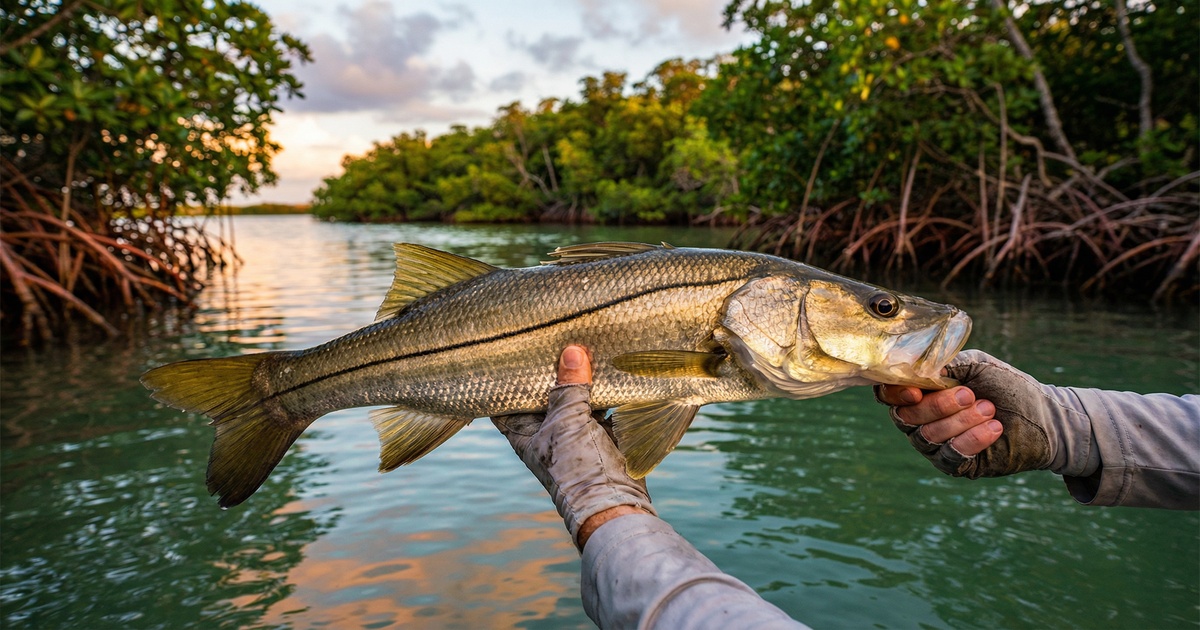
It's mid-June, 6:15 in the morning. The tide is dropping hard off a mangrove point, the water temperature is 82°F, and there's a snook sitting in that shadow line like she owns the place. She does. I've been watching fish like this for fifteen years, and the ones who catch them consistently aren't the ones who fish harder — they're the ones who understand why snook are where they are in the first place.
Snook are one of the most predictable fish on the Florida coast, but only once you understand their logic. Water temperature, tides, structure, baitfish — snook are responding to all of it simultaneously. Fish the wrong spot in the wrong month and you'll spend six hours staring at mangroves wondering what went wrong. Fish the right spot with the right approach and snook season feels less like hunting and more like shopping.
Here's how they move — from Tampa Bay to the Keys — and what you should be doing about it.
Why Water Temperature Runs Everything
Before we get into month-by-month tactics, you need to understand the one variable that dictates every snook decision you'll make: water temperature.
Snook are a tropical species. They thrive between 68°F and 88°F. Once the water dips below 60°F, you're looking at potential cold-stunning and die-offs. Above 90°F, especially in shallow backcountry flats, they get sluggish and push to deeper, cooler water.
| Water Temp | Snook Behavior |
|---|---|
| Below 60°F | Danger zone — cold-stunning risk, fish huddle near warm water discharges |
| 60–68°F | Lethargic, tight to warm structure, minimal feeding |
| 68–78°F | Active but selective — slower presentations work |
| 78–88°F | Peak activity, aggressive feeding, wide range |
| Above 88°F | Feeding slows, fish seek depth or cooler moving water |
This is why a cold front in January hits Tampa Bay snook a lot harder than it hits Key West snook. The geography of Florida creates almost two different fisheries on the same coastline.
Spring: The Transition That Sets Up Everything
March through May is when I start getting excited again after a long winter of watching snook sulk near warm-water discharges and deep bridge pilings.
As water temps climb back through the 68–72°F range, snook start moving. And the first move is predictable: they push from their winter holding areas — deeper canals, power plant outflows, bridge fender systems — toward the shallow flats and mangrove shorelines.
Tampa Bay and Charlotte Harbor in Spring
Up around Tampa Bay, this transition usually starts in earnest by late March, but a cold snap can push it back two or three weeks. I've had great snook fishing on the Hillsborough River in February during a warm spell and dead sticks on a Charlotte Harbor flat in April after a frontal passage.
The fish are hungry but still a little slow. This is the time to slow down your retrieve. A DOA Shrimp or a live pilchard fished under a popping cork will out-fish a fast-moving swimjim almost every time in 68°F water. These fish aren't going to chase. Make it easy for them.
Best spring spots in the Tampa Bay region:
- Grass flat edges adjacent to deeper channels
- Mouths of tidal creeks as water warms
- Mangrove points on the first incoming tide of the morning
- Dock lights after dark — snook start using them again as baitfish return
Southwest Florida and the Ten Thousand Islands
As you move south toward Naples and the Ten Thousand Islands, the spring transition happens a few weeks earlier and the fish are often more numerous. The backcountry out there holds a ridiculous amount of snook. By April, fish are already patrolling the outer edges of mangrove islands on every tidal movement.
Spring is when I start checking HookCast's tidal charts obsessively. The first two hours of a falling tide on a mangrove point — after a run of stable weather — is about as dialed-in as inshore fishing gets.
Gear and Tactics for Spring Snook
- Rod/Reel: 7'–7'6" medium-heavy spinning rod, 3000–4000 series reel
- Line: 20–30 lb braid with a 30–40 lb fluorocarbon leader
- Live bait: Pilchards, pinfish, small mullet
- Artificials: DOA shrimp, paddle tails on light jig heads (1/8 to 1/4 oz), suspending twitch baits
- Approach: Slow retrieves, let the tide do the work
Summer: Peak Season and the Spawn
This is it. June through August is when the whole state of Florida is thinking about snook. And for good reason — it's the spawn.
The Beach and Pass Bite
Snook are broadcast spawners, and they stage at tidal passes and beach fronts to do it. From Boca Grande Pass down to Wiggins Pass, and over on the Atlantic side from Jupiter Inlet to Sebastian Inlet, snook pile up in summer in numbers that are hard to believe until you've seen it.
The classic setup: snook stack on the downcurrent side of a pass right at dusk and dawn. They're feeding aggressively on any baitfish getting swept through with the tide. Live threadfins pitched upcurrent and allowed to wash through the structure — that's the move. Work the last two hours of the outgoing tide through the summer months and you're targeting fish that are actively positioned and feeding.
Beach fishing at night during summer is also a legitimate game. Walking the beach with a light spinning rod and a white DOA CAL jig around any light source — condos, parking lot lights — is how a lot of locals quietly catch snook all summer long without a boat.
Heat and the Shallow Bite
Don't sleep on early morning shallow water during summer. From about 5:30 to 8:00 AM, before the water temps spike, snook will push up onto extremely shallow grass flats — sometimes in 12 inches of water — to feed. This is a visual game. Polarized glasses, quiet approach, accurate casts.
I've watched people run 30 mph past fish feeding in shin-deep water because they assumed summer snook were deep. Read the water, not your assumptions.
Once the sun is high and water temps start pushing 87°F+, the shallow bite mostly dies. Fish move to deeper passes, shaded structure under docks, and any water with current moving through it.
Summer quick reference:
- Where: Tidal passes, beach fronts, dock lights, early AM flats
- When: First and last light, night fishing, peak tidal movement
- Bait: Live threadfins, pilchards, white/chartreuse artificials
- Note: Check your local snook season dates. Florida's Atlantic coast and Gulf coast have different closure windows that align with the spawn.
Fall: The Best-Kept Secret in Florida Inshore Fishing
If I had to pick one season to fish snook, September through November wins every time. I realize that surprises people who associate snook fishing with summer beach passes, but hear me out.
Post-spawn fish are hungry. The oppressive heat is breaking. Baitfish migrations are underway — mullet are running, pilchards are schooling — and snook are following them back into the backcountry and up into tidal rivers and creeks.
The Mullet Run Connection
The fall mullet run is one of the most dramatic baitfish events on the Florida coast, and it happens right when snook are repositioning for winter. On the Gulf side, mullet start their southward migration in October. On the Atlantic side, it can start in late September and runs through November.
Anywhere you see mullet getting pushed — nervous water, fish showering, swirls under birds — there's a predator. Snook, tarpon, jack crevalle, ladyfish. But the snook tend to be the ones right on the structure, using the ambush points while the jacks and tarpon freelance in open water.
Tidal Rivers and Creeks
By October in Tampa Bay and Charlotte Harbor, snook are stacking in tidal creeks and river mouths. The Manatee River, the Peace River, the Myakka — these hold fish that moved in to follow bait and will stay until a hard cold front pushes water temps toward that 65°F threshold.
Fish the bottom third of a falling tide in a tidal creek. Set up near a bend where current deflects off a bank. Fish a live mullet or a large paddletail. Wait.
Fall fishing rewards patience. These fish aren't spawning-aggressive, but they are building fat reserves for winter. They'll eat, but on their terms.
Winter: Tough Fishing, Real Rewards
December through February is when honest anglers admit snook fishing gets hard — at least north of Naples. But "hard" doesn't mean impossible.
Cold-Weather Holding Spots
When water temps drop into the low 60s, snook have a short list of approved addresses:
- Warm-water discharges from power plants (the Manatee County discharge on Tampa Bay is famous for this)
- Deep tidal rivers where water stays warmer than exposed flats
- Bridges and pilings in urban areas where concrete absorbs and retains heat
- Deep backcountry potholes — dark bottom retains solar heat
These fish are lethargic. Metabolism slows dramatically. The old advice is true: slow down until you think you're too slow, then slow down more. A live shrimp fished dead-drift on a jig head right on the bottom — near structure, on a warm afternoon incoming tide — is your best shot.
South Florida in Winter
Below Naples, and especially in the Keys and Miami, winter snook fishing is legitimately good. Water temperatures stay in the 68–75°F range most of the winter. Fish are active, spread out across backcountry flats and mangrove shorelines, and far less pressured than during the summer peak.
If you want to target double-digit snook without fighting summer crowds and closed season restrictions, a January or February trip to the Ten Thousand Islands or Florida Bay is worth serious consideration.
Pull up HookCast before a winter trip and look at the barometric pressure trend, not just the current reading. A three-day stable high after a cold front clears — that's when lethargic fish start moving and feeding again, even in 64°F water.
Reading Structure: Where Snook Actually Live
Regardless of season, snook are ambush predators. They're not out on open sand chasing bait down. They're hiding in a spot that lets current deliver food to them with minimal energy expenditure.
Universal snook structure:
- Mangrove points: The corner where current deflects is almost always the spot
- Dock pilings: Shaded side, downcurrent corner
- Bridges: Both the shadow line and the fender system
- Drain pipes and culverts: Outgoing tide concentrates bait here
- Channels adjacent to flats: The edge — not the middle of the channel, not the flat itself
- Cuts through islands: Current rips, bait concentrates, snook wait
The single most common mistake I see is casting at the structure itself. You want your bait in the current, approaching the structure. Let the snook come out and eat it. If you're dragging artificials through pilings and getting snagged, you're fishing too close.
Quick-Reference: Florida Snook by Season
Spring (March–May)
- Transitioning from winter holds to flats and mangroves
- Slow presentations, live pilchards, DOA shrimp
- Focus: tidal creek mouths, first warming flats, dock lights
Summer (June–August)
- Spawn staging at passes and beaches
- Live threadfins, white/chartreuse artificials
- Focus: tidal passes at last light, beach fronts, early AM shallow flats
- Check Gulf and Atlantic season closures
Fall (September–November)
- Best overall bite; post-spawn fish following mullet run
- Live mullet, large paddletails, suspending plugs
- Focus: tidal rivers, creek mouths, structure near bait schools
Winter (December–February)
- North Florida: slow, target warm-water holds
- South Florida and Keys: underrated, less pressure, active fish
- Dead-slow presentations, live shrimp, jighead near bottom
Snook will humble you. They'll eat a live pilchard in gin-clear water right up until the moment you commit to that spot and they disappear completely. But if you're fishing the right structure, at the right tidal stage, in the right water temperature window — you've put the odds where they belong.
The rest is just casting.
FAQ
What water temperature is ideal for snook fishing in Florida?
Snook are most active and aggressive when water temperatures fall between 78°F and 88°F. They can still be caught in the 68–78°F range, but you'll need slower presentations. Below 60°F, snook face cold-stunning risks and become extremely difficult to target.
Where do snook go during the winter months?
During cold winter months, snook seek out warm-water refuges such as power plant outflows, deep bridge pilings, and canals. These areas maintain slightly warmer temperatures and allow snook to survive periods when ambient water temperatures drop to dangerous levels, particularly in areas like Tampa Bay.
Is snook fishing better in Tampa Bay or the Florida Keys?
Both areas offer excellent fishing, but they behave differently. The Keys generally maintain warmer water temperatures year-round, making snook less vulnerable to cold fronts. Tampa Bay and Charlotte Harbor experience more dramatic seasonal swings, which means winter fishing can be tougher but the spring transition can produce exceptional action as fish move back to shallow flats.
What are the best months to target snook in Florida?
Late spring through early fall — roughly March through October — represents the prime snook season for most of Florida's Gulf Coast. The peak feeding activity typically aligns with water temperatures in the 78–88°F range, which generally corresponds to the summer months.
What lures work best for snook during the spring transition?
During the spring transition, when fish are active but still a bit sluggish, slower presentations tend to outperform fast retrieves. Lures like the DOA Shrimp are mentioned as effective options, along with live bait such as pilchards. The key is matching your retrieve speed to the water temperature — the cooler the water, the slower you should fish.