Spring Walleye Night Fishing: River Current, Shallow Flats & Low-Light Tactics
It was 11:30 PM on a Thursday in early May. I was sitting in my kayak on a slow inside bend of a river in southern Wisconsin, maybe 18 inches of water under my hull, watching my rod tip. Air temperature: 48 degrees. I was seriously questioning my life choices.
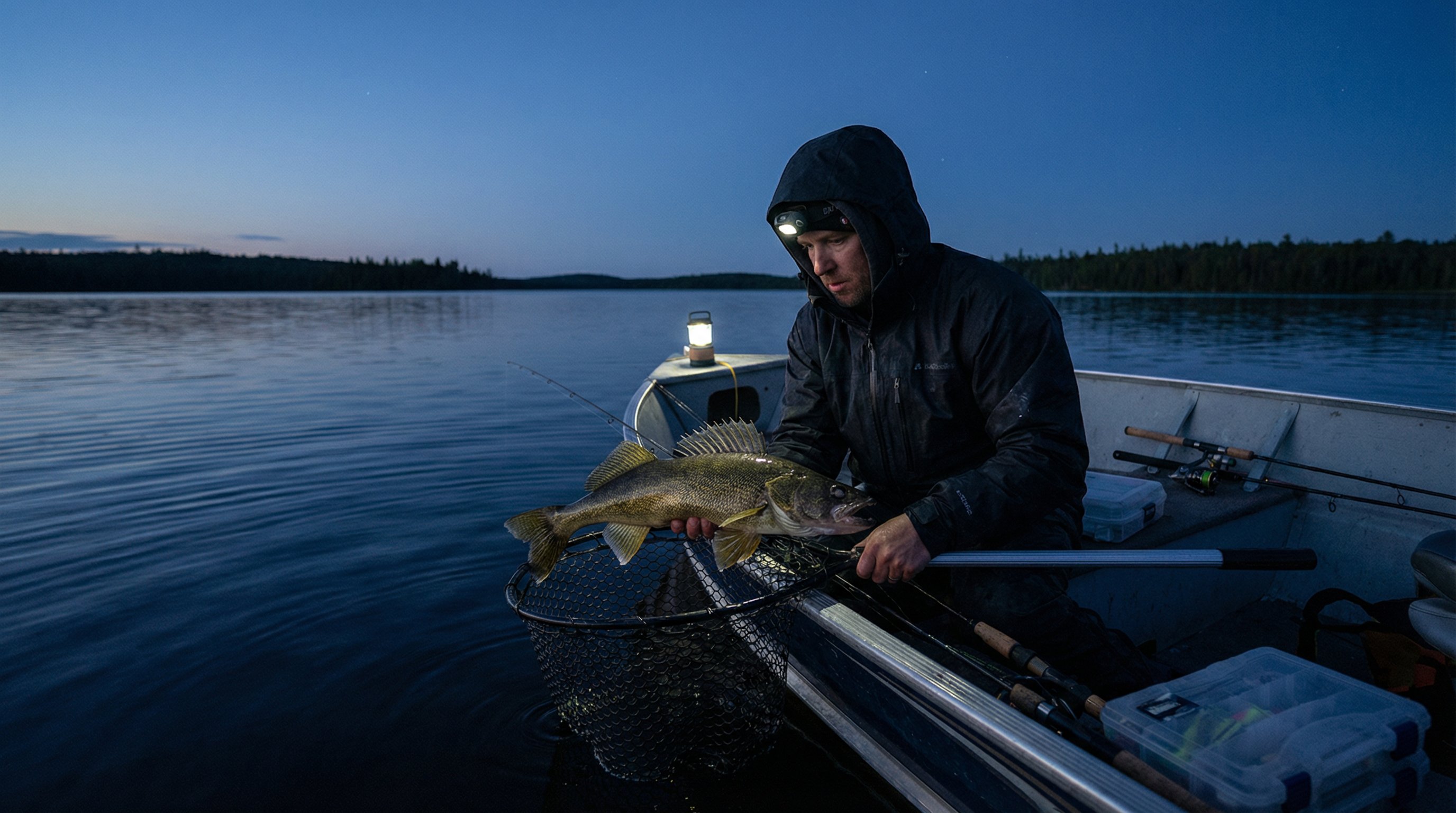
Then the rod loaded up. Not a tap — a full, confident pull. A chunky 27-inch walleye that had absolutely no business being in two feet of water.
That fish rewired how I approach spring walleye fishing entirely. Before that night, I'd been doing what most anglers do: fishing the deep stuff, running the main channel, throwing crankbaits at structure I'd marked during the day. Getting fish, sure. But nothing like what happens when you show up after dark and start fishing the water everyone else walks straight past.
Spring is the best time of year to catch big walleye at night. Full stop. Understanding why that's true — and how to take advantage of it — is the difference between stumbling into a few fish and having the kind of night you're still talking about a week later.
Why Spring Walleye and Night Fishing Are a Perfect Match
Walleye are built for the dark. Their eyes contain a reflective layer called the tapetum lucidum, which amplifies available light — the same reason they look almost metallic when you shine a headlamp at them. NOAA Fisheries notes this adaptation makes walleye exceptional low-light predators, giving them a decisive edge over baitfish once ambient light drops.
During the day in spring, especially on clear or lightly stained systems, walleye push into deeper water or tuck tight to structure to avoid bright conditions. At night, that changes completely. They roam. Shallow flats, rock shelves, current seams — water that looks barren at noon can be stacked with actively feeding fish by midnight.
The Spawn Window
Spring walleye movement is driven hard by water temperature. Walleye typically spawn when water hits the 40–50°F range, usually over rocky or gravelly substrate with current influence. The best night fishing generally clusters around two windows:
- Pre-spawn — Fish are staging, aggressive, and feeding heavily before the push
- Post-spawn — Females are recovering and feeding up; males linger and stay active
The practical sweet spot on most Midwest and Great Lakes rivers is roughly 48°F to 58°F water temperature. In my experience fishing rivers in Missouri, Wisconsin, and Minnesota, that window lands somewhere between late March and mid-May depending on how brutal the winter was.
What Current Does to Walleye Behavior
Current is the most underappreciated factor in spring walleye fishing, especially at night. Moving water does two things simultaneously: it concentrates baitfish and it triggers feeding behavior. Walleye don't have to chase when current delivers food to them — they position on the downstream edge of any current break and let the river do the work.
This is critical for reading spots correctly. You're not just looking for shallow water. You're looking for shallow water with current influence — a subtle drop from three feet to five feet, the back edge of a gravel bar, the downstream side of a bridge piling, a slow eddy adjacent to faster flow.
Reading the River: Where to Look After Dark
Most of the best spring walleye night fishing happens in places that feel almost too obvious once you understand what to look for. The challenge is that most anglers never scout at night, so they have no idea what's actually happening in those spots after dark.
Shallow Flats Adjacent to Deep Water
This is the core setup. Look for flats in the 2–5 foot range that are within a short swim of deeper water — 8 feet or more. Walleye use that depth as a daytime refuge and move up onto the flat to feed once light fades.
On rivers, these are usually inside bends — slower current, gradual depth change, sandy or gravelly bottom. On lakes with river inflows, look for transition zones where river current fans out across a flat.
Some of my most reliable spring night spots are obvious on a map: inside bends, tributary confluences, the back ends of oxbow channels. The fish aren't hiding. They're predictable. You just have to show up at the right time.
Rocky Points and Gravel Bars
Walleye love hard bottom, and in spring they're specifically seeking out gravel or cobble near current for spawning. Even post-spawn, they stay close to this habitat because baitfish do too.
Rocky points that extend into the main current and flatten out into a gravelly tail are prime. If you can, wade the area during daylight to understand the layout — knowing where the drop-off is before you're fishing it in the dark pays off.
It's also worth checking USGS stream gauge data before any trip. Rising water from spring runoff can completely relocate fish. Dropping water after a rise often triggers concentrated feeding as fish that were scattered in flooded backwaters push back onto main channel structure.
Current Seams and Eddies
The downstream edge of any current break is a natural ambush point. Bridge pilings, wing dams, boulder clusters, submerged timber — anything creating a seam between fast and slow water deserves attention at night.
The thing about current seams is that you can fish them in barely three feet of water and find big fish. They don't need depth at night. They need the break.
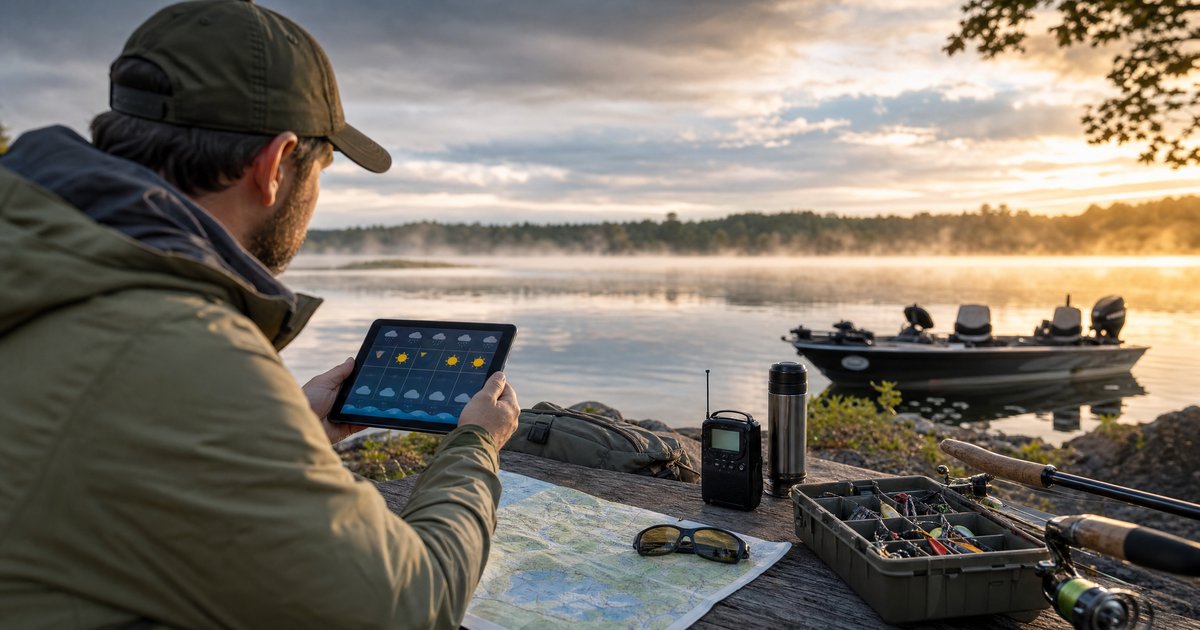
Before night sessions, I pull up a fishing forecast on HookCast specifically to check barometric pressure trends. A steady or slowly falling pressure after a stable period almost always produces better night bites than post-cold-front high pressure, which tends to lock fish up tight.
Gear Setup for Night Walleye Fishing
You don't need to reinvent your tackle approach. Night walleye fishing is mostly about refinement — the same presentations that work during low-light mornings and evenings, adjusted for full darkness.
Rods, Reels, and Line
Sensitivity matters more at night, not less. You're relying entirely on feel since you can't see your line. A medium-light spinning rod in the 6'8" to 7' range with a fast action tip works well — enough backbone to handle a big fish in current, sensitive enough to feel bottom composition and subtle takes.
Braided line with a fluorocarbon leader is standard. I run 10-lb braid to a 12-lb fluoro leader, roughly 18–24 inches. The braid provides sensitivity and no-stretch hooksets; the fluoro handles abrasion from rocky bottom and is essentially invisible in clear water.
Keep setups simple at night. Fumbling with lures in the dark while sitting in a kayak on moving water is genuinely dangerous. Pre-rig two or three rods before you ever launch.
Lures That Work After Dark
The night walleye toolkit doesn't need to be complicated:
| Presentation | Best Conditions | Notes |
|---|---|---|
| Jig + paddle tail | Current seams, rocky points | ¼ to ⅜ oz; fish slower than daytime |
| Shallow crankbait | Flats, 2–5 ft depth | Shad rap profile; natural or dark colors |
| Inline spinner | Moving current, post-spawn | Slow roll along bottom |
| Live or cut bait | Cold fronts, pressured fish | Slip sinker rig, slower current |
On color: this is where most anglers overthink it. In practice, dark colors outperform bright ones after dark — black, dark brown, dark purple, and dark chartreuse. The reason is silhouette: walleye are looking up at your lure against whatever ambient light exists from the moon, stars, or distant sources. A dark lure creates a sharper, more defined profile.
That said, in heavily stained or muddy water, chartreuse or orange can still produce because vibration and smell matter more than visual profile when visibility is near zero.
Field note: On overcast nights with zero moon, all-black jig heads with dark paddle tails fished painfully slow have been some of my most productive setups. When there's a half moon or better, natural shad patterns start producing again. Moon phase genuinely matters — pay attention to it.
Safety Gear: Non-Negotiable Items
Night kayak fishing on a moving river is a real hazard without the right preparation.
- White 360° light — legally required by USCG regulations for unpowered vessels after dark
- PFD worn, not stowed — non-negotiable in current
- Headlamp plus a backup — red light preserves night vision; white for rigging
- Phone in a dry bag — waterproof case or sealed dry bag
- Float plan left with someone — launch point, takeout, expected return time
On river trips where I might be out of cell range, I carry a small handheld VHF radio. Cell service drops in river corridors more often than most people expect.
Working the Current: Tactics That Actually Produce
The mechanics of fishing current at night differ from still-water walleye fishing. It takes some adjustment if most of your experience is on lakes.
Drifting vs. Anchoring
From a kayak, both work — and the choice depends on the spot.
Drifting suits longer flats with consistent, slower current. Let the kayak move with the flow while casting upstream at a 45-degree angle and retrieving with the current. This keeps your lure in the strike zone longer and looks natural. A small drift sock can slow you down in faster sections.
Anchoring is better for current seams, eddies, and specific structure you want to work thoroughly. A kayak anchor trolley system lets you adjust the anchor point and swing the bow into different angles without re-anchoring — worth the investment for serious river fishing.
Retrieve Cadence
Night walleye are often slower feeders than their daytime counterparts. Slow your retrieve by 30–40% compared to what you'd use during the day. Let the jig tick bottom. Give a crankbait time to dig down and wobble before you accelerate it.
Pauses are where most fish commit. The majority of my night walleye strikes come on the pause or the first inch of movement after one. Count to two on every pause if you're not getting bit. Try three. The lure sitting motionless in the dark drives walleye into committing when they've been following.
Reading Bites in the Dark
Since you can't see your line, here's what you're feeling for:
- Dead weight — line suddenly heavier; a fish picked it up and held position
- Tick or bump — usually a tap-and-release; shorten your pause, keep the lure moving
- Line going slack — fish swam toward you; reel fast and set
- Rod loading slowly — confident take; often a bigger fish
The most common mistake at night is setting too early on subtle bites. Wait until you actually feel the fish moving before you swing. Many night walleye hits feel indistinguishable from bumping a rock — let it sit a beat before committing to the hookset.
Putting It Together: A Simple Night Walleye Plan
Here's how I structure a spring night session from launch to takeout.
Before you go:
- Pull the HookCast forecast for your area — check pressure trend, wind, temperature
- Check USGS stream gauge data — rising, falling, or stable?
- Scout spots during daylight if possible, even a quick drive-by
- Charge all lights, headlamps, and fish finders
Timing:
- Arrive at your launch roughly 30 minutes before dark
- Get on the water and paddle to your first spot as light fades
- Peak feeding windows are typically 9 PM to midnight and again just before first light
- Don't pack up too early — some of my biggest fish have come in the 2–4 AM window after most anglers have gone home
On the water:
- Start with your most reliable spot first; conditions can shift
- Fish shallow-to-deep transitions first, then move to current seams
- Move spots every 30–45 minutes if you're getting no interest; don't grind a dead spot in the dark
- Mark productive spots on your GPS for future sessions
Quick-Reference Checklist:
- [ ] Water temp checked — target 48–58°F
- [ ] Barometric pressure — steady or slowly falling preferred
- [ ] Stream gauge — dropping water after a rise is prime
- [ ] Moon phase noted — fuller moon favors lighter colors; darker night favors darker lures
- [ ] Two rods pre-rigged before launch
- [ ] PFD on, 360° light mounted and visible, headlamp accessible
- [ ] Float plan left with someone
- [ ] Phone charged and in dry bag
- [ ] Launch and takeout route confirmed in daylight
Spring walleye night fishing on rivers is genuinely some of the best freshwater angling available to anyone within driving distance of a Midwest or Great Lakes system. It doesn't require a big boat, expensive electronics, or a guided trip. It requires understanding why the fish are there — and showing up when most people have already called it a night.
That 27-inch fish on the inside bend in Wisconsin? I went back to that exact spot six times that spring. Caught walleye on four of the six trips, all in less than three feet of water, all after dark. The spot looks like nothing during the day. At night, it's a dinner table.
Frequently Asked Questions
What is the best time of night to fish for walleye in spring?
The most productive windows are typically the first two to three hours after sunset and the hour before dawn. Walleye feeding activity usually peaks between 9 PM and midnight during spring when water temperatures are in the 48–58°F range. That said, fish can be active throughout the night — don't pack up too early if conditions feel right.
How deep should I fish for walleye at night in spring?
Spring walleye regularly feed in water as shallow as 18 inches to 6 feet at night, especially on flats and river shelves adjacent to deeper water. They use depth as a daytime refuge and move shallow to feed after dark. Target flats in the 2–5 foot range that are close to water 8 feet or deeper, particularly with current influence, gravel bottom, or nearby structure.
What lures work best for walleye night fishing?
Jig and paddle tail combos, shallow-running crankbaits, and inline spinners are the top producers. For color, dark tones — black, dark brown, dark purple — create a sharper silhouette against ambient night light and tend to outperform bright colors on most nights. In heavily stained water, chartreuse or orange can still produce because vibration and smell become more important than visual profile.
Does moon phase affect walleye night fishing?
Yes, noticeably. A fuller moon extends the feeding window and can allow walleye to see natural-colored lures more effectively in clear water. On darker nights with little or no moon, dark lure colors tend to outperform natural shad patterns. Many experienced walleye anglers plan their best night trips around the days surrounding a new or full moon.
Is kayak fishing safe for walleye night fishing on rivers?
It's manageable with proper preparation, but night river kayak fishing does carry real risks. A Coast Guard-compliant 360-degree white light is legally required for unpowered vessels after dark, and a PFD should be worn — not just stowed — any time you're on moving water. Bring a backup headlamp, keep your phone in a waterproof bag, leave a float plan with someone, and scout the river section during daylight before fishing it at night.