The Spring Slam: How to Hunt Turkeys and Catch Bass on Opening Weekend
It's 5:45 a.m. on a Saturday in mid-April. You're sitting with your back against a pine tree, listening to a gobbler sound off about 200 yards out. By 8:30, he's on the ground and tagged. Now what?
You've got the rest of the day, the truck is already loaded, and the bass in that creek arm behind the property have been on fire all week.
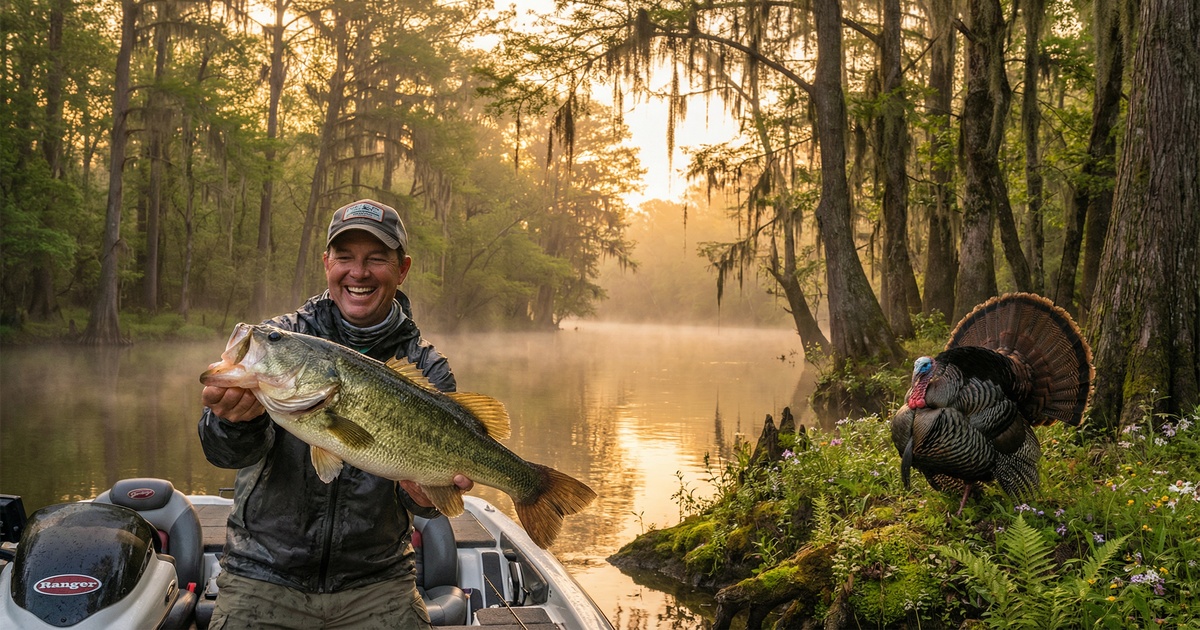
That right there is the Spring Slam — turkey in the morning, bass in the afternoon. If you've never stacked these two on the same opening weekend, you're leaving one of the best days of the year on the table. The Southeast is built for it. The seasons overlap, the habitat overlaps, and the window when both are peaking is tighter and more predictable than most people realize.
Here's how to make it work without blowing either one.
Why Opening Weekend Lines Up Better Than You Think
People treat hunting and fishing like competing hobbies fighting for the same Saturday. They can be — or they can stack cleanly if you understand what's driving both.
The Turkey Season Calendar
Opening dates vary across the Southeast, but the bulk of them land between late March and mid-April. Georgia opens in late March, Alabama runs late March through April, Florida's zone system starts as early as March, and Tennessee and the Carolinas follow in early to mid-April. The common thread: gobblers are actively breeding, which makes them vocal, aggressive, and patternable during the early morning hours.
That last part matters. A turkey hunt that goes well is largely finished by 9 or 10 a.m. That leaves a full half-day of daylight for the water.
What Bass Are Doing in April
April bass behavior in the Southeast is about as predictable as it gets all year. Water temperatures are climbing through the 58–68°F range — the trigger window for pre-spawn and early spawn movement. Fish are pushing out of deeper wintering structure, staging on points, moving into creek arms, and setting up on spawning flats.
NOAA Fisheries notes that largemouth bass begin active spawning behavior when water temps consistently hit 60–65°F, with peak spawning in the 65–75°F range. In the Southeast, April lands squarely in that window. The fish are shallow, aggressive, and not yet pressured by summer crowds.
The practical upshot: your morning belongs to the woods. Your afternoon belongs to the water. Neither window wastes the other.
Reading the Land — Finding Spots Where Both Overlap
This is where the Spring Slam gets genuinely interesting. You're not just combining two activities — you're potentially combining two locations if you're hunting the right ground.
Creek Drainages and Timber Tracts
Turkeys love creek bottoms. They roost in big timber along creek drainages, feed in adjacent fields, and travel those corridors throughout the day. Bass love those same drainages — creek arms are classic pre-spawn staging habitat, and the feeder creeks draining into reservoirs and river systems are loaded with structure: wood, laydowns, points, depth changes.
If you're hunting private timber or agricultural land with creek frontage, there's a real chance you're within walking distance of fishable water. I've hunted properties in central Florida and south Georgia where you could tag a bird in the hardwoods, walk 15 minutes, and be throwing a spinnerbait at a creek arm that never sees a lick of pressure.
Public Land Opportunities
Most southeastern states have Wildlife Management Areas that allow both turkey hunting and fishing. Some standout examples:
- Florida's WMAs — Many sit adjacent to river systems and public lakes. The Suwannee River corridor runs through several WMAs where turkey numbers are strong and spring bass fishing on the river itself is consistently good.
- Georgia's WMAs — Oconee, Ocmulgee, and Chattahoochee National Forest units all offer turkey hunting within reach of quality bass water.
- Alabama's WMAs — Units adjacent to Weiss Lake, Lewis Smith Lake, and the Alabama River drainage are natural fits for combining both.
Always check your state wildlife agency for unit-specific rules. You'll need valid licenses and tags for both activities, and some WMAs have restrictions on carrying firearms during non-hunting hours.
Morning Turkey Strategy: Don't Blow Your Afternoon
Here's where most guys go wrong on a combo day: they hunt sloppy and either burn out physically by noon or stay in the woods grinding on a hung-up bird until 2 p.m. — right when the bass bite has already softened.
Set a Hard Out Time
Decide before you leave the truck: if I don't have a bird tagged by 10 a.m., I'm going fishing. This isn't quitting early. It's tactical. Turkeys that haven't committed by mid-morning are usually henned up, call-shy from pressure, or just uncooperative. Chasing them all day typically produces nothing except sore legs and a blown fishing window.
Set your exit time, stick to it, and you'll fish better because you're not mentally dragging a failed hunt into the afternoon.
Gear Logistics
You don't need to make two trips. Here's how to run it:
- Turkey vest handles everything you need for the morning
- Fishing rod stays in a tube strapped to the truck
- Tackle bag locks in the cab — no point hauling it into the woods
- Change of boots at the truck — wet ground in the turkey woods is different from a boat deck, and you'll want the switch
One thing worth flagging: if you're hunting near water, pay attention to how you approach it after the hunt. Wading through the shallows where you plan to fish later — in camo and knee boots — will spook fish off the beds. Give it an hour before you're in the water, or approach from the opposite bank.
Read the Weather Early
Both pursuits are heavily influenced by spring weather, and April in the Southeast can swing hard. A cold front the night before will suppress both — gobblers go quiet, bass pull off beds and suspend.
Before opening weekend, I check HookCast to monitor the barometric trend. Standard atmospheric pressure sits around 1013.25 hPa per NOAA. When I see pressure rising post-front with clearing conditions, I know both turkeys and bass are going to be more active. Falling pressure ahead of rain can produce a short bass feeding window, but it shuts turkey hunting down fast — gobblers don't like to strut in wet grass.
Field note: The two-day window after a cold front clears and pressure stabilizes is often the single best hunting and fishing of the entire spring. Mark it the moment you see the forecast shift.
Afternoon Bass Tactics for Spring Slam Day
You've got a bird. You're back at the truck by 9:30. Water temperature is reading 63°F and the bass are on the beds or staging just outside them. Here's how to approach the afternoon.
Pre-Spawn vs. Spawn: Know Which Phase You're In
The difference between pre-spawn and active spawn changes your entire approach.
Pre-spawn (water temps 58–63°F):
- Fish are staging on points, channel edges, and hard bottom transitions
- They're feeding aggressively before the move to beds
- This is your best window for big bites on reaction baits
Early spawn (63–68°F+):
- Fish are on beds in 1–4 feet of water
- Less focused on feeding, more focused on defending territory
- Sight fishing with finesse plastics becomes the primary play
A quick water temp check before you rig saves you from throwing the wrong presentation. Most fish finders give you surface temp, or you can pull USGS stream temperature data for gauged rivers and streams if you're fishing moving water.
Bait Selection
| Condition | Presentation | Why It Works |
|---|---|---|
| Pre-spawn, clear water | Swimbait or jerkbait | Reaction bite — fish are chasing |
| Pre-spawn, stained water | Spinnerbait or chatterbait | Vibration and visibility draw strikes |
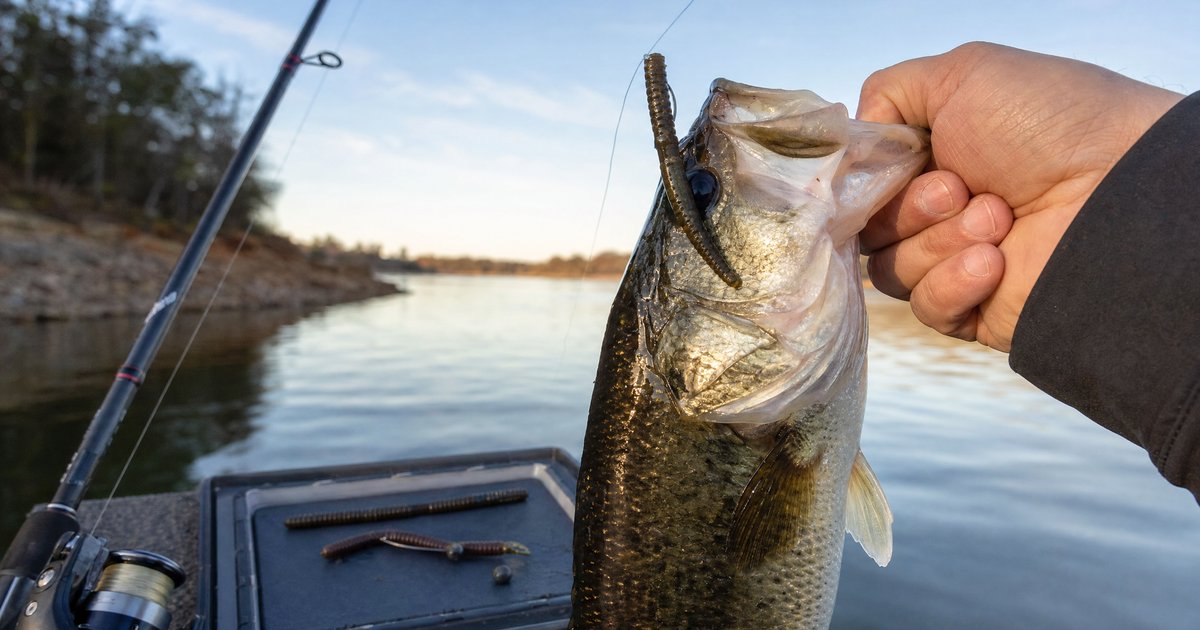
| Active spawn, sight fishing | Soft plastic stick bait (Senko-style) | Slow fall triggers territorial aggression |
| Overcast or post-front | Finesse dropshot | Suspended fish need a slower presentation |
| Early morning on beds | Topwater frog or popper | Low light, fish are more willing to commit |
Structure to Target
April bass in southeastern lakes and reservoirs concentrate predictably. Focus here first:
- Creek arm points — the transition from main lake to cove interior is where fish stage pre-spawn
- Laydowns and timber — wood holds fish throughout the day, especially on shaded banks
- Spawning flats — sand, gravel, or hard clay bottom in 1–4 feet; sunny banks warm faster
- Dock lines — shaded docks hold big females that haven't fully committed to beds yet
Work north and northwest banks first — they absorb the most sun and warm ahead of south-facing shorelines, which means earlier spawning activity and more active fish on those banks.
Pro tip: Don't skip the back ends of creek arms just because they look shallow and weedy. In April, the biggest females push all the way in. I've caught more 5-pound bass in 18 inches of water during April than in any other month.
Checking Tides If You're Fishing Coastal Systems
If your Spring Slam puts you near a tidal river or coastal marsh — the Florida panhandle, coastal Georgia, the Carolinas — tides matter even for bass. Brackish creek systems hold largemouth, and those fish feed on the same tidal cycles that govern inshore saltwater species. Check tide charts for your area before you commit to an access point. An outgoing tide concentrates baitfish and bass at creek mouths. Incoming tide pushes fish back into the marsh grass.
Making It a True Slam: When the Day Goes Sideways
Not every opening weekend is a bluebird morning with a fired-up gobbler and glassy water. Here's how to adjust when things don't break your way.
Rainy Opening Weekend
Cold rain effectively kills turkey hunting — gobblers won't strut, gobble less, and tend to mill around under roost trees waiting it out. Turn that time toward the water.
Bass feed aggressively ahead of a rain system as barometric pressure drops. Check the pressure trend on HookCast before you abandon the turkey vest entirely. If pressure is falling, the bite before the front can be exceptional. Work active structure: points, channel edges, anything with current or a depth change.
Post-Front Blues
A hard cold front that drops overnight lows 20°F in April is the toughest scenario for both pursuits. Turkeys will gobble but won't commit. Bass suspend and go lockjaw.
If you're dead set on the combo anyway, here's the honest take: hunt hard in the morning, accept that afternoon fishing is going to be slow, and lean into finesse tactics on deeper structure. Dropshot, shaky head, slow-rolled swimbait on a tight line. It's not the Spring Slam you drew up, but you can still put fish in the boat.
Wind
Wind above 15 mph is rough for turkey calling — you lose sound distance and gobblers don't like moving through it either. But wind can help bass fishing. Windward banks get blown-in baitfish, which pulls bass to the surface and to the bank. If the turkey hunt collapses by midday due to wind, relocate to the windward shoreline and start throwing moving baits. Spinnerbaits and crankbaits thrive in choppy water.
The Spring Slam Quick-Reference
Everything you need for a successful combo day, condensed:
Before You Go:
- Confirm turkey and bass licenses and tags for your state
- Verify WMA or private land access
- Monitor the barometric trend — rising post-front is best for both
- Check water temperature if available; know which spawn phase you're entering
- Pack a change of boots and keep fishing gear in the truck, not the turkey vest
Morning Turkey Hunt:
- Be on the roost before first light
- Set a hard out time — 9:30 or 10:00 a.m., no exceptions
- Don't wade or disturb fishing water on your way in or out
- If the bird is henned up or call-shy, leave early and bank the extra time on the water
Afternoon Bass:
- Check water temp before you rig — pre-spawn vs. spawn changes everything
- North and northwest banks warm first; start there
- Work creek arm points and laydowns before spawning flats
- Tidal systems: pull tide charts before picking your access point
- Rainy or post-front conditions: slow down, go finesse, go deeper
The Honest Truth:
You won't always slam both. Some mornings the gobbler doesn't cooperate. Some afternoons the bass are locked on beds and won't eat. But combining the two gives you more shots at a great day than running either pursuit solo — and the days when both line up are the ones you'll talk about for years.
My grandfather never hunted a day in his life. Pure fisherman. But I think even he'd make an exception for an April morning in the pines followed by a few hours throwing topwater at bedding bass. That's about as good as it gets in the Southeast.
FAQ
Can you turkey hunt and bass fish on the same public land in one day?
Yes, in many southeastern states. Most WMAs and state forests that allow turkey hunting also include public fishing access on adjacent reservoirs, rivers, or ponds. You'll need valid licenses and tags for both, and some units restrict carrying firearms outside of legal hunting hours. Always verify the specific rules with your state wildlife agency before combining both on public ground.
What is the best time of year for the Spring Slam?
Mid-April is generally the sweet spot across most of the Southeast. Turkey season is open in Georgia, Alabama, Florida, Tennessee, and the Carolinas during this window, and bass are in the pre-spawn or early spawn phase with water temperatures in the 60–68°F range. That combination puts gobblers in full breeding mode and bass shallow and aggressive at the same time.
How does weather affect opening weekend turkey hunting and bass fishing?
Both are sensitive to weather. Rising barometric pressure following a cold front produces the best conditions for both — gobblers are active and vocal, bass feed more aggressively in stable weather. Falling pressure ahead of rain can trigger a short but productive bass feeding window while shutting turkey hunting down. Hard post-front conditions with cold temps and high pressure suppress activity in both species.
What bass fishing tactics work best in April during the spawn?
In the pre-spawn phase (water temps 58–63°F), reaction baits — spinnerbaits, jerkbaits, swimbaits — work well because bass are actively feeding before moving to beds. During the active spawn (63–68°F+), sight fishing with slow-falling soft plastics like a Senko-style stick bait is the most effective approach, as spawning bass strike primarily out of territorial aggression rather than hunger. North and northwest-facing banks warm faster and typically hold the most active fish early in the season.
Do you need a separate fishing license to bass fish after turkey hunting on the same day?
Yes. Turkey hunting and freshwater fishing require separate licenses in every southeastern state, plus a turkey tag for the bird. Some states offer sportsman's license packages that bundle hunting and fishing privileges, which can reduce overall cost if you plan to combine both pursuits regularly. Check your state wildlife agency's licensing page before the trip to confirm you're covered for both.